If you've spent any time targeting pelagic species in saltwater, you've likely encountered ballyhoo. This slender baitfish has been a go-to choice for offshore anglers for decades, and for good reason. When properly set up, a rigged ballyhoo swims naturally through the water, attracting everything from dolphin to marlin. The real magic happens when you master the rigging process, turning a simple baitfish into an irresistible offering that produces consistent strikes.
Why Ballyhoo Works So Well
Ballyhoo's effectiveness comes down to a few key factors. Their silvery profile mimics the natural forage that gamefish hunt daily. The baitfish has a unique body shape that creates an enticing swimming action when trolled at various speeds.
Key advantages of using ballyhoo:
- Natural scent trail that attracts fish from distance
- Versatile presentation options from surface skipping to deep trolling
- Widely available frozen or fresh at tackle shops
- Proven track record across multiple species
- Cost-effective compared to artificial lures
The slim profile allows ballyhoo to cut through the water with minimal resistance. This means you can troll them faster than many other natural baits without them spinning or losing their action. Whether you're fishing offshore ledges or exploring coastal spots near major cities, rigged ballyhoo remains a reliable choice.
Basic Rigging Techniques
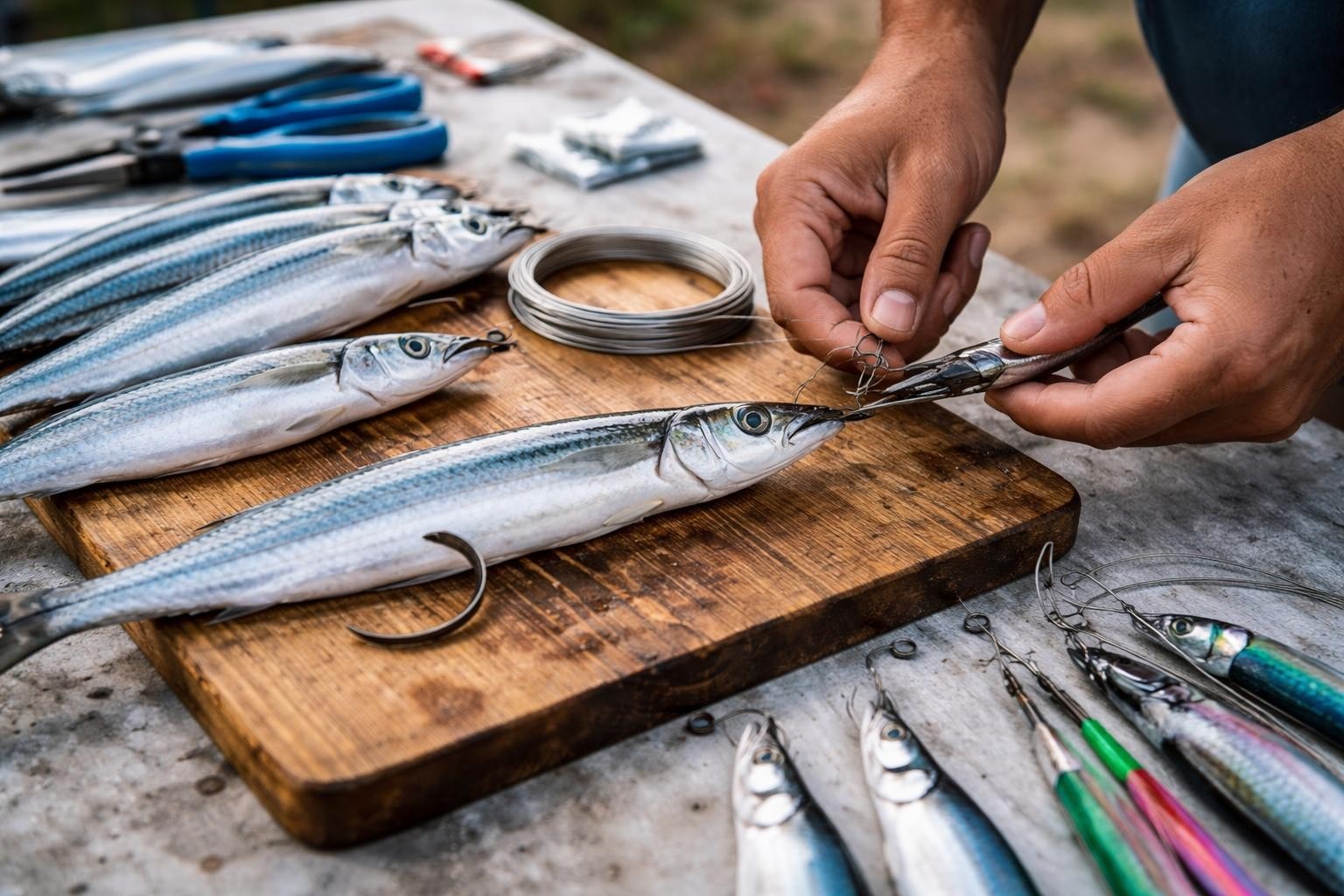
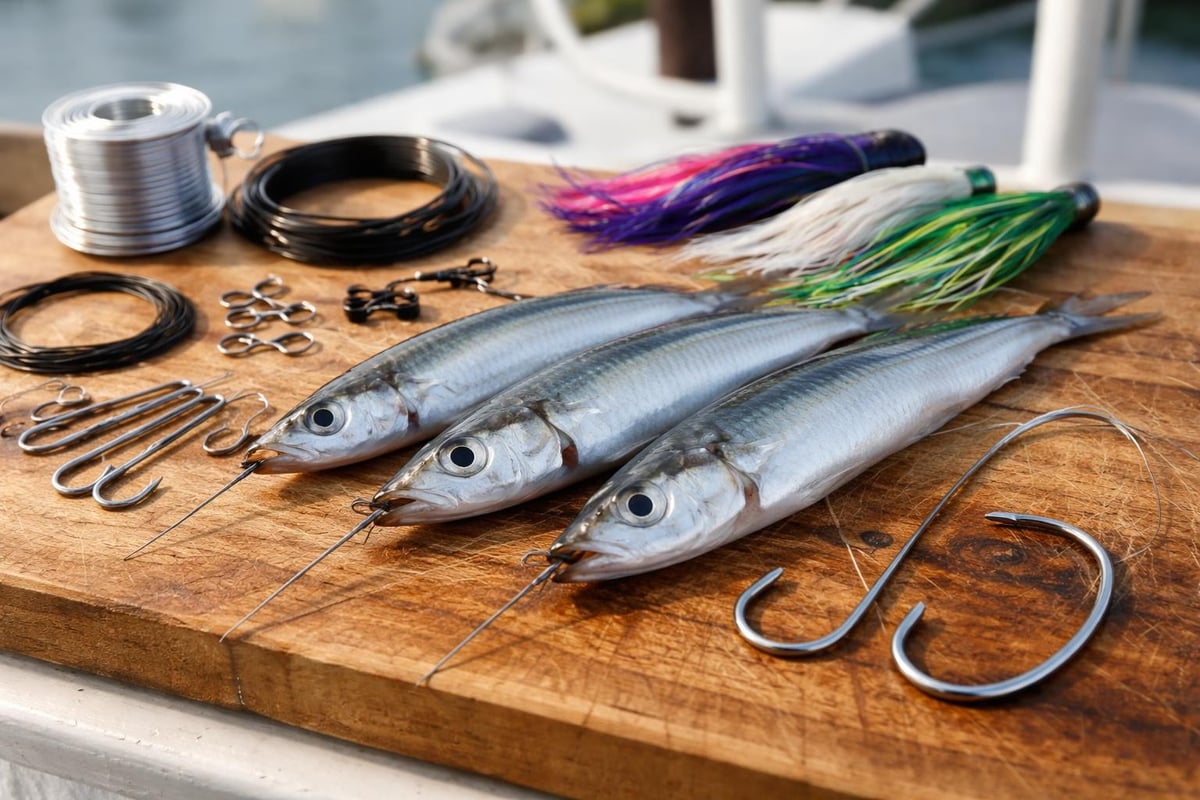
Getting started with a rigged ballyhoo doesn't require years of experience. The fundamental approach involves running a hook through the bait's body while securing it with wire or thread. The traditional rigging method has evolved over time, but the core principles remain consistent.
Traditional J-Hook Setup
Start by selecting a hook size that matches your target species. For most applications, a 6/0 to 8/0 J-hook works well. Insert the hook point into the ballyhoo's throat and bring it out through the belly, positioning it near the anal fin.
Step-by-step process:
- Remove the eyes and break the bill at a 45-degree angle
- Thread copper wire through the eye sockets
- Insert the hook through the gill plate
- Position the hook point for optimal presentation
- Wrap wire around the bill to secure everything
The wire wrap keeps the bait from sliding down the hook during trolling. Make several tight wraps, then twist the tag end to lock it in place. Trim any excess wire that could interfere with the bait's action.
Circle Hook Configurations
Circle hooks have gained popularity for their fish-friendly design and higher hookup rates. The circle hook X rig method offers a straightforward approach that works exceptionally well for billfish. Instead of embedding the hook in the bait's body, the circle hook rides alongside or just behind the head.
This setup allows the bait to swim more naturally. When a fish strikes, the circle hook slides to the corner of the mouth as the fish turns away, resulting in better hooksets with less gut-hooking.
Advanced Rigging Methods
Once you've mastered basic techniques, several advanced approaches can improve your success rate in specific situations. A rigged ballyhoo with a stinger hook setup provides insurance against short strikes, particularly when targeting toothy species like kingfish.
The quick stinger rig allows you to add a trailing hook without complicated threading. This proves valuable when fish are tapping the bait without committing fully. The second hook catches those hesitant biters that might otherwise escape.
Popular advanced setups:
- Split-beak rig: Creates dual action between skipping and swimming
- Double-hook configuration: Ideal for deeper presentations
- Chugger head combination: Adds surface commotion and vibration
- Dredge positioning: Multiple baits create feeding frenzy appearance
The reusable O-ring method has changed how many anglers approach rigging. Instead of threading wire through the eyes each time, you secure an O-ring to the hook, then slide the ballyhoo onto the ring. This speeds up bait changes significantly during active fishing.
Skirt and Color Selection
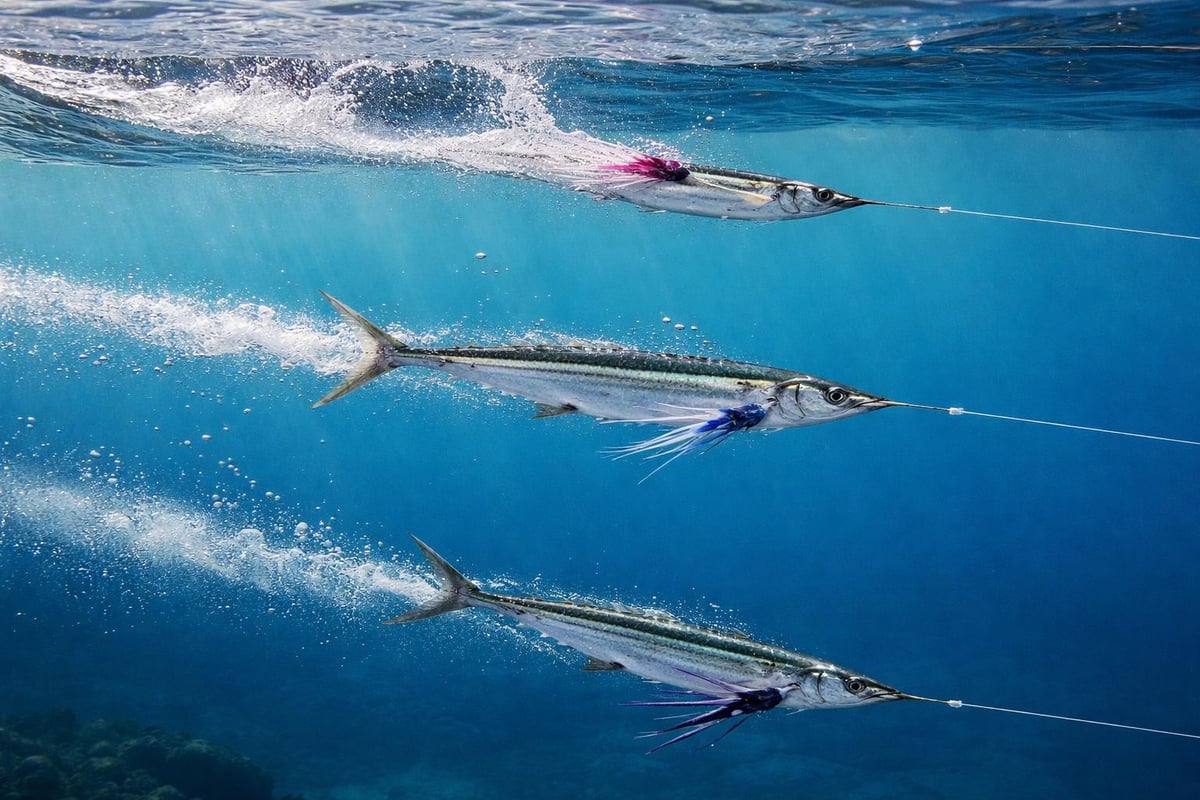
Adding a skirt to your rigged ballyhoo creates additional flash and vibration. The skirt material catches water and pulses with each wave, amplifying the bait's natural attraction. Color selection depends on water clarity and target species preferences.
In clear blue water, natural colors like pink, white, and light blue work well. When fishing murky conditions or overcast days, brighter options like chartreuse or hot pink increase visibility. The skirt also protects the bait from washing out during extended trolling sessions.
Match your skirt length to the bait size. A properly sized skirt extends just beyond the tail, creating a unified profile. Too long, and it interferes with the action. Too short, and you lose the added attraction.
Hook Placement and Bait Preparation
Proper hook placement determines how well your rigged ballyhoo swims. The hook should exit the body at a point that creates a straight line from the eye to the bend. Any deviation causes the bait to spin or run off-center.
Before rigging, inspect each ballyhoo for firmness and freshness. Reject any baits with soft bellies or torn skin. These won't hold up during trolling and often wash out within minutes. Quality bait preparation starts with selection.
Pre-Rigging Steps
Thaw frozen ballyhoo slowly in saltwater. Quick thawing in freshwater or warm conditions breaks down the tissue, creating mushy baits that won't last. Once thawed, brine the baits briefly to firm them up.
Breaking the backbone just behind the head allows the bait to flex naturally during trolling. Use your thumbnail or the back of a knife to crack it without tearing through the skin. This small step dramatically improves swimming action.
Trolling Speed and Spread
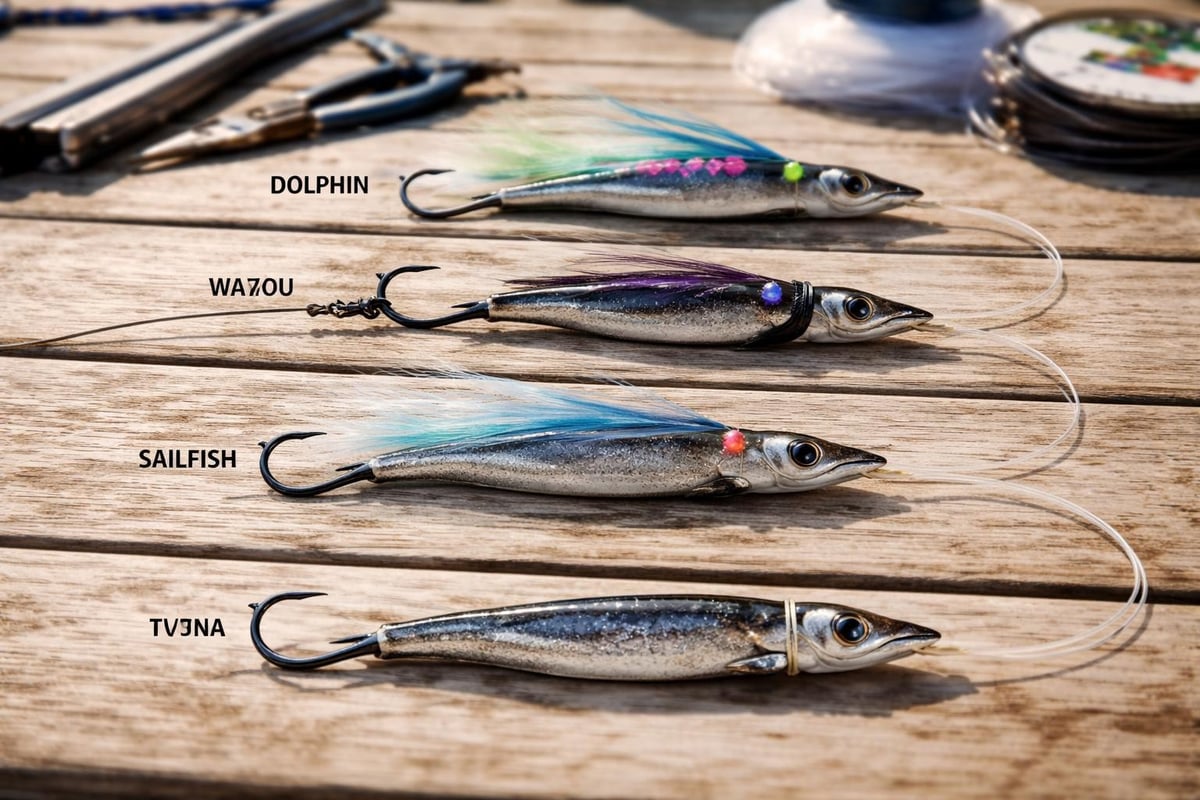
The ideal trolling speed for a rigged ballyhoo falls between 6 and 9 knots for most species. At this pace, the bait skips across the surface or swims just below, creating a realistic presentation. Adjust based on sea conditions and target species behavior.
Position your baits at varying distances behind the boat. A typical spread includes:
- Short rigger baits: 50-75 feet back
- Long rigger baits: 100-150 feet back
- Flatline baits: 75-125 feet back
- Way-back or shotgun bait: 200+ feet back
Varying the distance prevents tangles and covers different zones where fish might be feeding. The split-beak rigging technique works particularly well on longer lines, where the dual action attracts fish from greater distances.
Storage and Longevity
Properly stored ballyhoo lasts months in the freezer. Vacuum-sealing preserves quality better than standard freezer bags. Keep baits flat to prevent them from curving during freezing, which makes rigging more difficult later.
Some anglers prefer brining their rigged ballyhoo overnight before fishing. This firms up the flesh and adds durability during extended trolling sessions. A simple salt brine works, though commercial brines include additional hardening agents and UV protectants that extend bait life even further.
Mastering rigged ballyhoo techniques opens up countless opportunities for successful offshore fishing. These versatile baits work across various conditions and consistently produce results when targeting pelagic species. Whether you're heading to well-known offshore waters or discovering new productive areas, having properly rigged ballyhoo in your spread increases your chances significantly. Ready to put these techniques to use? Find Fishing Spots helps you locate prime saltwater fishing locations across the U.S., complete with GPS coordinates and detailed access information to get you on the water faster.