Ever wondered how to pinpoint any location on Earth using just a set of numbers? Welcome to the world of coordinates, where the ability to search place by coordinates opens up a whole new way to explore, travel, and solve real-world problems.
In this guide, we’ll break down the mystery behind finding places with latitude and longitude. From planning your next adventure to helping in an emergency, learning these skills puts the world at your fingertips.
You’ll discover why mastering coordinates matters in 2026, hear about the latest tools, and get step-by-step advice to boost your confidence with every search. Ready to start exploring? Let’s dive in.
Understanding Geographic Coordinates
Ever wondered how explorers, pilots, or even your smartphone can pinpoint any spot on Earth? It all comes down to latitude and longitude, the backbone of any search place by coordinates. Latitude tells you how far north or south you are from the equator, while longitude measures east or west from the prime meridian. Together, these numbers form a global grid, giving every location a unique “address.”
Coordinates come in several formats. You might see them as decimal degrees (like 40.7128, -74.0060), degrees-minutes-seconds (DMS) such as 40°42'51"N 74°0'21"W, or even as Universal Transverse Mercator (UTM), which uses a grid-based system. Each format serves a different purpose, but all are essential for anyone who wants to search place by coordinates with accuracy.
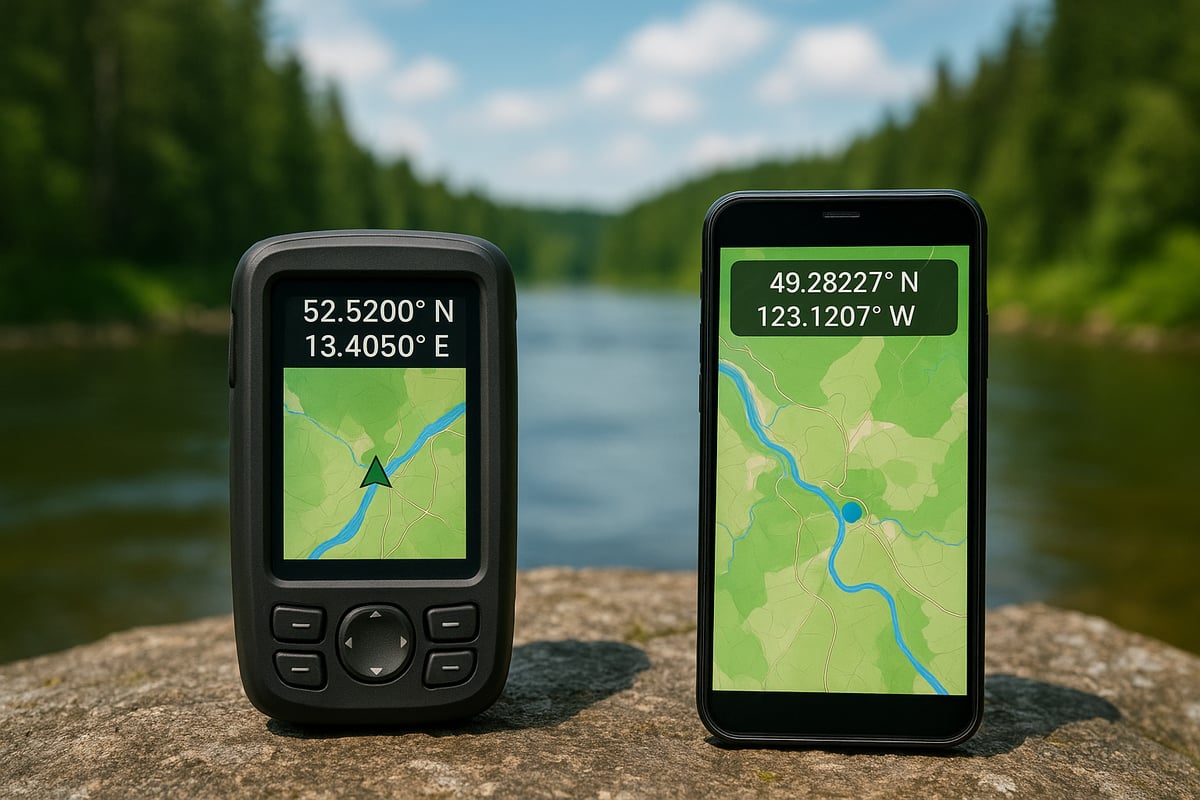
GPS technology is what brings these coordinates to life in our daily routines. Whether you are navigating through a city, tracking a delivery, or guiding emergency teams to remote areas, GPS satellites use coordinates to map out real-world locations. In fact, over 90% of digital maps and navigation apps rely on coordinate-based systems. Imagine disaster relief teams rushing to an affected zone—they depend on precise coordinates to reach people quickly. This is why mastering how to search place by coordinates is more than just a travel hack; it’s a vital skill for modern living.
There are some common misunderstandings when people first try to search place by coordinates. Many assume all coordinates are equally precise, but small errors or format mix-ups can send you miles off course. As mapping systems have evolved, their accuracy has improved dramatically. Today, new advances such as AI-enabled spatial intelligence are pushing coordinate precision even further, making it easier than ever to find exactly where you want to go.
Step-by-Step Guide: How to Search a Place by Coordinates
Ready to put coordinates to use? Whether you are planning a trip, sharing a secret spot, or double-checking a location, this guide will walk you through every step. Learning how to search place by coordinates is easier than you think, and these steps will help you get it right every time.
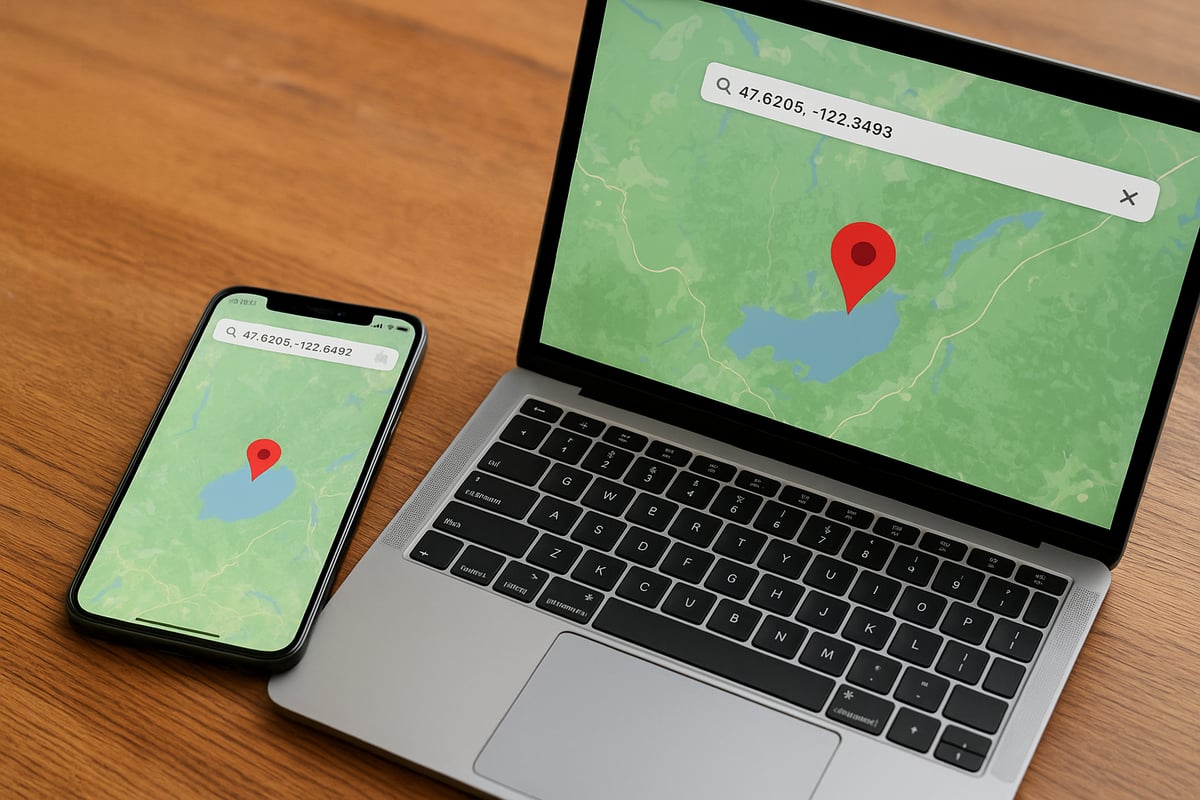
Step 1: Identifying the Coordinate Format
Before you jump into a map app, take a close look at the numbers you have. Are they in decimal degrees, like 43.12345, -73.98765? Or do they look like degrees, minutes, and seconds (DMS), such as 43°7'24.4"N, 73°59'15.5"W? Sometimes, you might even see Universal Transverse Mercator (UTM) codes.
To accurately search place by coordinates, you need to know what format you are working with. Many online tools and smartphone apps can detect and convert formats for you. For example, if you paste coordinates into Google Maps, it often figures out the type automatically. Still, double-check the format to avoid mistakes.
If you are not sure, try entering the numbers into a converter tool. That way, you can make sure your search place by coordinates starts on the right foot.
Step 2: Choosing the Right Platform or Tool
Next up, pick where you want to search place by coordinates. The most popular options are Google Maps, Apple Maps, and OpenStreetMap. Each has its strengths.
- Google Maps: User-friendly, supports most formats, and gives lots of details.
- Apple Maps: Great for iPhone users, but can be picky with formats.
- OpenStreetMap: Free and open-source, excellent for exploring off-the-beaten-path areas.
Looking for outdoor spots? The Fishing Spots Search Tool lets you search place by coordinates to find lakes, rivers, and hidden fishing gems.
Consider your needs. If you want street view, Google Maps is a solid choice. For privacy or open data, try OpenStreetMap. No matter what, the ability to search place by coordinates is just a few clicks away.
Step 3: Entering Coordinates Correctly
Getting your coordinates into the platform is where small errors can cause big problems. Most map apps have a search bar where you can paste the numbers. Make sure you match the format the platform expects.
- For decimal degrees, enter commas between latitude and longitude.
- For DMS, include the degree, minute, and second symbols.
- For UTM, check if your platform supports it, and enter each part in the right box.
If you want to search place by coordinates without headaches, double-check for typos and stray spaces. Watch out for swapped latitude and longitude, which can send you to the wrong side of the world. Some platforms let you copy and paste directly, but always review the result before hitting search.
Step 4: Interpreting the Results
Once your search place by coordinates returns a map pin, it is time to review what you see. Sometimes, a pin lands in the middle of a lake, forest, or even an inaccessible mountain. This happens if the coordinates are precise, but the area is remote or lacks roads.
Look for location details, such as nearby landmarks or addresses. If the result looks odd, double-check your input. A misplaced decimal point can move your spot by miles. Some platforms display extra info, like elevation or imagery, to help you confirm.
Remember, when you search place by coordinates, not every pin will land on a city street. Sometimes, that is exactly what you want—especially if you are exploring or sharing a hard-to-find destination.
Advanced Tips for Accurate Coordinate Searches in 2026
Getting more from your search place by coordinates routine in 2026 means tapping into some seriously advanced tech. AI-powered mapping is changing the game. These tools can now suggest corrections if your coordinates are slightly off or even fill in missing data points based on trends. Want to dig deeper? Platforms that use AI-Driven Decision Support help you visualize clusters, spot patterns, and make smarter decisions with your searches.
Batch and Bulk Coordinate Searches
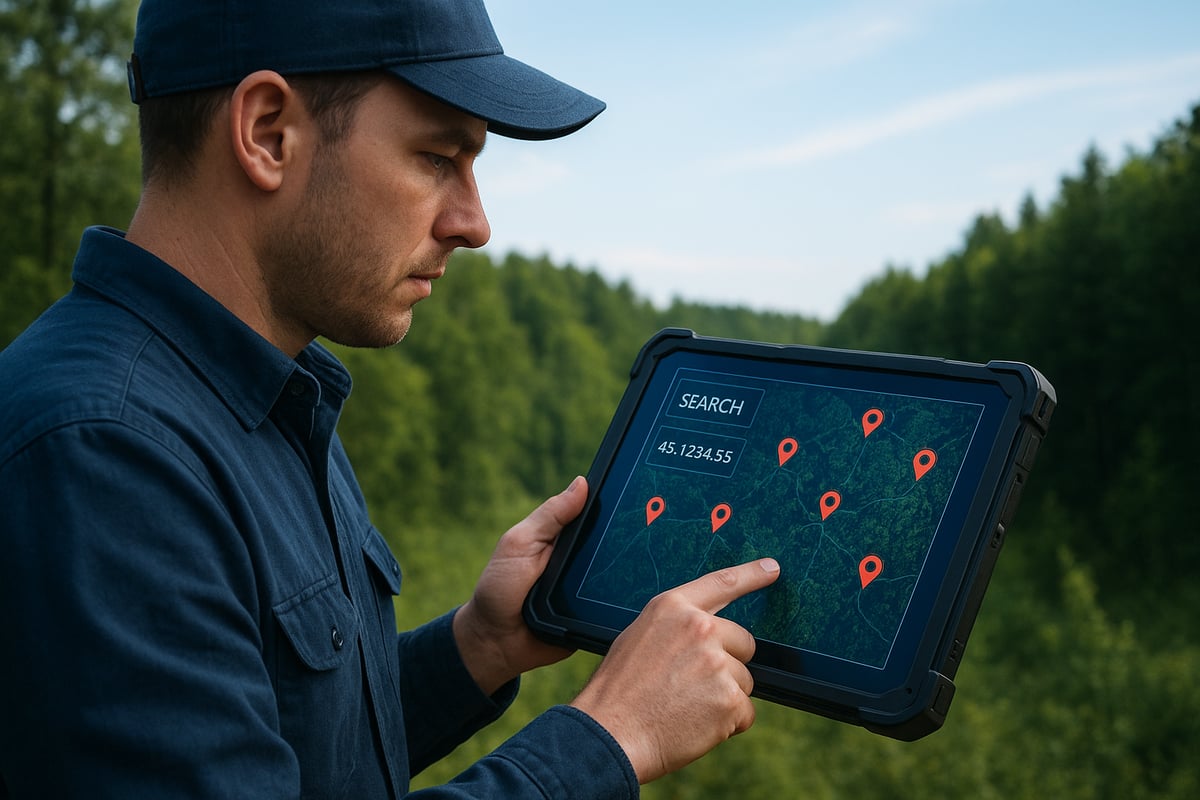
If you need to search place by coordinates for a whole list—say, tracking animal movements or planning a group adventure—batch tools are your friend. Many mapping platforms let you upload a spreadsheet or paste in multiple entries. This is a huge time-saver for researchers and anyone who needs to hit several spots in a single trip. Just be sure your format matches what the platform expects, or you might get weird results.
Off-Grid and Rural Location Strategies
Sometimes, you are heading where roads do not go. For these off-grid or rural spots, coordinate searches really shine. Download offline maps before you head out, since cell service can be spotty. GPS accuracy can drift in dense woods or canyons, so double-check your search place by coordinates results against physical landmarks or satellite images.
Cross-Referencing with Satellite Imagery
Satellite imagery is a powerful ally. After you search place by coordinates, zoom out on the map and compare what you see with recent satellite photos. This helps confirm if your spot is on a trail, in a clearing, or maybe in the middle of a lake. It is a good habit, especially for fishing, hiking, or fieldwork.
Mobile Tips and Privacy Reminders
On your phone, keep location services on for best accuracy, but download offline maps just in case. When sharing coordinates, remember that privacy matters. Only send your exact spot to people you trust, and use secure apps. In short, the smarter you get with your search place by coordinates methods, the more reliable and useful your results will be.
Common Challenges and How to Overcome Them
Searching for a place by coordinates can feel like using a treasure map—one wrong turn and you might end up somewhere unexpected. Even though the process sounds simple, there are a few common hurdles that can trip up beginners and seasoned explorers alike. Let’s walk through the most frequent challenges and show how to tackle them so your next search place by coordinates adventure goes smoothly.
Common Input Mistakes
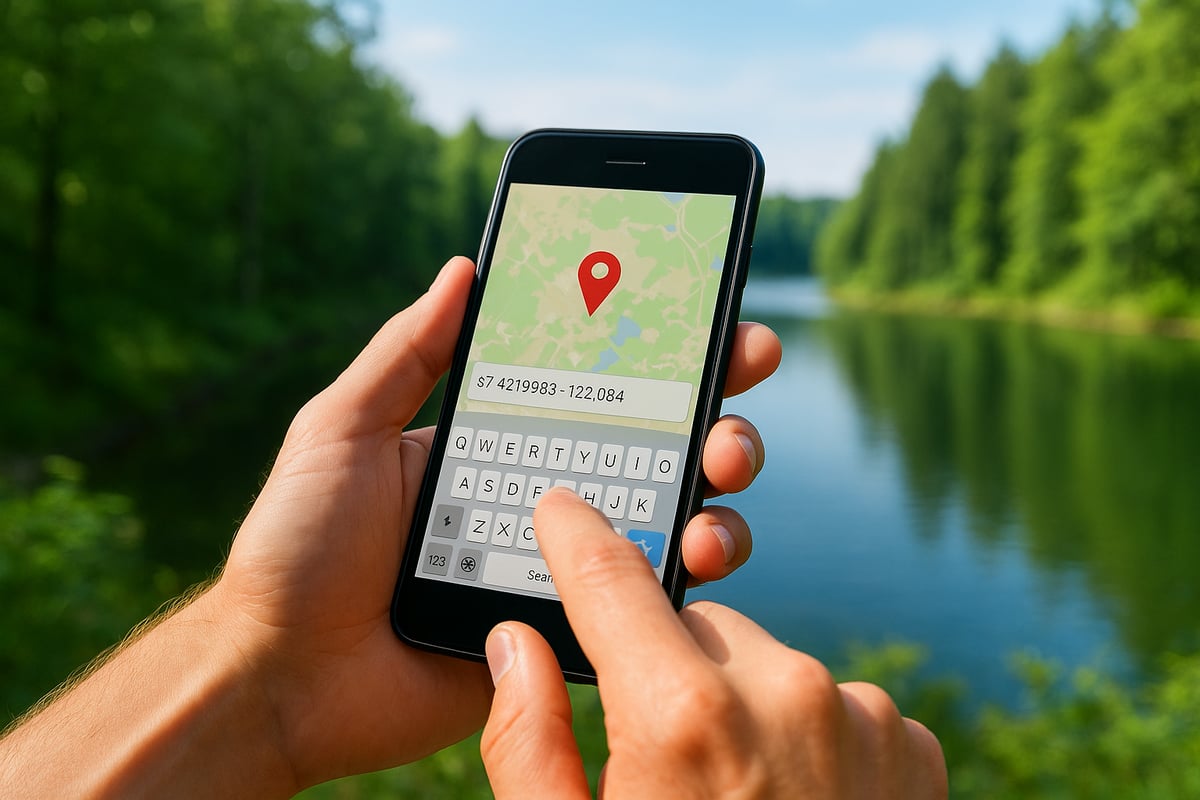
One of the biggest stumbling blocks with any search place by coordinates is inputting the numbers in the wrong format. For example, confusing decimal degrees with degrees-minutes-seconds can send you off course by hundreds of miles. Even a tiny typo or missing symbol can lead you far away from your intended spot. A classic case is when someone tries to find a fishing location and ends up in the middle of nowhere, simply because of a misplaced decimal. For a real-world example, check out this Lake George Coordinates Example to see how accurate input makes all the difference.
- Double-check the format before hitting search.
- Use online converters if you’re unsure about the coordinate style.
- Stick to reputable map apps that can auto-detect formats.
Troubleshooting Map Results
It’s frustrating when your search place by coordinates pulls up “location not found” or drops a pin in the middle of a lake. Sometimes, mapping tools interpret coordinates differently, especially when near borders or remote areas. This can happen if the coordinate is just a hair off, or if the map’s database is out of date. Always zoom out to get context, and try entering the coordinates in another app for comparison.
- Cross-check results using two different platforms.
- Remember that some places, like private land or restricted zones, might not show up with details.
- If you land in an odd spot, re-examine your input for typos.
Datum Differences and Border Cases
Another challenge in your search place by coordinates quest comes from something called the map datum. Most maps use WGS84, but others rely on systems like NAD83. A mismatch here can put your target miles away from where you expect. This is especially true near state or country borders, or in remote regions where map coverage isn’t perfect. Consistency is key—always use the same datum and format for best results.
- Check the map’s settings for datum options.
- If you’re working with older coordinates, verify which datum was used.
- When in doubt, consult an online converter and double-check your sources.
With a careful eye and a little practice, you’ll breeze past these common challenges. Consistency and attention to detail ensure your search place by coordinates always lands you in the right spot.
Real-World Applications: Who Uses Coordinate Searches and Why?
Ever wonder who actually needs to search place by coordinates? Turns out, it is not just for cartographers or tech geeks. People from all walks of life use coordinates to make their work, adventures, and even emergencies run smoother.
Travelers and Adventurers
Travelers use the search place by coordinates feature to find those off-the-grid gems—hidden waterfalls, secret beaches, or that perfect hiking trail nobody else knows about. Backpackers love sharing exact coordinates with friends to meet up at remote campsites. Even road trippers use them to mark quirky roadside attractions.
Emergency Services and First Responders
For emergency teams, precision is everything. When disaster strikes, responders rely on search place by coordinates to locate people or affected areas quickly. A single digit can make the difference between a successful rescue and a missed location. Modern ambulance dispatch systems are built around this technology, letting crews navigate straight to a caller’s spot.
Environmental Science and Research
Scientists out in the field need to be exact when studying animal habitats or monitoring environmental changes. They often use search place by coordinates to track migrations or document new findings. Drones have taken this to another level, with AI-Powered Drone Swarms surveying huge areas and pinpointing locations for analysis. In fact, around 70% of field researchers depend on GPS coordinates for their site work.
Outdoor Recreation and Fishing
Hikers, anglers, and off-roaders love the search place by coordinates tool for planning their trips. Sharing the precise spot of a fishing hole or a trailhead means everyone gets there with no confusion. If you are interested in finding new fishing locations, check out these Tips for Finding Fishing Locations that often use coordinate-based methods.
Business Logistics and Archaeology
Businesses use search place by coordinates to keep their fleets efficient and deliveries on track. Logistics teams can optimize routes and make sure packages land at the right doorstep. Archaeologists use coordinates to document dig sites, ensuring every discovery is mapped and recorded with pinpoint accuracy.
The search place by coordinates feature is woven into the fabric of how we explore, rescue, research, and deliver. Whether you are heading into the wild or managing a fleet, coordinates make the modern world run on time and on target.
Future Trends: The Evolution of Coordinate Search Technology
The way we search place by coordinates is about to get a major upgrade. Emerging tech is reshaping how we find and understand locations, making it easier, faster, and even more interactive for everyone. Ready to see what the future holds?
Immersive Experiences: AR and VR Integration
Augmented reality and virtual reality are turning coordinate searches into hands-on adventures. Imagine pointing your phone at a landscape and seeing real-time overlays of geographic coordinates or walking through a VR simulation of a remote destination before you ever visit. This immersive approach makes the process to search place by coordinates more engaging and intuitive for travelers and researchers alike.
Next-Gen Satellite Accuracy and Smarter Navigation
Satellite technology is making leaps forward, offering pinpoint accuracy even in dense cities or remote terrain. For drivers and logistics teams, this means safer, more reliable navigation. According to the Vehicular Wireless Positioning Survey, advancements in coordinate-based navigation are already transforming how vehicles and fleets locate destinations. These improvements will make every search place by coordinates more precise, especially for time-sensitive or critical missions.
AI-Driven Suggestions and Predictive Mapping
Artificial intelligence is stepping in to suggest points of interest based on your search patterns and context. If you search place by coordinates for a hiking trail, AI can recommend nearby rest stops or scenic viewpoints. Predictive mapping will also help with disaster preparedness, flagging safe zones or hazards before you hit the road.
Voice Activation and Privacy-First Mapping
Voice-activated searches are becoming standard, letting you search place by coordinates hands-free on your favorite smart device. Alongside this, privacy-focused mapping apps are gaining ground, giving users more control over how and where their location data is shared.
A Growing Industry and What It Means for You
The global geospatial analytics market is expected to grow by 15% annually through 2026. That means even more tools and features to help you search place by coordinates with confidence and accuracy, whether you're planning a trip, conducting research, or just exploring new places.
Now that you know how to search by coordinates and make sense of those numbers like a pro, why not put your new skills to good use? There’s a whole world of fishing spots out there just waiting to be discovered—saltwater, freshwater, or that perfect brackish hideaway. With detailed GPS info and location tips all in one spot, you can find your next adventure without any guesswork. If you’re ready to explore new waters and put these expert techniques into action, check out Find Spots and start planning your next trip!