Finding fish has always been equal parts art and science, and modern electronics have shifted that balance dramatically. The lowrance elite 7 represents a sweet spot in fishfinding technology, offering serious capabilities without the overwhelming complexity or price tag of higher-end units. Whether you're working a familiar lake or exploring new waters, this fishfinder gives you the tools to understand what's happening below the surface and mark productive spots for future trips.
What Makes the Lowrance Elite 7 Stand Out
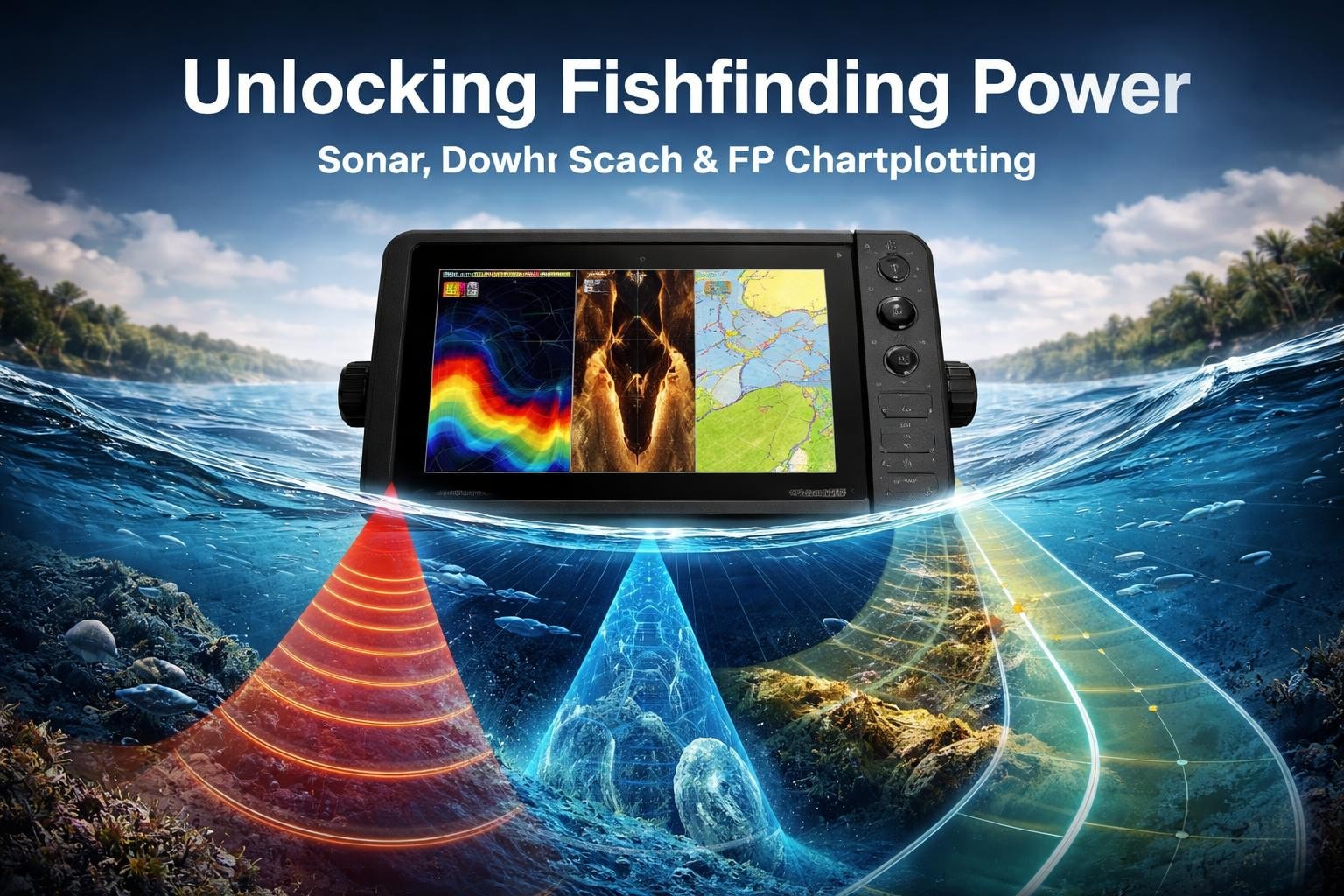
The lowrance elite 7 earned its reputation by combining three essential technologies into one unit: traditional broadband sonar, DownScan Imaging, and GPS chartplotting. This hybrid approach gives you multiple ways to look at the same underwater structure, which matters when you're trying to distinguish between fish, rocks, and vegetation.
The 7-inch display is the first thing you'll notice – it's 70% larger than the 5-inch models that preceded it, making a real difference when you're trying to read the screen in bright sunlight. According to the announcement from Yacht & Boat, the LED-backlit screen provides excellent visibility even in direct sun, a crucial feature when you're on the water all day.
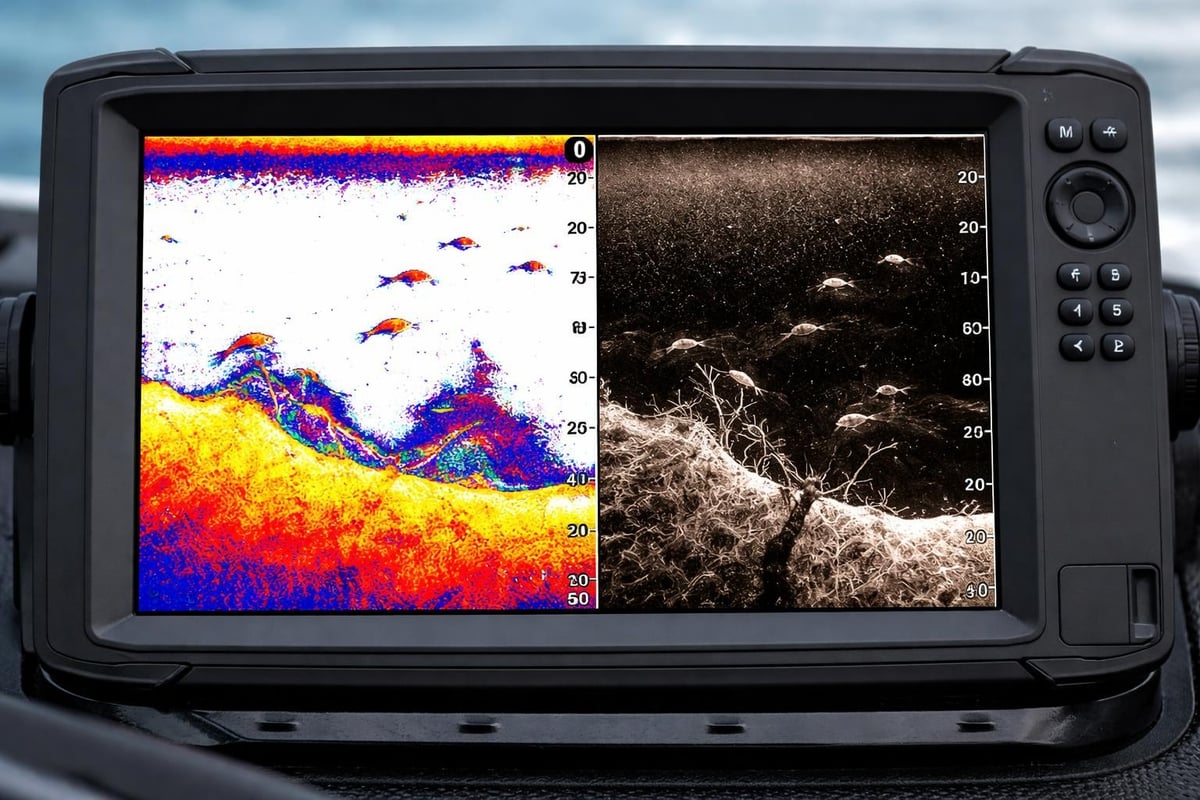
The split-screen functionality lets you view different data simultaneously:
- Traditional sonar on one side, DownScan on the other
- Chart view combined with sonar readings
- Multiple zoom levels of the same area
- Custom combinations based on fishing conditions
Understanding the Imaging Technologies
Traditional broadband sonar sends a cone-shaped signal that covers a wide area beneath your boat. This technology excels at showing fish arches and depth readings quickly, perfect for searching large areas or trolling. The lowrance elite 7 processes this information rapidly, updating the screen as you move through the water.
DownScan Imaging works differently. It sends a thin, downward-facing beam that creates photo-like images of what's directly below. As Fishing World notes, this combination of Broadband Sounder and DownScan Imaging gives you enhanced underwater views that help distinguish individual fish from structure.
When to Use Each Mode
Different fishing scenarios call for different imaging approaches:
- Searching new water: Start with traditional sonar in full-screen mode to cover ground quickly
- Investigating structure: Switch to DownScan to see detailed images of rocks, ledges, or brush piles
- Marking waypoints: Use split-screen to confirm fish presence with both technologies before saving the spot
- Following contours: Keep the chart view visible while monitoring depth changes in real-time
The beauty of the lowrance elite 7 is that you're not locked into one view. You can switch modes with a few button presses, adapting to what the fishing situation demands.
GPS and Mapping Capabilities
Built-in GPS turns your lowrance elite 7 into more than just a fishfinder – it becomes a navigation tool and fishing journal rolled into one. The unit comes preloaded with basic U.S. maps, though many anglers upgrade to more detailed charts for their home waters.
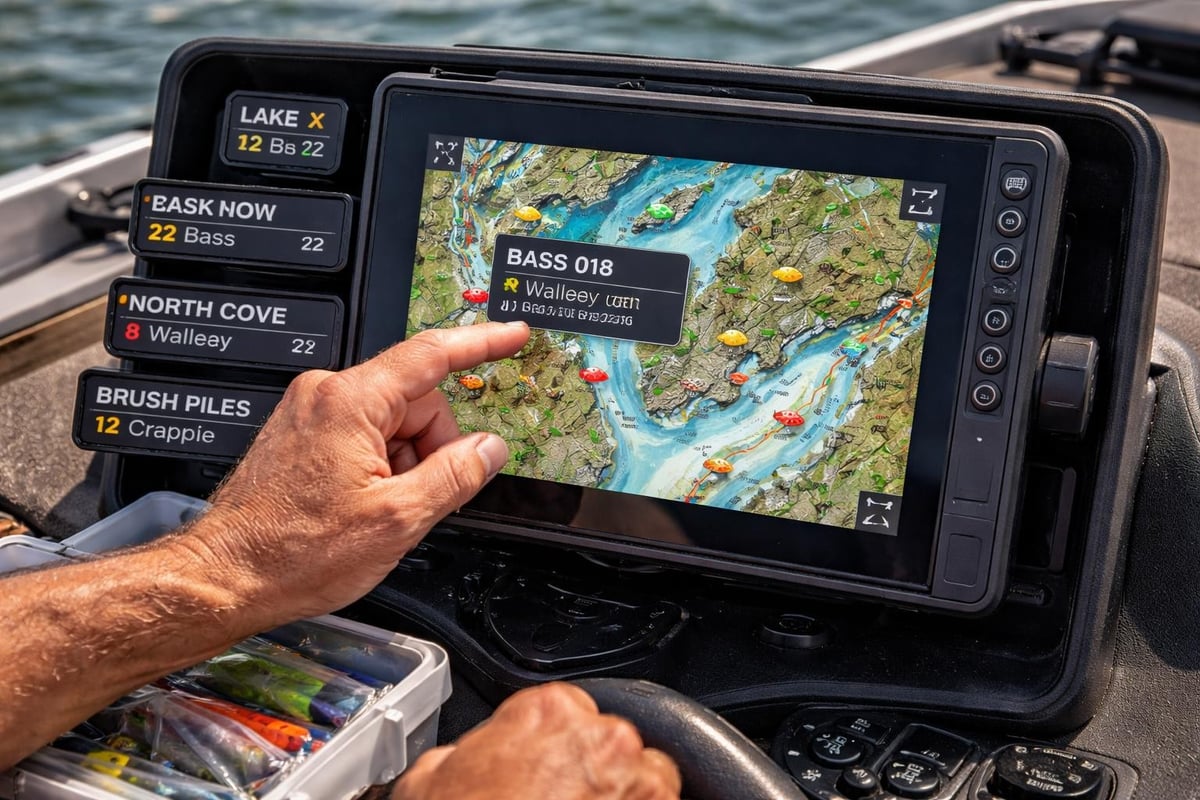
Waypoint management is where GPS really shines for anglers. When you find productive structure or catch fish in a specific spot, you can mark it instantly. The unit stores these waypoints with coordinates accurate to within a few feet, letting you return to exact locations even in featureless water.
Track recording automatically documents your path across the water. This creates several advantages:
- Review where you've already fished to avoid redundant coverage
- Identify productive trolling routes based on past success
- Share coordinates with fishing buddies
- Build a personal database of your favorite fishing areas
When you're exploring waters throughout different regions, having reliable GPS keeps you oriented and helps you pattern fish movements across multiple visits. You can build a comprehensive understanding of seasonal patterns by reviewing saved waypoints and tracks over time.
Installation and Mounting Considerations
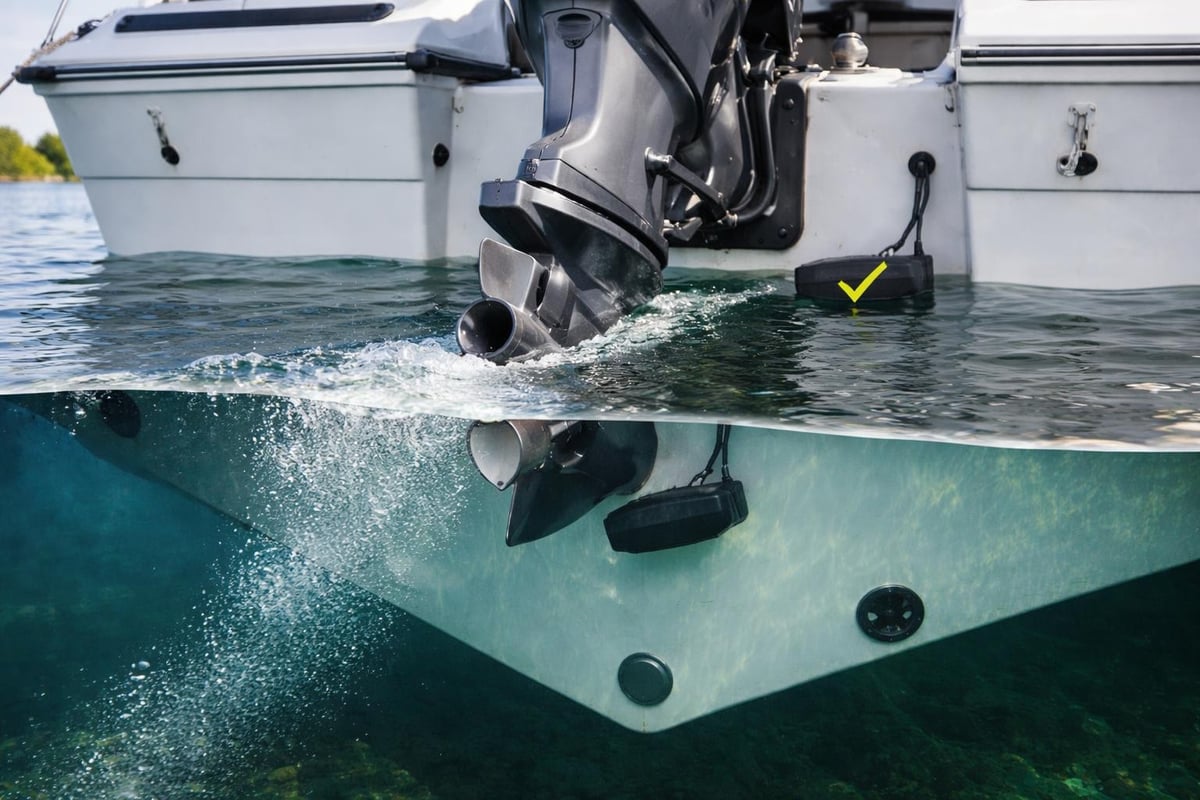
Getting your lowrance elite 7 properly mounted makes all the difference in how effectively you can use it. The transducer placement is critical – mount it too close to the motor and you'll get interference, mount it incorrectly and your readings will be unreliable.
The official user manual provides detailed installation instructions, but here are the practical considerations most anglers face:
Transducer Mounting Options
Your boat type determines the best mounting approach. Fiberglass hulls typically use a transom mount, positioning the transducer at the stern where it gets clean water flow. Aluminum boats can use similar setups, though you may need additional backing plates for structural support.
Trolling motor mounts work well for anglers who fish from the bow. This gives you real-time readings exactly where you're fishing, rather than relying on information from the stern. The trade-off is that you'll need to run cables along your deck, which requires some planning to keep them protected and out of the way.
Power requirements are straightforward – the lowrance elite 7 runs on 12-volt DC power, drawing minimal current from your boat's battery. Most installations connect directly to the cranking battery, though some anglers prefer a dedicated electronics battery to avoid any risk of being stranded.
Real-World Performance Across Different Waters
The lowrance elite 7 adapts to various fishing environments, though performance varies based on water conditions and depth. In shallow freshwater lakes under 30 feet, both traditional sonar and DownScan provide incredibly detailed views. You can spot individual bass holding on brush piles or see crappie suspended around standing timber.
Deeper reservoirs present different challenges. Traditional sonar maintains effectiveness to greater depths than DownScan, which typically performs best in water under 100 feet. When you're fishing deep ledges or offshore structure in reservoirs, you'll rely more heavily on the broadband sonar while using DownScan for detailed inspection of specific targets.
Saltwater applications work equally well, whether you're fishing inshore flats or nearshore reefs. The unit handles saltwater environments without issues, though regular freshwater rinsing helps maintain the transducer and connections. Many inshore anglers appreciate how DownScan reveals subtle bottom changes in sandy areas where traditional sonar might show a flat, featureless bottom.
Reading the Display Effectively
Learning to interpret what you're seeing takes practice. Fish appear differently depending on the imaging mode, their size, and their position in the water column:
- Arches on traditional sonar indicate fish passing through the sonar cone
- Dots or dashes on DownScan show fish as the thin beam passes over them
- Large returns could be single big fish or schools of smaller ones
- Bottom composition appears as hard (bright) or soft (dim) returns
Structure identification becomes intuitive after spending time on the water. Rocks show up as hard, defined edges. Brush piles create irregular, branching patterns. Vegetation appears as fuzzy returns rising from the bottom. The lowrance elite 7 gives you the information – experience teaches you what it means in your specific waters.
Optimizing Settings for Different Situations
Out-of-box settings work reasonably well, but fine-tuning your lowrance elite 7 improves performance noticeably. Sensitivity controls how much detail the unit displays – too high and you'll see clutter from plankton and debris, too low and you'll miss subtle fish signals.
Scroll speed determines how fast the screen updates as you move across the water. Slow the scroll when you're sitting still or drifting, speed it up when running to new spots. This adjustment keeps the display relevant to your current fishing method.
Depth range can be set to auto or manual. Auto mode works fine for most situations, adjusting as the bottom depth changes. Manual mode lets you lock in a specific depth range, useful when you're targeting fish at a particular depth and don't want the display constantly rescaling.
Palette choices affect how returns display on screen. The lowrance elite 7 offers several color schemes – some anglers prefer the classic blue/yellow palette, others like the white or gray backgrounds that reduce screen glare. Experiment to find what works best for your eyes and typical light conditions.
Memory Cards and Map Upgrades
The microSD card slot expands your lowrance elite 7 capabilities significantly. High-detail maps like Navionics or C-MAP reveal bottom contours, vegetation beds, and structure that generic base maps miss. For serious anglers fishing unfamiliar waters, these detailed charts provide a major advantage.
Map cards show contour lines at tight intervals – often every foot or less – revealing subtle depth changes that hold fish. You can identify creek channels, offshore humps, and ledges before ever putting a line in the water. This pre-fishing research saves time on the water and puts you on productive areas faster.
Recording your own maps using the Insight Genesis feature creates custom charts showing exactly what's beneath your favorite waters. As you run your boat across a lake or river section, the lowrance elite 7 records depth and bottom hardness data. Upload this information, and you'll receive a detailed custom map showing features no commercial chart includes.
Managing Waypoints and Routes
Organization matters when you've marked hundreds of fishing spots. The lowrance elite 7 lets you group waypoints by categories, name them descriptively, and add notes about what you caught there:
- Create waypoint groups for different lakes or fishing styles
- Use consistent naming (depth, structure type, date)
- Add icons to distinguish different waypoint types
- Back up waypoint data to your memory card regularly
- Share productive spots with trusted fishing partners via file transfer
Routes connect multiple waypoints in sequence, useful for tournament anglers who need to hit specific areas efficiently or recreational anglers who want to work a milk run of proven spots.
Troubleshooting Common Issues
Most lowrance elite 7 problems stem from transducer installation or settings. If you're not seeing fish you know are there, check your transducer mounting first. Air bubbles trapped under the transducer face block sonar signals – even tiny bubbles make a difference. Ensure the transducer sits fully in the water when the boat is on plane.
Interference from other electronics shows up as random dots or lines across your display. VHF radios, other sonar units, and electric trolling motors can all create noise. The lowrance elite 7 includes interference rejection settings that filter out most of this clutter automatically, but severe cases may require relocating equipment or adjusting installation.
No GPS lock typically means obstructed sky view. The unit needs a clear line of sight to satellites, so installations under solid T-tops or inside cuddy cabins may struggle. GPS antennas can be remotely mounted on gunwales or hardtops for better satellite visibility.
According to Western Bass, the unit's Hybrid Dual Imaging capabilities require proper setup to maximize performance – taking time to work through the settings menu pays dividends in image quality.
Comparing with Other Models
The lowrance elite 7 occupies middle ground in Lowrance's lineup. Smaller 5-inch units cost less and draw less power but compromise screen visibility. The 9-inch and larger models offer more screen real estate but demand more mounting space and higher prices.
Feature-wise, the 7-inch strikes a practical balance for most fishing boats. It's large enough to split-screen effectively while small enough to mount on center consoles, bass boats, or even larger kayaks. The processing power handles dual imaging smoothly without the lag that plagued some earlier models.
CHIRP sonar technology appears in newer units but isn't available on the standard lowrance elite 7 models. CHIRP provides cleaner target separation, though the difference matters most in deep water or when fish are tightly schooled. For many freshwater applications, the broadband sonar performs excellently.
Networking capabilities on higher-end units allow multiple displays, radar integration, and more complex installations. The lowrance elite 7 functions as a standalone unit, which simplifies installation and reduces points of potential failure – a real benefit for anglers who want reliable electronics without complexity.
Battery Management and Power Draw
Running electronics all day requires attention to battery capacity. The lowrance elite 7 draws approximately 6-8 watts depending on screen brightness and sonar usage. Over a full fishing day, this translates to several amp-hours of battery capacity.
A standard marine starting battery provides enough power for occasional use, but serious anglers benefit from a dedicated deep-cycle battery. This isolates your electronics from the starting system, ensuring you'll never be stranded because you drained the cranking battery while fishing.
Calculating runtime is straightforward: divide your battery's amp-hour rating by the unit's current draw. A 50 amp-hour battery running the lowrance elite 7 at 0.5 amps gives you roughly 100 hours of use – more than enough for multiple fishing trips between charges.
Solar panel trickle chargers help maintain battery charge during storage and can supplement power during long days on the water. Even small 5-10 watt panels make a difference, particularly for anglers who fish from boats without charging systems.
Building Your Waypoint Library
The real value of the lowrance elite 7 GPS emerges over time as you accumulate waypoints and develop a personal map of productive fishing locations. Every marked spot represents knowledge – a brush pile that holds bass, a ledge where walleye stack up, or a mud flat that attracts redfish.
Seasonal patterns become visible when you review waypoints chronologically. You might notice that summer waypoints cluster around deeper water while spring marks concentrate in shallow spawning areas. This data helps predict where fish will be during different times of year.
Sharing waypoint files with trusted fishing buddies builds collective knowledge. You can export your waypoints to a memory card, hand it to a friend, and they'll have instant access to your productive spots. Obviously, you'll want to be selective about who gets this information – these coordinates represent hard-earned fishing knowledge.
When you're planning trips to new regions, having organized waypoint data helps you fish more efficiently. You can focus on structure types that have produced in similar waters elsewhere, applying lessons learned across different fisheries. Anglers exploring new spots across various waters can leverage this cumulative knowledge base effectively.
Maintenance and Longevity
Proper care extends the life of your lowrance elite 7 significantly. After each trip, wipe down the screen with a soft, damp cloth to remove water spots and grime. Avoid harsh chemicals or abrasive materials that could scratch the display or damage the waterproof seals.
The transducer deserves special attention. Inspect the cable connections for corrosion, particularly if you fish saltwater. A light coating of dielectric grease on connections prevents corrosion and ensures reliable performance. Remove any barnacles, algae, or debris from the transducer face regularly – buildup reduces sonar effectiveness noticeably.
Store the unit in a dry location during extended off-seasons. If you remove it from the boat, disconnect all cables carefully and cap the unused ports to prevent moisture intrusion. Some anglers prefer to leave units installed year-round, which is fine as long as the boat stays covered and dry.
Software updates from Lowrance occasionally add features or improve performance. Check their website periodically, download updates to a memory card, and install them following the instructions in the user manual. These updates are typically straightforward and take only a few minutes.
Mounting Accessories and Add-Ons
Versatile mounting options let you position the lowrance elite 7 exactly where you need it. Flush-mount installations create a clean, integrated look on center consoles or dashboards. These require cutting a precise opening in your mounting surface but result in a professional appearance and maximum screen protection.
Swivel-bracket mounts offer flexibility for boats where you fish from different positions. You can adjust the screen angle for optimal viewing from the helm or while standing at the bow. Quick-release brackets let you remove the unit when trailering or storing the boat, reducing theft risk.
Sun covers protect the display from UV damage and reduce screen glare in bright conditions. These inexpensive accessories slip over the front of the unit and make a real difference when you're trying to read the screen midday. Some anglers also add screen protectors to prevent scratches from hooks, tools, or other gear.
Ram mounts provide rock-solid installation with infinite adjustability. The ball-and-socket system lets you position the display at any angle, tighten it down securely, and readjust later if needed. These mounts work well on boats with limited flat mounting surfaces or where you want to temporarily install the unit.
Using Electronics with Traditional Fishing Skills
Technology enhances fishing but doesn't replace watercraft and observation. The lowrance elite 7 shows you where fish are, but you still need to figure out what they're eating, how they're positioned, and which presentation triggers strikes. Electronics and technique work together.
Visual clues still matter enormously. Birds diving on baitfish, surface swirls, bait flipping out of the water – these observations complement what your electronics reveal. When you mark fish on the lowrance elite 7 and simultaneously see surface activity, you've got high-confidence targets.
Weather and seasonal patterns drive fish location more than any single factor. Electronics help you find fish where they should be based on conditions, but understanding why they're there makes you more effective. Spring spawning movements, summer thermocline setups, fall baitfish migrations – the lowrance elite 7 reveals where these patterns play out on your waters.
Modern fishfinding technology like the lowrance elite 7 gives anglers unprecedented ability to locate fish and understand underwater structure, but it works best when combined with detailed knowledge of where to fish. Whether you're exploring new water or returning to proven spots, having reliable information about fishing locations across different regions makes every trip more productive. Find Fishing Spots helps you discover productive fishing locations throughout the U.S., complete with GPS coordinates, access information, and location details that let you plan your next adventure and put your electronics to work on waters you've never fished before.