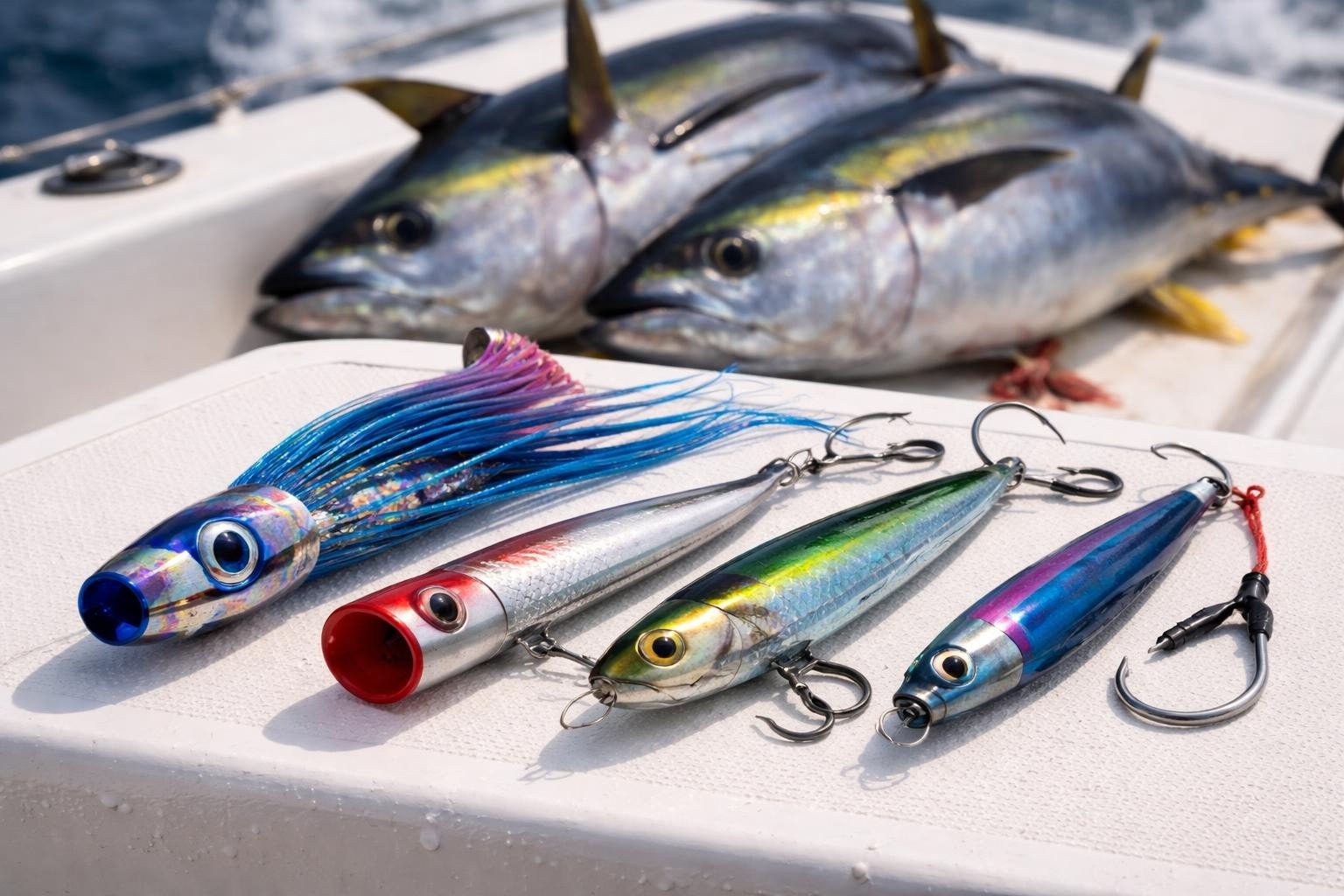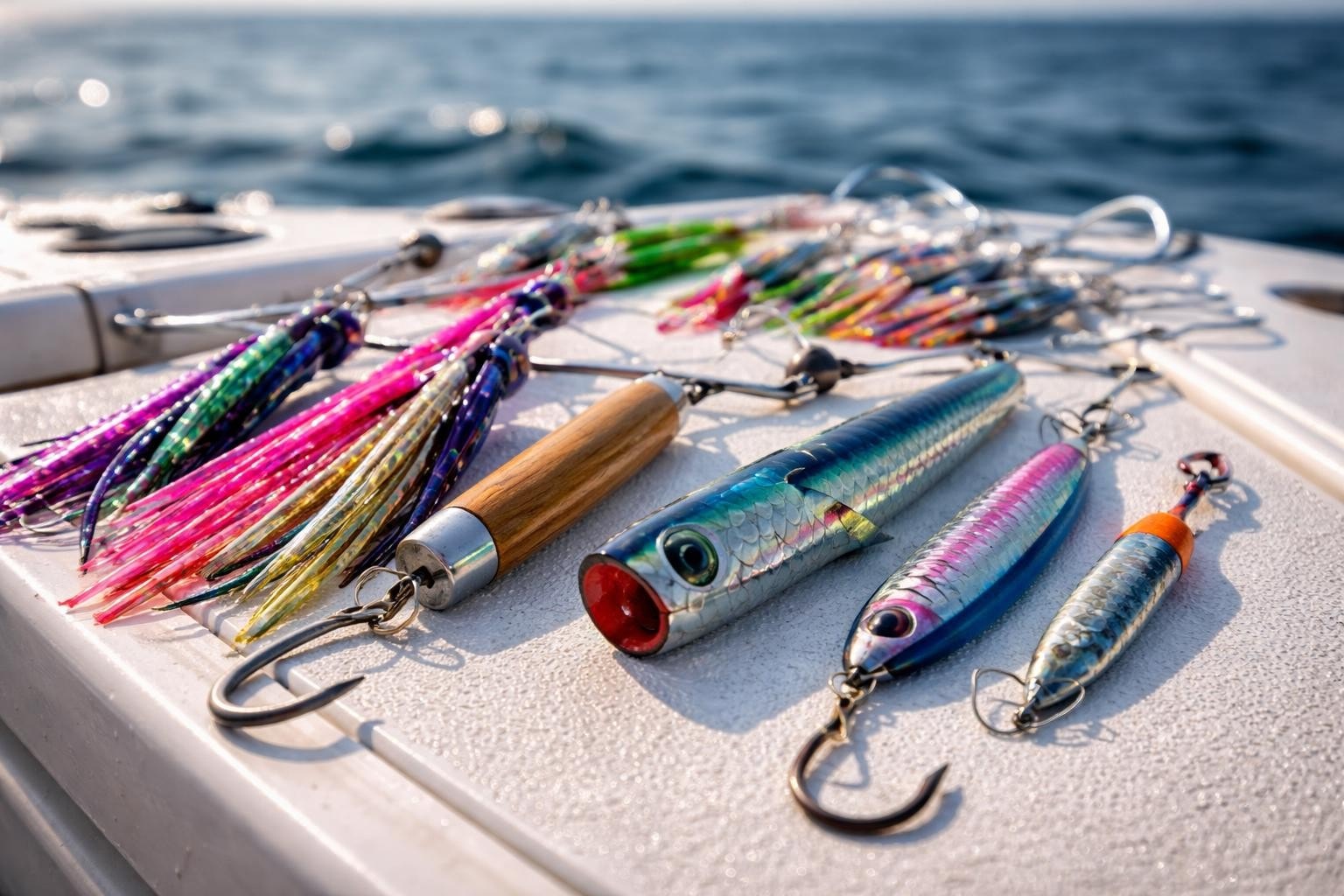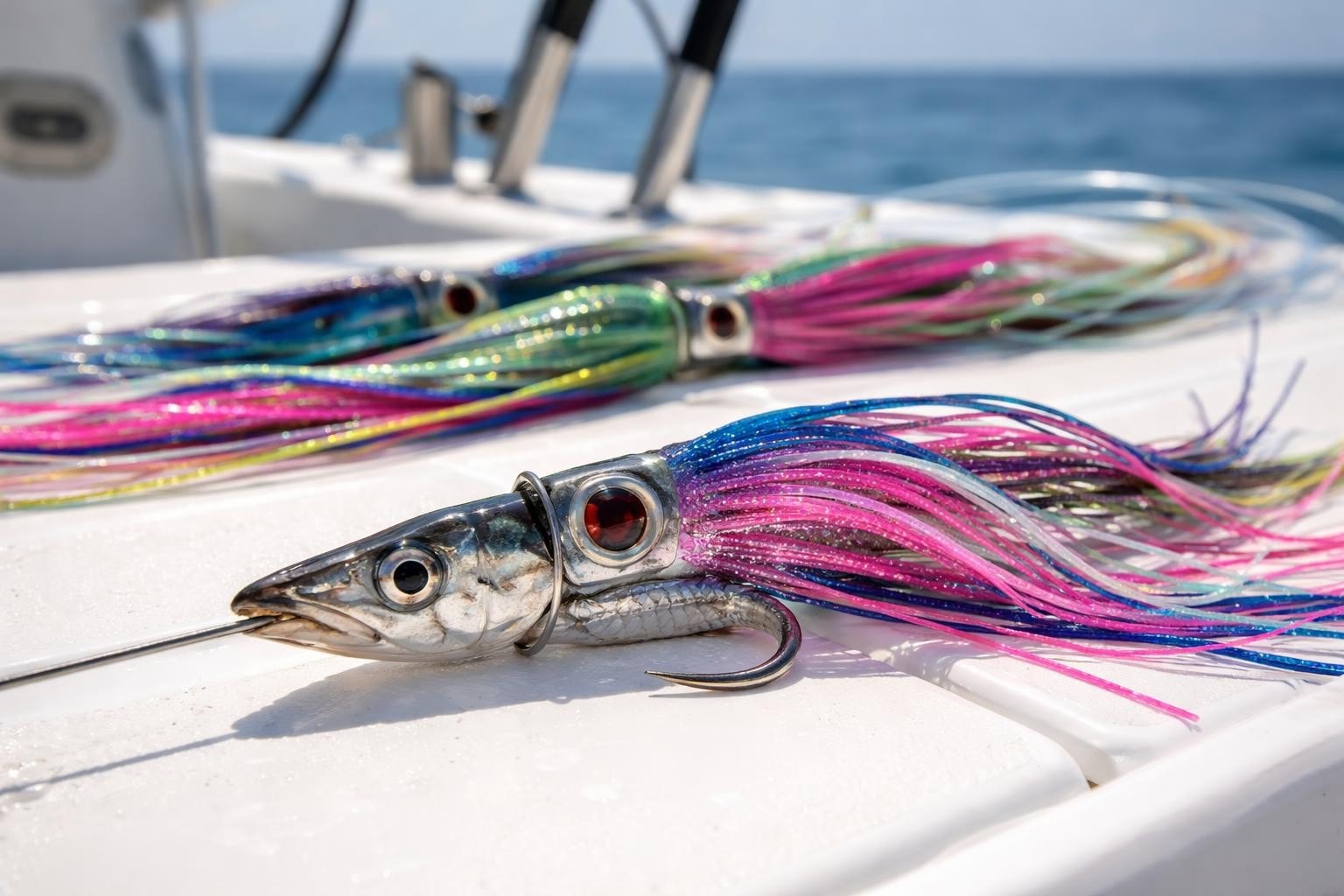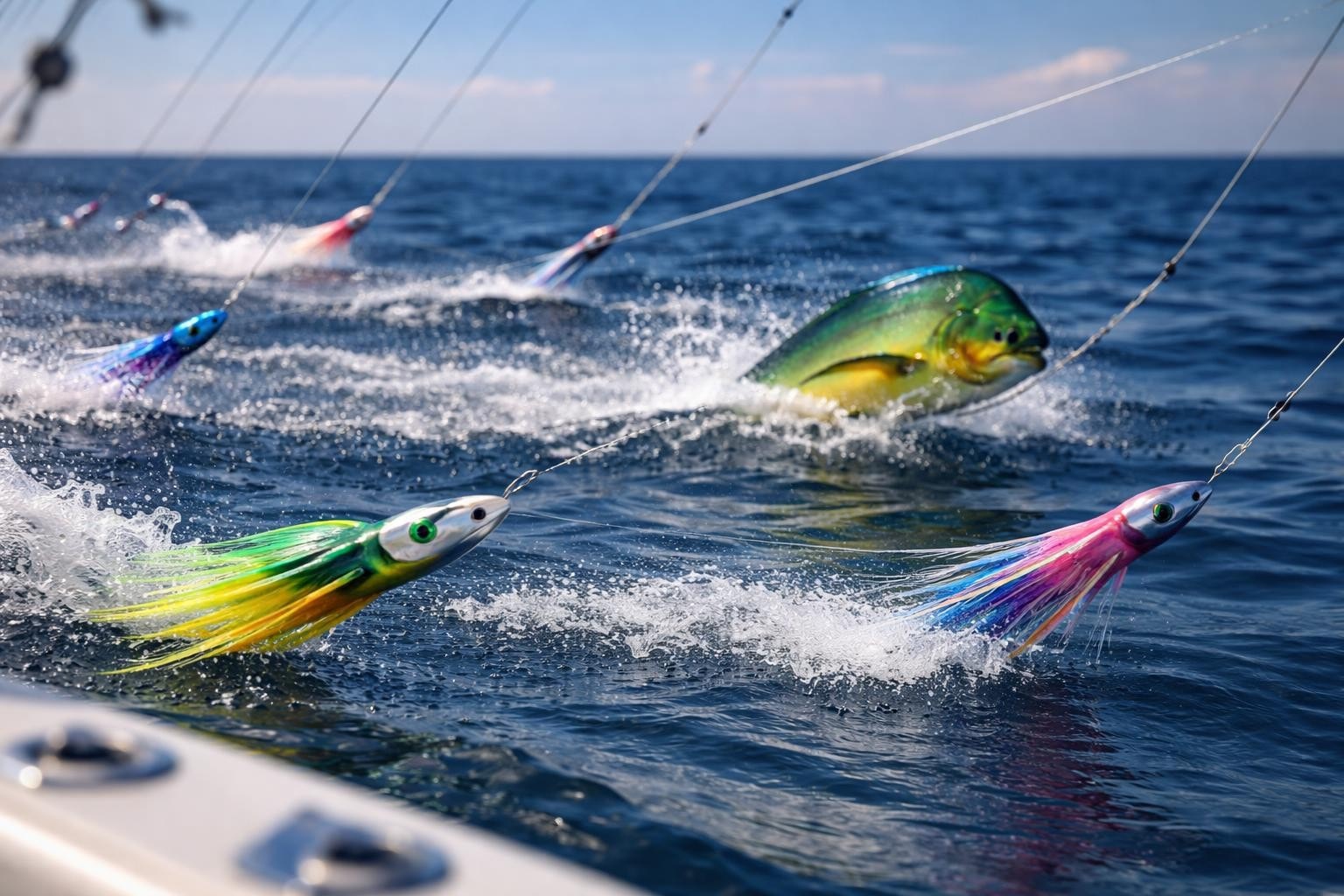
When you're hunting for mahi mahi offshore, having the right lures makes all the difference between a cooler full of fish and a long day of wondering what went wrong. These aggressive feeders respond to specific triggers-bright colors, erratic movement, and the right presentation depth. Whether you're trolling along weed lines in the Gulf or targeting floating debris off the Florida coast, understanding which mahi mahi lures perform best can transform your fishing game. Let's dig into what actually works when you're chasing these acrobatic fighters.
Understanding Mahi Mahi Feeding Behavior
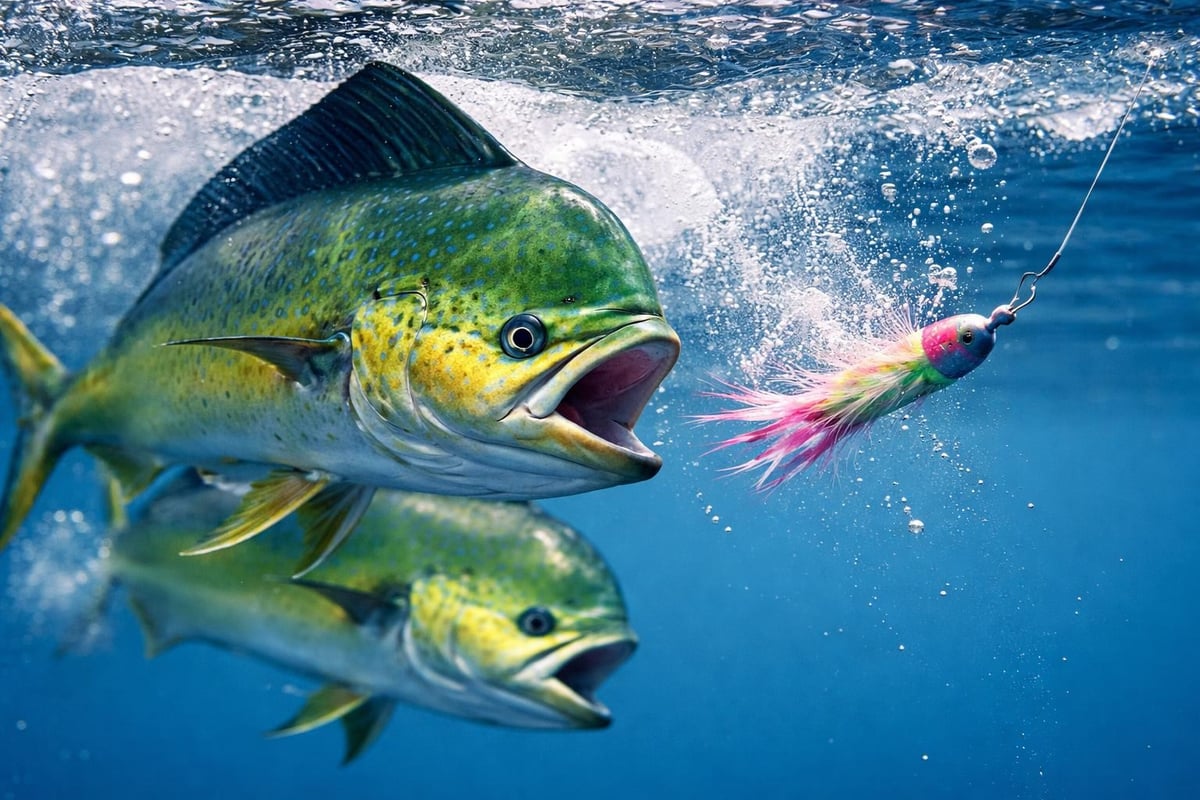
Mahi mahi are opportunistic predators that rely heavily on visual cues to locate prey. They're attracted to anything that breaks the surface monotony-floating debris, weed patches, and schools of baitfish.
Their feeding preferences include:
- Flying fish and ballyhoo
- Small squid and juvenile tuna
- Anything brightly colored that moves erratically
- Surface commotion that suggests injured prey
This behavior explains why certain lure types consistently outperform others. When you're planning a trip to productive offshore locations like the Jose Cuervo Reef or Schoolmaster Ledge, matching your lures to their natural feeding patterns increases your hookup rate significantly.
Top Lure Categories That Produce Results
Trolling Lures
Trolling lures dominate the mahi mahi fishing world for good reason. These lures create bubble trails and swimming actions that mimic fleeing baitfish, and selecting the right trolling lures can make or break your day on the water.
Skirted trolling lures work exceptionally well because they:
- Create significant water disturbance
- Maintain action at various speeds (6-9 knots)
- Come in fish-attracting color combinations
- Handle rough seas without fouling
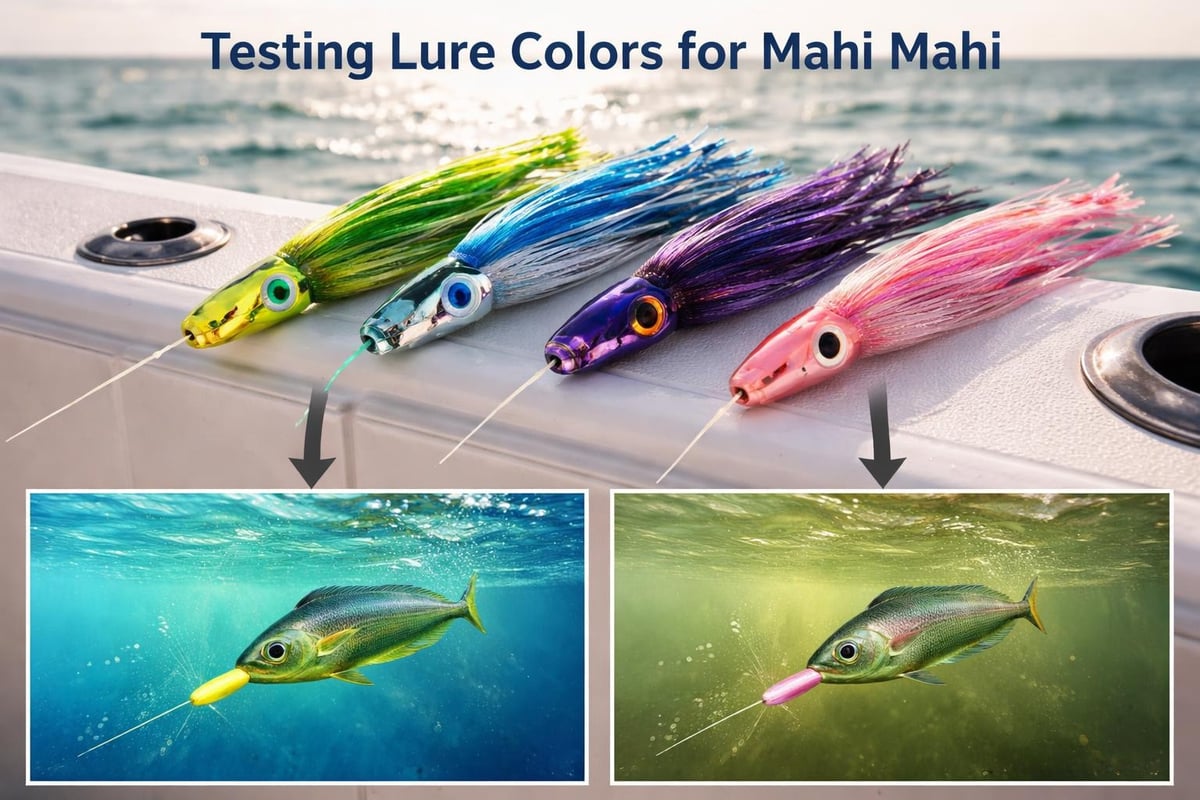
Popular choices include chrome/blue patterns, chartreuse/yellow combinations, and pink/white schemes. The key is running a mix of colors in your spread to determine what the fish want on any given day.
Surface Poppers and Stick Baits
When mahi are actively feeding near the surface, nothing beats the excitement of topwater action. These lures excel around floating debris and weed lines.
- Cast to visible structure like logs or sargassum mats
- Work the lure erratically with sharp pops and pauses
- Maintain contact once you hook up-mahi often travel in schools
- Keep additional rods ready for follow-up casts
Soft Plastics and Swimbaits
Don't overlook soft plastics when targeting mahi mahi. These versatile options work both trolled and cast, especially when fish are finicky about hard baits.
The guide to Gulf of Mexico mahi lures emphasizes how swimbaits with paddle tails produce excellent vibration patterns that trigger strikes. Rig them on heavy jig heads for casting to floating structure or slow-troll them behind the boat.
Color Patterns and Size Selection
Mahi mahi aren't particularly shy about lure size, but color selection matters more than many anglers realize.
High-visibility colors dominate:
- Chartreuse and yellow for clear water conditions
- Pink and orange during low-light periods
- Blue and white to match natural baitfish
- Green combinations around weed lines
Size-wise, lures ranging from 6 to 10 inches handle most situations. Smaller lures (4-6 inches) work when fish are targeting juvenile baitfish, while larger offerings (10-14 inches) appeal to bull dolphins.
Building an Effective Trolling Spread
Your trolling spread determines how many hookups you'll get when you locate fish. Understanding trolling spreads and distances helps you cover more water and present multiple options simultaneously.
Recommended spread setup:
- Long rigger – 150 feet back, large skirted lure
- Short rigger – 75 feet back, medium trolling lure
- Flat line – 100 feet back, different color pattern
- Teaser – 50 feet back, small lure or naked ballyhoo
This configuration covers different depths and presents varied actions. When one lure gets hit, keep the boat moving-you'll often hook multiples from the same school.
Position matters as much as lure choice. When searching offshore fishing spots along temperature breaks or current edges, your spread should run at consistent depths. Adjust individual lines using different weight configurations rather than changing boat speed.
Rigging Tips for Maximum Hookups
Proper rigging prevents lost fish and increases your catch rate significantly.
- Use quality hooks in the 4/0 to 7/0 range depending on lure size
- Fluorocarbon leaders (40-60 lb test) resist abrasion better than mono
- Check terminal tackle after every fish-mahi have rough mouths
- Replace crimps and swivels showing any wear signs
For trolling lures, many experienced anglers prefer inline rigging over traditional J-hooks. Circle hooks work well for live bait presentations but can reduce hookup rates on artificial lures pulled at higher speeds.
Technique Adjustments Based on Conditions
Water conditions dictate which mahi mahi lures perform best. Calm days allow for lighter lures and slower trolling speeds, while rough water demands heavier, more aggressive presentations.
Calm conditions strategy:
- Slow troll (5-6 knots) with smaller lures
- Focus on subtle color variations
- Use lighter leaders for finicky fish
Rough water approach:
- Increase speed to 8-9 knots
- Deploy larger, high-visibility lures
- Add extra weight to keep lures in the strike zone
When fish are boiling on bait near the surface, switch tactics entirely. Stop trolling and start casting with poppers or stick baits. The best performing mahi lures often include topwater options for these exciting scenarios.
Seasonal Patterns and Location Selection
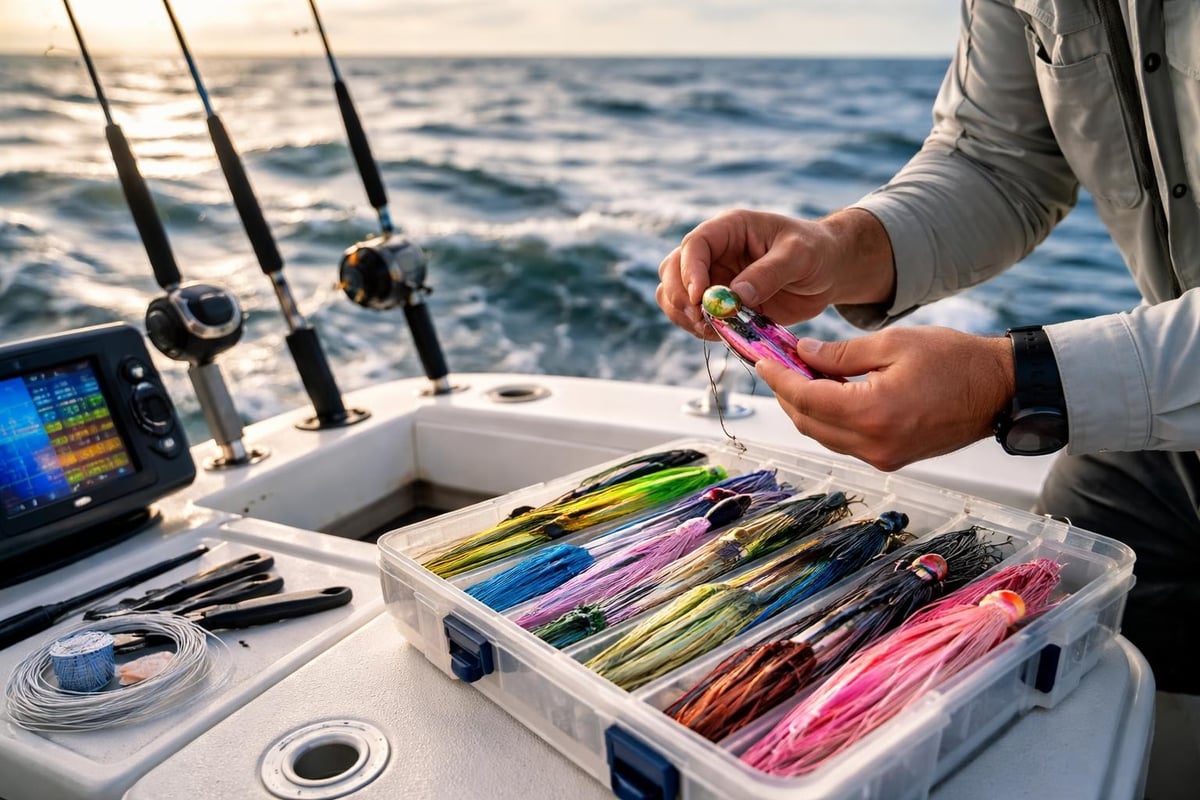
Mahi mahi migrate seasonally, and their lure preferences shift with water temperature and available forage.
Spring migration (March-May):
- Fish move north following warming waters
- Smaller baits dominate as flying fish spawn
- Focus on blue/white color schemes
Summer peak (June-August):
- Larger bulls cruise deeper structure
- Bigger lures produce better results
- Chartreuse and pink patterns excel
Fall transition (September-November):
- Fish concentrate around remaining warm water
- Mixed sizes require varied lure selection
- Natural color patterns outperform flashy options
Finding productive water matters as much as lure selection. Whether you're fishing artificial reefs like the Esjoo Haitian Steel Cargo Ship or natural structures like the Star Island Reef, having GPS coordinates for proven mahi spots saves valuable search time.
Choosing the right mahi mahi lures combines understanding fish behavior with matching conditions and seasonal patterns. Whether you're trolling skirted lures offshore or casting topwater baits to floating debris, success comes from presenting the right action and color at the proper depth. Ready to put these techniques to work? Find Fishing Spots helps you locate productive offshore locations with GPS coordinates and detailed access information, so you can spend more time fishing and less time searching for where the mahi are holding.