Portable fish finder technology is booming in 2026, and anglers everywhere are taking notice. Whether you fish from a kayak, cast from shore, cruise on a boat, or brave the ice, picking the right portable fish finder can feel overwhelming with so many choices.
That’s why we’ve rounded up the top 7 portable fish finder picks that balance performance, portability, and real value. In this guide, you’ll discover each model’s standout features, best use cases, pros and cons, and what sets them apart from the crowd.
Curious which portable fish finder is right for you? Dive in and see how the latest tech can turn your next fishing trip into a true catch.
What to Look for in a Portable Fish Finder
When you’re eyeing the latest portable fish finder, it’s easy to get caught up in flashy features. But what really matters when you’re out on the water? Here’s what you need to know before making your pick.
Key Features and Technologies
First up, let’s talk tech. The best portable fish finder models today use CHIRP sonar, which sends a sweep of frequencies for clearer, more detailed images. Some, like the Humminbird Helix series, also offer dual spectrum CHIRP for even better target separation.
Side imaging lets you scan wide swaths of water beside your boat or kayak, while GPS and chartplotting help you mark waypoints and return to hot spots. Live-view features, such as Garmin’s LiveVu, give you near real-time visuals of fish and structure.
Display size and clarity matter, too. A crisp, glare-resistant screen means you won’t miss subtle details, even in bright sun. Waterproof ratings are a must for unpredictable weather.
Battery life is another biggie. Look for rechargeable lithium packs or efficient sealed lead acid batteries for all-day fishing. Modern units often connect via Wi-Fi or Bluetooth, letting you sync with apps for advanced mapping and updates. For a deeper dive into how these technologies work together, check out Smart Integration in Fish Finder Technology.
Portability and Versatility Factors
A portable fish finder should be easy to grab and go. Weight is key—ultra-light models like the Deeper Pro+ 2 fit in your pocket, while larger units may need a dedicated carry case.
Look for smart design touches: padded cases, quick-release mounts, and modular brackets that fit kayaks, boats, or even clip onto an ice shack. Battery type affects weight and ease of use—AAAs are light, lithium lasts longer, and sealed lead acid is heavier but reliable.
Setup should be quick, so you can spend more time fishing and less time fiddling. Choose a portable fish finder that snaps into place and unmounts fast, especially if you move between fishing spots or switch between kayak and boat.
Price vs. Performance Considerations
Portable fish finder prices are all over the map. Budget options under $200, like the Garmin Striker 4, offer solid sonar and GPS basics. Step up to premium models, like the Echomap UHD2, and you get live imaging, detailed maps, and more power for over $1,500.
Think about which features you’ll actually use. Beginners might skip expensive mapping packages, while seasoned anglers could benefit from upgraded transducers and chartplotting. Value for money is important—sometimes a mid-range portable fish finder gives you the best bang for your buck.
If you mostly fish small lakes or from shore, a simple model might be perfect. But if you’re chasing trophies across big water, investing in advanced features can pay off with better results.
Durability and Environmental Suitability
Fishing can be tough on gear, so your portable fish finder needs to keep up. Rugged construction, solid waterproof ratings, and sturdy protection cases make all the difference.
Whether you’re bank fishing, paddling a kayak, or braving the ice, look for devices tested in harsh conditions. A truly reliable portable fish finder won’t let you down when the weather turns or when you’re miles from the dock.
Top 7 Portable Fish Finder Picks for Anglers in 2026
Choosing the right portable fish finder can feel like searching for a needle in a haystack, especially with so many new options in 2026. Whether you fish from a kayak, the shore, a boat, or even on ice, the right gear will make the difference between a slow day and a fish tale worth sharing.
Below, you’ll find our top 7 picks for every style and budget. Each one stands out with something special—so dive in and see which portable fish finder hooks your interest.
Garmin Echomap UHD2 73cv Fish Finder/Chartplotter
Serious about fishing year-round? The Garmin Echomap UHD2 73cv is a powerhouse portable fish finder that brings pro-level tech to your fingertips. Expect a bright 7-inch touchscreen, crystal-clear CHIRP sonar, and LiveVu Forward/Down imaging for nearly video-like views of what’s below.
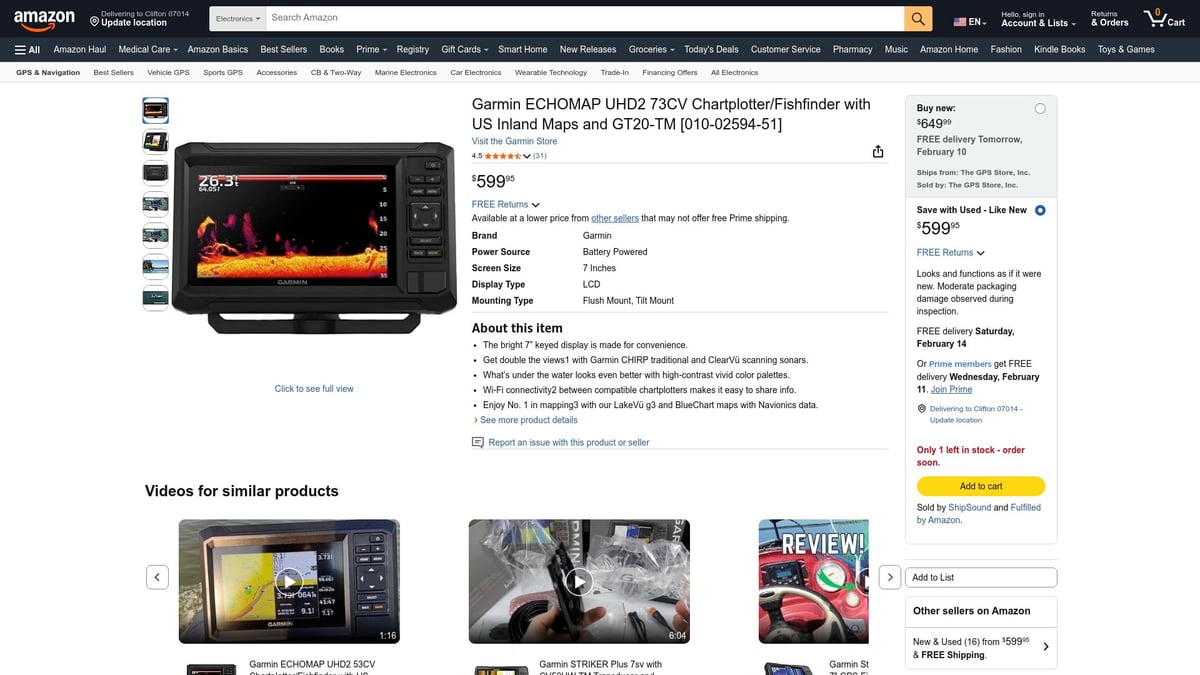
You get premium LakeVu and Navionics charts, plus Wi-Fi and Bluetooth for seamless updates and sharing. While it is on the heavier side at over 16 pounds, the included carry case makes it manageable for boat, kayak, or even ice fishing. The lead acid battery adds weight but delivers solid runtime.
Pros:
- Live view imaging
- Advanced mapping
- Rugged construction
Cons:
- Heavy and bulky
- Premium price tag
Perfect for anglers who want top-tier performance and are willing to carry a bit more gear for the best portable fish finder experience.
Deeper Pro+ 2 Castable Fish Finder
If you want a portable fish finder that fits in your pocket, the Deeper Pro+ 2 is hard to beat. This castable model pairs wirelessly with your smartphone, offering dual-beam sonar and GPS mapping up to 260 feet deep.
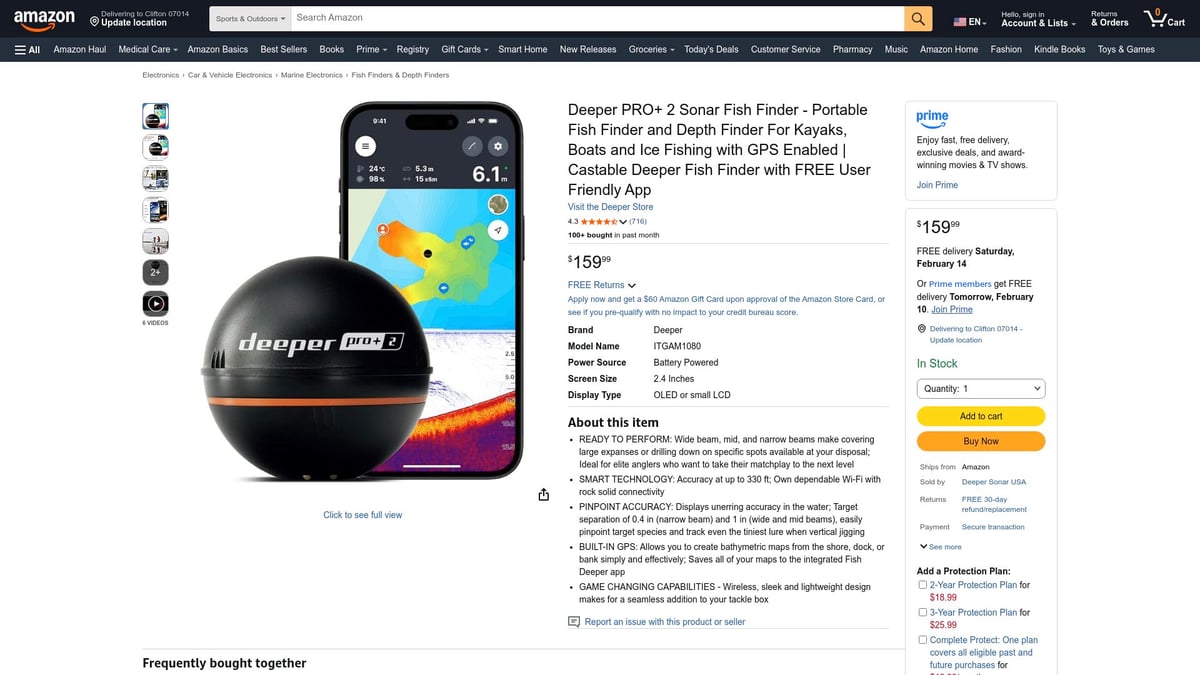
It shines for bank and kayak anglers, travelers, or anyone who wants to pack light. Just tie it to your line, cast, and get instant readings on your phone. The app lets you save maps, mark waypoints, and review trip history.
Pros:
- Super portable
- Affordable
- Works on shore, kayak, or boat
Cons:
- Relies on your phone’s battery
- GPS is basic
Ideal for those who travel or fish from different spots often, this portable fish finder is all about convenience.
Humminbird Helix 5 CHIRP GPS G3 PT Fish Finder
The Humminbird Helix 5 CHIRP GPS G3 PT brings reliable performance to the table, making it a favorite portable fish finder for both new and seasoned anglers. Its 5-inch color screen is easy to read, and dual spectrum CHIRP sonar gives you crisp fish arches and structure views.
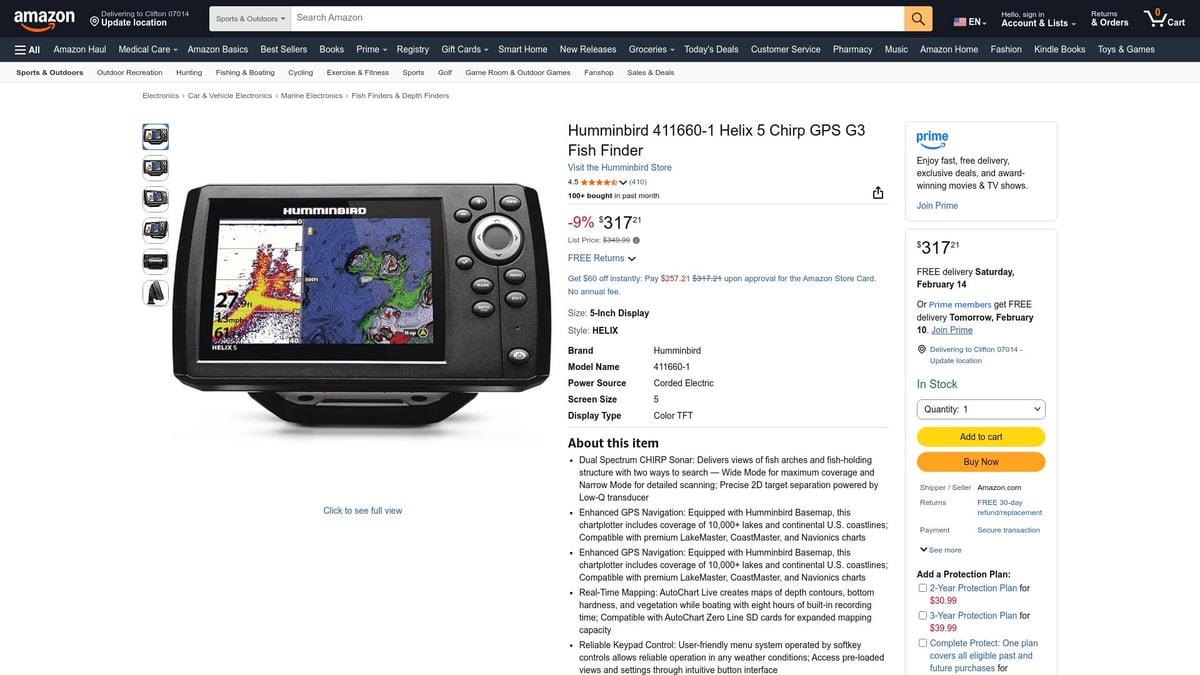
Built-in GPS and auto-charting let you map out small lakes and mark hot spots. The included battery and case make it easy to grab and go, whether you’re fishing from a kayak, boat, or ice shack.
Pros:
- Auto-mapping features
- Versatile for all environments
- Easy setup
Cons:
- No side or down imaging
- Limited compatibility with advanced modules
This portable fish finder is a great value pick, especially for those who like to fish in a variety of locations.
Lowrance Elite FS Explorer Pack
Tech lovers, meet your dream portable fish finder. The Lowrance Elite FS Explorer Pack is loaded with features: a 7-inch touchscreen, multi-view sonar (CHIRP, down, side, and live), and preloaded C-Map Contour+ charts.
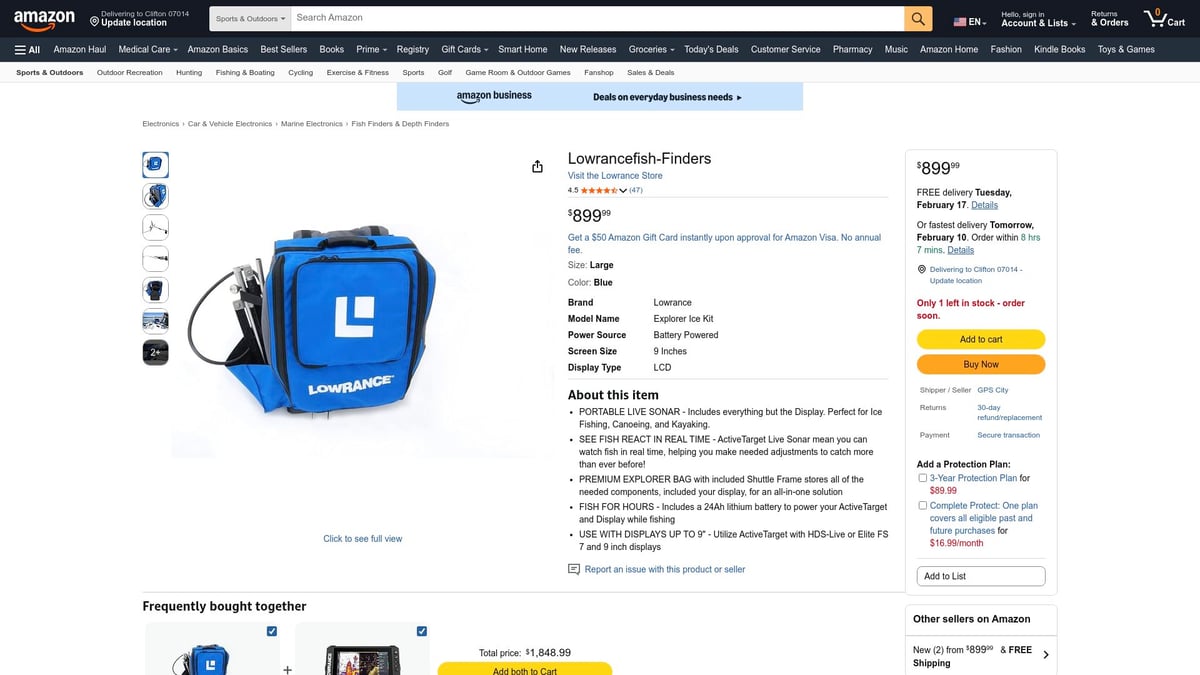
With a robust 24ah lithium battery and USB charging, you’ll get plenty of time on the water. It also comes with a sturdy portable frame and dual transducer support. It’s a bit bulkier but perfect for serious anglers, especially those fishing tournaments or large lakes.
Pros:
- Comprehensive sonar options
- Touchscreen display
- High-capacity battery
Cons:
- Expensive
- Larger carry case
If you need a portable fish finder that does it all, this one’s built for advanced users who want every feature at their fingertips.
HawkEye FishTrax 1C-K Paddlesport Fish Finder
For kayak and small craft anglers, the HawkEye FishTrax 1C-K is the ultimate in simplicity and portability. Its compact color screen, dual-beam sonar, and glare-resistant display make it easy to use in bright conditions.
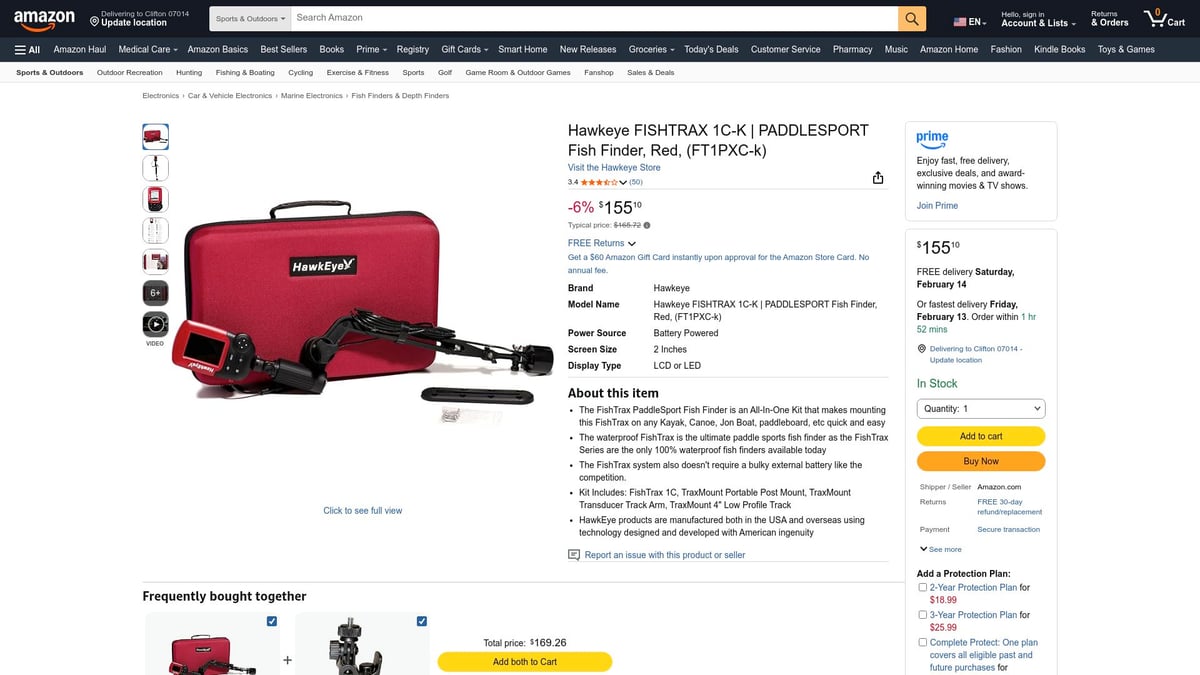
Running on AAA batteries, it’s a true grab-and-go portable fish finder. The universal gear track mount means it fits most kayaks or canoes, and it even floats if dropped on ice.
Pros:
- Super lightweight
- Versatile mounting
- Long battery life
Cons:
- No GPS
- Small screen
This is the portable fish finder to grab when you want something hassle-free for quick trips or paddle adventures.
Garmin Striker 4 Portable Bundle
Looking for a budget-friendly portable fish finder that still packs a punch? The Garmin Striker 4 Portable Bundle is tough to beat. With a 3.5-inch color display, CHIRP sonar, and GPS waypoint marking, it covers all the basics.
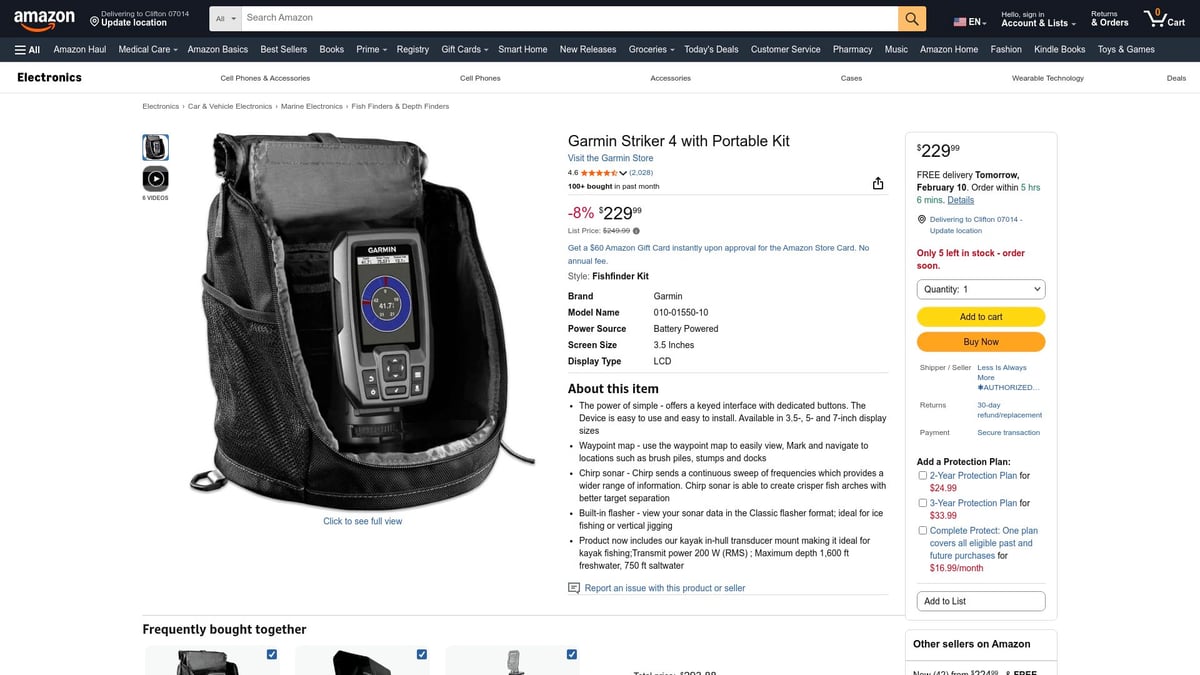
The portable kit includes a battery and carry case, so it’s ready for kayak, boat, or ice fishing. It’s lightweight, reliable, and even works as a flasher for ice anglers.
Pros:
- Affordable
- Upgradable transducer
- Good for all environments
Cons:
- No contour mapping
- Basic GPS features
For beginners or casual anglers, this portable fish finder delivers great value without breaking the bank. Want to scout new water? Check out some best fishing spots for kayaks to put your new device to the test.
Lucky Kayak Handheld Fish Finder
If simplicity is your style, the Lucky Kayak Handheld Fish Finder is the perfect entry-level portable fish finder. It’s incredibly lightweight, features a 4-inch display, and comes with a castable transducer that reaches up to 300 feet.
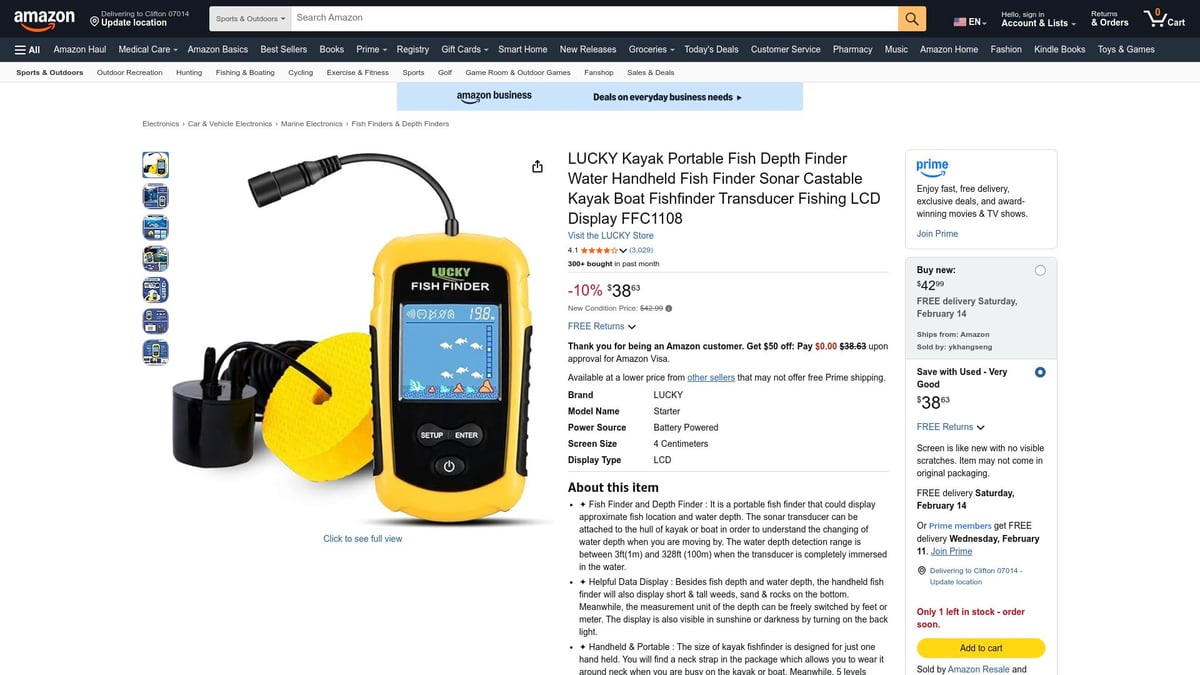
No phone required—just turn it on, drop the sensor, and get instant readings. It even measures water temperature, making it a handy choice for youth, travelers, or shore anglers.
Pros:
- Very affordable
- Easy to use
- Dedicated display
Cons:
- Not waterproof
- Limited advanced features
A great portable fish finder for first-timers or anyone who wants a no-fuss way to spot fish fast.
How We Tested and Compared These Fish Finders
Choosing the right portable fish finder can feel overwhelming, so we put each model through its paces in real-world fishing scenarios. We wanted to make sure our recommendations are the kind you can trust out on the water, whether you’re casting from a kayak, drilling through ice, or cruising in a boat.
Testing Approach and Environments
We tested each portable fish finder in various locations, including lakes, rivers, and frozen ponds. Our hands-on approach meant lugging gear through muddy banks, setting up units in tight kayak spaces, and braving cold mornings in ice shanties. This let us see how each device handled the real challenges anglers face.
A big part of our process was checking how easy it was to move and set up each portable fish finder. We looked at weight, battery type, and whether the carry case made a difference when hiking to remote spots or switching between fishing styles.
Criteria for Evaluation
Our main criteria focused on portability, performance, and durability. We measured how long each portable fish finder’s battery lasted during full-day trips. Sonar accuracy and screen clarity were tested in both sunny and low-light conditions. We dunked, splashed, and left units outside to see how they held up to the elements.
We also compared how fast each model could be mounted or removed, a real plus if you fish from more than one type of watercraft. For added perspective, we considered how these devices would fare for someone fishing at popular destinations like Lake George top fishing locations, where quick setup and reliable readings matter.
Comparing Models and Gathering Feedback
To round out our reviews, we balanced price against features, considering both budget-friendly and premium options. We made sure to include portable fish finder models that suit beginners and seasoned anglers alike. Switching between modes, updating software, and using mapping features all played a role in our evaluations.
We didn’t just rely on our own experiences. We read through community forums, tapped into user reviews, and gathered feedback from local anglers. This mix of field testing and real-world insight helped us pick portable fish finder models that truly stand out for reliability, value, and versatility.
Tips for Getting the Most from Your Portable Fish Finder
Getting the absolute best from your portable fish finder comes down to more than just turning it on and casting out. With a little know-how, you can turn your device into a trusty sidekick that helps you find more fish, faster.
Here are some practical tips to get the most out of your portable fish finder:
-
Dial in your sonar settings. Take a moment to calibrate your sonar and fine-tune sensitivity for the water you're fishing. This helps you spot fish even in murky or deep water.
-
Keep your device up to date. Regularly update your portable fish finder's firmware and mapping software. This keeps features running smoothly and ensures you have the latest charts.
-
Learn what you’re seeing. Spend time interpreting sonar returns. Practice telling the difference between fish, bait schools, and underwater structure. It pays off, especially in new spots.
-
Use GPS and mapping tools. Mark waypoints when you find a productive hole or drop-off. If you’re fishing popular locations like St. Pete Beach fishing hotspots, logging these spots can help you return to them trip after trip.
-
Secure your gear. Always use proper mounts or cases, especially if you’re fishing from a kayak or in rough weather. A portable fish finder is only as useful as it is protected from splashes and bumps.
-
Manage your power. Pack extra batteries or a power bank to avoid running out of juice in the middle of a hot bite. Charging up before you leave home is always a safe bet.
-
Take advantage of apps. Many portable fish finders connect with apps for advanced mapping, trip planning, and sharing your best catches with friends. Explore these features and see what works for you.
The more you experiment and get familiar with your portable fish finder, the more you’ll trust it to guide your next big catch. Try new settings, mark your favorite spots, and enjoy every trip a little more.
The Future of Portable Fish Finder Technology
The future of portable fish finder technology is shaping up to make every angler's trip smarter and more productive. In 2026 and beyond, we’re seeing a wave of innovation that’s changing what you can expect from a portable fish finder—both on the water and in your pocket.
Artificial intelligence is leading the charge. Newer models are starting to use AI for smarter fish detection, automatically classifying targets and helping you spot schools or trophy fish with better accuracy. If you’re curious about how these smart systems work and their impact on fishing, check out this overview of the Integration of AI in Fish Finders.
Live imaging is getting sharper and more lifelike, letting you watch fish and structure in almost real time. These upgrades make it easier to read the water, whether you’re chasing bass from a kayak or scouting deep holes from a boat.
Portable fish finder designs are also getting smaller, tougher, and more energy efficient. Expect longer battery life and better waterproofing—perfect for ice fishing, kayak trips, or rugged shoreline adventures. Castable models that fit in your hand are now common, giving bank anglers and travelers more freedom than ever.
Another exciting trend is the rise of digital fishing logs and social sharing. Apps like Deeper let you track catches, map your favorite spots, and share your success with the fishing community. Mapping and navigation tools are also more advanced, turning your portable fish finder into a full-featured guide on the water.
With big brands like Garmin, Lowrance, Humminbird, and Deeper pushing the envelope, anglers should keep an eye out for new features every season. The portable fish finder market is growing fast, and it’s a great time to explore what’s next in fishing tech.
Now that you’ve got the scoop on the best portable fish finders for 2026, you’re set to make the most of every trip—whether you’re tossing a line from the bank, paddling out on a kayak, or drilling holes in the ice. But having the right tech is only half the adventure. If you’re itching to put your new gear to the test in fresh spots or hidden gems nearby, I’ve got just the thing. Check out Find Spots for detailed fishing locations all across the US, complete with GPS, access info, and more. Let’s get you on the water and onto the fish!