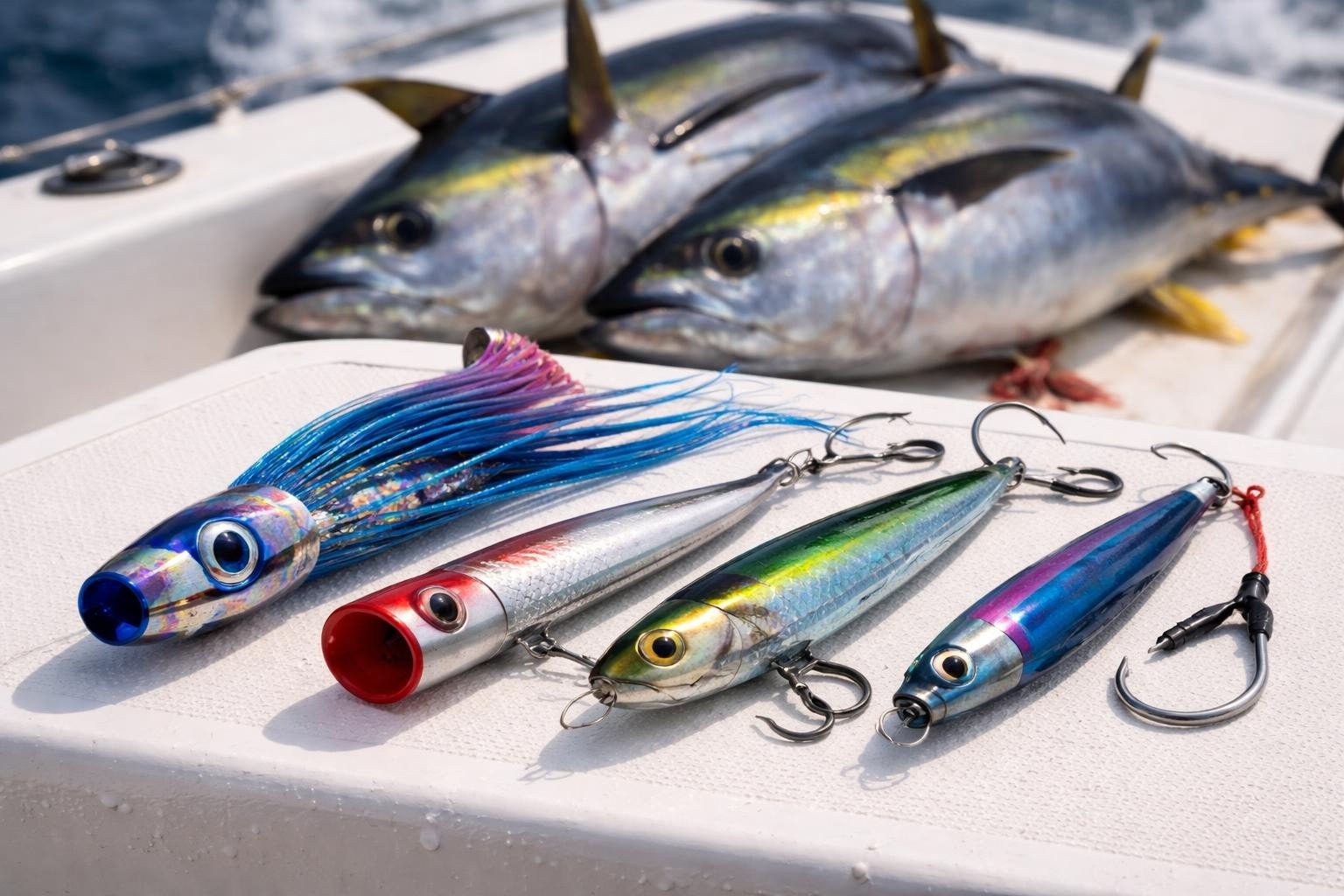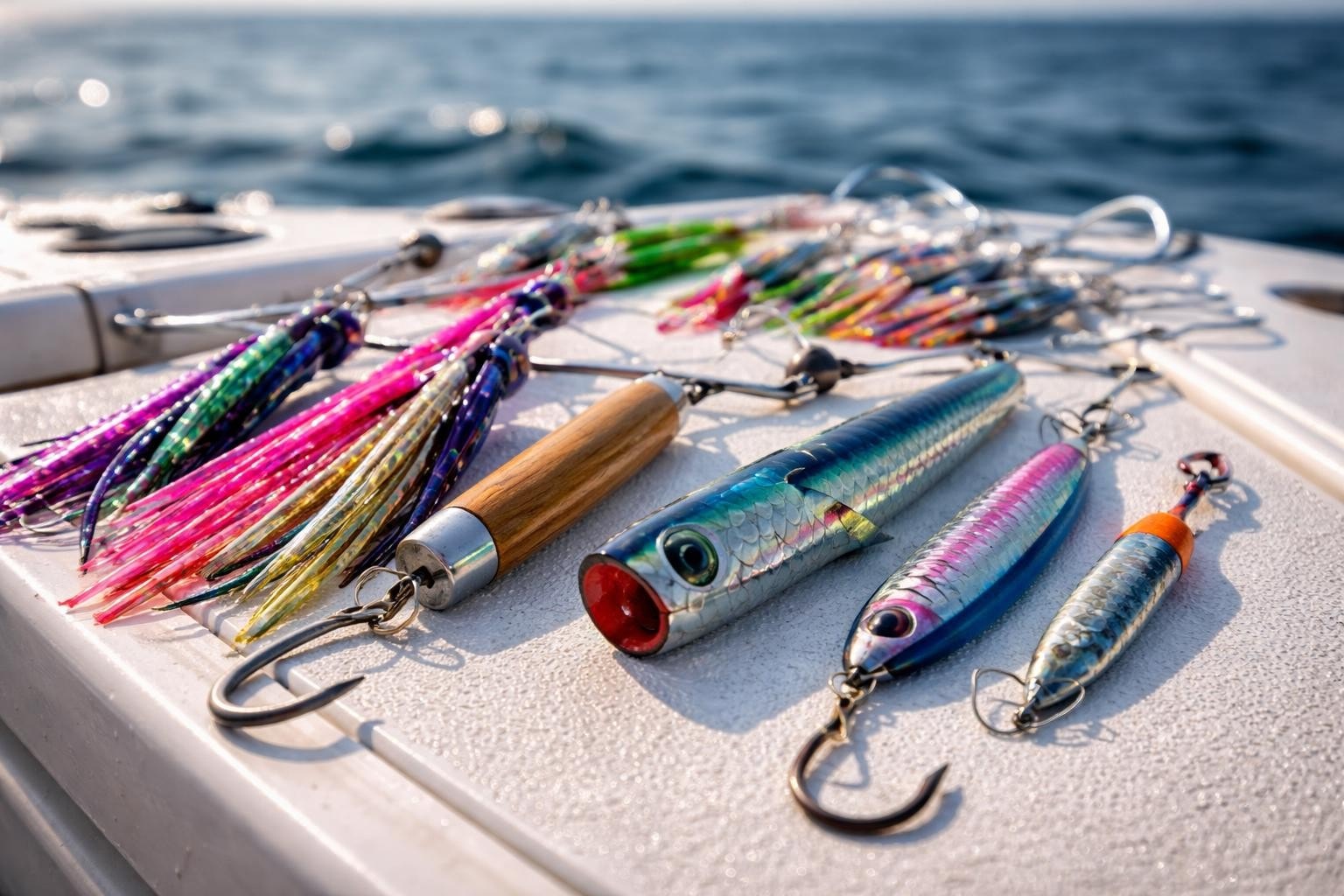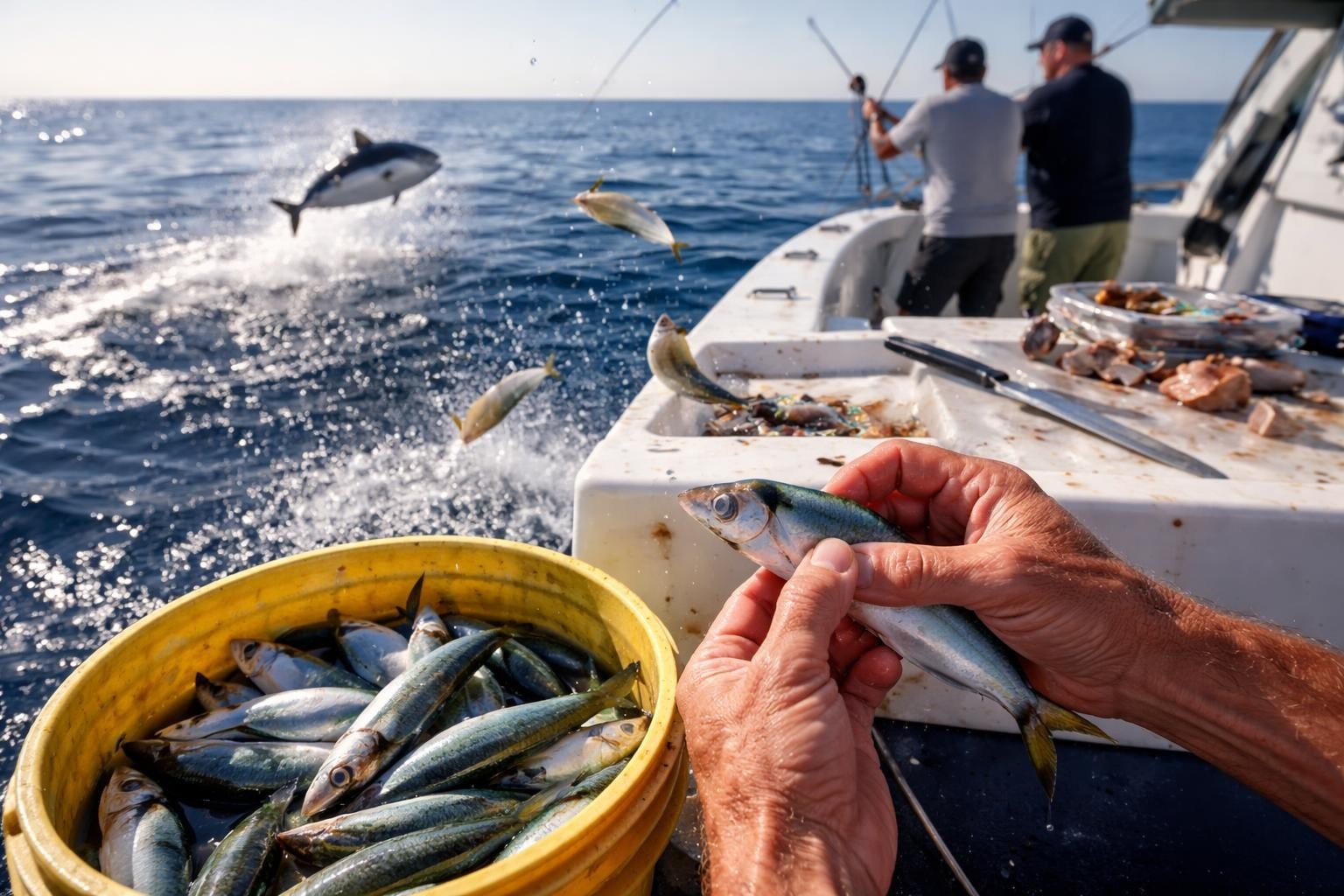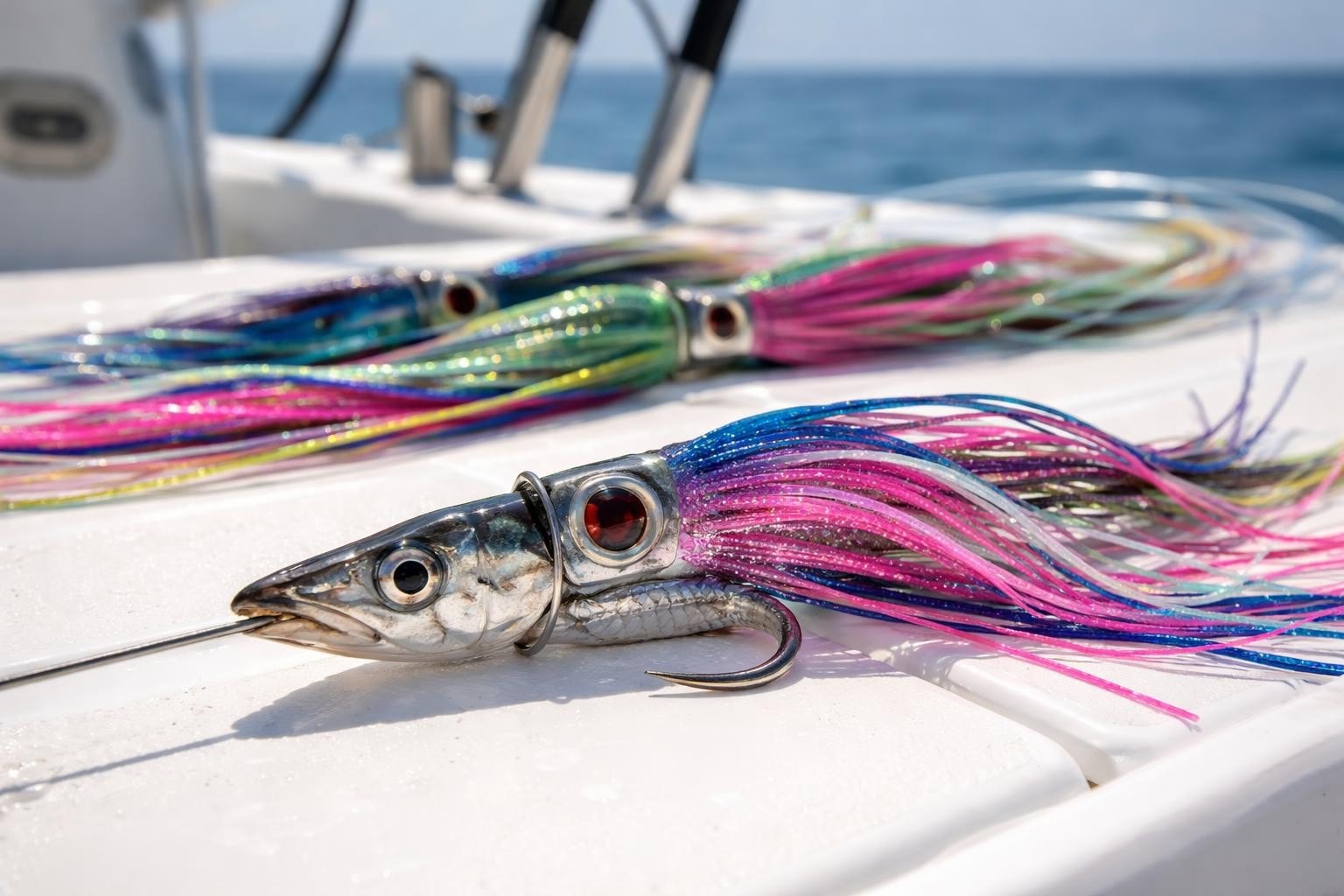
If you've spent any time trolling offshore waters, you've probably heard about skirted ballyhoo. This combination of natural bait and flashy synthetic skirts has become the go-to rig for targeting everything from dolphin to marlin across the Atlantic and Gulf coasts. The beauty of this setup lies in its simplicity: you're combining the scent and taste of real bait with the visual attraction of a lure, giving predatory fish every reason to strike.
What Makes Skirted Ballyhoo So Effective
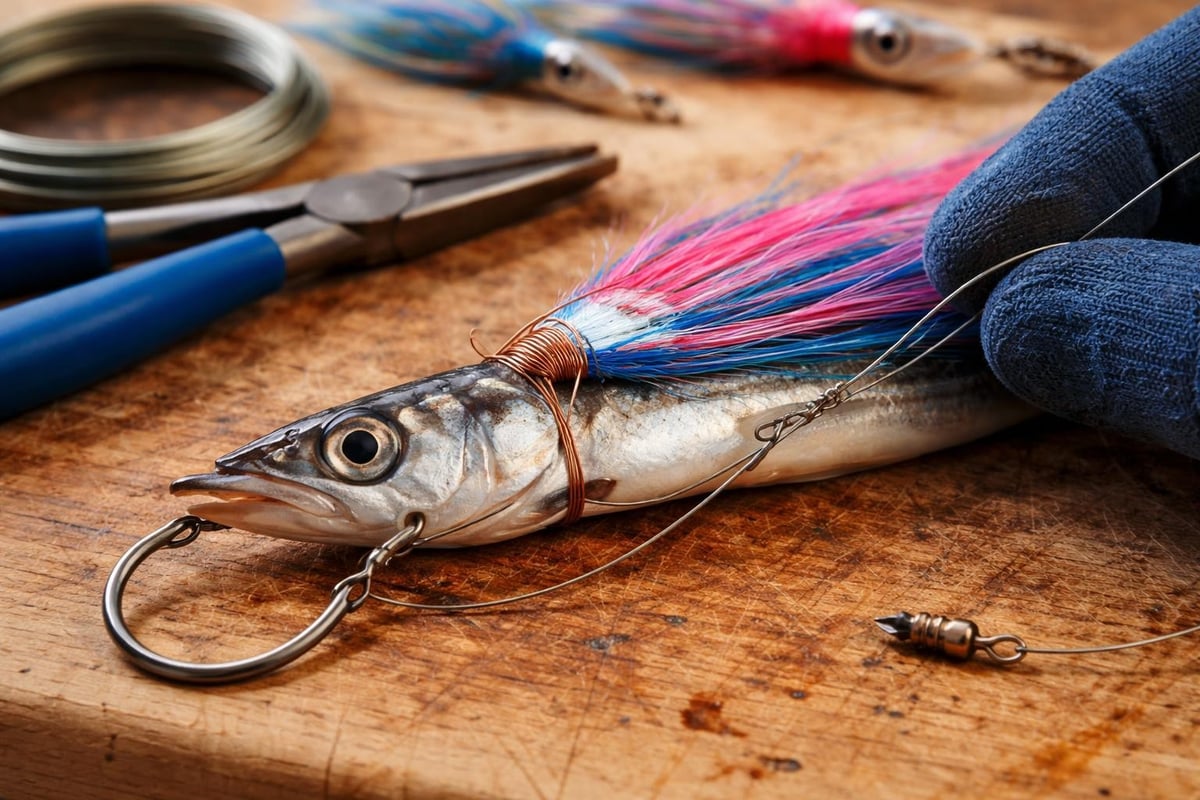
Natural bait gets fish to bite, but skirts get them to notice. That's the core principle behind skirted ballyhoo. The ballyhoo itself provides authentic scent trails and a recognizable silhouette that offshore predators naturally target. When you add a colorful skirt or lure head, you're amplifying the visual profile and creating additional water disturbance.
The combination works because it triggers multiple feeding responses:
- Visual attraction from the skirt's color and movement
- Scent trail from the natural ballyhoo
- Realistic swimming action when properly rigged
- Increased size profile to attract larger fish
Different species respond to different presentations. Marlin fishermen swear by the classic Sea Witch and ballyhoo combo, while tuna anglers often prefer more subdued colors. The versatility of this rig means you can adjust your approach based on conditions and target species.
Choosing the Right Skirt Colors and Styles
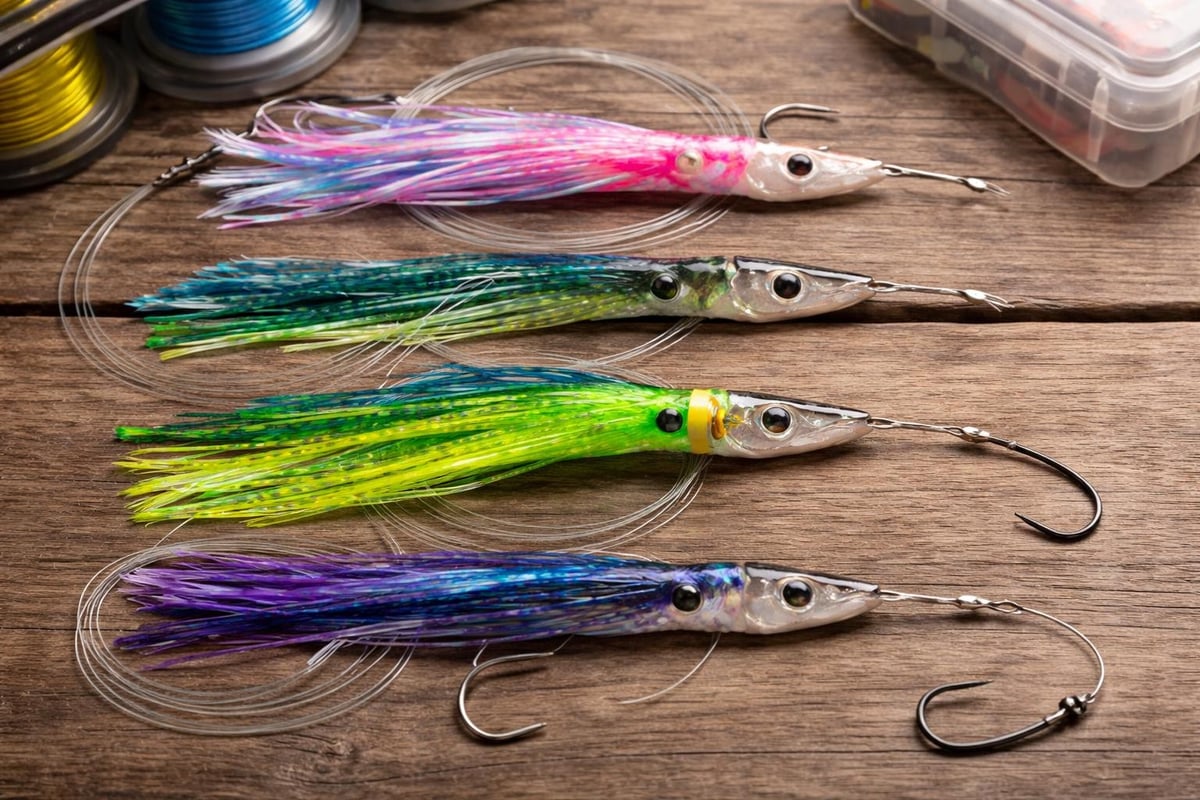
Color selection matters more than most anglers realize. Clear blue water calls for natural colors like blue-white combinations or silver. When the water gets rough or green, switch to brighter options: pink, chartreuse, or hot pink can make all the difference.
Popular skirt choices include:
- Sea Witches – Traditional choice with long flowing strands
- Ilanders – Bullet-shaped heads with rubber skirts
- Joe Shute lures – Proven performers for tuna fishing
- Custom skirts – Hand-tied options for specific conditions
Size matching is critical. Your skirt should complement the ballyhoo, not overwhelm it. A 6-inch ballyhoo pairs well with a medium Sea Witch, while larger baits can handle bigger lure heads. When trolling a mixed spread, vary your colors to see what fish are responding to on any given day.
Rigging Techniques for Maximum Performance
Proper rigging separates successful offshore anglers from those who just drag bait around. The circle hook and skirt ballyhoo rig has become increasingly popular, especially in areas with catch-and-release regulations. This setup positions the hook for better hooksets while the skirt adds flash and bulk.
Basic rigging steps:
- Insert wire through ballyhoo's gill plates and out the belly
- Position circle hook near the bend of the tail
- Slide skirt onto the leader above the bait
- Secure everything with a haywire twist
- Add chin weight if needed for swimming action
The rubber biscuit method offers an alternative that many charter captains prefer. Instead of threading wire through the bait, you use a rubber grommet to secure everything, which can extend bait life during long trolling sessions.
For anglers targeting kingfish or wahoo, a quick stinger rig setup adds a trailing hook that catches short strikers. This modification works particularly well with skirted ballyhoo since the added bulk sometimes causes fish to strike short.
Trolling Speed and Bait Presentation
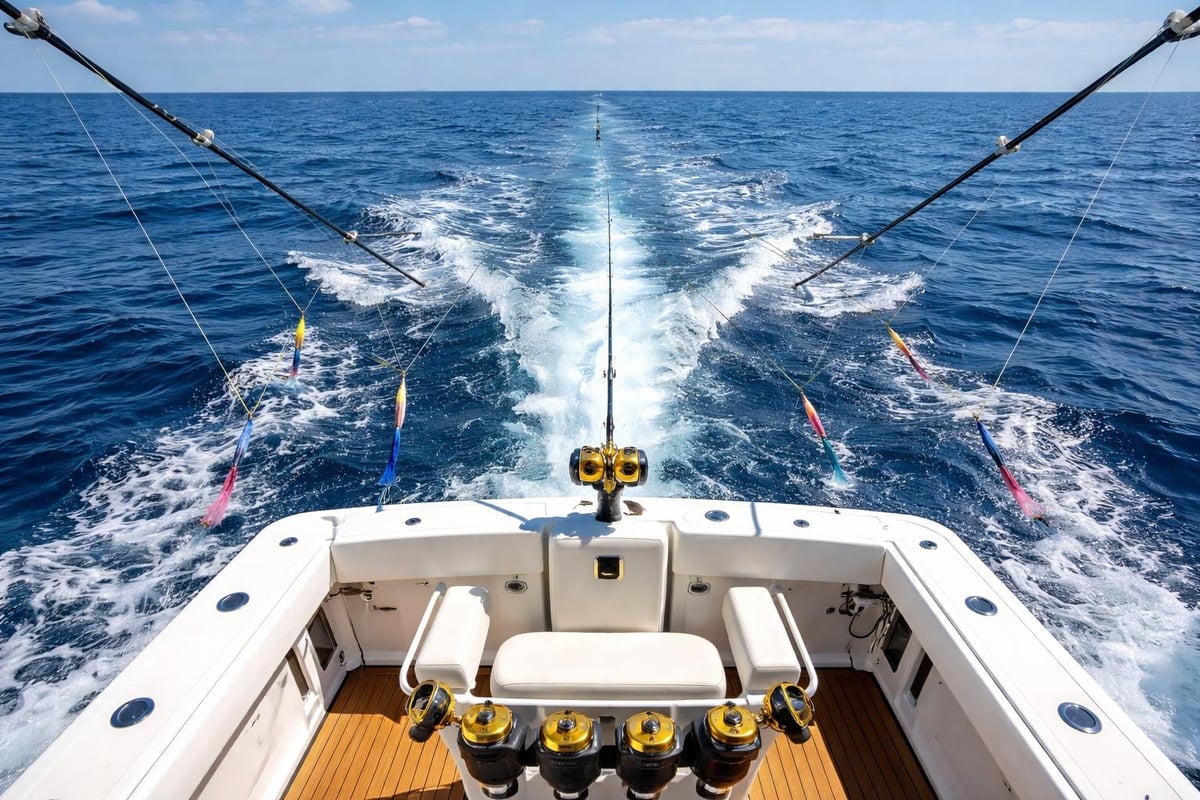
Speed control makes or breaks your skirted ballyhoo presentation. Most pelagic species respond best to speeds between 5 and 8 knots, but conditions vary. Watch your baits: they should skip and dance across the surface without tumbling or spinning.
Signs of proper bait action:
- Consistent skipping pattern every 3-5 seconds
- Straight tracking without spinning
- Skirt pulsing naturally with wave action
- Ballyhoo maintaining position in skirt
Rough seas might require you to slow down slightly, while calm days allow for faster speeds. The key is maintaining that enticing action that mimics fleeing baitfish. When exploring saltwater fishing spots, local knowledge about current and depth can help you dial in the perfect speed.
Rigging Preparation and Tackle Considerations
Proper tackle preparation before heading offshore saves time and frustration on the water. Pre-rigging several skirted ballyhoo means you can quickly replace baits that get damaged or catch fish.
Store your rigged baits in a brine solution to keep them firm and prevent deterioration. Many anglers prepare a dozen or more rigs before a trip, varying hook sizes and skirt colors to match different situations. This preparation pays off when fish are biting and you need to get lines back in the water quickly.
Leader material matters too. Fluorocarbon leaders between 40 and 80 pounds handle most situations, though you'll want heavier wire when targeting toothy critters like wahoo. The connection between your skirt and leader should be secure but allow some movement for natural action.
Target Species and Location Strategies
Skirted ballyhoo works across a wide range of offshore species, but presentation adjustments help target specific fish. White marlin fishing demands precise bait positioning and often benefits from brighter skirt colors. Dolphin, on the other hand, will eat just about any color combination you throw at them.
When fishing productive offshore areas around Fort Pierce or deeper waters off Miami Beach, adjust your spread based on water depth and temperature. Warmer months see more dolphin activity near weed lines, while cooler periods concentrate sailfish and kingfish closer to shore.
Tuna fishermen often run skirted ballyhoo on their flat lines while dragging spreader bars on the riggers. This combination covers multiple depths and offers fish different presentations. The natural ballyhoo often gets hit when tuna get finicky about artificial lures.
Advanced Rigging Methods for Experienced Anglers
Once you've mastered basic skirted ballyhoo rigging, advanced techniques like the split bill swimming ballyhoo open new possibilities. These methods require more time and skill but produce incredibly lifelike swimming actions that selective fish can't resist.
The double hook pin rig creates a skipping action perfect for marlin fishing. By positioning hooks differently and adjusting weight distribution, you can make your skirted ballyhoo skip aggressively or swim just below the surface. Experiment with different approaches when fishing offshore spots around Key Biscayne or other productive areas.
Season and conditions affect rigging choices:
- Spring: Lighter skirts for clear water conditions
- Summer: Brighter colors during peak feeding periods
- Fall: Natural patterns as baitfish migrate
- Rough weather: Heavier chin weights for stable swimming
Remember that even the best visual guides on circle-hook skirted ballyhoo rigging can't replace time on the water. Practice your rigging at home, then refine your technique based on results. Every fishing trip teaches you something new about bait presentation and fish behavior.
Mastering skirted ballyhoo rigging opens up incredible offshore fishing opportunities, whether you're targeting billfish, tuna, or anything in between. Ready to put these techniques to work? Find the best offshore fishing locations near you with Find Fishing Spots, your comprehensive directory of saltwater, freshwater, and brackish fishing spots across the U.S. Get GPS coordinates, access information, and local insights to plan your next successful offshore adventure.