If you've ever watched tuna blow through a school of baitfish offshore, you know how fast and aggressive these fish can be. Tuna jigging lures give you a way to get down to where they're feeding and trigger those explosive strikes. Whether you're fishing the Gulf Stream off Florida or working deep structure anywhere along the coast, the right jig can make all the difference between watching the fish finder light up and actually hooking into them.
Understanding Tuna Jigging Basics
Tuna jigging is all about getting a metal lure down to the strike zone quickly and working it with the right action. Unlike trolling, where you cover water horizontally, jigging lets you work vertically through the water column where tuna are actively feeding.
The technique is straightforward but demands the right gear. You drop your jig down to the depth where you're marking fish, then work it back up with a combination of rod lifts and cranks. The key is matching your lure weight to the depth and current conditions.
Why Jigging Works for Tuna
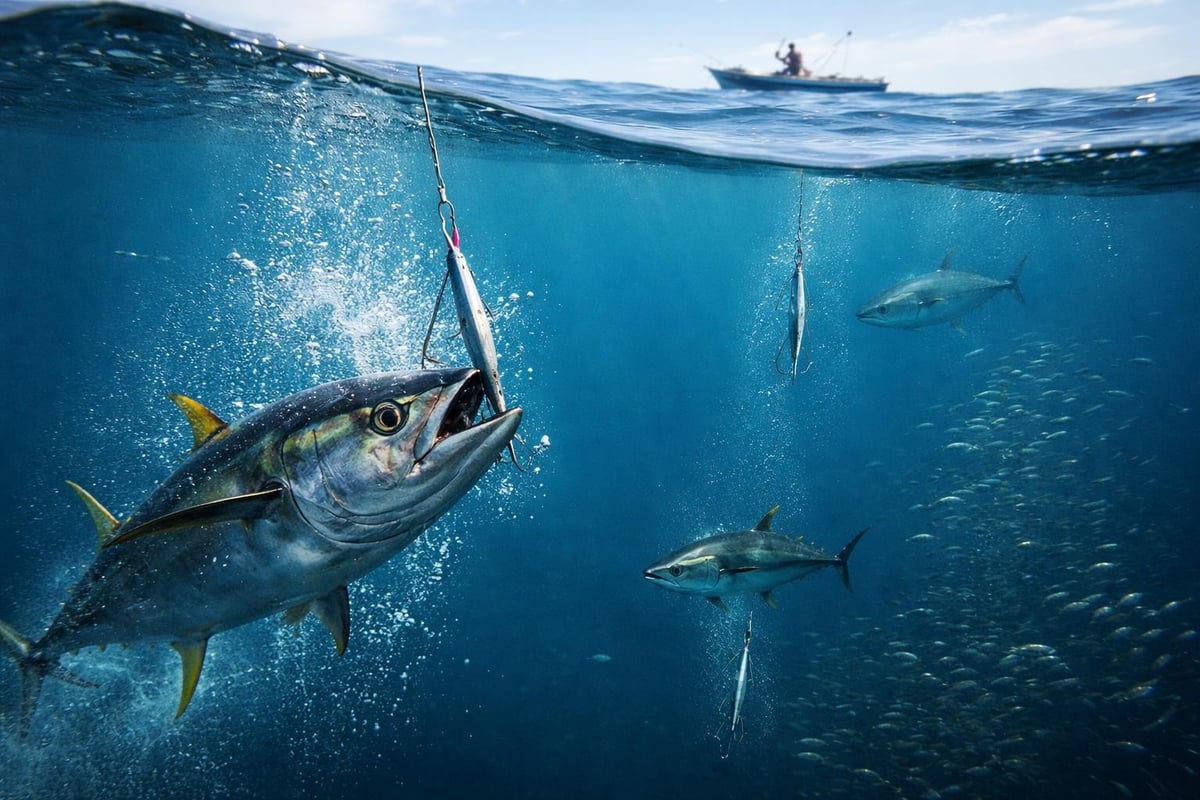
Tuna are visual predators that react to movement and flash. When baitfish scatter, injured or struggling fish fall through the water column, and that's exactly what a properly worked jig mimics. The flutter and flash of metal lures trigger aggressive strikes, even from tuna that might ignore other presentations.
Speed matters too. Tuna are built for fast bursts, and a jig that drops quickly and moves erratically often outperforms slower-moving baits. This is especially true when you're dealing with schools that are here one minute and gone the next.
Choosing the Right Jig Weight
Weight is probably the most important factor when selecting tuna jigging lures. Go too light and you'll spend forever getting down, plus you'll struggle in any current. Too heavy and you might drop past active fish or lose the action that triggers strikes.
For most offshore tuna fishing, you're looking at jigs between 100 and 400 grams. Shallow to mid-depth fishing (50-150 feet) works well with 100-200 gram jigs. When you're dropping to 200+ feet or fighting strong current, step up to 250-400 grams.
Current changes everything. What worked yesterday in calm conditions might be useless today if there's a strong current running. Many experienced anglers carry a range of weights for this exact reason. Offshore tuna jig selections vary based on conditions, so flexibility in your tackle box pays off.
Jig Styles and Designs
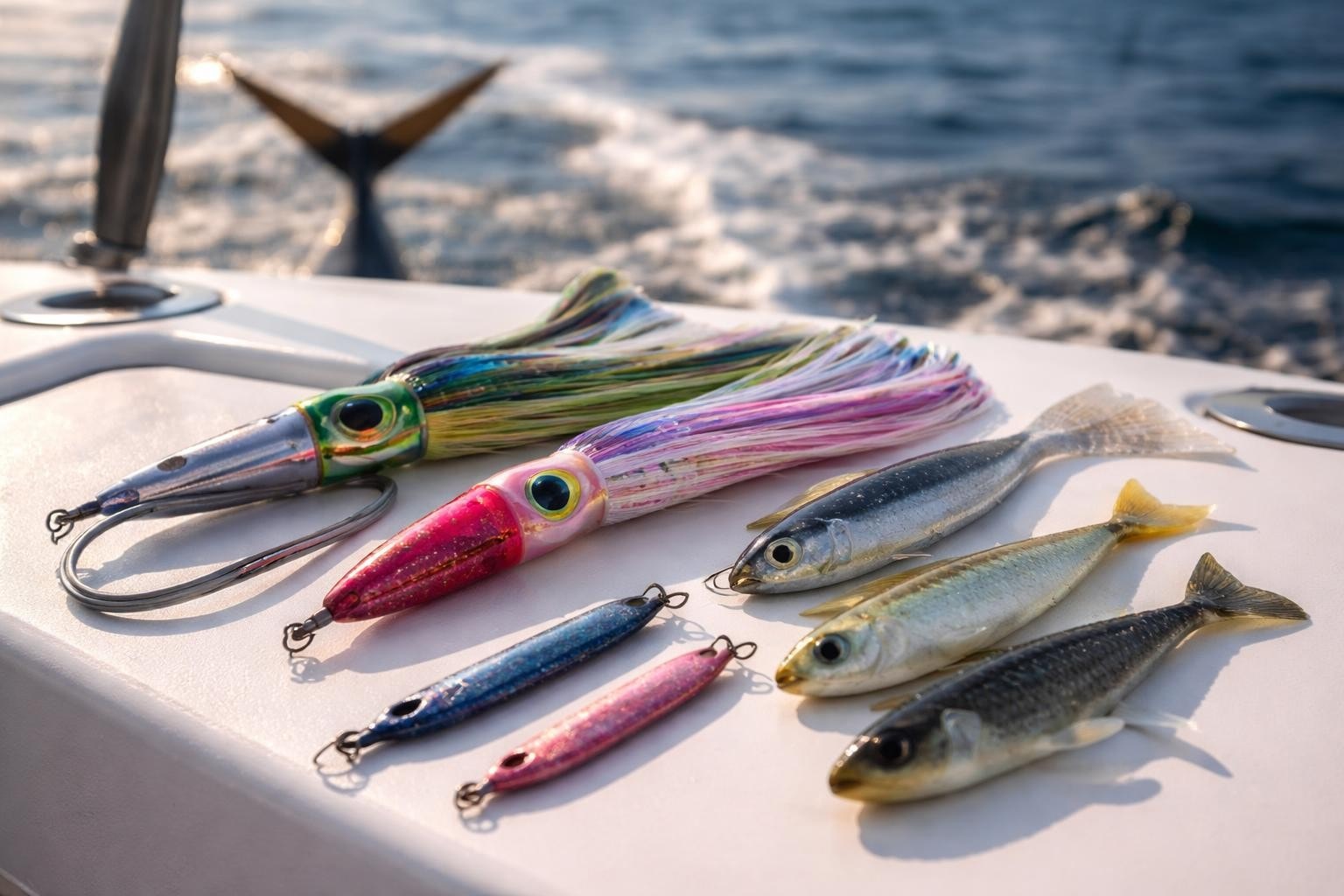
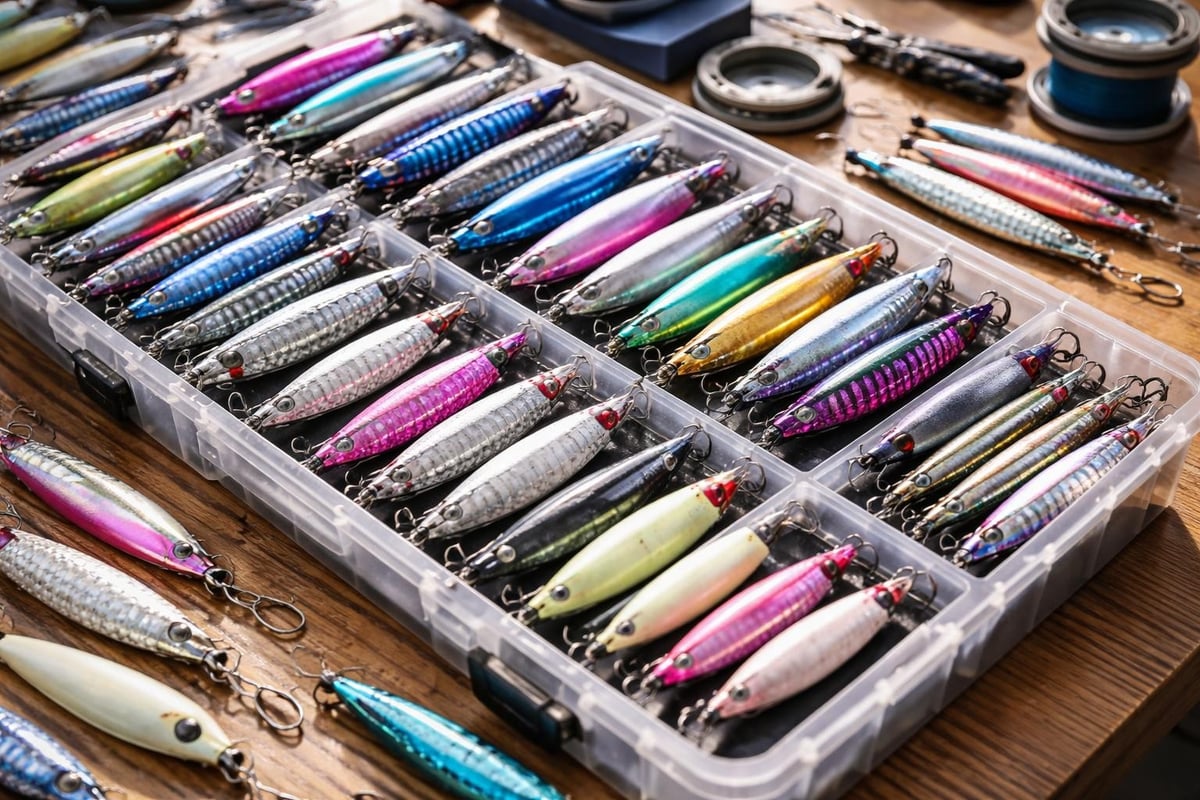
Not all tuna jigging lures look or act the same. The shape affects how the jig falls, flutters, and responds to your rod movements.
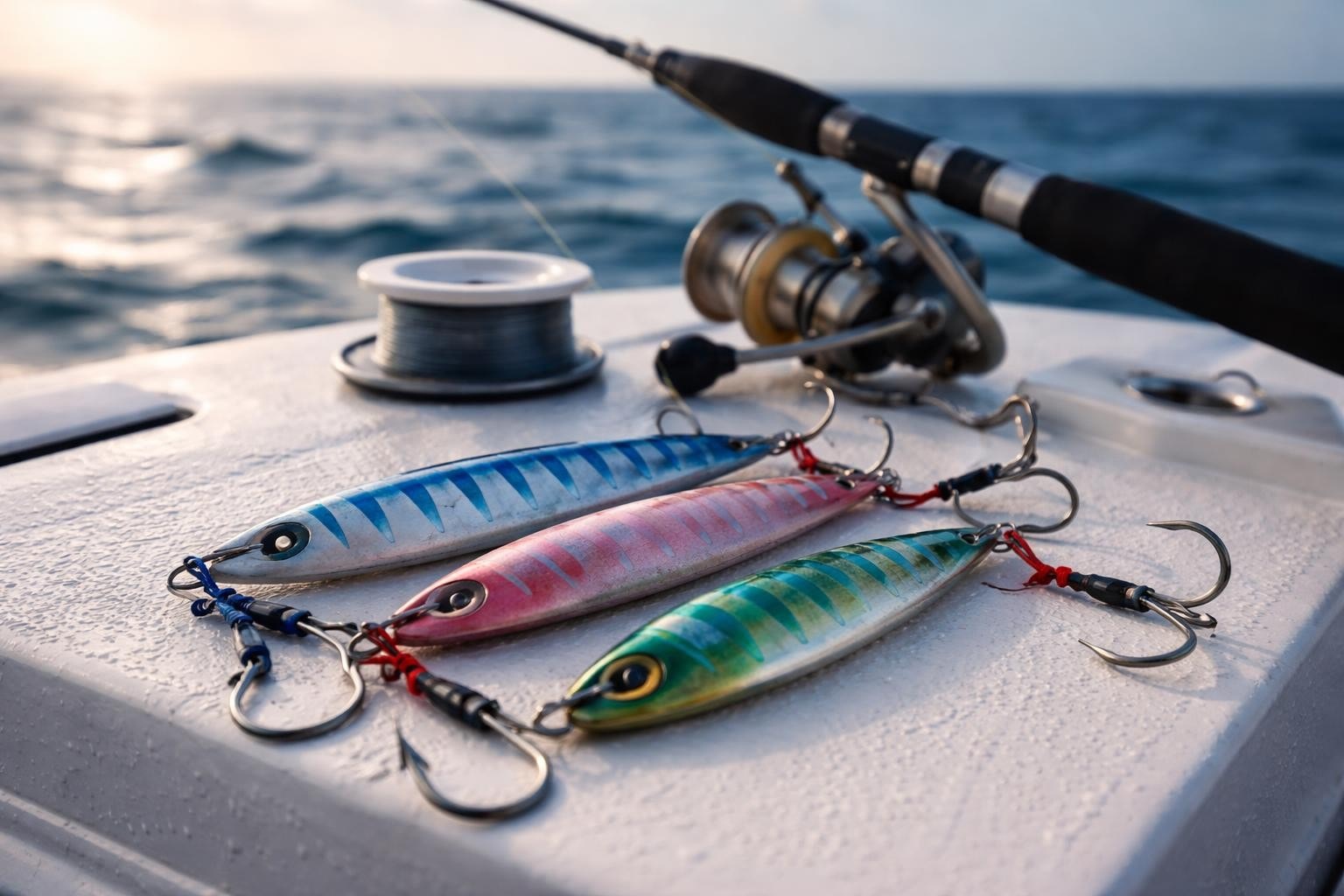
Knife jigs are long and thin with a narrow profile. They drop fast in a relatively straight line, making them perfect for deep water or strong current. The tight action works great when tuna are keyed in on small baitfish.
Butterfly jigs have a wider, flatter design that creates an irregular flutter as they fall. This erratic action can be deadly when tuna are aggressive, though they're trickier to fish in current because they don't drop as straight.
Speed jigs are designed for fast, aggressive retrieves. These are your go-to when you need to cover water quickly or when tuna are chasing fast-moving bait near the surface.
The best tuna casting and jigging lures often depend on what the fish are eating. Match your jig profile to the predominant baitfish and you'll get more bites.
Color and Finish Considerations
Tuna can be surprisingly color-selective at times. While there's no magic color that works everywhere, certain patterns consistently produce.
Silver and chrome finishes are versatile choices that imitate most baitfish. These work well in clear water and bright conditions. Blue and silver combinations are classic for a reason-they match the coloring of sardines, anchovies, and other common tuna forage.
In low light or murky water, glow finishes can make a difference. Some jigs incorporate glow paint that charges in sunlight and continues to attract fish even at depth. Pink and chartreuse have their moments too, especially when tuna are feeding on squid or in stained water.
Don't overthink it though. Having a few reliable colors is better than a tackle box full of options you never use. Start with silver, add a blue pattern, and maybe include a glow option for early morning or late evening fishing.
Rigging Your Tuna Jigs
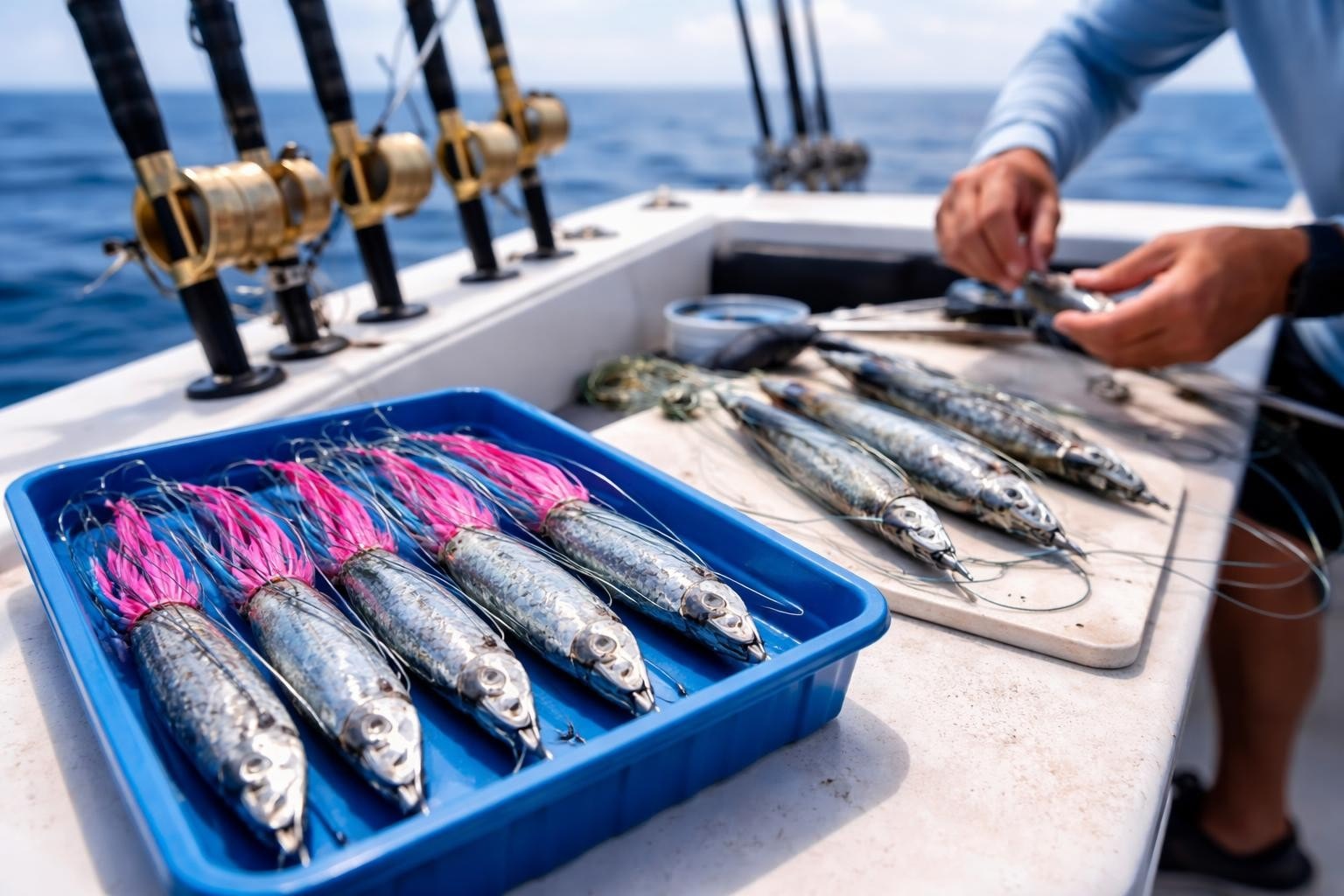
Most tuna jigging lures come pre-rigged with assist hooks at the top, though some anglers add or modify hooks based on personal preference. Assist hooks use Kevlar or heavy braid attached to strong treble or single hooks, positioned to hang just beyond the jig's nose.
This setup hooks fish that strike as the jig falls, which is when many bites occur. The hooks float freely, so they move naturally and tend to find purchase in the corner of a tuna's mouth rather than deep-hooking the fish.
Split rings should be heavy-duty, and many serious tuna fishermen upgrade factory hardware before even hitting the water. A failed split ring on a big yellowfin is a memory you won't soon forget.
Leader material typically runs 60-100 pound fluorocarbon for most tuna jigging. Heavier for bigger fish or around structure, lighter when the bite is finicky. Heavy metal tuna techniques often emphasize leader quality as much as jig selection.
Working Your Jigs Effectively
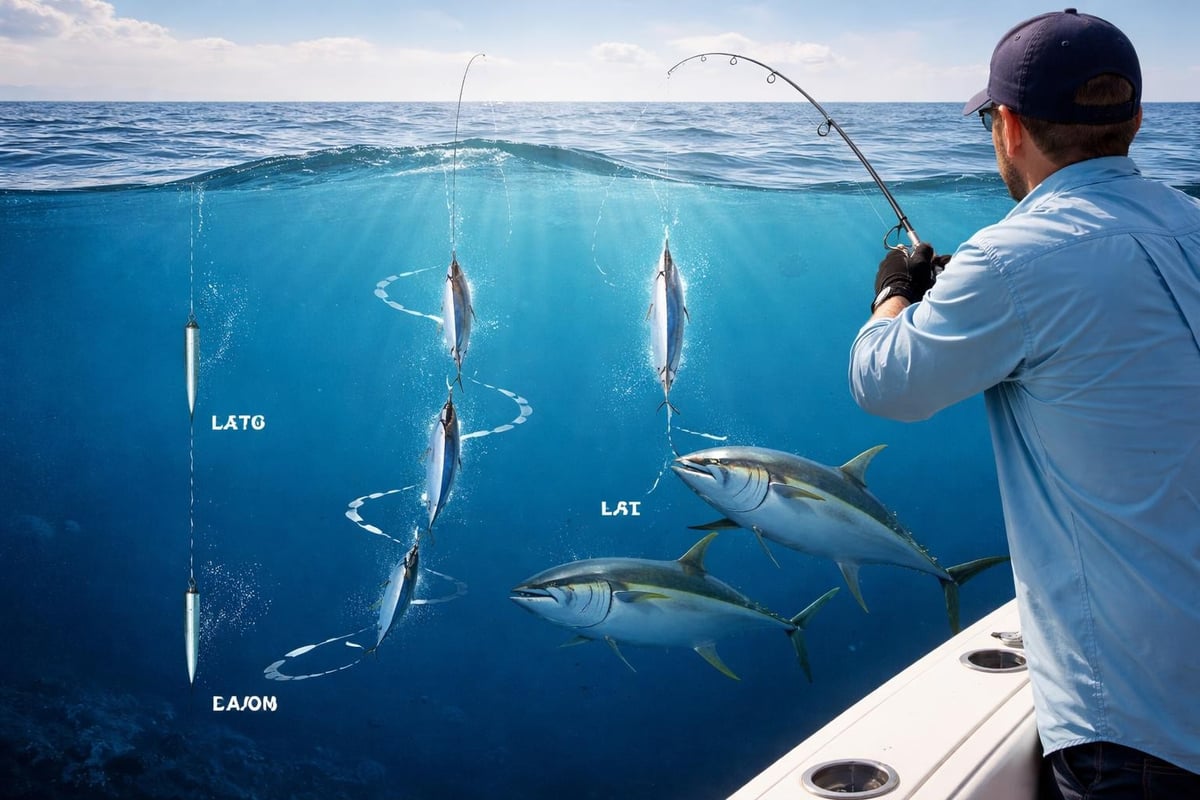
Drop your jig on a semi-tight line so you can feel it hit bottom or reach your target depth. Once you're there, the retrieve variations are endless, but a few patterns consistently work.
The high-speed retrieve involves cranking fast while pumping the rod tip. This creates an aggressive, fleeing baitfish action that triggers reaction strikes. It's tiring but effective when tuna are hot.
A slow pitch uses shorter, more deliberate lifts with pauses. Lift the rod tip three or four feet, drop it back while reeling up slack, then pause. The jig flutters on the drop, often getting hit during the pause.
Yo-yo jigging is somewhere in between: drop, crank up several turns quickly, drop again. This covers the water column and lets you find the depth where fish are holding. If you're exploring saltwater fishing spots in Miami or other coastal areas, this technique helps you dial in productive zones.
Pay attention to your fishfinder. If you're marking fish at 120 feet, don't waste time jigging all the way from 200 feet. Drop to just below the marks and work your way up through them.
Tackle Considerations
Your rod and reel need to handle the demands of jigging. A conventional reel with 40-65 pound braid is standard, paired with a rod rated for the jig weights you're throwing. Shorter rods (5.5-6.5 feet) give you better leverage when working jigs vertically.
High-speed reels help you catch up to falling jigs and get back down quickly for another drop. Gear ratios around 6:1 or higher are ideal. You'll also want a reel with solid drag-tuna will test it on that first run.
Tuna fishing gear essentials include backup tackle because these fish are hard on equipment. Having spare jigs already rigged saves precious time when the bite is on.
Location Matters
Tuna jigging works best where fish congregate. Structure like ledges, seamounts, and wrecks hold baitfish, which attract tuna. Temperature breaks and current edges are also prime spots.
Finding these areas is easier than ever with modern electronics, but local knowledge still matters. Whether you're checking out offshore spots near Key Largo or researching deeper structure, understanding where tuna gather in your target area saves time on the water.
Many productive tuna grounds are well offshore, but some coastal areas with quick access to deep water can produce excellent jigging action. The jiggy-pop technique for late summer combines approaches that work especially well during peak seasons.
Tuna jigging lures give you a direct, effective way to target these powerful fish where they feed. With the right jig weight, style, and technique, you can consistently hook up even when other methods aren't producing. Once you've got your tackle sorted, finding productive offshore water is your next step. Find Fishing Spots helps you discover saltwater locations across the U.S., complete with GPS coordinates and access details, so you can spend less time searching and more time fishing.