When you're heading offshore for yellowfin tuna, your lure selection can make or break your day on the water. These aggressive predators are opportunistic feeders, but they're also selective about what they'll strike. The right yellowfin tuna lure matches the conditions you're facing, whether you're trolling open blue water or working schools near floating debris. Understanding which lures work best in different situations helps you put more fish in the boat and spend less time guessing.
What Makes a Good Yellowfin Tuna Lure
Yellowfin tuna have excellent vision and hunt aggressively when feeding. Your lure needs to create the right profile, action, and flash to trigger strikes from fish that might be cruising deep or busting bait on the surface.
Key characteristics that matter:
- Size and profile that matches local baitfish (usually 6-12 inches)
- Action that creates vibration and movement even at varying speeds
- Durability to withstand powerful strikes and long runs
- Color patterns that work in different light and water conditions
The best yellowfin tuna lure for your situation depends on how you're fishing. Trolling requires different options than popping or jigging, and understanding these differences helps you prepare properly before heading to your favorite offshore spots.
Trolling Lures for Yellowfin
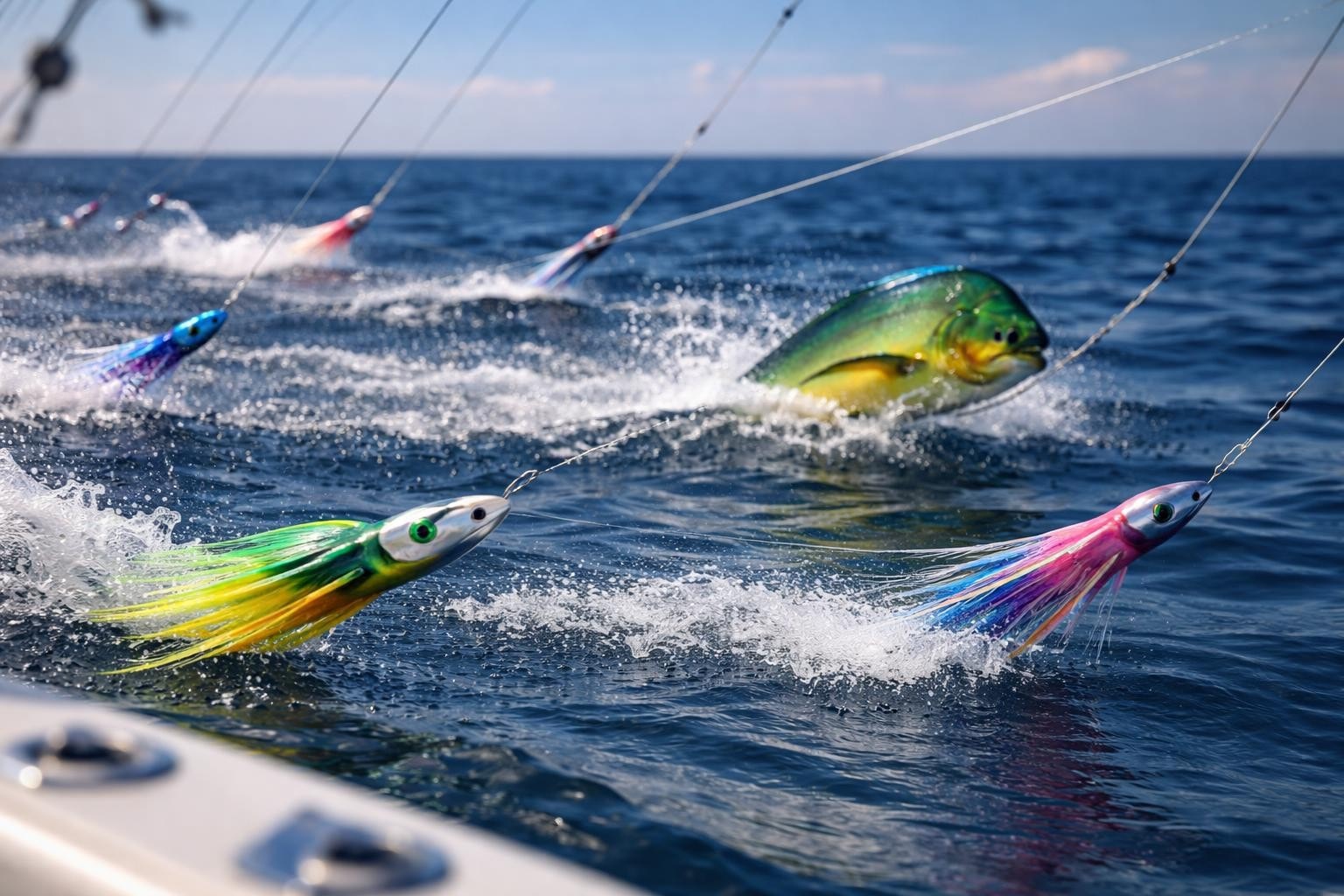
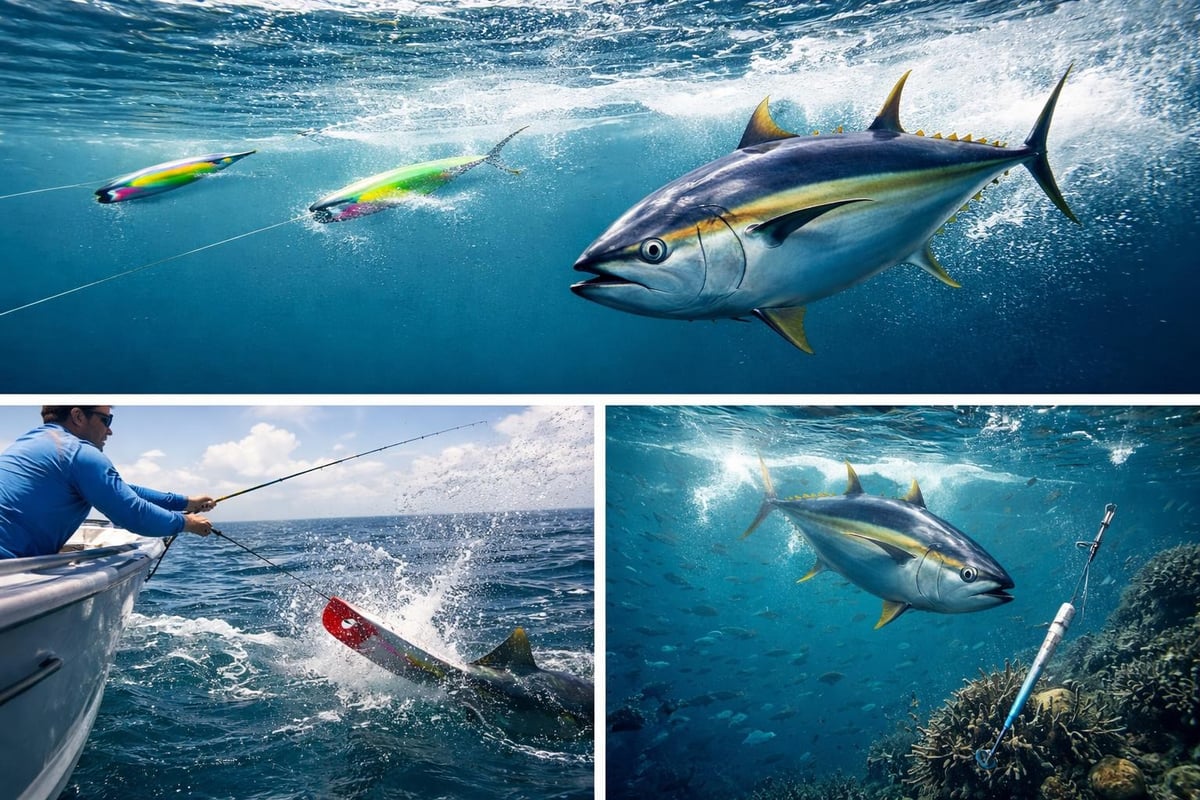
Trolling remains one of the most productive methods for covering water and finding active yellowfin. Effective trolling techniques rely on lures that create the right action at speeds between 6 and 10 knots.
Popular trolling lure styles:
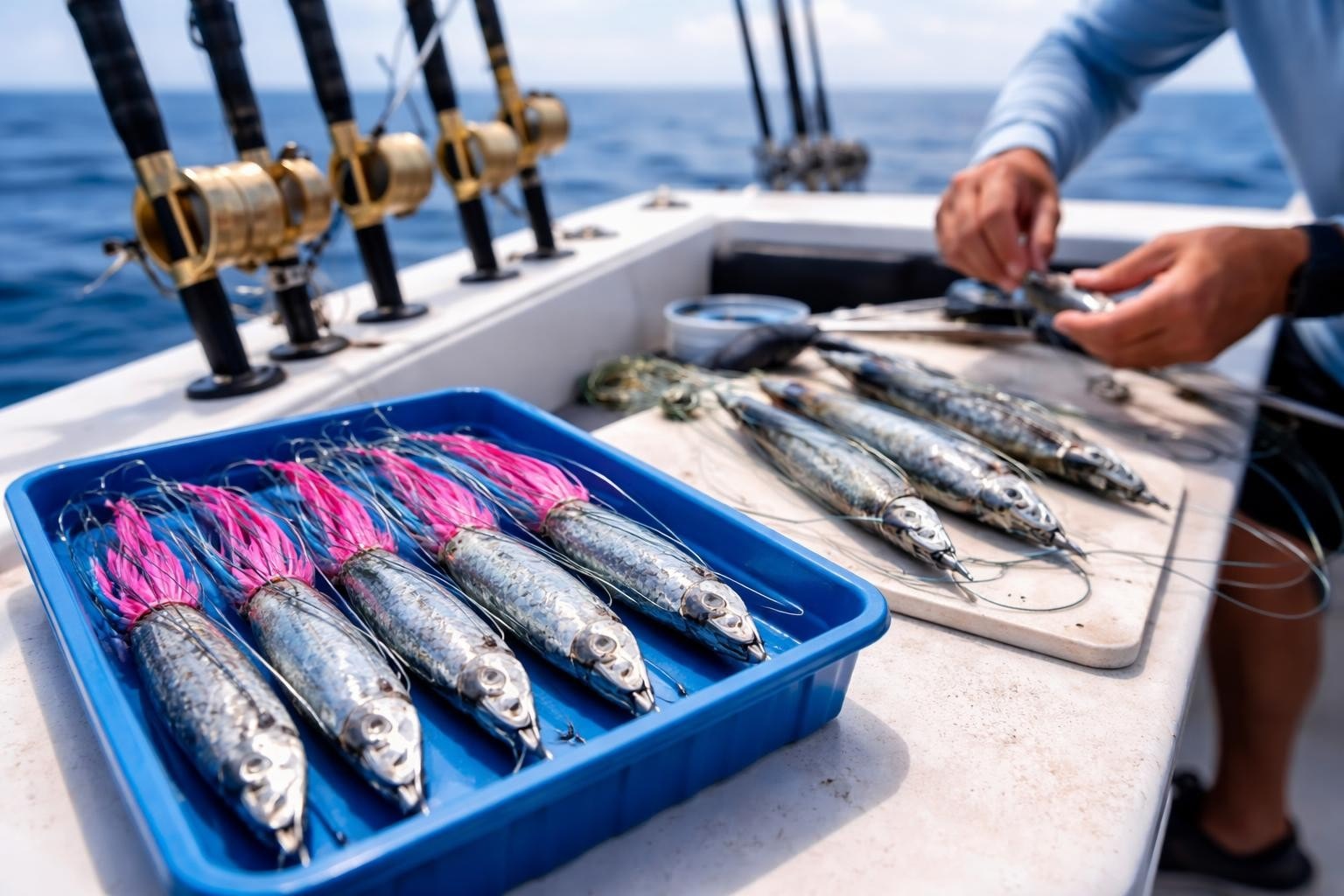
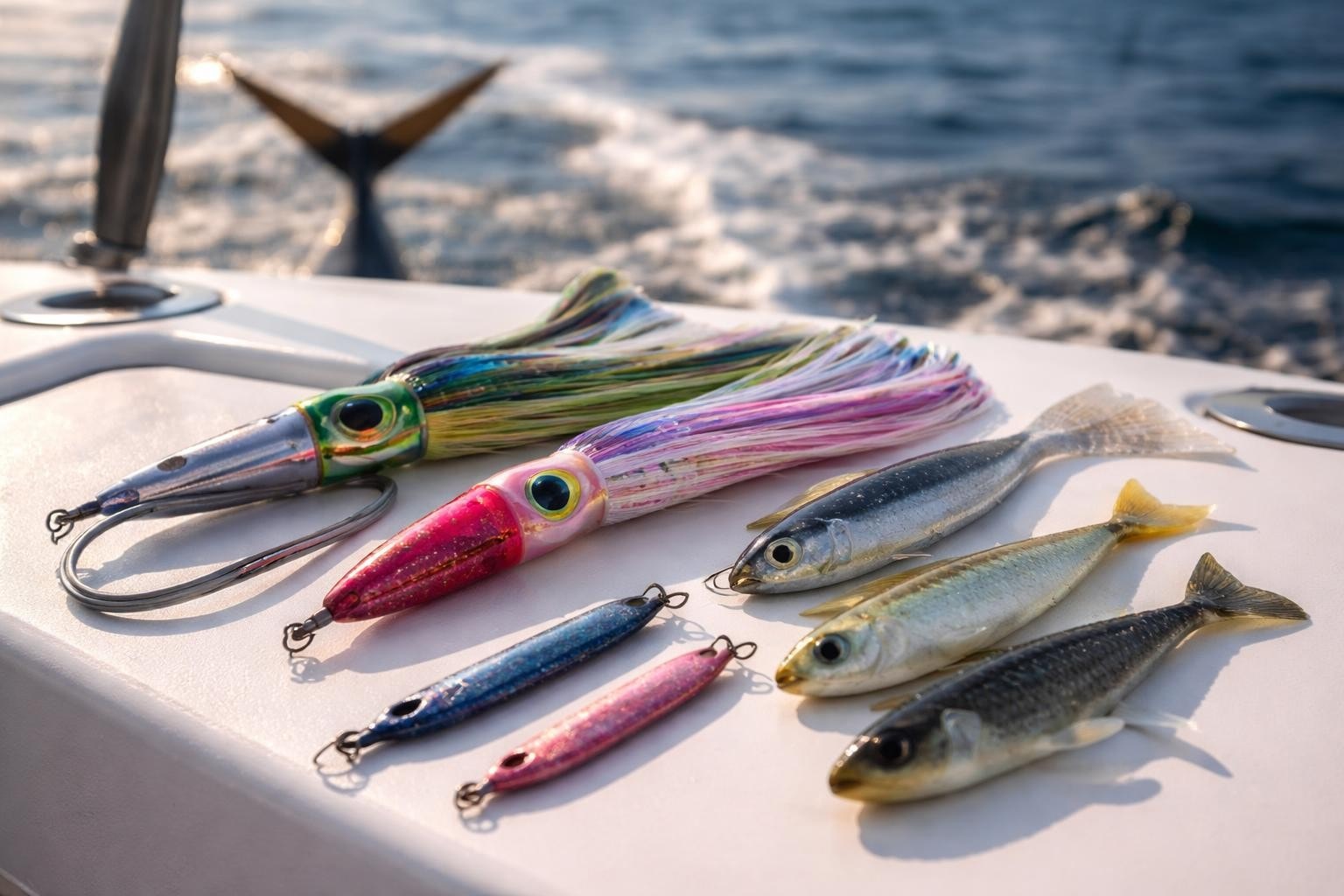
- Skirted trolling lures with bullet heads that create smoke trails and bubble action
- Hard-bodied diving lures like the Halco Laser Pro series that dive and wobble
- Cedar plugs that mimic baitfish and work well in spreads
- Rigged ballyhoo combined with lures for a natural presentation
Many anglers find success by mixing lure types in their spread. Running a combination of colors and sizes lets you test what the fish want on any given day. When fishing areas around Key West or Islamorada, local bait patterns often dictate which colors produce best.
Surface Lures and Topwater Action
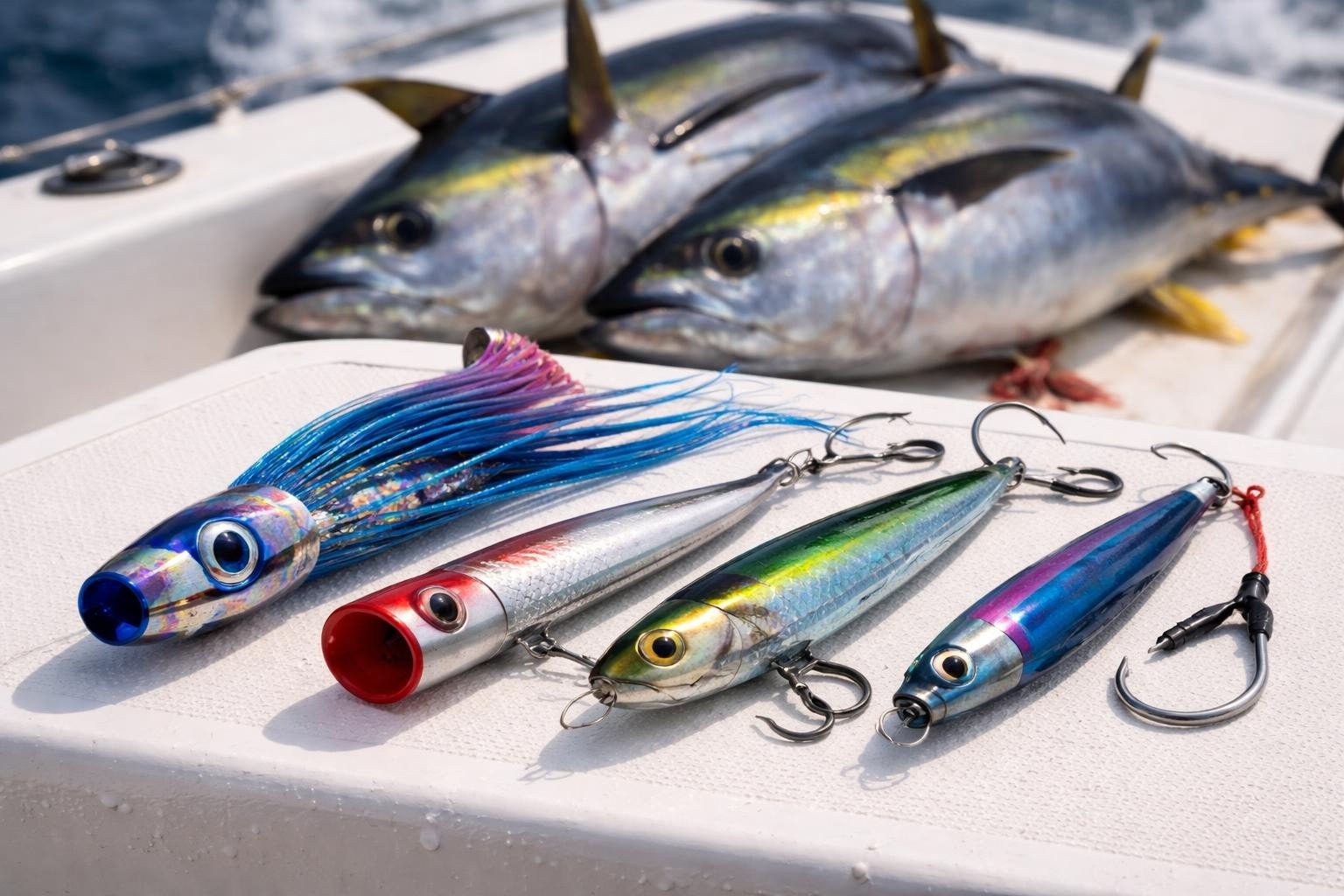
When yellowfin are feeding aggressively near the surface, few things beat the excitement of topwater strikes. Poppers and stickbaits create commotion that draws fish from considerable distances.
Poppers feature cupped faces that throw water and create loud popping sounds when worked with sharp jerks. Stickbaits have a more subtle "walk-the-dog" action that can be more effective when fish are following but not committing. The rod and reel setup you choose matters significantly for working these lures effectively throughout long fights.
Working surface lures effectively:
- Start with aggressive pops to draw attention
- Vary your retrieve speed based on fish response
- Watch for followers and adjust cadence accordingly
- Be ready for explosive strikes that happen without warning
Surface fishing works especially well during dawn and dusk when yellowfin push baitfish to the top. It's also productive around floating debris, weed lines, and anywhere birds are working.
Vertical Jigs for Deep Water
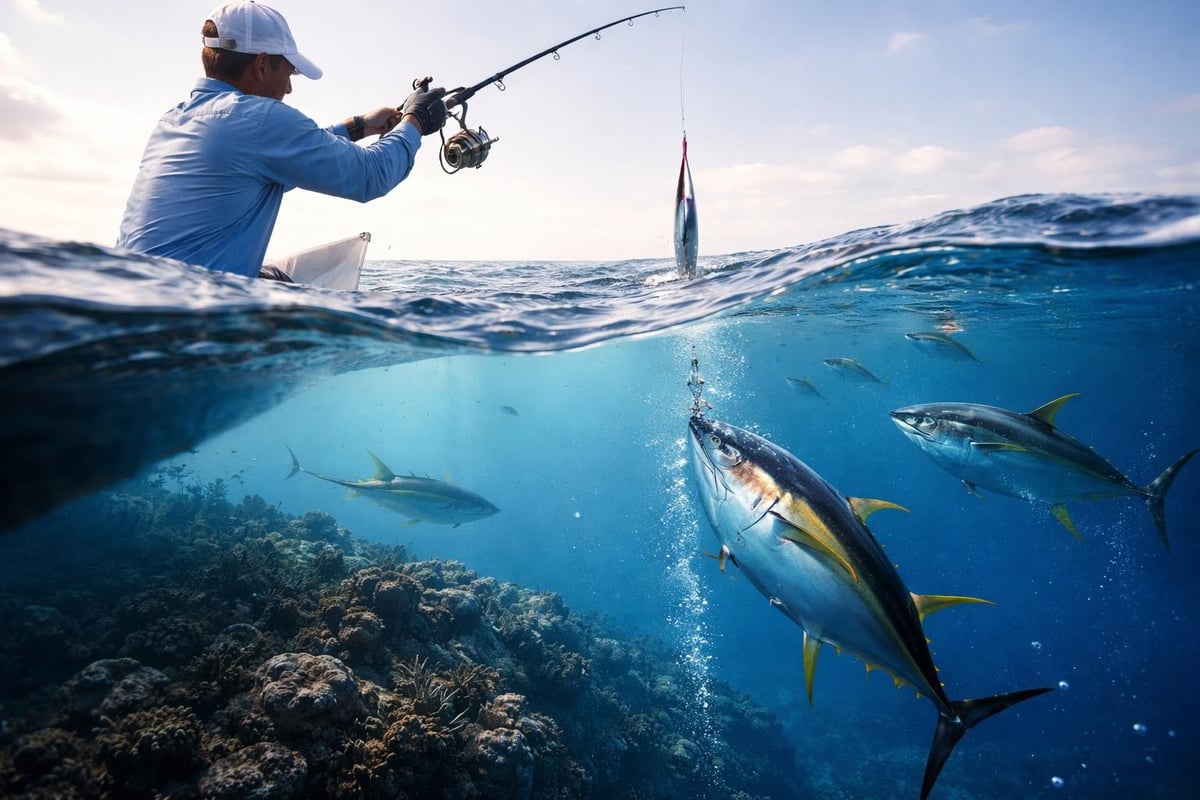
When yellowfin hold deep or suspend along drop-offs, vertical jigs let you target specific depth zones. These metal lures sink fast and create an erratic flutter that triggers reaction strikes.
Speed jigs in the 150-300 gram range work well for most situations. Top tuna trolling lures get plenty of attention, but jigs deserve a spot in every offshore box for their versatility. The technique involves dropping to the desired depth, then working the jig with sharp lifts followed by controlled falls.
Color Selection Strategy
Yellowfin tuna lure color generates endless debate among anglers. While personal preferences vary, certain patterns consistently produce across different regions and conditions.
Reliable color patterns:
- Blue and white combinations for clear offshore water
- Pink and purple in low light or deeper water
- Green and yellow around weed lines and floating debris
- Natural baitfish patterns when matching the hatch matters
Don't overlook the importance of having variety. What worked yesterday might not work today, and having options lets you adjust quickly. Many successful crews rotate lure colors every hour or so when trolling until they find what's working.
Matching Lures to Conditions
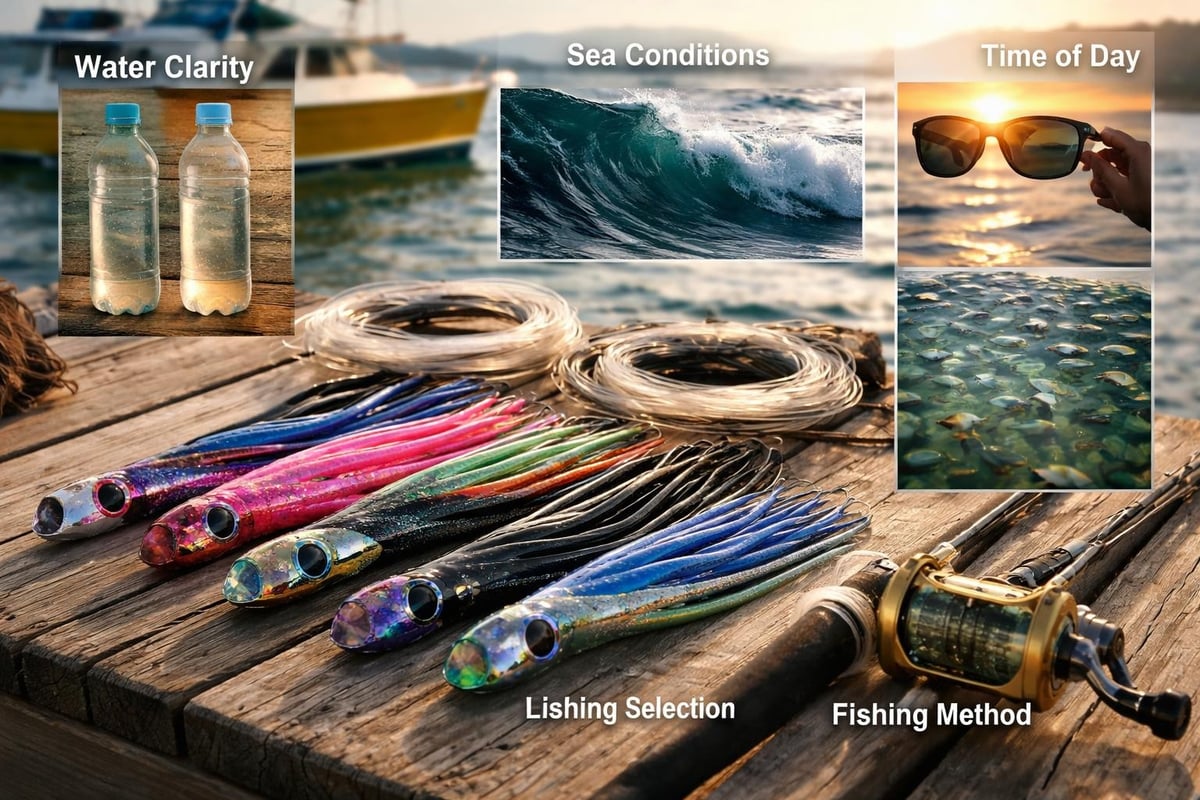
Reading conditions helps you select the right yellowfin tuna lure before you even start fishing. Water clarity, sea state, time of day, and bait activity all influence which lures perform best.
In calm, clear conditions, more natural presentations often work better. When seas are rough or water has color, lures with more flash and vibration help fish locate your offering. Understanding various techniques for targeting yellowfin helps you adapt as conditions change throughout the day.
Rigging Considerations
How you rig your yellowfin tuna lure matters as much as which one you choose. Leader material, hook selection, and connection methods all impact presentation and hookup ratios.
Most anglers use fluorocarbon leaders in the 80-130 pound range for trolling applications. Circle hooks have become popular for their conservation benefits and solid hookup rates. When rigging poppers or stickbaits, many prefer inline single hooks or assist hooks that improve landing percentages on jumping fish.
Split rings should be heavy-duty and properly sized for your hooks. Cheap hardware fails when you hook that fish of a lifetime. Similarly, your connection between leader and lure needs to allow proper action while providing security during the fight.
Seasonal Patterns and Adjustments
Yellowfin behavior changes throughout the year, and your lure selection should adjust accordingly. Spring and fall migrations often put fish in feeding mode where they'll hit larger, more aggressive presentations. Summer fish around structure might require more finesse.
Pay attention to what's happening in your local waters. If you're fishing offshore spots near Miami or other productive areas, talking with other anglers and checking recent reports helps you dial in current patterns. Water temperature, bait movements, and moon phase all play roles in yellowfin activity levels.
Testing different lure speeds during trolling sessions gives you valuable information. Some days fish want lures moving fast, creating lots of commotion. Other times a slower presentation with more subtle action produces better results. Keep notes about what works when, and patterns will emerge over time.
Having the right yellowfin tuna lure is just one part of successful offshore fishing, but it's a critical piece of the puzzle. Whether you're trolling the deep blue, popping over schools, or jigging structure, matching your presentation to conditions puts odds in your favor. Once you've got your tackle sorted, finding productive water becomes the next challenge. That's where Find Fishing Spots helps you locate offshore fishing locations across the U.S., complete with GPS coordinates and access details to get you on the water faster. Check out saltwater spots in your area and start planning your next yellowfin adventure.