Mahi mahi are one of the most exciting gamefish in the ocean, known for their explosive strikes, acrobatic jumps, and brilliant colors. Whether you're fishing offshore in the Gulf of Mexico, along the California coast, or off the Carolinas, having the right lures makes all the difference. The best mahi mahi lures mimic the small baitfish and squid that these aggressive predators can't resist, and knowing which ones to tie on can turn a slow day into an epic catch.
What Makes Mahi Mahi Lures Effective
Mahi mahi are visual predators that rely heavily on sight to hunt their prey. They're attracted to bright, flashy lures that create movement and commotion in the water.
Key characteristics that make lures irresistible to mahi:
- Bright, contrasting colors (chartreuse, pink, blue, yellow)
- Erratic swimming action that mimics injured baitfish
- Size range between 4-8 inches for most conditions
- Ability to be trolled at 6-9 knots effectively
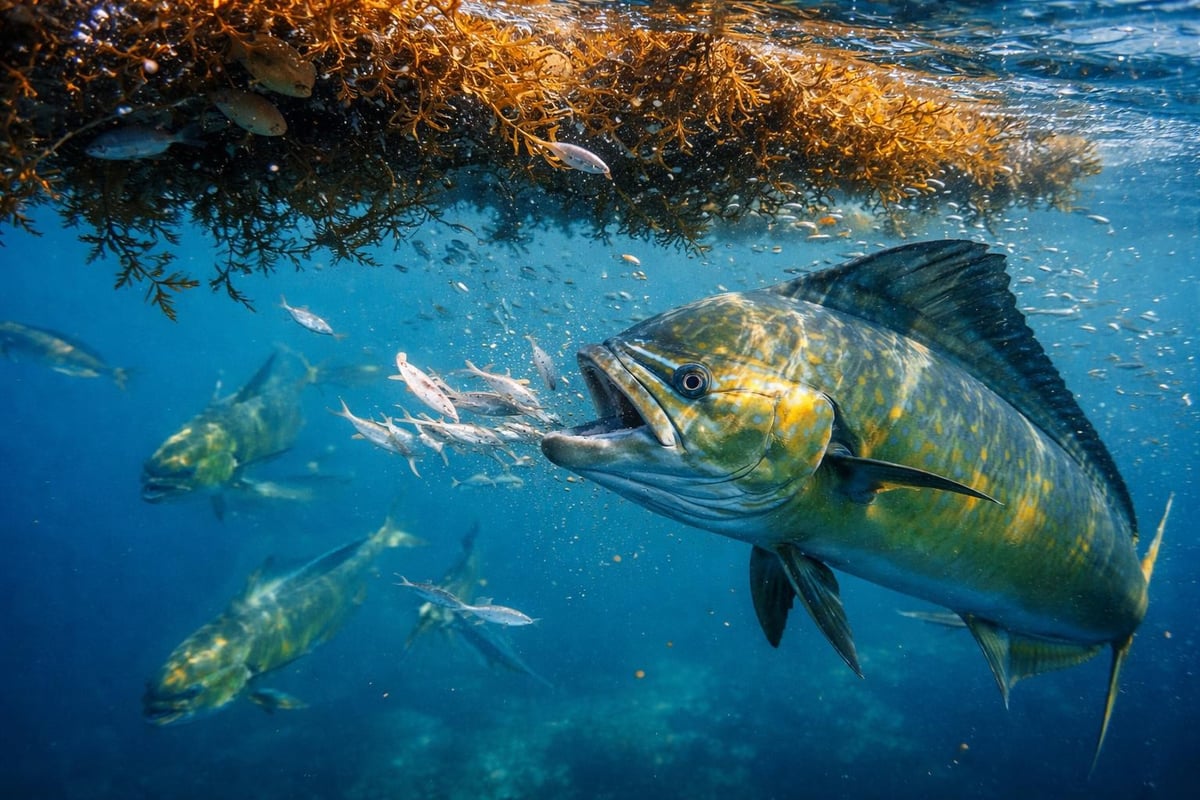
These fish are also known for hanging around floating debris, weed lines, and flotsam, where they ambush schools of smaller fish. Matching your lure presentation to their natural prey increases your odds significantly.
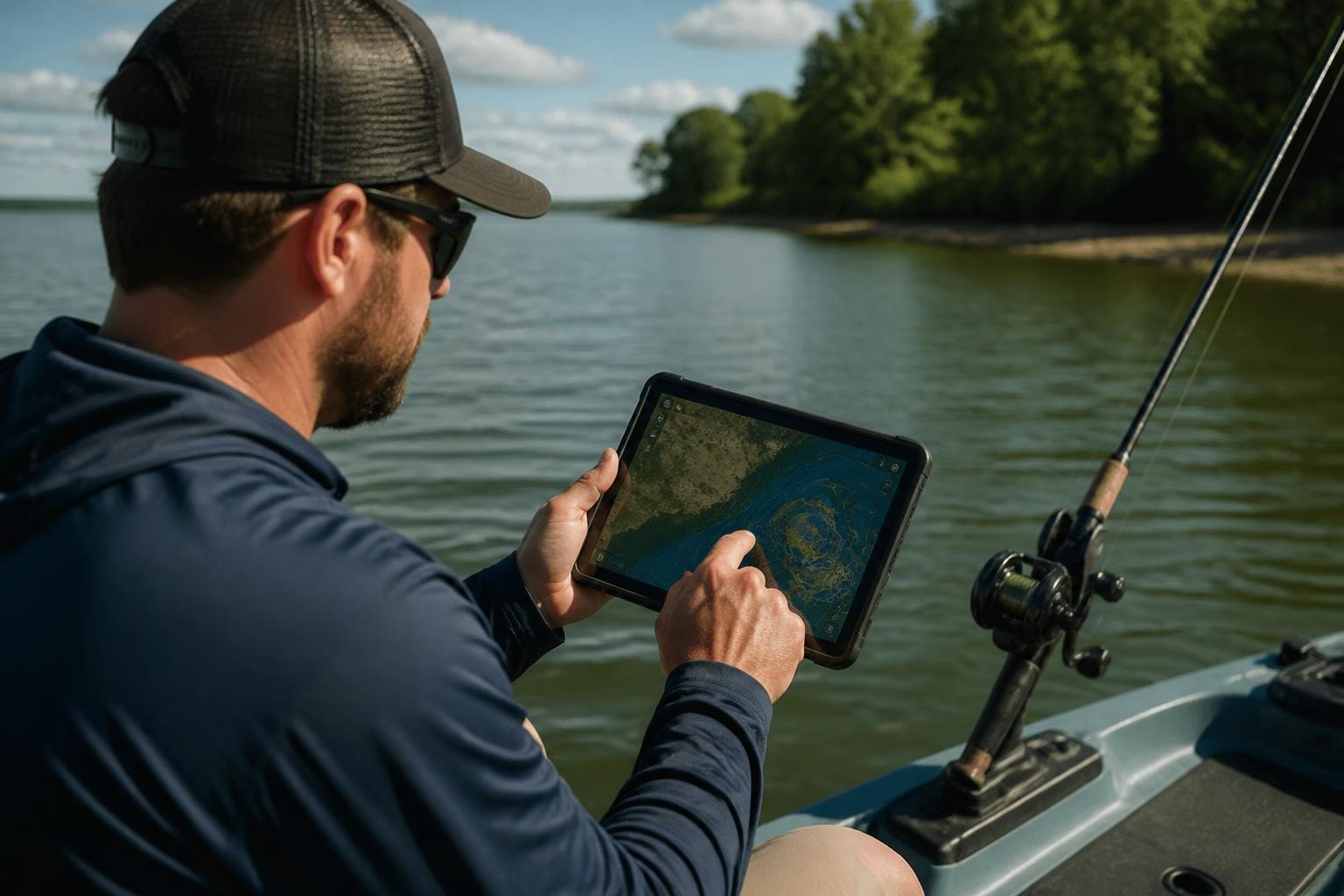
When you're planning your next offshore trip, check out Find Fishing Spots to locate proven mahi mahi grounds with GPS coordinates and access information.
Skirted Trolling Lures
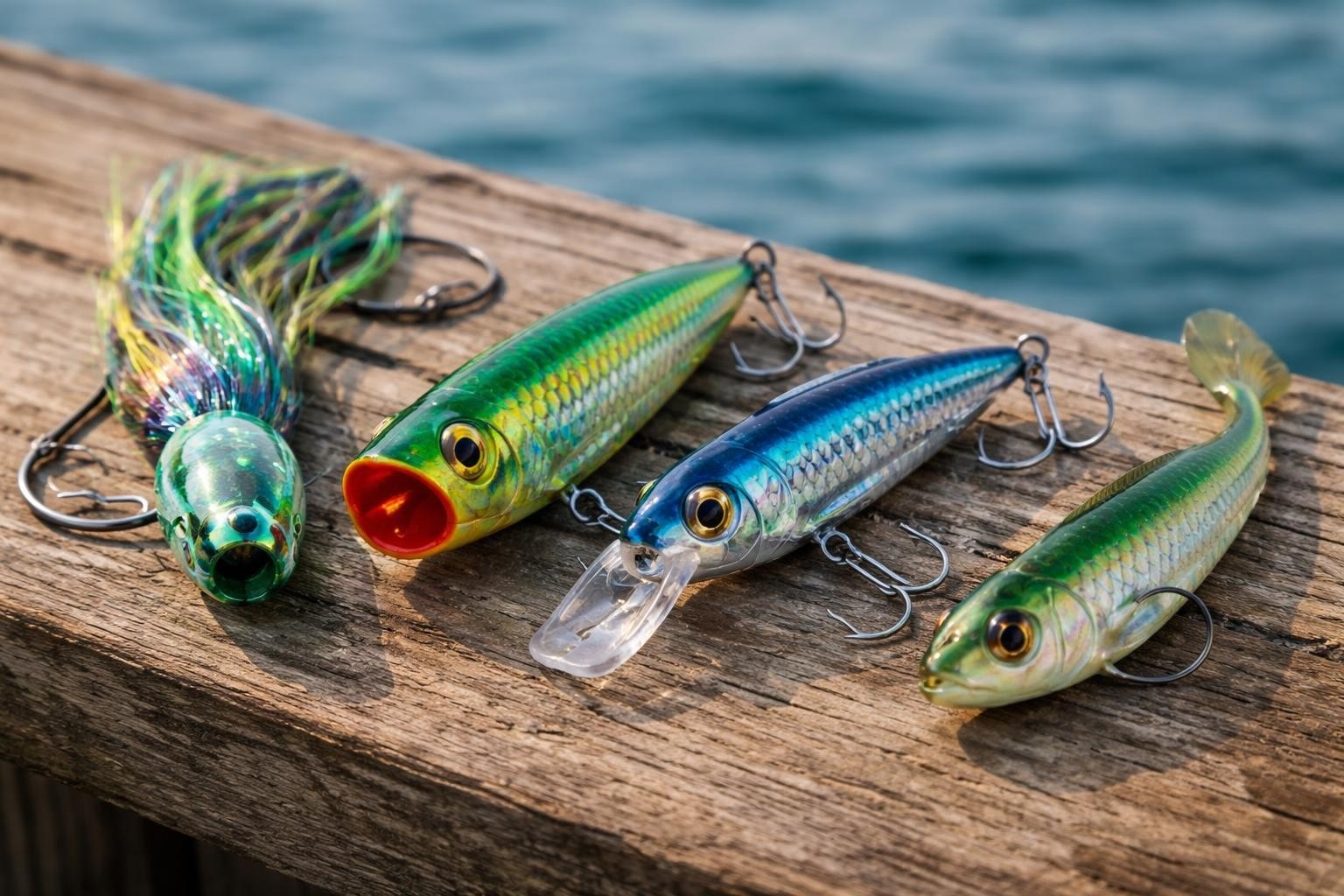
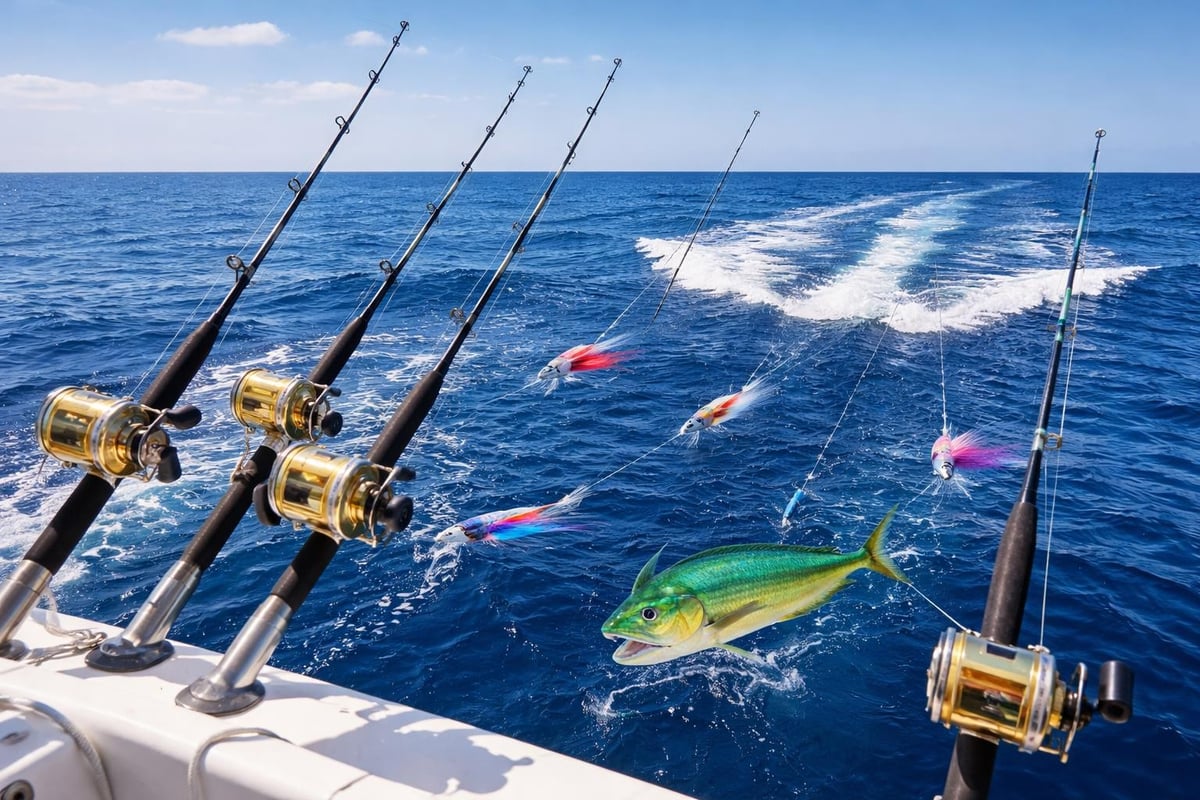
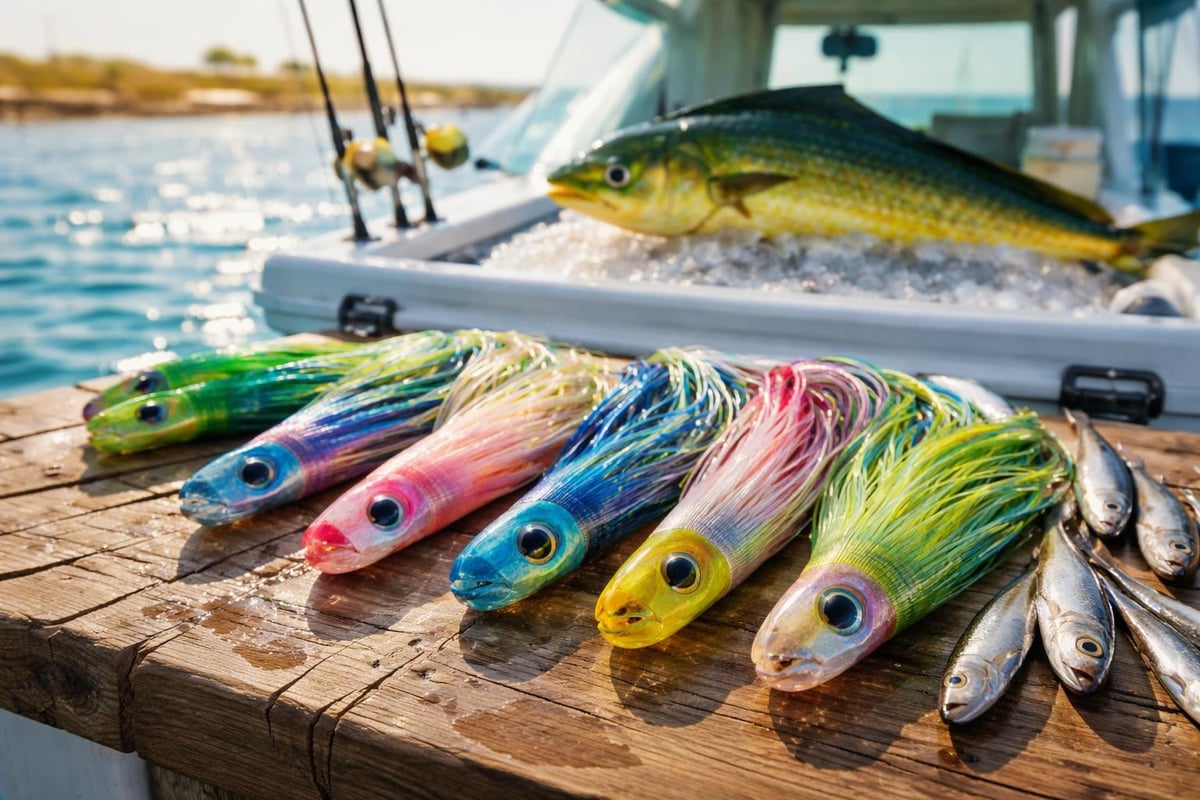
Skirted trolling lures are arguably the most popular choice among serious mahi anglers. These lures feature a hard or soft head with colorful vinyl or silicone skirts that pulse and wave in the water.
The Mahi Maniacs series has gained a strong reputation for offshore fishing. These versatile lures work for mahi, tuna, sailfish, and more, making them a solid investment for mixed-bag trips.
Top Color Combinations
- Chartreuse and pink: High visibility in clear blue water
- Blue and white: Classic combination that mimics flying fish
- Purple and black: Effective in low-light conditions or overcast days
- Yellow and green: Great for stirring up curiosity strikes
Most experienced captains recommend running 4-6 lures in a spread, varying colors and positions to cover more water. If you're heading to the Gulf of Mexico fishing spots, these trolling setups work exceptionally well.
Diving Plugs and Crankbaits
Diving plugs add a different dimension to your mahi spread. These hard-bodied lures dive below the surface and create a wobbling, darting action that triggers aggressive strikes.
The Rapala X-Rap and Yo-Zuri Crystal Minnow are two standouts in this category. They dive to depths of 8-15 feet and work well when mahi are holding slightly deeper or when the surface bite slows down.
Advantages of diving plugs:
- Cover different depth zones in your spread
- Create noise and vibration that attracts fish from distance
- Hold up well to aggressive strikes and sharp teeth
- Can be trolled or cast to visible fish
When targeting mahi near structure or offshore reefs, diving plugs can be particularly deadly. They're also excellent when you spot birds working and need to cast to the action quickly.
Soft Plastic and Rigged Ballyhoo
Soft plastics offer incredible versatility and lifelike action. Paired with a weighted jig head or rigged behind a trolling lead, they produce a swimming motion that's hard for mahi to ignore.
Rigged ballyhoo remains a time-tested favorite, especially when combined with a colorful skirt or lure head. The natural baitfish scent and movement make it one of the best mahi mahi lures when fish are being selective.
Rigging Tips for Maximum Success
- Use a 6/0 to 8/0 circle hook for better hookup ratios
- Add a chin weight to keep ballyhoo swimming straight
- Pair with bright skirts in pink, chartreuse, or orange
- Replace baits every few hours to maintain freshness
Many anglers fishing California offshore spots swear by the ballyhoo-and-skirt combination, particularly during spring and summer when mahi move closer to shore.
Poppers and Surface Lures
Few things in fishing match the excitement of watching a mahi explode on a surface popper. These lures are worked with a jerking, popping retrieve that creates splashes and commotion.
Poppers shine when you've located a school of mahi and want to keep them engaged. They're particularly effective around weed lines and floating debris where fish are actively feeding.
When to throw poppers:
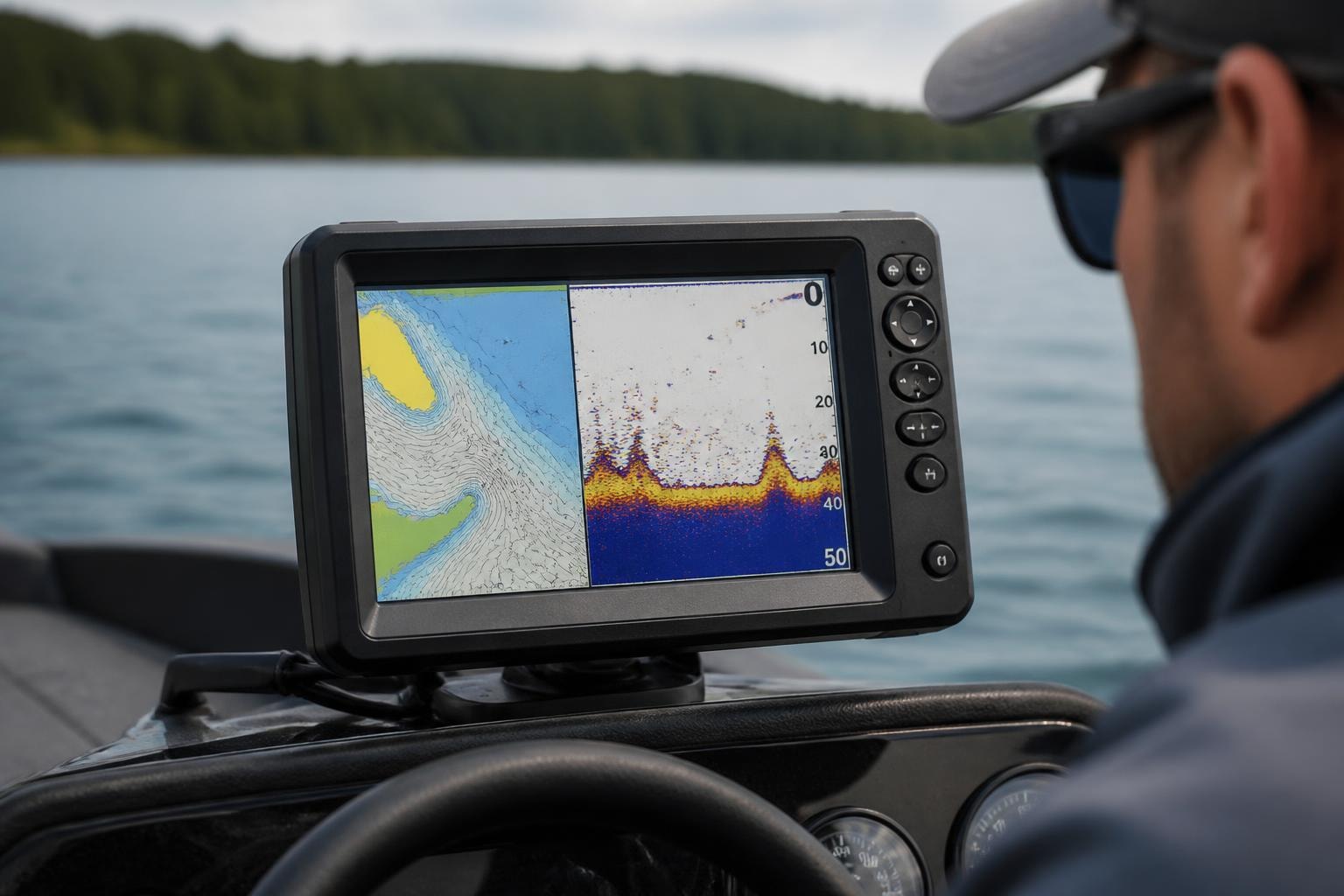
- You spot mahi visually or on the fish finder
- Trolling lures produce a hookup and you want to target the school
- Early morning or late afternoon when fish are surface feeding
- Calm seas with good visibility
Specialized mahi lure collections often include both trolling and casting options, giving you flexibility to adapt to changing conditions.
Color Selection and Water Conditions
Choosing the right colors for the best mahi mahi lures depends heavily on water clarity, light conditions, and local baitfish populations.
In clear, blue offshore water, bright colors like chartreuse, hot pink, and orange stand out and attract fish from greater distances. When water has more color or you're fishing on overcast days, consider darker combinations with purple, black, or blue.
Seasonal Color Patterns
- Spring: Lighter blues and whites mimicking smaller baitfish
- Summer: Bright chartreuse and pink as fish become more aggressive
- Fall: Natural patterns and darker colors as baitfish mature
- Winter: Bright attractor colors to trigger reaction strikes
Don't be afraid to experiment. Mahi can be unpredictable, and sometimes an unusual color combination produces when traditional choices don't. Expert reviews of top lures often emphasize having variety in your tackle box.
Speed and Presentation Techniques
Trolling speed matters significantly when fishing for mahi. Most captains recommend speeds between 6-9 knots, though some situations call for slower presentations around 4-5 knots.
Effective trolling strategies:
- Start at 7 knots and adjust based on bite frequency
- Run lures at varying distances: 30, 60, 100, and 150 feet back
- Use outriggers to spread lures wider
- Occasionally vary speed to trigger following fish
When you hook up, slow down or circle back to the area. Mahi are schooling fish, and where there's one, there are usually more. If you're fishing near North Carolina’s offshore waters, this strategy can lead to multiple hookups.
Maintaining and Storing Your Lures
The best mahi mahi lures are an investment, and proper care extends their lifespan significantly. After each trip, rinse all lures thoroughly with fresh water to remove salt buildup.
Check hooks for rust or dullness, and replace them as needed. Sharp hooks mean better hookup ratios and fewer lost fish. Store lures in tackle boxes with dividers to prevent tangling and damage to skirts.
For rigged ballyhoo and natural baits, proper freezing and thawing techniques maintain their effectiveness. Avoid refreezing baits multiple times, as this degrades their texture and makes them less durable on the troll.
Choosing the best mahi mahi lures comes down to understanding what these fish are feeding on and matching your presentation accordingly. Whether you prefer skirted trolling lures, diving plugs, or topwater poppers, having the right selection in your tackle box puts you ahead of the game. Ready to put these lures to the test? Visit Find Fishing Spots to discover offshore mahi grounds near you, complete with GPS coordinates, access details, and local fishing reports to help you plan your next successful trip.