If you've spent any time fishing offshore in the Atlantic or Gulf, you've probably heard experienced anglers talk about goggle eye fish bait. These small, energetic baitfish are a secret weapon for targeting big pelagic species, and once you understand how to catch and use them, they might just become your go-to live bait. Goggle eyes, also known as bigeye scad, are prized for their hardiness, swimming action, and ability to attract everything from sailfish to kingfish. Whether you're new to offshore fishing or looking to level up your bait game, here's what you need to know.
What Makes Goggle Eye Fish Bait So Effective
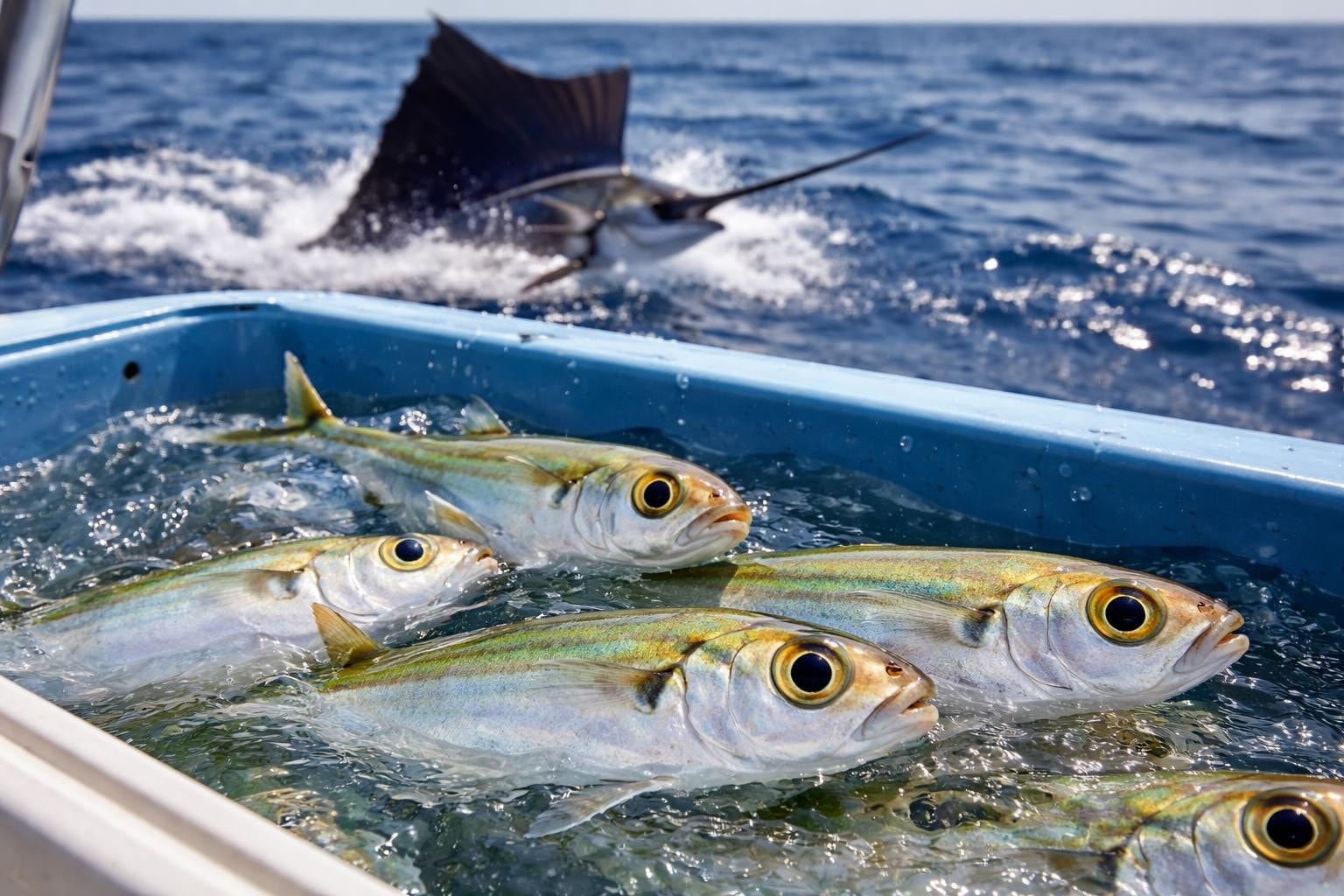
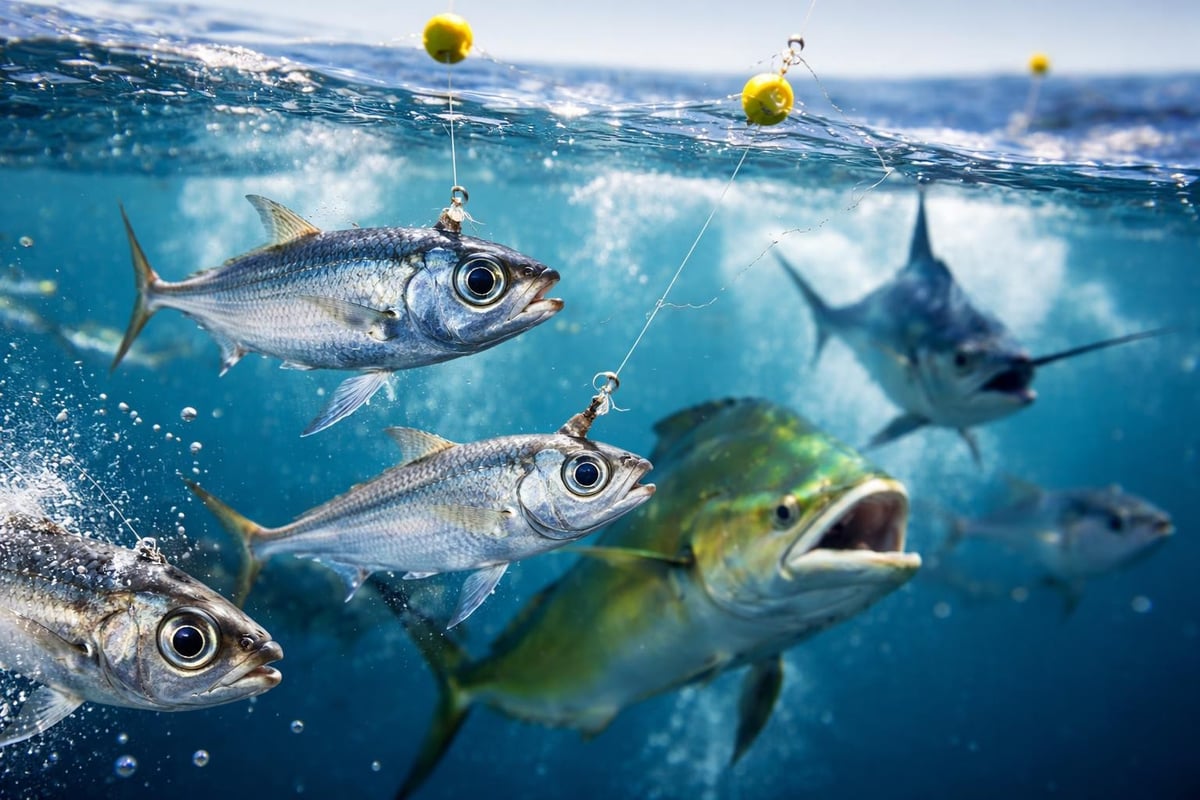
Goggle eyes are members of the jack family, and they've got the swimming power and flash that predators can't resist. Their distinctive large eyes and silvery bodies create vibration and reflection in the water that draws strikes from a distance.
Key characteristics that make them ideal bait:
- Hardy and lively even after being hooked
- Strong swimmers that stay active on the line
- Size range typically 4-8 inches, perfect for most offshore species
- Natural prey for sailfish, marlin, tuna, and kingfish
- Can survive in live wells longer than many other baitfish
The goggle eye’s natural behavior and physical traits make them exceptionally effective for sight-fishing situations. When a sailfish sees that frantic swimming motion, instinct kicks in. Unlike some baits that get lethargic quickly, goggle eyes keep moving, which is exactly what triggers aggressive predators to strike.
Where to Find Goggle Eyes
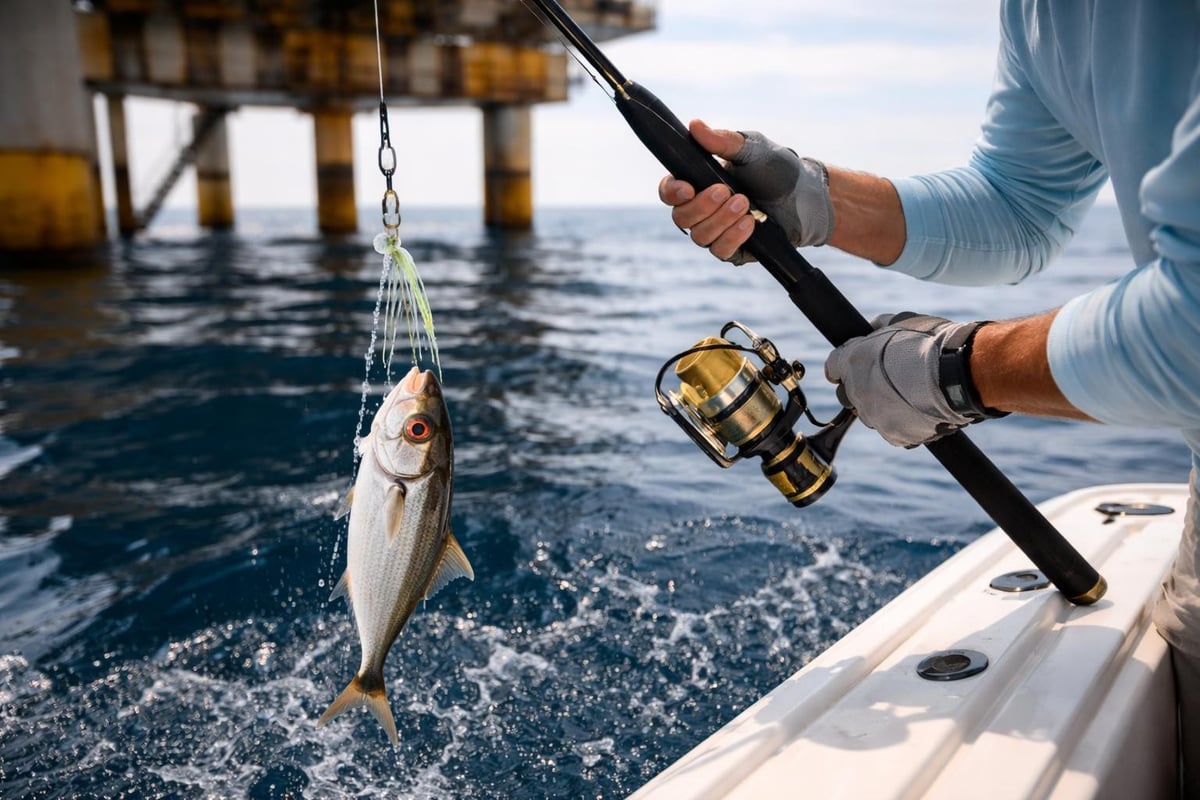
Locating goggle eye fish bait requires knowing their habits and preferred structures. These fish school around offshore structures, typically in 60-300 feet of water, though you can sometimes find them closer to shore around deep channels and inlets.
Prime goggle eye locations:
- Oil rigs and artificial reefs
- Rock piles and natural bottom structure
- Deep wrecks and ledges
- Bridge pilings with strong current
- Channel markers in deeper water
When searching for productive fishing locations that hold goggle eyes, focus on areas with current and vertical structure. They tend to suspend in mid-water during the day and move higher in the water column at night. In Florida waters, spots like Egmont Key at the mouth of Tampa Bay can hold schools of goggle eyes around the deeper channels.
Catching Goggle Eye Fish for Bait
The most effective method for catching goggle eyes is with specialized jigs designed for this purpose. These aren't your typical fishing jigs but rather small, weighted hooks that mimic tiny baitfish or plankton.
Sabiki Rigs and Specialty Jigs
Sabiki rigs with small hooks work well, but dedicated goggle eye jigs like Skyline’s Gog Bug are purpose-built for this task. These jigs typically range from 1/4 to 1 ounce and feature glow-in-the-dark or reflective materials that attract goggle eyes in deeper water.
Techniques for catching them:
- Drop your jig to the desired depth near structure
- Use a rapid jigging motion with 1-2 foot pulls
- Watch your line for the distinctive tap-tap bite
- Reel steadily once hooked to avoid tangles
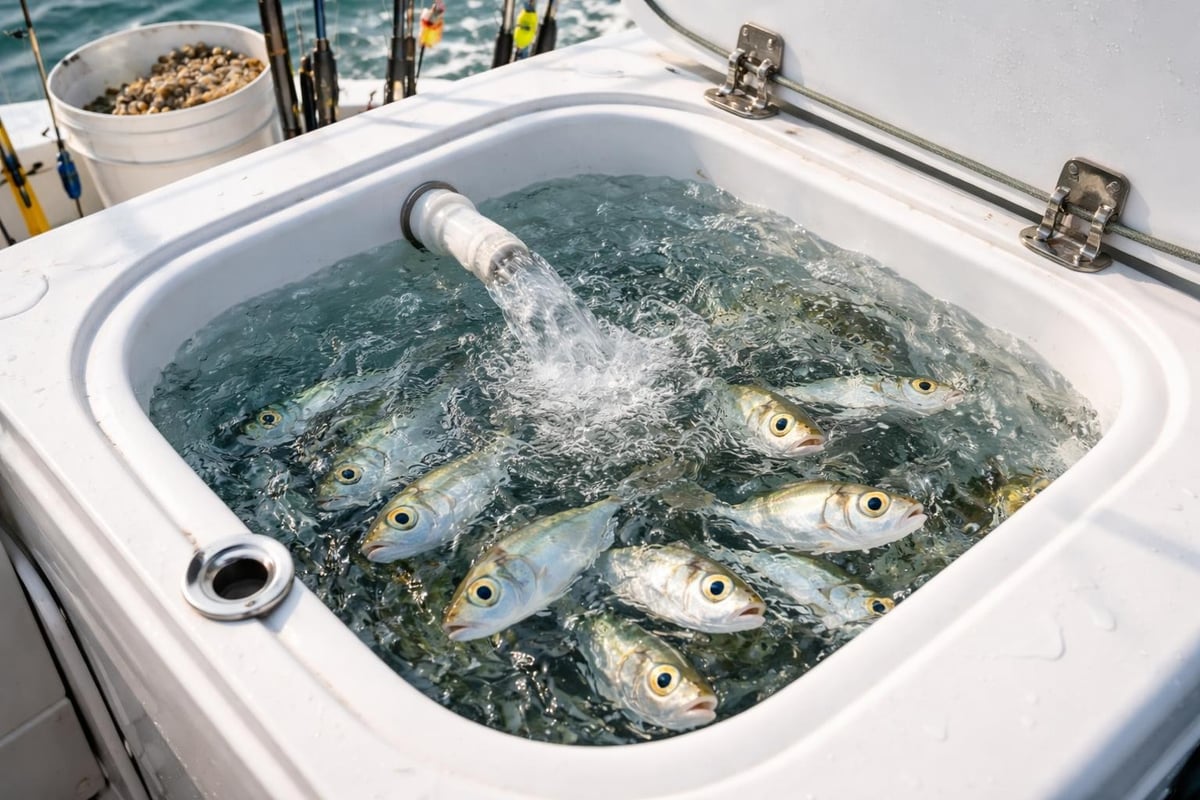
- Keep a flow-through live well ready for immediate transfer
Night fishing produces excellent results because goggle eyes rise in the water column to feed on plankton. Many serious offshore anglers fish for goggle eyes at night before their daytime fishing trips, ensuring they have fresh, lively bait ready at first light.
Rigging Goggle Eye Fish Bait
Proper rigging keeps your goggle eye swimming naturally and increases hookup rates on gamefish. The goal is to allow free movement while ensuring the hook is positioned for a solid connection when a big fish strikes.
Hook Placement Options
Nose hooking: Best for trolling and slow-pitch presentations. Insert the hook through both nostrils or just behind the upper jaw. This keeps the bait swimming forward naturally.
Shoulder hooking: Ideal for kite fishing and live bait drifting. Hook through the meaty area behind the head, avoiding the spine. This allows the goggle eye to swim in place or dive.
Tail hooking: Useful when you want the bait to swim away from the boat. Hook near the tail base, being careful not to damage the spine.
For serious offshore work, specialized goggle eye bait rigs feature circle hooks and fluorocarbon leaders designed specifically for this baitfish. These pre-made rigs save time and are built to handle the stress of big gamefish.
Leader and Hook Size
Match your tackle to your target species. For sailfish and smaller tuna, a 4/0 to 6/0 circle hook on 40-60 pound fluorocarbon works well. Targeting marlin or big kingfish? Step up to 7/0 or 8/0 hooks with 80-100 pound leader.
Keep the leader length between 6-10 feet for most applications. Longer leaders reduce visibility but can tangle more easily. Shorter leaders are easier to manage but might spook wary fish in clear water.
Keeping Goggle Eyes Alive and Healthy
The effectiveness of goggle eye fish bait depends heavily on presentation, and that means keeping them as lively as possible. Dead or dying bait simply doesn't produce the same results.
Live well management tips:
- Maintain water temperature between 68-75°F
- Ensure strong water flow and aeration
- Avoid overcrowding (8-12 goggle eyes per 30 gallons)
- Change water regularly or use flow-through system
- Handle minimally and gently when transferring
Goggle eyes are relatively hardy compared to other offshore baits like blue runners or pilchards, but they still need proper care. If you're fishing locations along the coast like Fort De Soto Park’s beaches and flats, having a quality live well system makes all the difference when you head offshore.
Species That Target Goggle Eye Bait
While goggle eyes are famous as sailfish candy, they attract a wide range of offshore predators. Understanding what you might hook helps you prepare the right tackle and techniques.
Top gamefish that eat goggle eyes:
- Sailfish (primary target in Southeast waters)
- White marlin and blue marlin
- Kingfish and Spanish mackerel
- Blackfin tuna and skipjack
- Wahoo (especially when trolled)
- Cobia and amberjack around structure
- Large grouper and snapper
The goggle eye’s role in the offshore food chain makes it valuable across different fishing scenarios. In California waters, around spots like La Jolla Canyon, they work for yellowtail and calico bass near kelp beds, though they're less common on the Pacific coast.
Freshwater Goggle Eye Alternatives
It's worth noting that in freshwater, "goggle eye" typically refers to rock bass or warmouth, completely different species. When fishing for freshwater goggle eye in rivers and streams, you're dealing with panfish rather than baitfish. The saltwater goggle eye fish bait discussed here is specific to offshore and nearshore saltwater fishing.
Seasonal Patterns and Timing
Goggle eye availability varies by season and location. In Florida and the Gulf, they're catchable year-round, but concentrations shift with water temperature and baitfish migrations.
Best times for catching goggle eyes:
- Spring: Excellent availability as waters warm
- Summer: Peak abundance around structures
- Fall: Good numbers during offshore migrations
- Winter: Deeper water concentrations, harder to find
Planning your bait-catching trips around these patterns improves success rates. When exploring fishing spots near you, pay attention to local reports about goggle eye availability. Coastal areas with deeper access points and bridge structures tend to hold them more consistently.
Goggle eye fish bait represents one of the most effective live bait options for offshore fishing, combining hardiness with irresistible action that triggers aggressive strikes. Whether you're targeting sailfish off the Atlantic coast or exploring new gamefish species, mastering the art of catching and rigging goggle eyes will expand your fishing success. Ready to put these techniques into practice? Find Fishing Spots helps you locate productive offshore structures, deep channels, and coastal access points across the United States where you can catch goggle eyes and target the gamefish that love them.