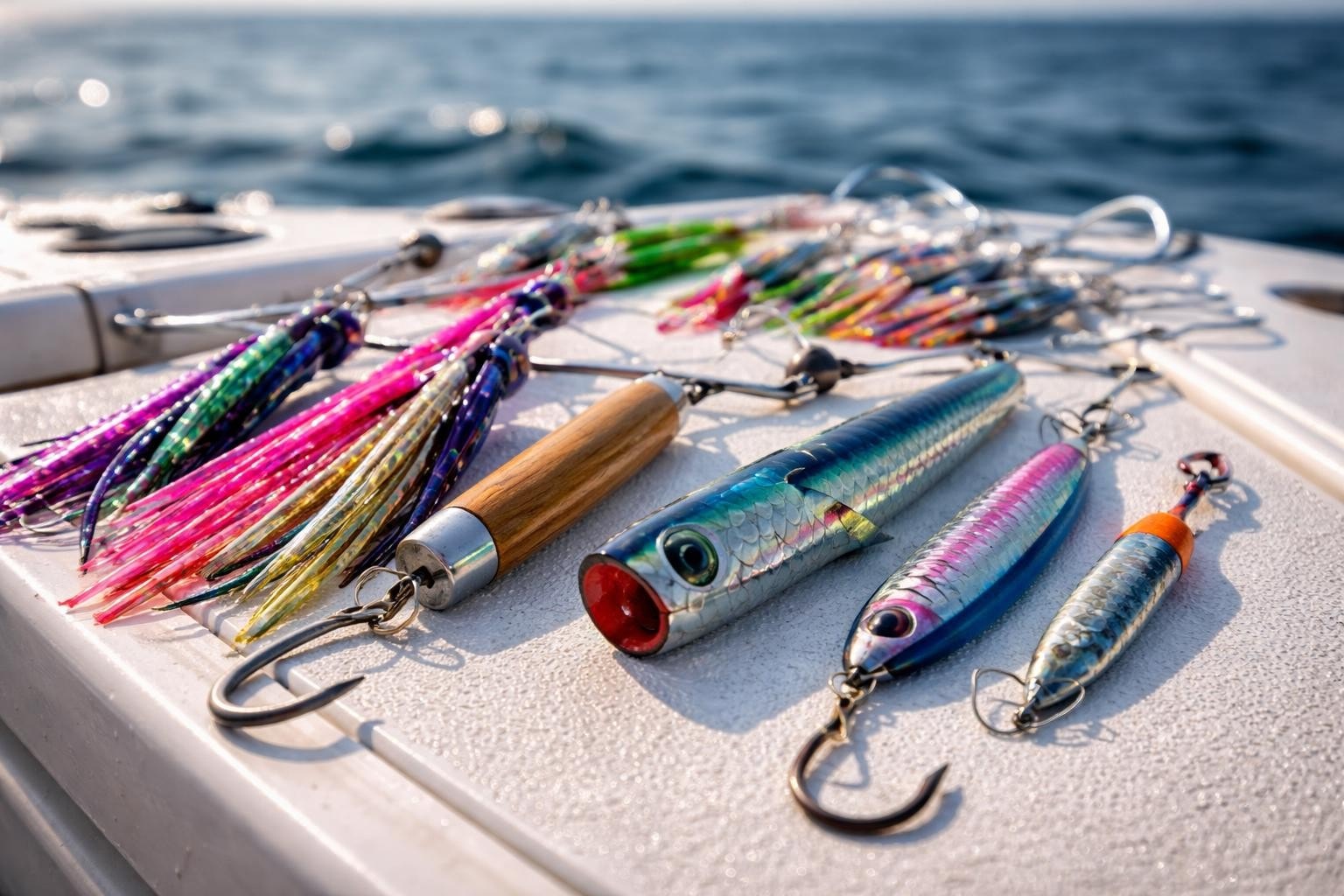
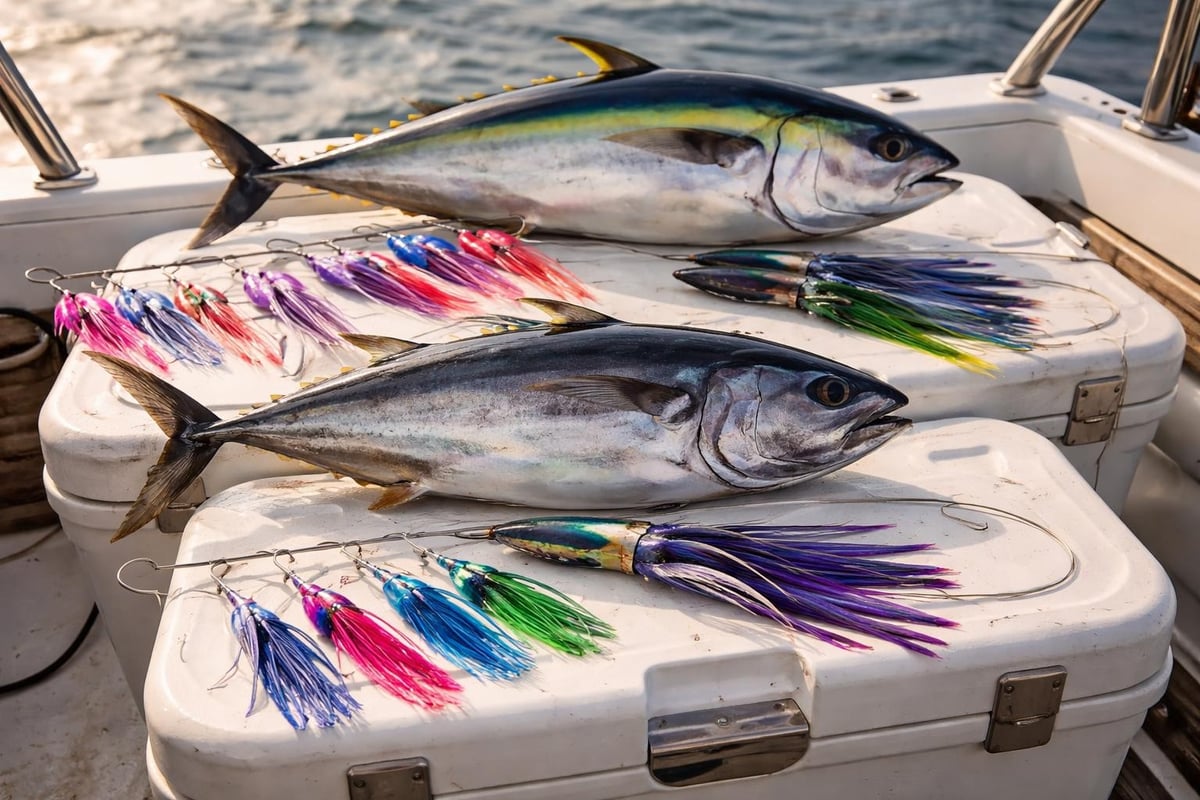
When you're targeting tuna offshore, having the right lures in your tackle box can make the difference between a slow day and a boatload of fish. Tuna are aggressive feeders that respond to specific presentations, whether you're trolling deep or working topwater action near schools of baitfish. The variety of tuna fish lures available today ranges from classic cedar plugs to modern high-speed skirted lures, each designed to trigger strikes from these powerful gamefish.
Understanding What Tuna Fish Lures Need to Do
Tuna have excellent eyesight and hunt by sight, so your lures need to stand out in the water column. These fish chase down fast-moving prey like squid, mackerel, and flying fish, which means your presentations need to mimic that speed and action.
Different tuna species respond to different presentations:
- Yellowfin tuna aggressively hit trolling spreader bars and squid chains
- Bluefin tuna prefer larger profile lures that mimic bigger baitfish
- Skipjack and albacore readily strike smaller feather jigs and cedar plugs
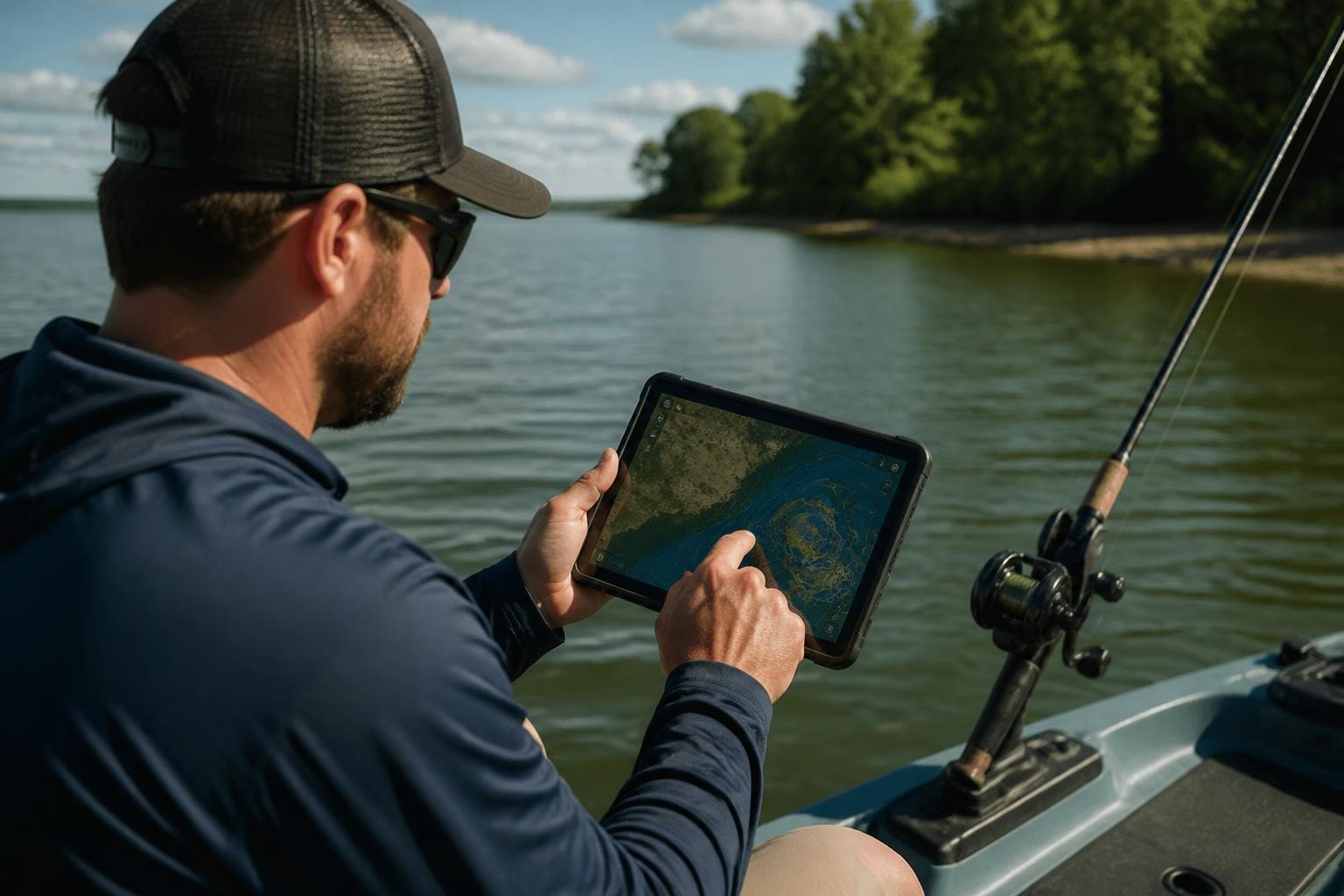
The key is matching your tuna fish lures to the local baitfish and adjusting your speed based on water conditions. When you're planning your offshore trip, checking fishing spots and local conditions helps you understand what bait is prevalent in your target area.
Trolling Lures That Produce Results
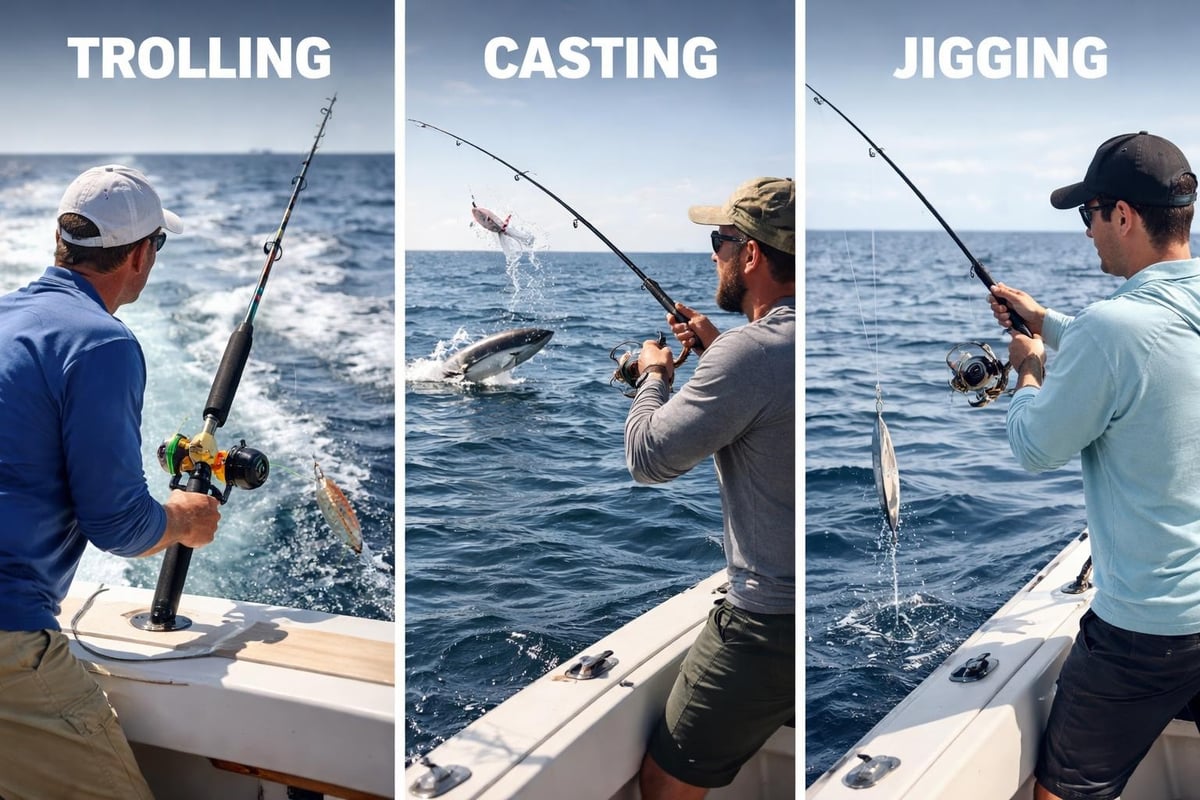
Trolling remains the most popular method for covering water and finding active tuna schools. High-speed trolling with skirted lures creates the flash and bubble trail that brings tuna up from depth.
Spreader Bars and Daisy Chains
Spreader bars create the illusion of a school of squid or small baitfish, which triggers the feeding instinct in tuna. These rigs feature multiple artificial squids rigged on bars that spread out behind the boat.
Daisy chains work similarly but with a simpler construction. They're excellent for yellowfin tuna that are feeding on squid. Many experienced anglers run multiple spreader bars at different positions in their trolling spread to maximize coverage.
Cedar Plugs and Bullet Lures
Cedar plugs are old-school tuna fish lures that still catch fish today. Their simple wooden design creates a tight wobble at high speeds. These work particularly well for smaller tuna species and can be trolled at 6-10 knots.
Bullet-style lures with jet heads cut through the water and create aggressive bubble trails. The best tuna fishing lures often include variations of these designs because they're proven producers across different conditions.
Casting and Jigging Options
When you locate tuna feeding on the surface, switching to casting lures gives you an exciting way to target these fish. Topwater poppers create surface commotion that drives tuna into a feeding frenzy.
Popper Characteristics:
- Cupped faces that throw water and create noise
- Sizes ranging from 5-9 inches depending on tuna size
- Work-the-lure techniques with aggressive pops and pauses
Vertical jigging has become increasingly popular for deep-holding tuna. Speed jigs in 100-300 gram weights reach depth quickly and flutter on the drop, mimicking injured baitfish. This technique requires less boat movement and lets you target specific depth zones where you mark fish.
Specialized Techniques and Lure Setups
Some tuna fishing methods require specific lure presentations that go beyond basic trolling. Green-sticking involves deploying synthetic squid from tall poles to keep lures in the clean water above the boat's wake. This method has proven especially effective for bluefin tuna.
The technique requires:
- Installing a 15-20 foot fiberglass pole on your boat
- Rigging multiple squid daisy chains from the pole tip
- Maintaining proper boat speed to keep lures dancing
- Watching for strikes and clearing lines quickly
Specialized trolling lures designed for specific tuna behaviors have evolved significantly. Modern materials and skirt designs create more realistic action than older rubber skirted lures.
Color Selection and Water Conditions
Tuna fish lures come in dozens of color patterns, and choosing the right one depends on several factors. In clear blue water, natural colors like blue-and-white or green-and-yellow mimic common baitfish. Darker conditions call for high-contrast patterns with pink, orange, or chartreuse.
Water clarity plays a major role:
- Clear water: Natural baitfish patterns, subtle blues and silvers
- Green water: Brighter colors with chartreuse and pink highlights
- Low light: Glow-in-the-dark inserts or UV-reflective materials
Many productive tuna anglers run a mixed spread with different colors to see what the fish prefer on any given day. When you're exploring new fishing locations, talking to local captains about productive color patterns saves time on the water.
Rigging and Maintenance Tips
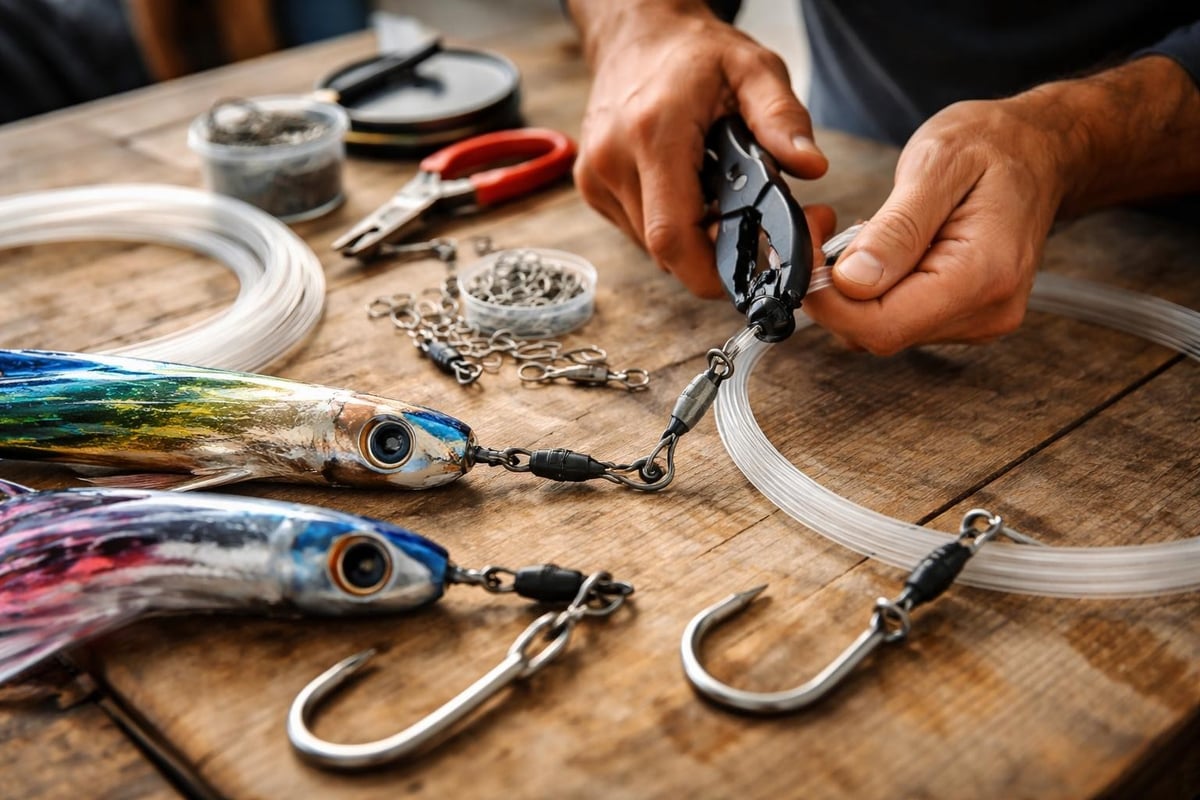
Properly rigging your tuna fish lures ensures they run correctly and hook fish efficiently. Most trolling lures work best with 100-130 pound fluorocarbon leaders and circle hooks or J-hooks depending on your preference.
Essential rigging components:
- Heavy-duty swivels rated for big game fishing
- Crimps or wind-on leaders for clean connections
- Hook sizes matched to lure size (7/0 to 10/0 typical)
- Leader length of 10-15 feet for most applications
After each trip, rinse all lures with fresh water and check for damaged skirts or bent hooks. Tuna teeth can tear up soft plastics, so keeping spare skirts and replacing them keeps your lures fishing at peak effectiveness. Quality manufacturers like those specializing in tuna tackle design their products for durability, but regular maintenance extends lure life significantly.
Matching Lures to Your Target Area
Different fishing zones produce better results with specific lure types. Offshore canyons and deep water structures often hold larger bluefin that prefer bigger presentations. Nearshore lumps and temperature breaks concentrate yellowfin that readily hit smaller high-speed lures.
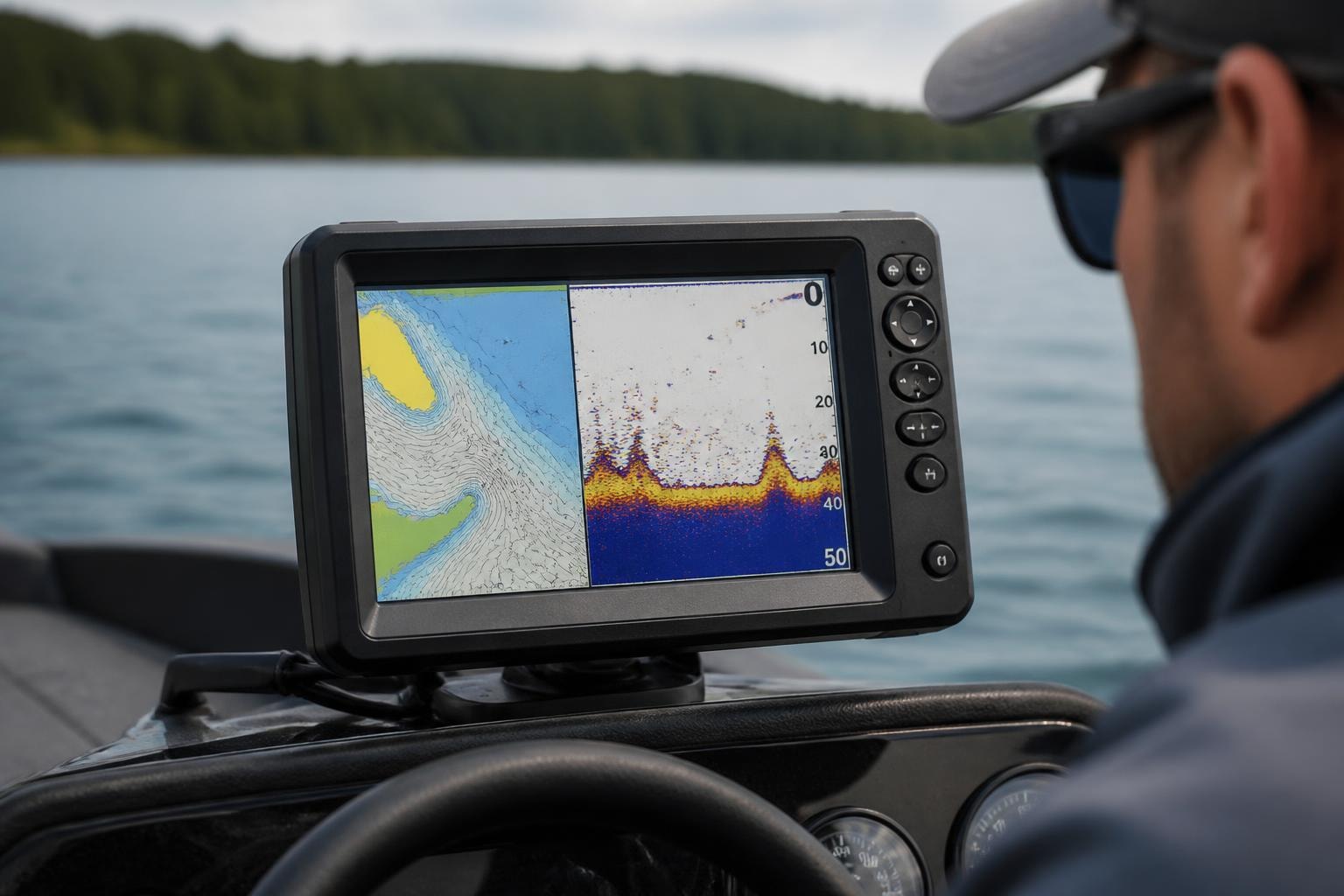
Before heading out, research your target area using resources that provide detailed fishing spot information including depth contours and seasonal patterns. This preparation helps you select the right combination of tuna fish lures for your tackle boxes.
Inshore tuna opportunities exist in some regions where skipjack and smaller yellowfin come within range of smaller boats. These situations favor lighter tackle and smaller lures that still produce exciting action.
Success with tuna fish lures comes down to understanding what these fish are feeding on and presenting your offerings at the right speed and depth. Whether you're trolling spreader bars for yellowfin or working poppers over breaking fish, having confidence in your lure selection makes all the difference. When you're ready to find productive offshore waters and tuna grounds, Find Fishing Spots provides GPS coordinates and detailed location information for saltwater fishing destinations across the country, helping you spend more time fishing and less time searching.