
Ballyhoo: Choosing, Rigging and Trolling
How to buy, store and thaw ballyhoo, rig them with or without skirts, run them in a trolling spread, and catch live ballyhoo with a hoop net.
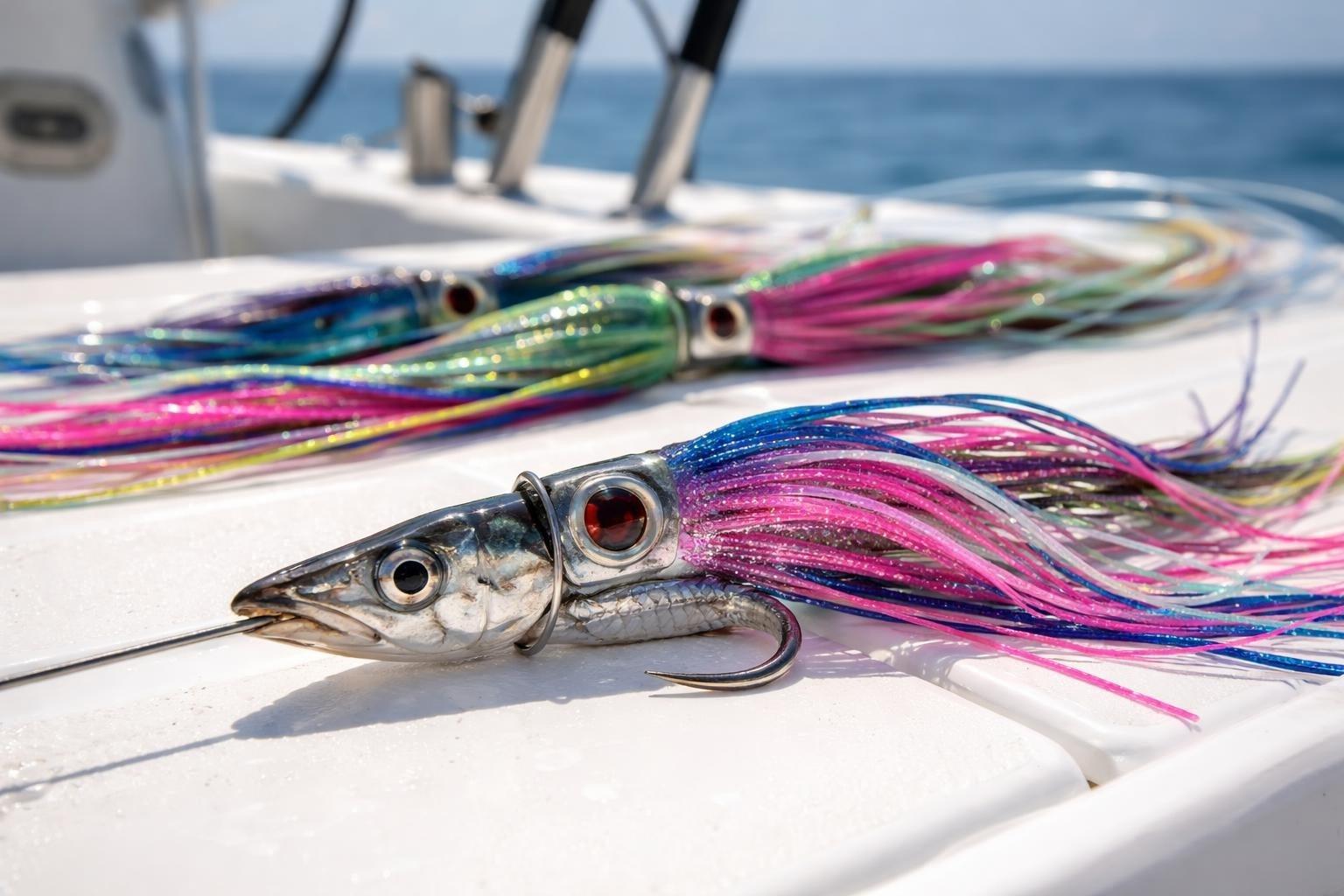
Ballyhoo are one of the most reliable offshore trolling baits, accounting for sailfish, marlin, wahoo, tuna, kingfish and mahi-mahi. This guide brings together how to choose, store and thaw ballyhoo, how to rig them, with or without a skirt, how to run them in a trolling spread, and how to catch your own live ballyhoo with a hoop net.
Why Ballyhoo Work
Ballyhoo belong to the halfbeak family and school in tropical and subtropical waters throughout the Atlantic and Gulf of Mexico. They have a distinctive elongated lower jaw, and they're a natural food for nearly every pelagic predator, which is why gamefish recognize them instantly. Their silvery, streamlined body gives off flash and scent, cuts through the water with little resistance, and swims with a natural wobble when properly rigged, so you can troll them faster than many other natural baits without them spinning.
Ballyhoo are widely available frozen at coastal bait and tackle shops, store easily, and can be rigged many ways, from surface skipping to deeper swimming presentations.
Frozen, Pre-Rigged or Live
Most anglers buy frozen ballyhoo, and they fish just as effectively as fresh when rigged correctly. Pre-rigged frozen ballyhoo come already pinned, wired and often skirted, which saves an hour of rigging at the dock and gets a mangled bait replaced in seconds when the bite is on. They cost more per bait than rigging your own. Custom rigging still makes sense when every detail counts, such as in tournaments, and knowing how to rig one yourself is a useful backup when pre-rigged supplies run out.
Live ballyhoo give the ultimate realism when slow-trolled or kite-fished, but they're fragile compared with hardier baits like pilchards or pinfish and need aerated livewells and careful handling. See "Catching Live Ballyhoo" below.
Choosing Quality Bait
- Bright, clear eyes, firm flesh and intact skin, with no soft bellies, tears, broken bills or bent bodies
- Vacuum-sealed packaging without excessive ice crystals, and natural color without brown oxidation or freezer burn
- A firm texture through the package, which suggests the baits were brined before rigging, and a packaging date
- On pre-rigged baits: properly crimped wire, sharp rust-free hooks, and a bait secured without excessive wrapping; leaders typically run 18 to 24 inches
Matching Bait Size to the Target
Ballyhoo range from about 6 to 12 inches or more. Typical sizing:
- Sailfish and white marlin: 6- to 8-inch ballyhoo on 5/0 to 6/0 hooks
- Mahi-mahi: 7- to 9-inch baits, or about 8 inches
- Kingfish: 7- to 10-inch baits rigged on wire
- Yellowfin and blackfin tuna: 8- to 11-inch ballyhoo in natural presentations, or smaller ballyhoo on lighter tackle
- Wahoo: 9- to 12-inch ballyhoo on heavy wire with 7/0 hooks
- Big billfish and marlin: 10- to 12-inch and larger baits
Larger isn't always better: oversized baits can cut strikes from smaller fish without much increase in trophy potential.
Storing, Thawing and Brining
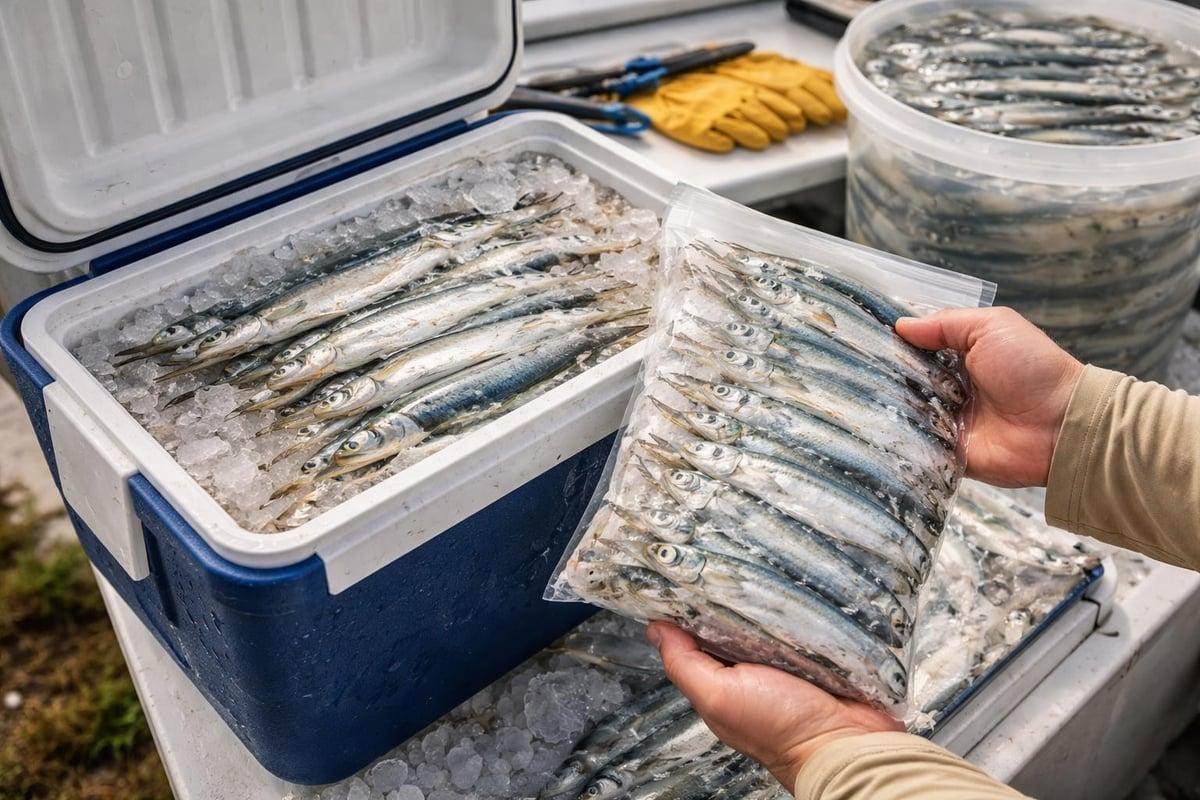
- Freezing: keep ballyhoo at a steady temperature, ideally below 0°F, since temperature swings form ice crystals that damage texture. Vacuum-sealing beats standard freezer bags. Freeze baits flat so they don't curve. Properly stored, they keep for months.
- Thawing: always thaw slowly, never in warm or hot water or the microwave. Anglers thaw them in a cooler with ice, often moved there about 24 hours before the trip, overnight in the refrigerator, or in saltwater. Quick thawing in freshwater or warm conditions breaks down the tissue and makes mushy baits that tear and wash out.
- Brining: a salt brine firms the flesh, toughens the skin and maintains color. Some anglers brine rigged ballyhoo overnight or days in advance, and kosher salt or a simple saltwater ice slush also works. Commercial brines add hardening agents and UV protectants. See this advice on preserving ballyhoo (opens in a new tab).
- On the boat: keep baits on ice in a dedicated bait cooler, out of the sun, and pull them as needed. Never refreeze thawed ballyhoo; use them within 24 to 48 hours.
Rigging Ballyhoo
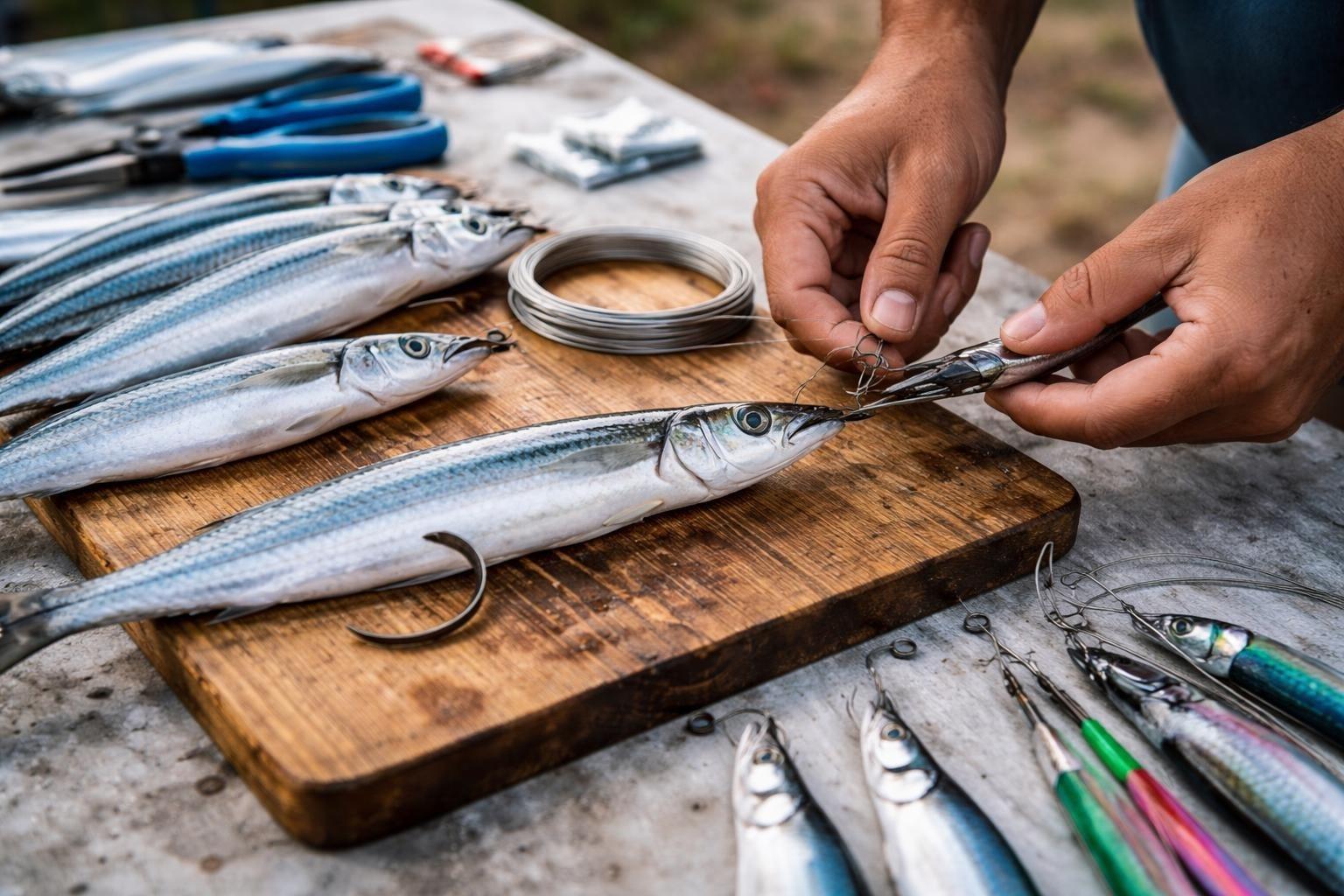
A well-rigged ballyhoo tracks straight with a slight wobble; a poorly rigged one spins and turns fish away. Before rigging, many anglers remove the backbone or break it just behind the head (with a thumbnail or the back of a knife, without tearing the skin) so the bait flexes naturally, and some trim the pectoral fins to reduce spin. The hook should sit so there's a straight line from the eye to the bend; any deviation makes the bait spin or run off-center.
J-Hook Rig
- Choose a 6/0 to 8/0 J-hook for most applications.
- Remove the eyes and break the bill at a 45-degree angle.
- Insert the hook through the gill plate and bring the point out through the belly near the anal fin, with the bend at about mid-body.
- Thread copper wire through the eye sockets and wrap it tightly around the bill and head, then twist the tag end to lock it and trim the excess.
- Add a chin weight if you need a deeper-running bait.
The pin rig is a classic variation: debone through the gill plate, run a rigging needle through the eye sockets and out the bottom of the jaw, thread the leader through, and secure everything with a copper pin through the lower jaw.
Circle Hook Rigs
Circle hooks have become popular for conservation, catch-and-release rules and tournament requirements, and for higher hookup rates. Instead of burying the hook in the body, the circle hook rides alongside or just behind the head, so the bait swims more naturally, and the hook slides to the corner of the mouth as a fish turns away, with less gut-hooking. The "X rig" holds everything in place with rubber bands or rigging floss. See the circle hook X rig method (opens in a new tab). Ringer swivels and O-rings help keep circle hooks properly oriented. Circle hooks in 5/0 to 9/0 cover most offshore applications.
Other Rigs
- Reusable O-ring: secure an O-ring to the hook and slide the ballyhoo onto it, which speeds up bait changes. The rubber biscuit method (opens in a new tab) uses a rubber grommet instead of threading wire and can extend bait life.
- Stinger rig: a trailing hook catches short strikers, especially toothy fish like kingfish and wahoo. See this quick stinger rig (opens in a new tab).
- Split-beak or split-bill rig: produces a lifelike swimming action and works well on longer lines. See how to rig a split-beak ballyhoo (opens in a new tab).
- Double-hook pin rig: creates a skipping action for marlin, and double-hook setups suit deeper presentations.
- Weighted rigs: egg sinkers or chin weights make a bait dive deeper and hold position in rough seas; lighter rigs skip and dance on the surface.
- Mylar wings: adding Mylar wings (opens in a new tab) imitates a flying fish, which mahi find hard to resist, especially in spring.
- Ballyhoo plugs: rigged for vertical jigging or live-lining (opens in a new tab), they reach grouper, snapper and other structure fish.
For more options, see these ballyhoo rigging types (opens in a new tab).
Leaders
Wire leaders resist bite-offs from kingfish and wahoo; pre-rigged wire commonly runs 30 to 60 pounds. Lighter leader material, such as 40- to 80-pound fluorocarbon, suits sailfish and mahi, and clear water.
Skirted Ballyhoo
Natural bait gets fish to bite; the skirt gets them to notice. A skirt or lure head over a ballyhoo adds color, flash, bulk and water disturbance, while the ballyhoo supplies the scent and silhouette. The skirt also protects the bait from washing out on long trolls. Common choices include Sea Witches with long flowing strands, bullet-headed Ilanders with rubber skirts, Joe Shute lures and hand-tied custom skirts. Chugger heads add surface commotion.
To rig one, run wire through the gill plates and out the belly, position the circle hook, slide the skirt onto the leader above the bait, and secure everything with a haywire twist, adding a chin weight if needed. Match skirt size to the bait: it should extend just beyond the head without overwhelming the bait, since too long interferes with the action and too short loses the attraction.
For skirt colors, natural pink, white, light blue, blue-and-white or silver suit clear blue water; brighter chartreuse, hot pink or orange suit rough, green or murky water and overcast days. Vary colors in a mixed spread to see what fish respond to. Presentation matters more than color: a well-running bait in the wrong color outfishes a poorly rigged bait in the perfect color.
Trolling Ballyhoo
Watch each bait for the first few minutes after you set it out. It should skip or swim just below the surface without tumbling or spinning; a skirted bait should skip consistently every few seconds with the skirt pulsing naturally.
Speed
Most anglers troll ballyhoo at about 6 to 9 knots, with a wider range of roughly 4 to 12 knots depending on the target. Common starting points by species:
- Sailfish: about 6 to 8 knots
- White marlin: 6 to 8 knots; blue marlin: 7 to 9 knots
- Mahi-mahi: about 5 to 8 knots
- Blackfin and yellowfin tuna: about 6 to 10 knots, with baits skipping at the faster end
- Wahoo: about 8 to 12 knots
Slow down slightly in rough seas; calm days allow faster speeds.
The Spread
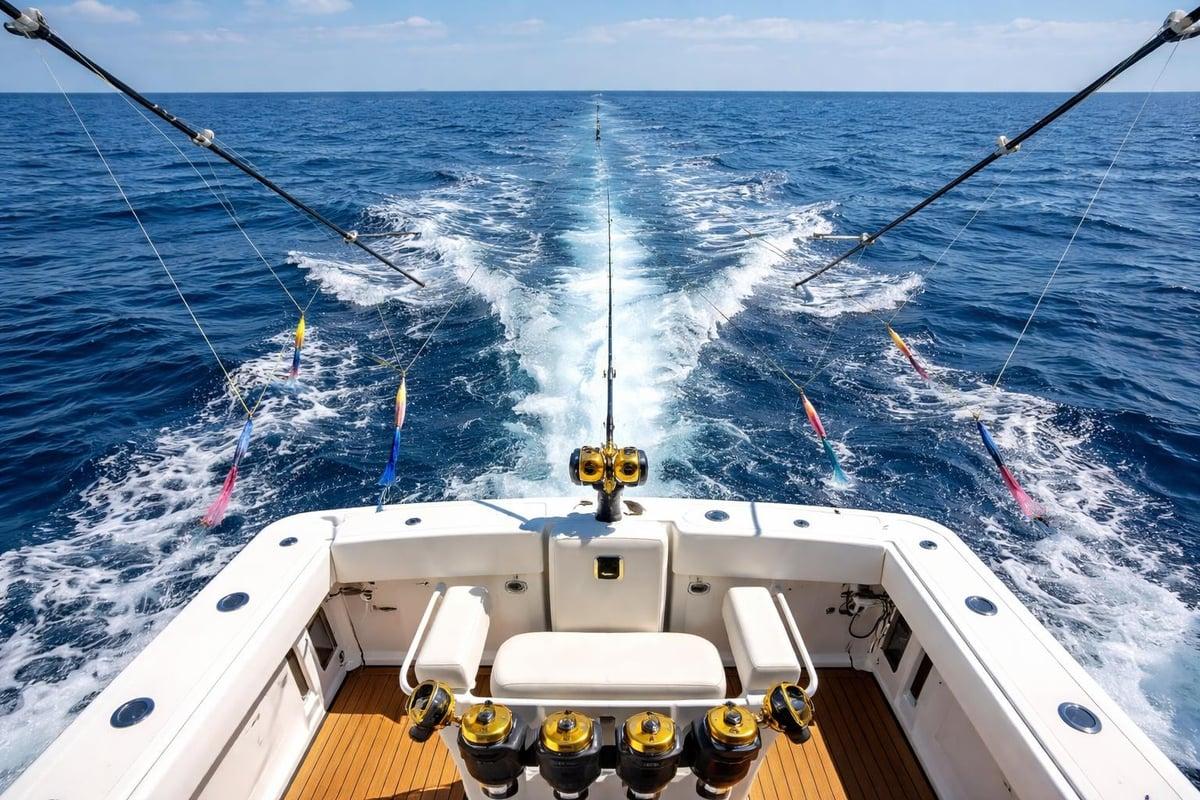
Stagger baits at different distances to cover more water, avoid tangles and look like a small school of baitfish. Typical distances:
- Short riggers: 50 to 75 feet back
- Flat lines: 75 to 125 feet back
- Long riggers: 100 to 150 feet back
- Shotgun or way-back: 200 feet or more
One or two baits can run in the prop wash close to the boat. Run larger baits on the long riggers and smaller ones on the flat lines, and mix naked and skirted ballyhoo with one or two artificial lures and a teaser or dredge. Some days fish want the real thing; other days they smash artificials. Tuna anglers often run skirted ballyhoo on the flat lines while dragging spreader bars on the riggers, and the natural bait often gets hit when tuna turn finicky about artificials.
Where and When to Troll Ballyhoo
Ballyhoo shine along temperature breaks, current lines, color changes, weed lines and the edge of the Gulf Stream, which attracts everything from white marlin to blackfin tuna. Work them around reefs, wrecks and ledges too. Off Miami Beach, ballyhoo fished near the bottom at Schoolmaster Ledge can draw grouper and snapper, wrecks like Billy's Barge create ambush zones, and the Coquina area produces when you work ballyhoo around the structure's edges. Pelican Bank near Key Biscayne offers opportunities for sailfish and kingfish.
Ballyhoo produce year-round. Spring brings the sailfish migration along the East Coast, summer is mahi and tuna season, fall brings wahoo runs, and winter is billfish time in southern waters. Many anglers run lighter skirts in clear spring water, brighter colors during summer's peak feeding, natural patterns in fall, and heavier chin weights in rough weather.
Catching Live Ballyhoo
Live ballyhoo concentrate around lighted structures in low light. The best times are just before sunrise and after sunset, and moonless or new-moon nights concentrate bait even tighter around lights. Look at bridges with overhead lighting, marina docks, lighted channel markers and inlet jetties.
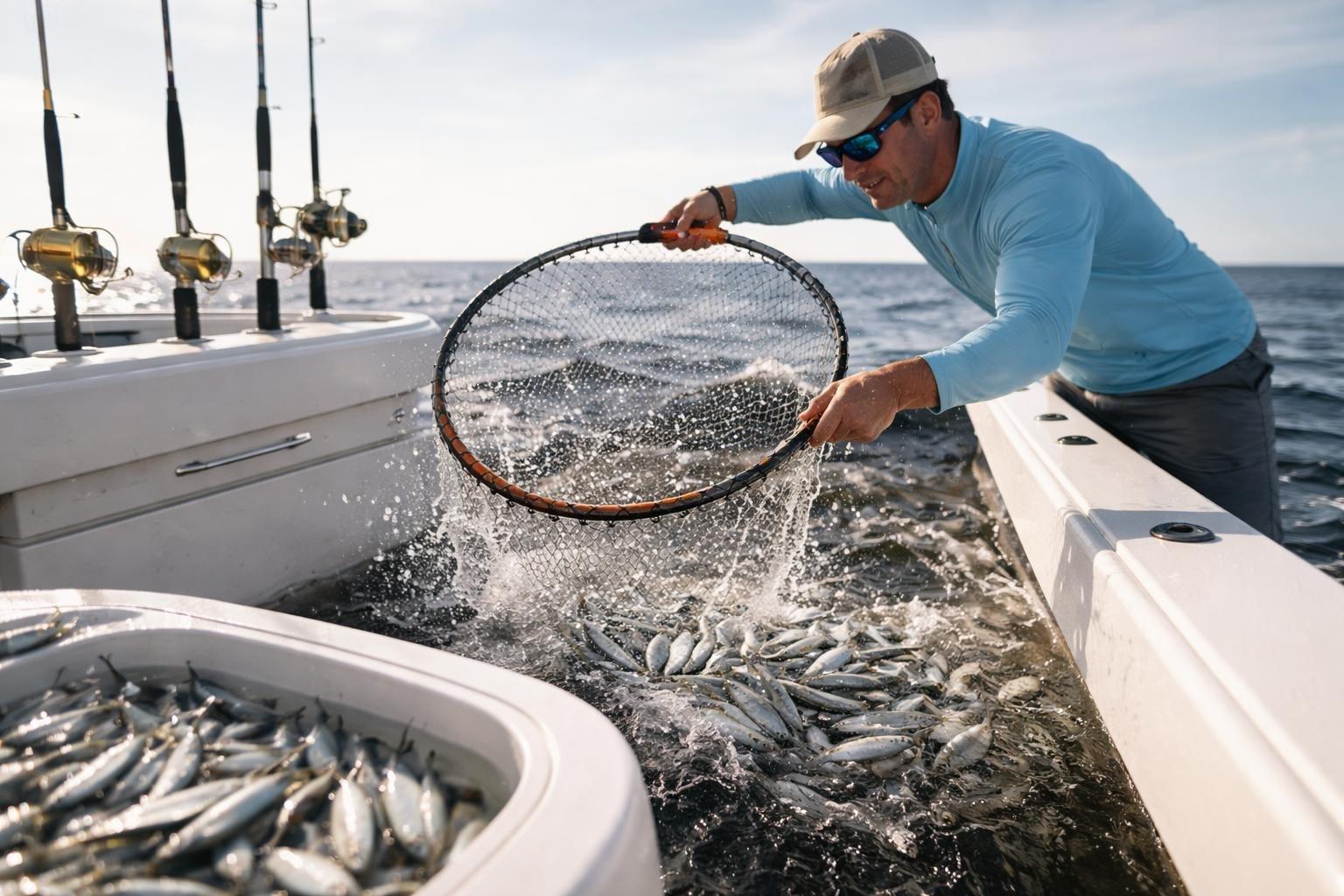
A ballyhoo hoop is a collapsible net designed for this job, and it reduces stress and injury to the bait compared with a cast net. See these pro tips on using hoop nets (opens in a new tab). When choosing one, consider:
- Frame diameter: larger hoops (24 to 30 inches) catch more per scoop but are harder to maneuver in tight spaces.
- Handle length: typically 4 to 6 feet; longer handles reach from elevated positions but take more storage and can be awkward in wind.
- Mesh: fine mesh won't damage scales and holds smaller bait, but creates more water resistance.
- Frame and weight: collapsible aluminum or stainless frames fold flat; lighter hoops reduce fatigue but may be less durable.
Technique
- Position yourself upwind or up-current of the school and let the hoop drift toward the bait. In strong current, position downstream and let the current sweep bait into the hoop.
- Use quick, smooth scoops rather than aggressive jabs, and keep the hoop in the water instead of repeatedly lifting it.
- Watch for "nervous water" that shows bait is about to ball up.
- Use a headlamp sparingly, because too much light can spook ballyhoo.
- For scattered fish, a smaller hoop with a longer handle allows more precise scoops.
- Transfer bait to a properly aerated livewell immediately; ballyhoo are sensitive to low oxygen.
Rinse the hoop with fresh water after each use, especially the joints and hinges, store it collapsed, and replace mesh that frays.
Regulations
Check local rules before collecting your own ballyhoo. Baitfish harvesting in protected areas (opens in a new tab) can require special permits, and some zones prohibit collection entirely.
Related Fishing Spots
About the Author
Matthew Howe
Matthew Howe is the founder of Find Fishing Spots and a lifelong fishing and boating enthusiast. He created FindFishingSpots.com to help anglers discover fishing locations, tournaments, and useful resources for getting on the water.