
Goggle-Eyes as Live Bait
How to find, catch, rig and keep goggle-eyes (bigeye scad) alive, and the sailfish, kingfish and other gamefish that eat them.
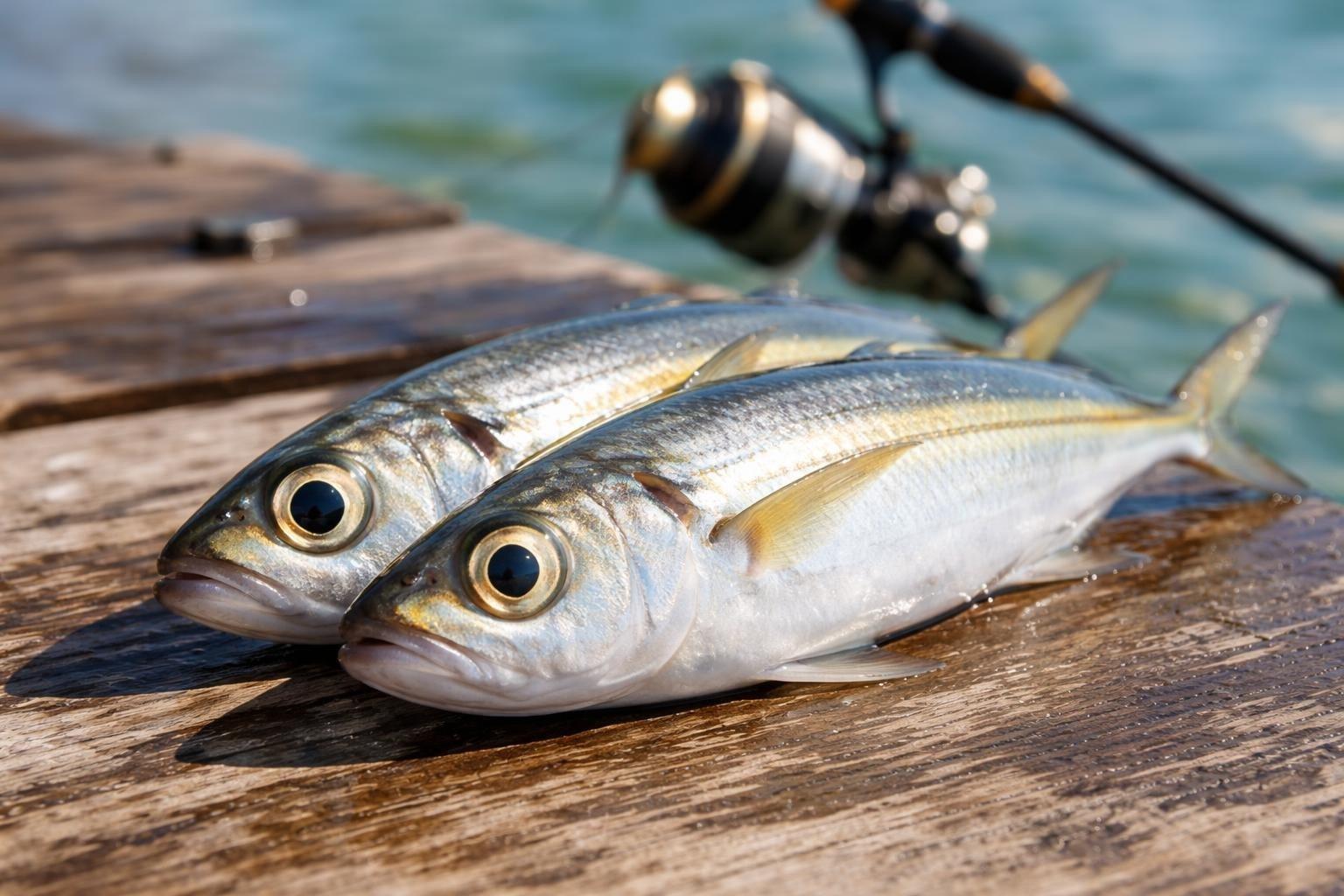
Goggle-eyes are one of the most effective live baits for offshore gamefish, especially sailfish and kingfish in southeast Florida. This guide covers what goggle-eyes are, where and how to catch them, how to rig them, how to keep them alive, and which gamefish eat them.
What Goggle-Eyes Are
In saltwater, "goggle-eye" means the bigeye scad or big-eyed scad (opens in a new tab) (Selar crumenophthalmus), a member of the jack family. Charter captains and commercial fishermen almost universally call them goggle-eyes. They're small, silvery schooling fish, typically 4 to 8 inches long, with unusually large eyes that help them navigate in deeper water and low light, so they're active at dawn, dusk and night.
They make excellent bait because they're:
- Hardy: they stay lively on the hook and survive in livewells longer than many other baitfish.
- Strong, energetic swimmers: their frantic motion, flash and vibration draw strikes from a distance, and they keep moving instead of turning lethargic.
- Natural prey: sailfish, marlin, tuna, kingfish and other gamefish feed on them.
- Oily: their flesh releases a scent trail.
Don't confuse them with the freshwater "goggle-eye," a name used in the Midwest and South for rock bass or warmouth (opens in a new tab). Those are panfish, a completely different species, and this guide is about the saltwater baitfish.
Where to Find Goggle-Eyes
Goggle-eyes are structure-oriented and school around:
- Artificial reefs, wrecks and oil rigs
- Natural ledges, drop-offs, rock piles and hard bottom
- Bridge pilings with strong current, such as those in the Florida Keys
- Channel markers and navigation buoys in deeper water
- Continental shelf edges, floating debris and weed lines
They're sometimes found closer to shore around deep channels and inlets. In Florida, Egmont Key at the mouth of Tampa Bay can hold schools around its deeper channels. Goggle-eyes concentrate around structure during strong current, tend to suspend mid-water during the day, and move higher in the water column at night to feed on plankton.
Depending on location, goggle-eyes are typically caught over structure in roughly 40 to 300 feet of water.
Catching Goggle-Eyes
Most serious anglers catch their own rather than buying them. Use a sabiki rig, whose small hooks and tiny lures mimic plankton, or a dedicated goggle-eye jig of about 1/4 to 1 ounce with glow-in-the-dark or reflective materials.
- Position over structure using GPS and your depth finder.
- Drop the rig to the fish, usually near the bottom.
- Work it with gentle jigging, or rapid 1- to 2-foot pulls with a dedicated jig.
- Watch for the distinctive tap-tap bite; you'll often hook several at once.
- Reel steadily to avoid tangles and transfer the bait carefully to a flow-through livewell.
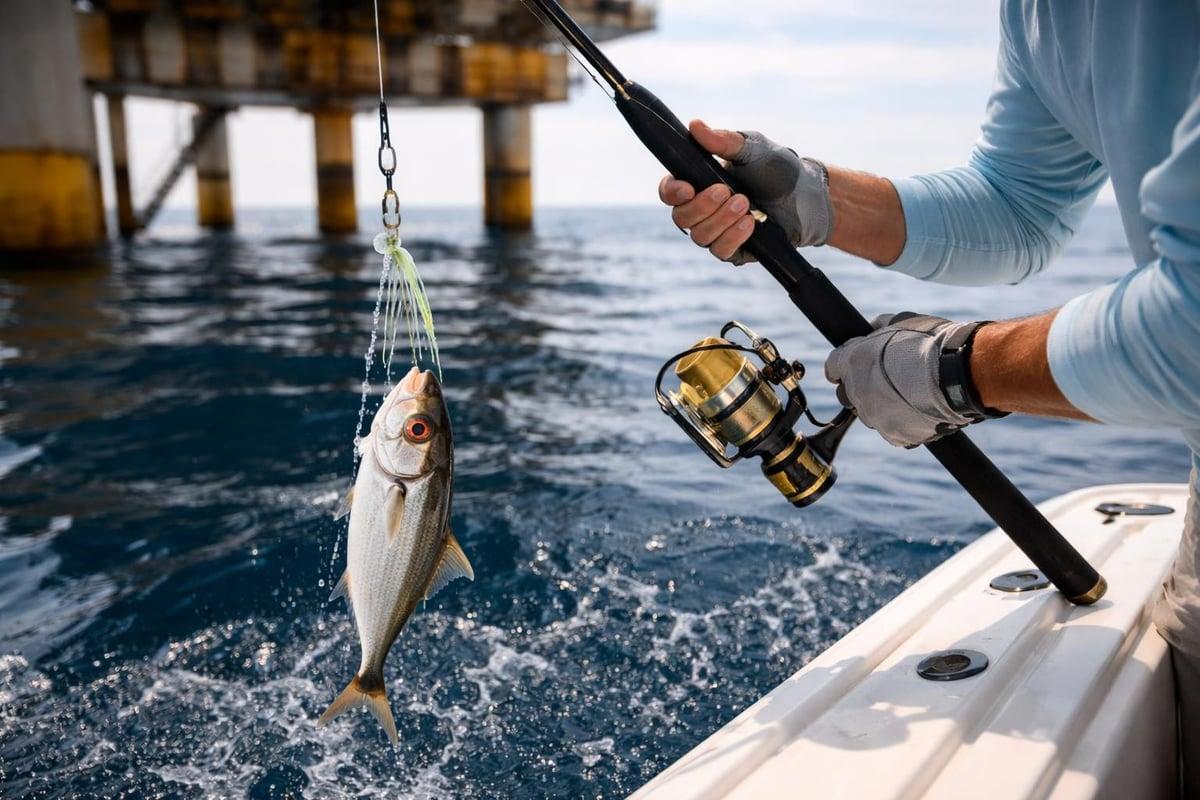
Night fishing produces excellent results, because goggle-eyes rise to feed on plankton, and many charter captains catch them at night with lights and sabiki rigs before a daytime trip, so they have fresh bait at first light. Early morning also produces as baitfish move up to feed. Calm mornings with light wind make sabiki rigs easier to work, and after a cold front, give the water a day or two to settle before expecting consistent bait catches.
Rigging Goggle-Eyes
Rigging determines how long a goggle-eye stays lively and how naturally it swims. Use sharp hooks and minimize damage to the bait. FishTrack explains how to rig a live goggle-eye (opens in a new tab).
- Nose hooking: through both nostrils or just behind the upper jaw. Keeps the bait swimming forward naturally; best for trolling, drifting and slow-trolling.
- Bridle rigging: allows natural swimming for kite fishing.
- Chin hooking: through the lower jaw and out the upper jaw for an upward-swimming presentation, a favorite presentation for sailfish and marlin.
- Through the eyes: creates an upright presentation.
- Shoulder hooking: through the meaty area behind the dorsal fin or head, avoiding the spine. It gives the bait more freedom to swim or dive.
- Tail hooking: near the tail base, without damaging the spine, when you want the bait to swim away from the boat.
Anglers use shoulder hooking in different ways: to let the bait swim deeper or hold in current, for kite fishing and live-bait drifting, or for casting with minimal weight.
Hooks and Leaders
- Sailfish and smaller tuna: 4/0 to 6/0 circle hooks on 40- to 60-pound fluorocarbon (4/0 to 7/0 overall, depending on bait size).
- Marlin or big kingfish: 7/0 or 8/0 hooks with 80- to 100-pound leader.
- Leader length: 6 to 10 feet for most applications. Longer leaders are less visible but tangle more easily.
Hooks that are too large kill bait quickly. When live bait isn't available, soft plastics, jerkbaits and jigs shaped like goggle-eyes can fill in.
Presenting Goggle-Eyes
- Kite fishing keeps goggle-eyes at the surface, creating commotion that draws strikes from sailfish and other surface feeders. It's standard practice out of South Florida ports.
- Slow-trolling at depths between 20 and 60 feet covers water while keeping baits active; adjust to where you're marking fish.
- Fishing live bait at anchor near structure, such as the Carysfort Trench off Key Largo, is effective for bottom species and passing pelagics.
Gamefish That Eat Goggle-Eyes
Sailfish are the number one target for goggle-eyes in southeast Florida, and many captains consider goggle-eyes the deadliest sailfish bait. Other takers include:
- White and blue marlin
- Kingfish (king mackerel) and Spanish mackerel
- Blackfin tuna and skipjack
- Mahi-mahi
- Wahoo, especially when trolled
- Cobia, amberjack and barracuda
- Large grouper and snapper
In California, anglers use them for yellowtail, tuna and calico bass near kelp beds, around spots like the Rock Pile near San Diego and La Jolla Canyon.
Keeping Goggle-Eyes Alive
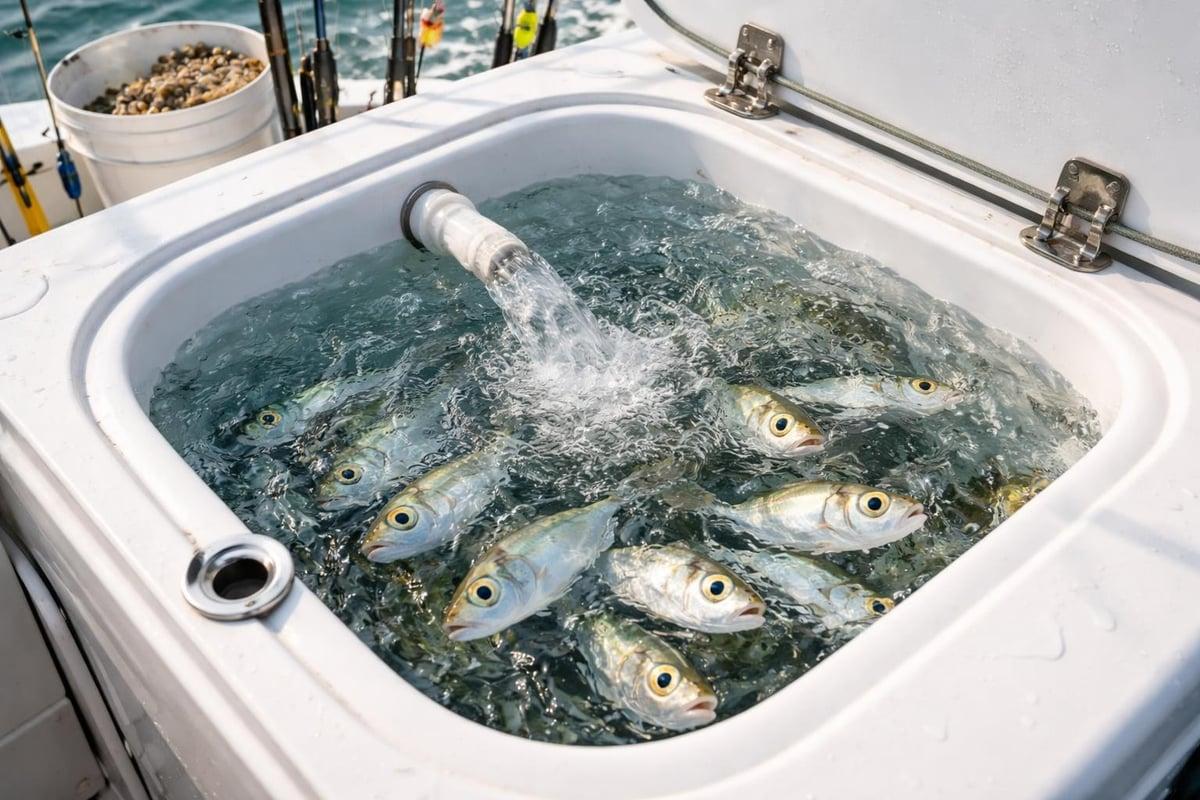
- Oxygen and water exchange: continuous flow-through systems work best; recirculating pumps with good aeration can also work. Change water regularly to prevent ammonia buildup.
- Temperature: avoid sudden temperature or salinity changes, and never add ice directly to the livewell. A common guideline is to keep the water within about ten degrees of the temperature where you caught them.
- Density: don't overcrowd. A common guideline is about 8 to 12 goggle-eyes per 30 gallons.
- Tank shape: rounded livewells prevent nose injuries from panicked swimming.
- Handling: wet your hands, handle bait gently and as little as possible, and never squeeze them, which damages internal organs and the protective slime coat.
Seasons
Goggle-eyes are catchable year-round in Florida and the Gulf, but abundance and location shift with water temperature. Demand peaks during the winter sailfish season, spring and fall usually bring good availability, and in summer schools often move slightly deeper.
Related Fishing Spots
About the Author
Matthew Howe
Matthew Howe is the founder of Find Fishing Spots and a lifelong fishing and boating enthusiast. He created FindFishingSpots.com to help anglers discover fishing locations, tournaments, and useful resources for getting on the water.