
Grouper Fishing Guide: Species, Habitat and Techniques
How to identify black, red and other grouper, where they live, and the tackle, baits and techniques that pull them away from structure.
Related Species
- Black Grouper
- Red Grouper
- Gag Grouper
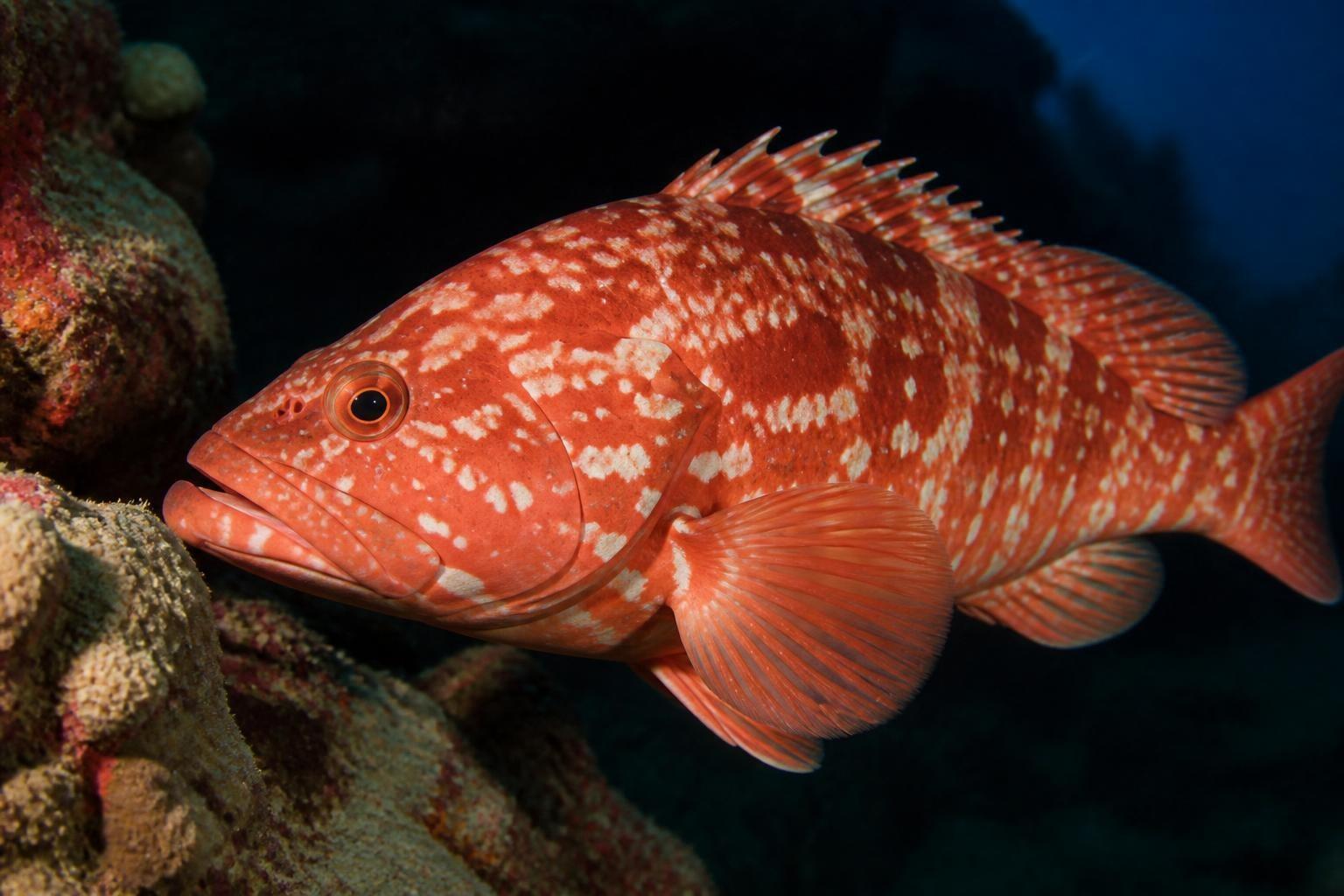
Grouper are powerful, structure-loving reef predators and some of the most popular bottom-fishing targets in U.S. saltwater. They also make excellent table fare. This guide covers the main grouper species anglers encounter, where they live, the tackle and baits that work, how to fight them away from structure, and the rules and practices that keep grouper fisheries healthy.
Grouper Species Anglers Target
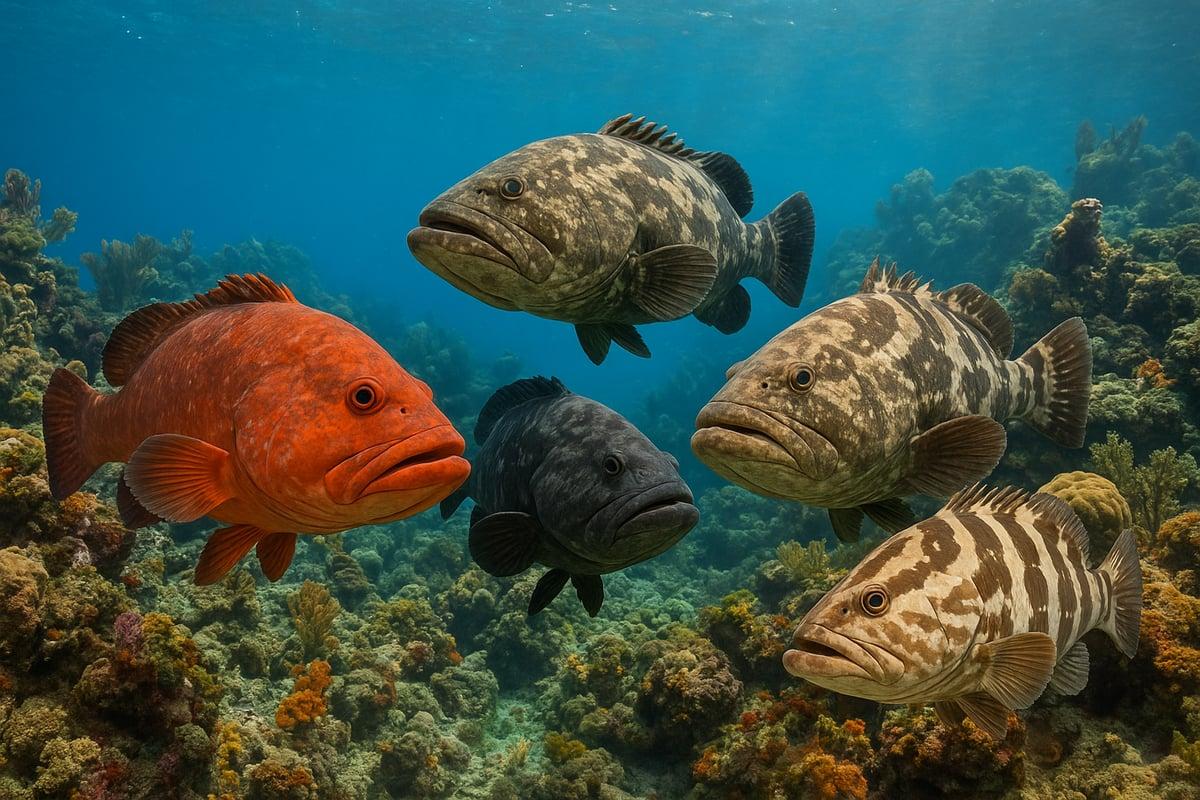
A handful of grouper species stand out as the main targets:
- Red grouper is the most common catch on U.S. reefs, known for its reddish color and tasty fillets.
- Black grouper are among the largest groupers in the western Atlantic and prefer deeper, rocky structure.
- Gag grouper start life inshore and move offshore as they grow.
- Goliath grouper are the true heavyweights, reaching up to 800 pounds.
- Snowy grouper live in deep water.
- Nassau grouper, once abundant, are now endangered and tightly protected.
Black Grouper
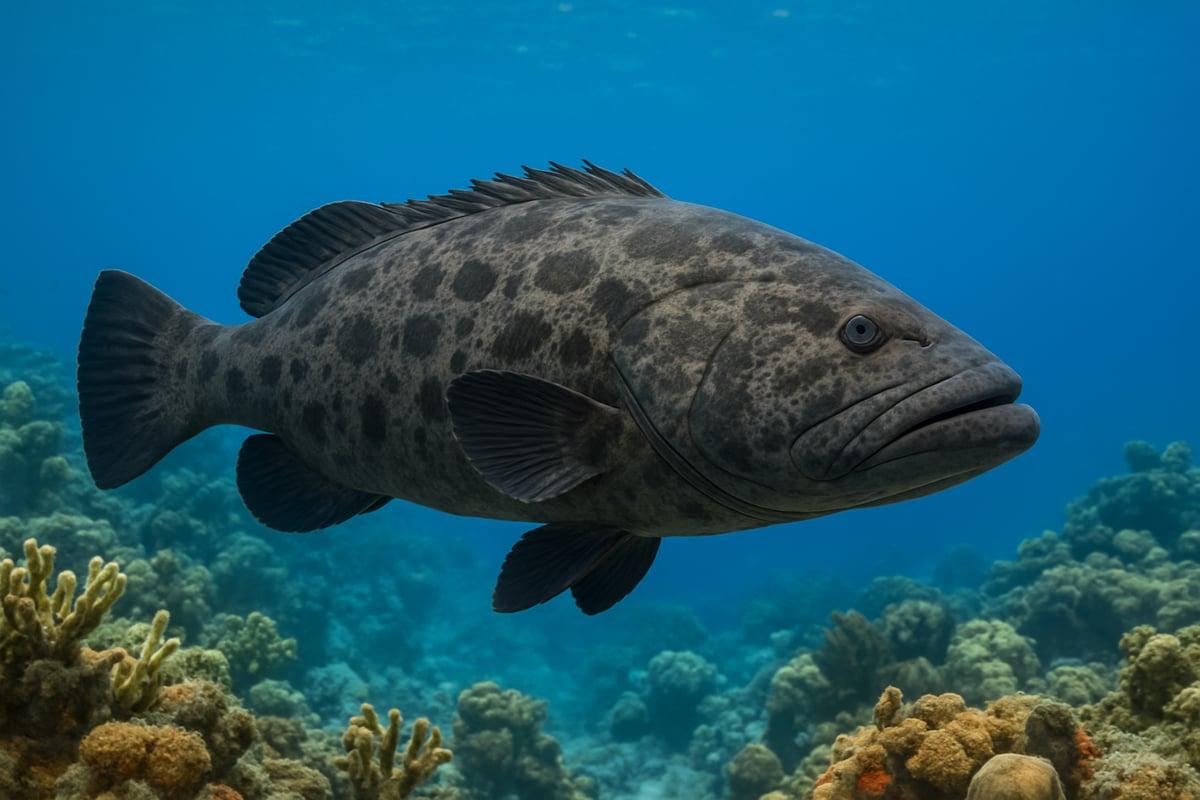
The black grouper (Mycteroperca bonaci) is a member of the Serranidae family. It has a robust, elongated body and a large mouth. Its coloration is generally dark olive or gray with subtle brassy or greenish hues, and rectangular black blotches and pale spots cover the upper body. Juveniles often show more pronounced patterns that fade as the fish matures. The dorsal fin is continuous and spined, and the tail is slightly rounded.
Adults can reach 52 inches and 179 pounds, though most caught fish are between 20 and 40 pounds. Black grouper are protogynous hermaphrodites: they start life as females and may later become males. They usually reach sexual maturity at 5 to 6 years and can live up to 30 years. That combination of long life and slow maturation makes them vulnerable to overfishing if not properly managed. See the Black Grouper Profile by NOAA Fisheries (opens in a new tab) for more on their biology and management.
Black grouper are ambush predators that feed primarily on other fish, squid and crustaceans, targeting bigger prey as they grow.
Red Grouper
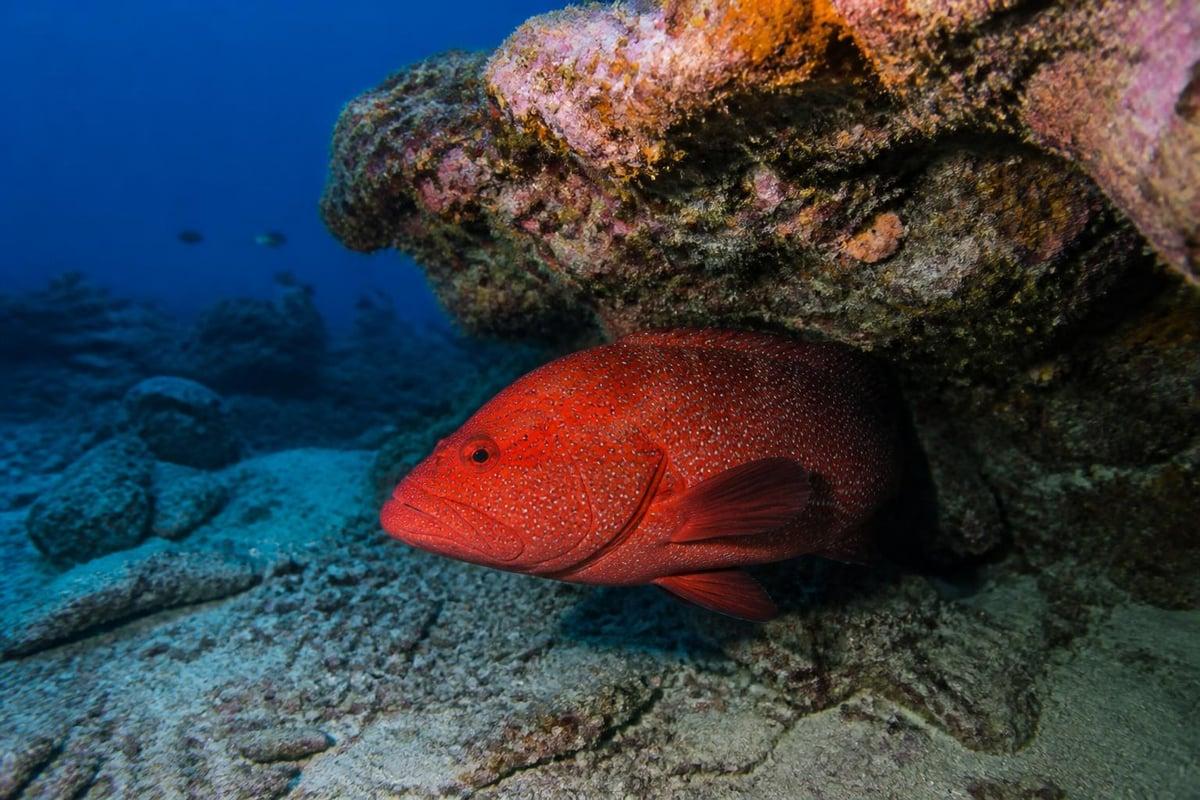
Red grouper have an overall reddish-brown coloration whose intensity varies with mood and environment. Dark blotches and white spots create a marbled pattern that is quite different from the bold markings of gag or black grouper. Key identification features include:
- A squared-off tail fin (unlike the rounded tail of scamp)
- A second dorsal spine noticeably longer than the others
- A pale margin on the pectoral fins
- No dark saddle markings like those on gag grouper
- A typical weight of 5 to 15 pounds, though they can exceed 40 pounds
Red grouper are opportunistic predators that feed primarily on crustaceans, smaller fish and mollusks. Crabs and shrimp make up a significant part of their diet. They hunt actively at dawn and dusk but will feed throughout the day, crushing shellfish with powerful jaws and inhaling smaller prey. Mote Marine Laboratory (opens in a new tab) notes that red grouper are ecological engineers that excavate depressions in the seafloor, creating microhabitats for other species. The Florida Fish and Wildlife Conservation Commission (opens in a new tab) maintains identification guides that help distinguish red grouper from similar species, which matters because regulations vary by species.
Telling Black, Gag and Red Grouper Apart
- Black grouper (Mycteroperca bonaci): dark olive with pale spots and rectangular black spots; continuous, spined dorsal fin; up to 52 inches and 179 pounds.
- Gag grouper (Mycteroperca microlepis): gray-brown with marbled, worm-like markings; continuous, notched dorsal fin; up to 42 inches and 81 pounds.
- Red grouper (Epinephelus morio): reddish with irregular pale blotches; continuous, rounded dorsal fin; up to 49 inches and 51 pounds.
Where Grouper Live
Grouper love structure. You'll find them around reefs, wrecks, ledges, pilings, estuaries and mangroves. Some species, like gag grouper, start in shallow mangroves before heading offshore, while Nassau grouper stick to the clear waters of the Bahamas. Offshore and inshore habitats support different life stages, so knowing where to look is half the battle.
Black Grouper Habitat
Black grouper are most commonly found on coral reefs, rocky bottoms and ledges, and around artificial structures such as shipwrecks and reef balls, typically in 60 to 250 feet of water. Juveniles may be found shallower, while adults favor deeper reefs and drop-offs. Their range runs from Massachusetts to Brazil, including the Gulf of Mexico and the Caribbean, and Florida waters are widely recognized as the most productive region. The Florida Keys, Miami-Dade reefs and the Gulf's offshore ledges are particularly well known. The FWC's Black Grouper Identification and Habitat (opens in a new tab) profile covers their environmental preferences.
During spawning season, typically late winter through early summer, adults form aggregations at specific sites. Migration often follows water temperature and prey, with black grouper moving between deeper and shallower habitat through the year. Rising ocean temperatures, reef degradation from pollution and coastal development, and red tide events have all affected black grouper habitat. Artificial reefs and wrecks, such as those off Miami Beach, have become important refuges as natural reefs decline.
Red Grouper Habitat
Red grouper are found primarily from North Carolina south through the Gulf of Mexico, with the heaviest concentrations off Florida's west coast. According to NOAA Fisheries (opens in a new tab), they prefer hard bottom, ledges and natural or artificial reefs at depths of 30 to 300 feet. Prime habitat includes:
- Natural limestone ledges and outcroppings
- Artificial reefs and shipwrecks
- Live bottom with coral and sponge growth
- Transitions from sand to hard structure
- Offshore platforms and oil rigs
In warmer months red grouper may be found in shallower water around 60 to 100 feet; as winter approaches, many move to deeper ledges and offshore structure. On Florida's Gulf Coast, nearshore areas like Fort De Soto Park and Egmont Key can connect you to structure that occasionally holds red grouper in shallower water.
Grouper Destinations
The Florida Keys are a classic grouper destination, with access to both inshore and offshore reefs. Madeira Beach, often called the "grouper fishing capital of the world," hosts annual tournaments and Grouper Fest. Venice, Louisiana is known for deep wrecks and reefs holding large black and gag grouper, and the Gulf Coast offers miles of structure and countless access points. See Florida fishing spots for locations across the state.
Further afield, the Bahamas hold Nassau grouper and other tropical species, Mexico's Abreojos is known for exceptionally large grouper, and the Caribbean islands and Central America offer healthy grouper populations.
Finding Productive Spots
Start with marine charts to locate reefs, wrecks and ledges, then use sonar and fish finders to pinpoint the drop-offs and rocky outcrops grouper hold tight to. A GPS lets you mark productive locations and return to them, and a GPS anchor system can keep you over the strike zone in a strong current without dropping a traditional anchor. Fishing reports, experienced captains and local guides are invaluable for current hot spots and seasonal movements. Currents and water clarity also influence grouper behavior.
When to Fish
Early mornings and late afternoons are peak feeding times, and strong incoming or outgoing tides stir up baitfish and get grouper hunting. Many anglers report that spring mornings with a good tidal push produce the most consistent action, as hungry grouper move closer to reefs and wrecks after the spawn.
Timing varies by species. Black grouper are most active at dawn and dusk, with peak fishing in cooler months, and they form spawning aggregations in late winter and early spring. Winter is spawning time for many grouper species, and some are off-limits during those months, so respect closed seasons.
Tackle and Gear
Grouper make powerful runs for structure, so your gear needs the backbone to turn them.
- Rods and reels: medium-heavy rods with 4000-size or larger spinning reels suit smaller grouper. For black and red grouper on deep structure, use 50- to 80-pound class gear, such as a heavy-duty rod paired with a robust conventional or electric reel. Electric reels reduce fatigue on repeated deep drops and are a game changer when deep-dropping for snowy grouper at 800 feet.
- Line and leader: most anglers run 40- to 80-pound braid, and 65- to 100-pound braid for black grouper. Use fluorocarbon leaders for abrasion resistance around rocks and wrecks: at least 80 pounds for black grouper, and 50 pounds or more depending on the target.
- Hooks: circle hooks are the go-to and are required in many areas. Start at 4/0 for smaller fish and go to 7/0–10/0 or larger for big grouper, choosing strong, corrosion-resistant hooks.
- Terminal tackle: sinkers matched to depth and current, barrel swivels to prevent line twist with live bait, and swivels and snaps for quick rig changes.
- Handling and release: gloves, a dehooking tool, a gaff for fish you keep, and a venting tool or descending device for deep-water releases.
- Electronics and safety: sonar, GPS, marine charts and planning apps, plus a VHF radio, EPIRB and life jackets.
Before every trip, inspect and replace worn lines and leaders, keep hooks sharp and knots tight, and rinse rods and reels thoroughly after each outing to prevent saltwater corrosion.
Baits and Lures
Live Bait
Live bait is often the top pick. Grouper respond to the movement and scent of pinfish, mullet, grunts, threadfin herring, ladyfish, needlefish, shrimp, squid and crabs. Pinfish and mullet are favorites for big grouper, while shrimp and squid work well for inshore juveniles. Hook live bait through the nose or back with a strong circle hook, drop it beside the reef edge or wreck, and let it swim naturally.
Dead and Cut Bait
Sardines, squid, mullet, ladyfish and fresh bonito put out strong scent that draws grouper out of hiding. Thread the bait onto a sturdy hook and drop it to the bottom near structure.
Artificial Lures
Large jigs, swimbaits, jig heads with soft plastics, jerkbaits and deep-diving plugs can all draw strikes, especially when natural bait is hard to find. Match lure color and size to what local grouper are eating. Artificials are convenient and less messy, but live bait usually produces more consistently.
Grouper can be finicky. If bites slow down, switch between live and cut bait or try a different lure, and watch for seasonal changes in the baitfish they're feeding on.
Techniques
- Bottom fishing: the classic approach. Drop live or cut bait right onto the structure and be ready for an explosive hit.
- Vertical jigging: work large or flashy jigs along ledges, drop-offs, rocks and wrecks.
- Trolling: deep-diving plugs can be surprisingly effective when covering new ground.
Precision matters more than covering water, because grouper rarely venture far from their holes and ledges. Set your drag heavy, drop to the structure, and when you feel the thump, set the hook and crank hard. Grouper immediately dive for cover, and many fish are lost in the first five seconds to slack or hesitation, so keep steady pressure from the moment of hookup.
Boat, Shore and Kayak
Offshore boats open up deep reefs and wrecks with trophy-sized fish. Without a boat, piers, bridges and mangroves can produce juvenile grouper close to shore. Kayaks offer stealth and access to shallow, less-pressured spots. Keep safety in mind, especially when fishing solo or in remote areas.
Regulations
Grouper regulations vary by species, by region, and between state and federal waters. They change periodically based on stock assessments, and emergency closures can happen mid-season based on quota monitoring. Common measures include minimum sizes, daily bag limits, seasonal closures during spawning, and special restrictions in marine protected areas. Nassau grouper are protected, and harvest is prohibited. For example, in Florida:
- Florida's minimum size for black grouper is 24 inches total length.
- The minimum size for red grouper is 20 inches total length.
You need a valid fishing license that covers saltwater fishing, and in some fisheries you must also report catches. Always verify current rules before your trip using official sources, such as FWC's grouper regulations (opens in a new tab) for Florida, the South Atlantic Fishery Management Council (opens in a new tab) for Atlantic federal waters, the Gulf Council (opens in a new tab) for gag grouper in the Gulf, and Texas grouper bag and length limits (opens in a new tab).
Responsible Grouper Fishing
Grouper populations have faced pressure from overfishing, habitat loss, red tide and warming water. Seasonal closures at spawning sites, marine protected areas, gear rules and angler cooperation have helped some stocks recover. You can help:
- Use circle hooks to reduce deep hooking.
- Handle fish with wet hands or gloves to protect their slime coat.
- Use a venting tool or descending device when releasing fish caught deep, to reduce barotrauma.
- Measure every fish, and promptly and gently release undersized, out-of-season or protected fish.
- Report catches and tag releases when programs ask for it.
For examples of collaborative conservation work, see Sustainable Snapper and Grouper Fisheries in Florida (opens in a new tab).
Grouper on the Table
Red grouper's mild, flaky white meat holds up well to grilling and frying. Black grouper has a firm texture and mild, slightly sweet flavor and is a lean source of protein with omega-3 fatty acids. Classic preparations include grilled fillets with citrus butter, blackened grouper sandwiches and ceviche with lime and fresh herbs. When buying grouper, look for fillets that are translucent, moist and free of strong odors, and ask your fishmonger about the source to avoid mislabeled substitutes. The Florida Museum's black grouper profile (opens in a new tab) covers the species' biology and conservation status.
Related Fishing Spots
About the Author
Matthew Howe
Matthew Howe is the founder of Find Fishing Spots and a lifelong fishing and boating enthusiast. He created FindFishingSpots.com to help anglers discover fishing locations, tournaments, and useful resources for getting on the water.