
Lake Lanier: Spotted Bass, Stripers and Crappie Through the Seasons
A seasonal guide to fishing Lake Lanier in north Georgia: Alabama (spotted) bass, striped bass, largemouth, crappie and walleye, plus the public parks and ramps around the lake.
Related Species
- Alabama Bass
- Spotted Bass
- Striped Bass
- Largemouth Bass
- Black Crappie
- Walleye
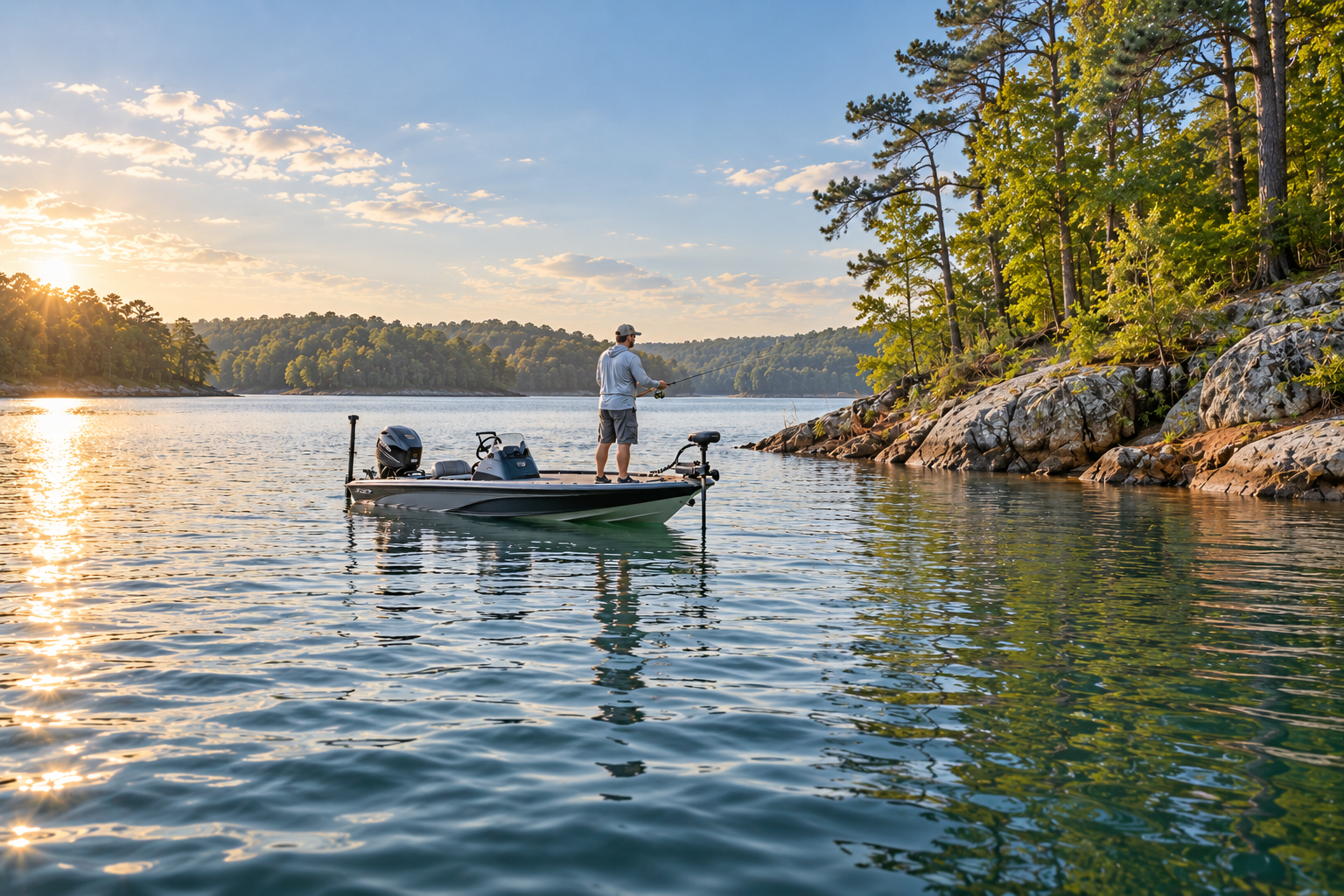
Lake Lanier is a large reservoir on the Chattahoochee River in north Georgia, lined with public parks and boat ramps from Buford and Cumming up to Gainesville and beyond. Georgia's Wildlife Resources Division (WRD) lists its best bets as Alabama bass, striped bass, largemouth bass, black crappie and walleye, and says the reservoir is best known for its spotted and striped bass fishing.
This guide covers how those fish use the lake through the year, what WRD and the fishing reports it publishes say about finding them, and the public parks and ramps in our directory. It does not repeat creel or size limits; check Georgia's current fishing regulations before you keep fish.
A note on "spots"
Anglers on Lanier have called its spotted black bass "spots" for years, and WRD's own park page still describes the lake as best known for spotted bass. In its current fishing forecasts, however, WRD lists Alabama bass among Lanier's best bets, while the weekly reports it publishes still talk about spotted bass. Expect to see both names; check WRD's forecast and the current regulations for how the agency treats these bass on Lanier.
How the fish use the lake
Alabama (spotted) bass
WRD's guidance for Lanier's spots is seasonal. In spring, target rocky shorelines; from summer through fall, expect them to be out in open water chasing blueback herring or shad.
The fishing reports WRD publishes each week fill in the detail. In early spring, as the water warms from the forties into the fifties, bass move into less than thirty feet of water to feed and spawn, and the reports describe fish around the backs of creeks, windy rocky areas, secondary points and docks near deeper water. After the spawn, they describe spotted bass moving out to brush in the twenty-five-foot range, with long points, humps and brush piles holding fish and a growing topwater bite as the water warms.
As spring moves on, the reports describe bass shallow and actively feeding in less than fifteen feet of water on reef poles, flats, coves and docks, with swimbaits, jerkbaits and shaky heads all producing. Reef poles come up again and again in those reports as places to start.
By mid-summer, the reports describe bass staging in the twenty-five-to-forty-foot range on humps, long points and ledges, where finding brush and structure is the key to locating fish. Lanier is generally clear on the main lake, while the backs of creeks and the river arms can be stained, especially after rain.
Striped bass
WRD says the best time to target Lanier's striped bass is spring, when they make spawning runs up the Chattahoochee River. That pattern showed up in the agency's own sampling: in spring 2026, WRD staff reported that stripers were hard to find on the lower end of the lake but that good numbers were encountered in the Chattahoochee River above Belton Bridge.
Later in spring, the reports WRD publishes describe stripers on the blueback herring spawning areas, ranging from up the rivers to main-lake points, with live bait pitched around low-water markers and planer boards and flat lines still producing. In late winter, a February report noted that Lanier holds a tremendous amount of bait, which is good for the stripers but can make them harder to pin down, because there is always more bait around the next corner.
WRD's published reports regularly include Lanier striper sections from local guides, which are a useful way to follow the season.
Largemouth bass
WRD notes that the upper end of the lake offers good options for largemouth bass. For boating anglers, the agency suggests targeting downed trees, especially in coves.
Crappie
Crappie fishing on Lanier centers on structure. The reports WRD publishes describe large groups of crappie under community docks and on brush in open water, with fish often suspended several feet above a twenty-to-forty-foot bottom. Minnows and small jigs are the standard approach in those reports. In summer, one report described crappie suspended eight to ten feet deep under docks, with the creeks moderately stained and the main river channels clear.
Walleye
Walleye are one of WRD's listed best bets for Lanier, alongside the lake's better-known bass and stripers. WRD stocks Lake Lanier and other north Georgia lakes with walleye every year, and some of Lanier's own walleye are collected and spawned to produce fish for the state's stocking program.
Public access
One of Lanier's strengths is how many public parks and ramps ring the lake. Access points in our directory include:
Around Gainesville and the middle and upper lake
- Little Hall Park
- Bolding Mill Park
- Duckett Mill Park
- War Hill Park
- Thompson Bridge Park
- Clarks Bridge Park
- Keith's Bridge
- Laurel Park, with shore and pier access
Around Cumming and the west side
Around Buford and the lower lake
Near Flowery Branch and the upper river
- Flowery Branch Bay Park
- Lula Bridge WMA South, toward the upper Chattahoochee end of the lake
Many of these parks offer shore access as well as a ramp, which makes Lanier one of the better big reservoirs in the region for anglers without a boat. Fees, hours and seasonal closures vary by park, so check before you go.
Don Carter State Park
Don Carter State Park sits on Lake Lanier, and WRD's description of fishing there is a good summary of the lake as a whole: the park offers a variety of warm-water species, four paddling trails with access to bass, bluegill, catfish, crappie and more, kayak rentals, and plenty of fishing access for shore-bound anglers.
Fish attractors
WRD maintains fish attractors on Lake Lanier and publishes their locations with its fishing forecasts. The agency's reports point anglers to them regularly, and for crappie and bass they are an easy way to find brush without searching blind. Load the locations before you launch.
Reading the lake
A few practical points come up again and again in WRD's reports:
- Water temperature drives the seasons. The reports track Lanier's surface temperature closely, from the forties in late winter to the upper eighties in August, and the bass move shallower or deeper with it.
- Structure is everything in summer. Humps, long points, ledges and brush in twenty-five to forty feet of water hold bass through the hottest months.
- Expect debris and stained water after big rains. Early-spring reports warned of significant floating debris and muddy water up the lake, with clearer water down the main lake.
- Electronics matter. On a big, clear reservoir where bass, stripers and crappie suspend over deep water, sonar is a major part of finding fish.
Planning a trip
- Pick your season and species. Spring for stripers on their Chattahoochee run and spots on rocky shorelines; summer and fall for spots and stripers in open water; docks and brush for crappie.
- Start with WRD's tools. The agency's fishing forecasts for Lanier include interactive maps, boating and angling access points and fish attractor locations, and its weekly Georgia Fishing Report regularly includes Lake Lanier.
- Use the parks. Lanier's many public parks make it easy to fish from shore or launch close to the water you want to fish.
- Check the regulations. Read Georgia's current fishing regulations before keeping fish.
Lanier rewards anglers who follow the seasons: rocks and creek backs in spring, deep structure and open water in summer, and the river arms when the stripers make their run.
Related Locations
About the Author
Find Fishing Spots
The Find Fishing Spots editorial team covers all things fishing, from fishing spots and tournaments to species guides, fishing tips, and helpful resources. Find Fishing Spots helps anglers discover new places to fish and useful information for planning their next day on the water.