
Mahi-Mahi Lures and Baits
The natural baits and artificial lures that catch mahi-mahi, how to set a trolling spread, choose colors and sizes, and rig for more hookups.
Related Species
- Mahi-Mahi
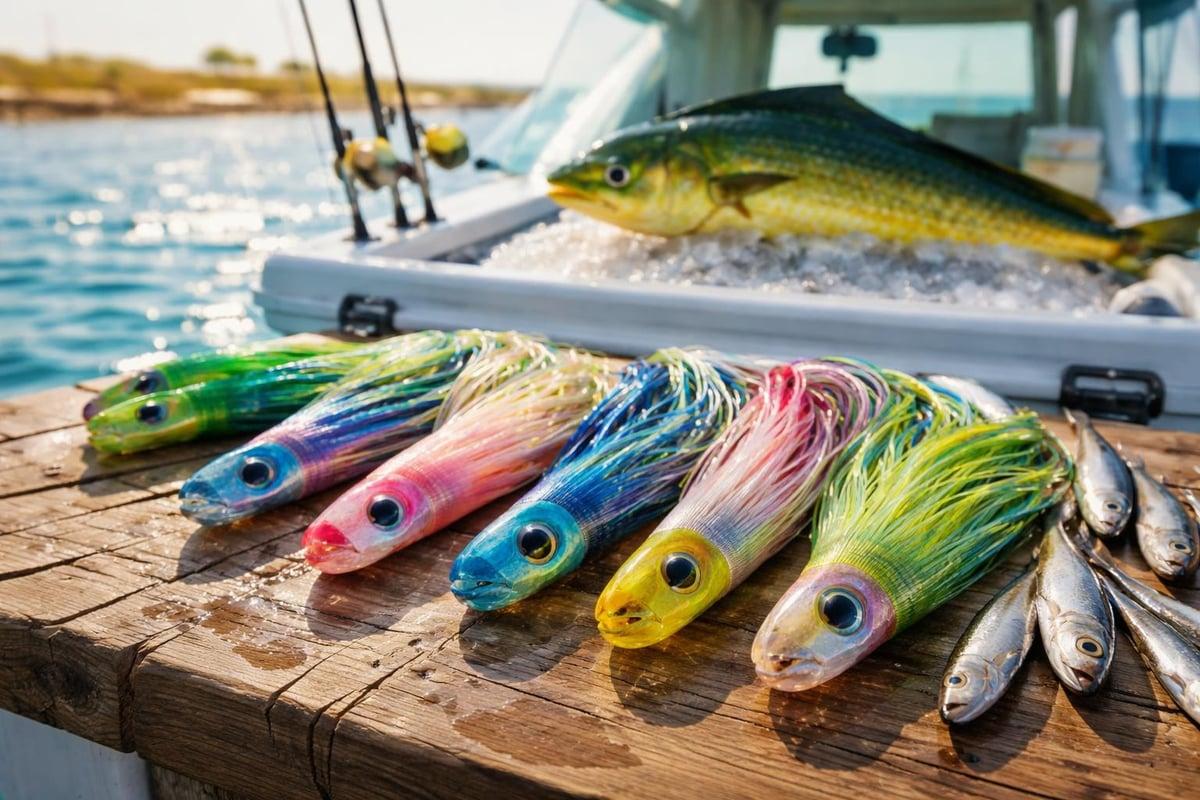
Mahi-mahi are aggressive, visual predators that aren't particularly picky, but the right lure or bait, presented at the right speed, still makes the difference between a slow day and steady hookups. This guide covers what mahi feed on, the natural baits and artificial lures that produce, how to set up a trolling spread, color and size choices, rigging, and seasonal adjustments.
What Mahi Eat
Mahi patrol open water around floating debris, weed lines and structure where baitfish gather. Their prey includes:
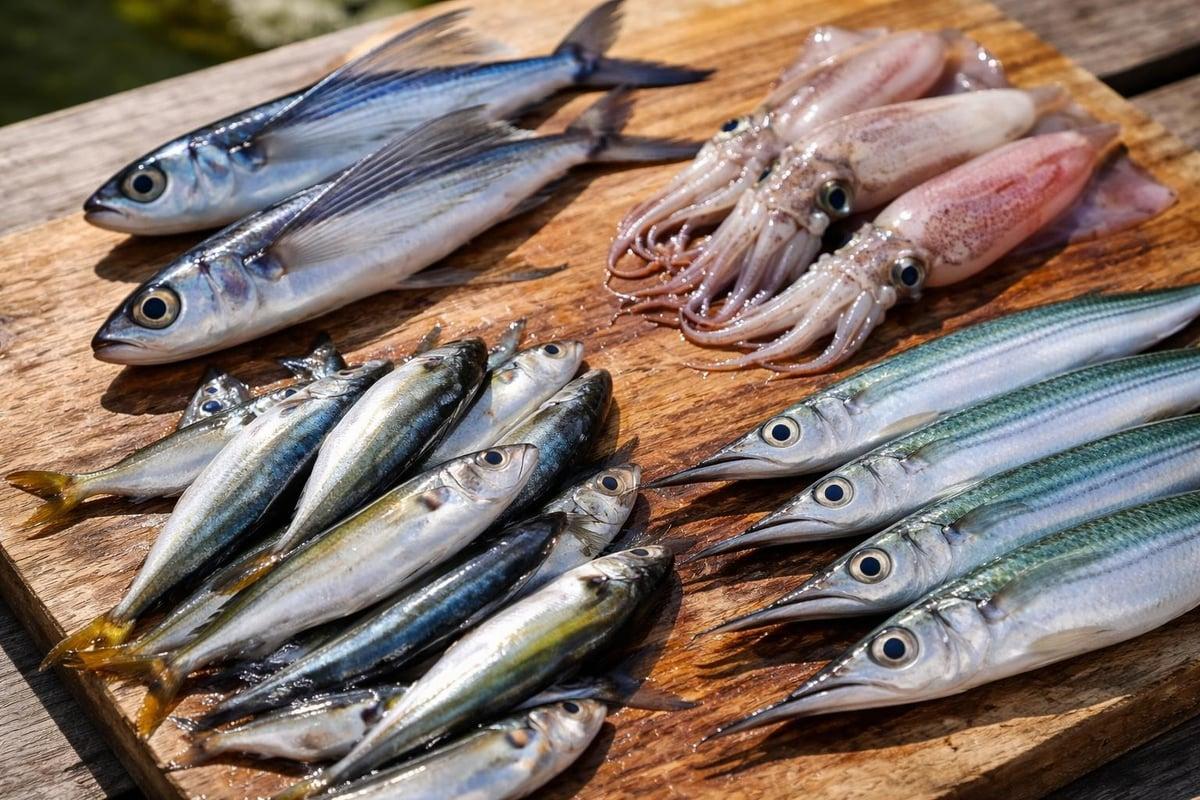
- Flying fish, their number one food source in most areas
- Squid, especially near deeper-water structure
- Small tuna and mackerel
- Ballyhoo, a staple baitfish in many regions
They're attracted to bright color, flash, erratic movement and surface commotion that suggests injured prey. The best lures and baits imitate that. NOAA's Atlantic mahi-mahi resources (opens in a new tab) cover their feeding habits in more detail.
Natural Baits
Live Bait
- Ballyhoo are the gold standard for many offshore anglers. Fish them live on a circle hook or slow-troll them. They're hardy in the livewell, and their flash draws mahi from a distance.
- Pilchards and sardines work exceptionally well when mahi are under floating debris. Free-line them without weight so they swim naturally, and keep your drag loose at first, because mahi hit hard.
- Blue runners in the 6- to 8-inch range, on a 3/0 to 5/0 circle hook, hooked through the nose or just behind the dorsal fin.
- Goggle-eyes are another top choice, particularly in Florida waters.
Cut and Rigged Bait
- Squid is tough, stays on the hook and is highly visible. Troll it whole or cut it into strips.
- Bonito strips cut from the belly in a triangle about 6 to 8 inches long flutter when trolled at 6 to 8 knots, and their oily flesh leaves a scent trail.
- Mackerel chunks cut into 2- to 3-inch pieces and free-lined into the current keep a located school around the boat.
- Rigged ballyhoo is the most popular trolling bait for mahi in U.S. waters, often paired with a colorful skirt or lure head. Use a 6/0 to 8/0 circle hook and a chin weight to keep it swimming straight, and replace baits every few hours to keep them fresh.
Fresh bait is better than frozen, but both work. Don't refreeze bait multiple times, because it degrades the texture and makes it less durable on the troll.
Artificial Lures
Artificials are always available, need no special storage, and let you fish faster and more aggressively. When mahi are hot almost anything works; in slower periods, switching to natural bait often makes the difference.
Skirted Trolling Lures
Skirted lures are the foundation of most mahi spreads. Their skirts pulse like squid and small fish, and they leave vibration, flash and bubble trails that mahi track from a distance. Head shapes change the action:
- Jet heads of 5 to 9 inches have a concave face that "smokes," pushing water and leaving a bubble trail.
- Bullet heads have a tighter action and cut through the water with less resistance, which suits rough seas or faster trolling.
- Slant-face lures dive and pop erratically.
Soft plastic squid lures also troll well at a range of speeds and can be rigged with or without skirts.
Diving Plugs
Hard-bodied diving plugs dive and wobble like wounded baitfish, cover a different depth zone than surface lures, and hold up to sharp teeth. The Rapala X-Rap and Yo-Zuri Crystal Minnow are examples that dive to about 8 to 15 feet. Look for plugs that keep a tight wobble at your trolling speed. They work well when mahi hold slightly deeper or the surface bite slows, and they can be cast to birds working bait.
Poppers and Stick Baits
When you find mahi around weed lines or debris, topwater produces spectacular strikes. Work 4- to 7-inch poppers with sharp jerks and pauses to create splash and bubble trails; mahi often blow up on a popper several times before hooking up. Stick baits walk side to side just below the surface like injured baitfish and draw reaction strikes from pressured fish. Throw topwater when you see fish, after a trolling hookup to target the rest of the school, in early morning or late afternoon, and on calm days with good visibility.
Jigs, Spoons and Soft Plastics
- Casting jigs of 1 to 3 ounces for surface fish
- Speed jigs of 3 to 7 ounces in metallic finishes for vertical jigging when you're marking fish deeper or working known structure
- Bucktail jigs of 2 to 4 ounces in white, chartreuse or pink, which can be trolled, cast or jigged
- Soft plastic swimbaits of 4 to 7 inches, such as a paddle or shad tail in chartreuse or white on a 1/2- to 1-ounce or heavier jig head, cast to fish around floating objects or slow-trolled
- Casting spoons of 2 to 4 ounces in silver or gold when mahi feed aggressively near the surface
Setting Up a Trolling Spread
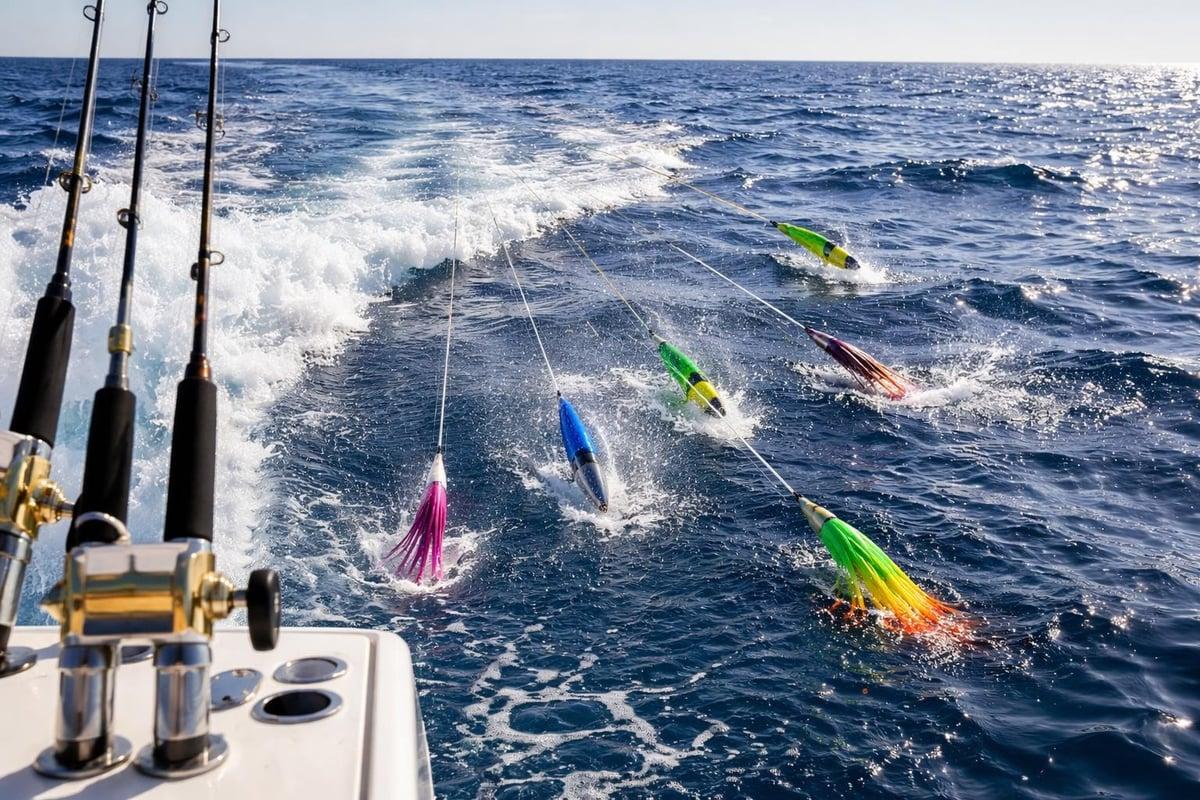
A spread of four to six lines at different distances and depths covers more water, helps you find out what's working, and triggers competitive feeding. Positions include:
- Short riggers, roughly 30 to 75 feet back, with skirted lures making surface commotion
- Long riggers, roughly 75 to 200 feet back, often with a large skirted lure, or smaller lures and feathers that swim deeper in clean water
- Flat lines off the sides or corners for mid-range positions
- A shotgun line straight back down the middle
- A teaser close in, about 50 feet back, such as a small lure or naked ballyhoo
Vary lure sizes and colors across positions. Larger lures on short positions act as teasers, and smaller trailing lures often get the bites once fish are in the spread. To change a line's depth, adjust weight rather than boat speed.
Trolling Speed
Most anglers troll at 6 to 9 knots; start around 6 to 7 knots and adjust based on strikes. Lures should track straight, keep consistent action and occasionally break the surface without tumbling or spinning.
- Faster (8 to 9 knots, and some days up to 10): searching lots of water and aggressive surface-feeding schools.
- Slower (4 to 7 knots): working around floating structure or weed lines, and fish that are present but not committing.
Approaches to sea conditions vary: some anglers slow down in rough water, while others speed up to 8 to 9 knots with larger, high-visibility, heavier lures and slow-troll smaller lures at 5 to 6 knots on calm days.
Working a School
When you hook up, keep one fish in the water and keep other lines out, or slow down and circle back. Mahi are schooling, competitive feeders, and a hooked fish often keeps the rest of the school around for double or triple hookups. When fish are boiling on bait near the surface, stop trolling and cast poppers, stick baits or live bait. Keep a pitch bait rigged on a circle hook ready to toss to visible fish.
Color and Size
Chartreuse and pink combinations rank among the most effective across water clarities and light conditions. Other consistent producers are blue and white (which mimics flying fish and ballyhoo), green and yellow, and all-pink or all-chartreuse. General guidance:
- Clear blue water: bright colors like chartreuse, hot pink and orange stand out; natural blue-and-white or silver patterns with flash also work, especially when fish are selective.
- Stained water, overcast days and low light: high-contrast patterns such as chartreuse, orange or fire tiger, or darker purple, black and blue combinations.
- Around weed lines: green combinations.
Mahi can be color-selective on certain days. If fish follow without committing, try a different pattern.
For size, 4- to 6-inch lures appeal to all sizes of mahi and often produce more bites, especially with schools of smaller fish or a finicky bite. Larger lures of 7 to 10 inches or more attract bigger bulls with fewer strikes. Let local baitfish guide you: match flying fish when you see them, and downsize when mahi are busting small pilchards or sardines.
Rigging
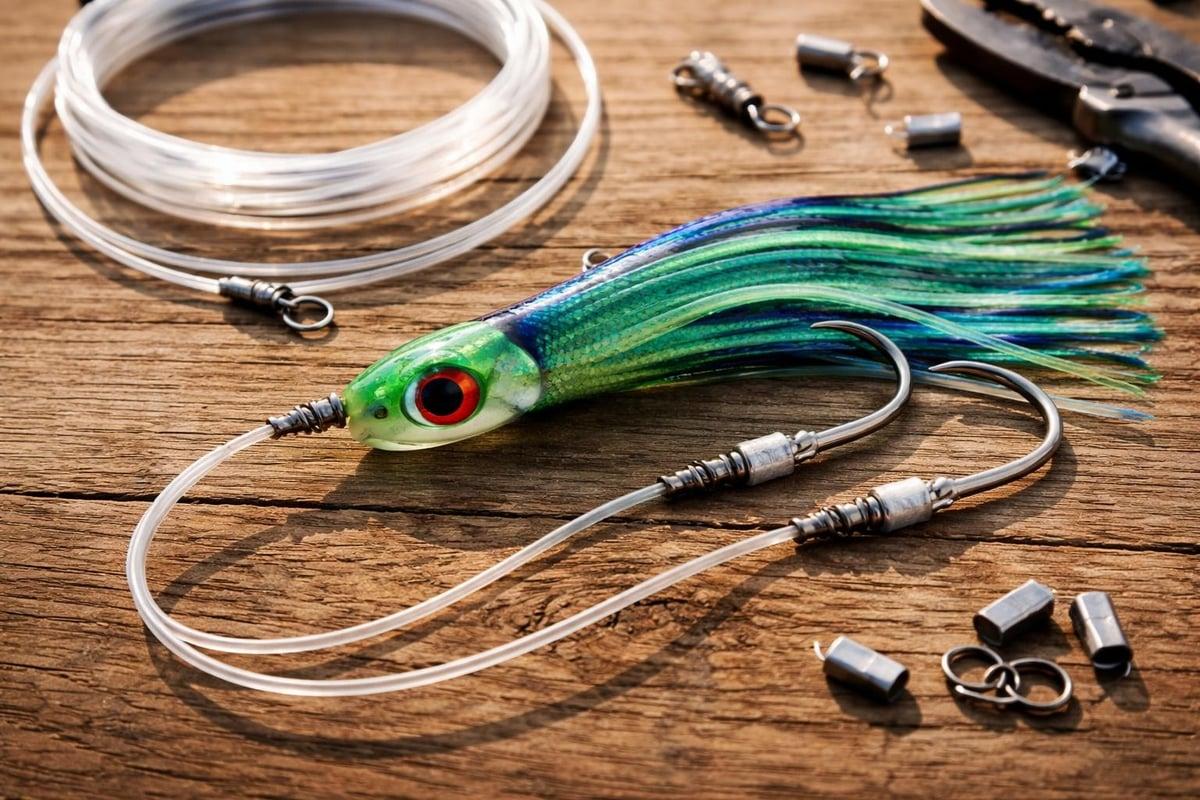
- Leaders: wire isn't typically necessary despite mahi's sharp teeth. Fluorocarbon or mono leaders of about 40 to 80 pounds handle rough mouths and head shakes.
- Hooks: 4/0 to 9/0, depending on lure size, with single hooks or a trailing stinger when mahi are short-striking. J-hooks give solid penetration on jigs and poppers where you set the hook yourself.
- Terminal tackle: quality split rings and barrel swivels, rated for at least 150 pounds, prevent twist and let lures swim naturally. Check terminal tackle after every fish and replace worn crimps and swivels.
Opinions differ on circle hooks with artificials: many anglers use circle hooks with skirted lures for better hookup ratios and easier releases, while others prefer inline rigging, reserving circle hooks for live bait because they can reduce hookup rates on lures pulled at higher speeds.
After each trip, rinse lures with fresh water, replace rusty or dull hooks, and store lures in divided boxes to protect the skirts.
Regional and Seasonal Adjustments
- Gulf of Mexico: flying fish and ballyhoo dominate the forage, and rigged baits trolled along weed lines produce from spring through fall.
- Atlantic coast, Carolinas to New England: mahi follow warm-water eddies, and squid and butterfish become important baits in northern waters.
- California: sardine and anchovy populations shape the bait choice. Offshore areas like La Jolla Canyon, Nine Mile Bank and the Rock Pile off San Diego can produce when conditions are right.
- Florida: year-round opportunities, with the strongest bite from April through September. Check Florida's dolphinfish regulations (opens in a new tab) for size and bag limits.
In spring (March to May), mahi move north with warming water, with flying fish and small tuna as primary targets and lighter blues and whites matching smaller baitfish. Summer (June to August) is the peak across most of the range, with water in the 78 to 84°F range and bright chartreuse and pink excelling. Fall (September to November) brings southern migrations and suits natural colors. In winter, fishing concentrates in southern waters and deeper structure where water stays warmer. Warmer water above 75°F supports faster, brighter presentations, while cooler water calls for more subtle approaches.
Big bulls can show up at different times of year, cruising alone or in pairs in spring and early summer, holding on deeper structure in summer, and appearing more often in fall. Bigger lures or baits, such as whole ballyhoo or larger squid, suit bigger fish.
For how mahi are managed in the Atlantic, see NOAA's dolphinfish management strategy evaluation (opens in a new tab).
Related Fishing Spots
Related Fishing Tournaments
About the Author
Matthew Howe
Matthew Howe is the founder of Find Fishing Spots and a lifelong fishing and boating enthusiast. He created FindFishingSpots.com to help anglers discover fishing locations, tournaments, and useful resources for getting on the water.