
Mahi-Mahi (Dolphinfish) Fishing Guide
How to identify, find and catch mahi-mahi: seasons, weed lines and birds, tackle, trolling and sight casting, and handling your catch.
Related Species
- Mahi-Mahi
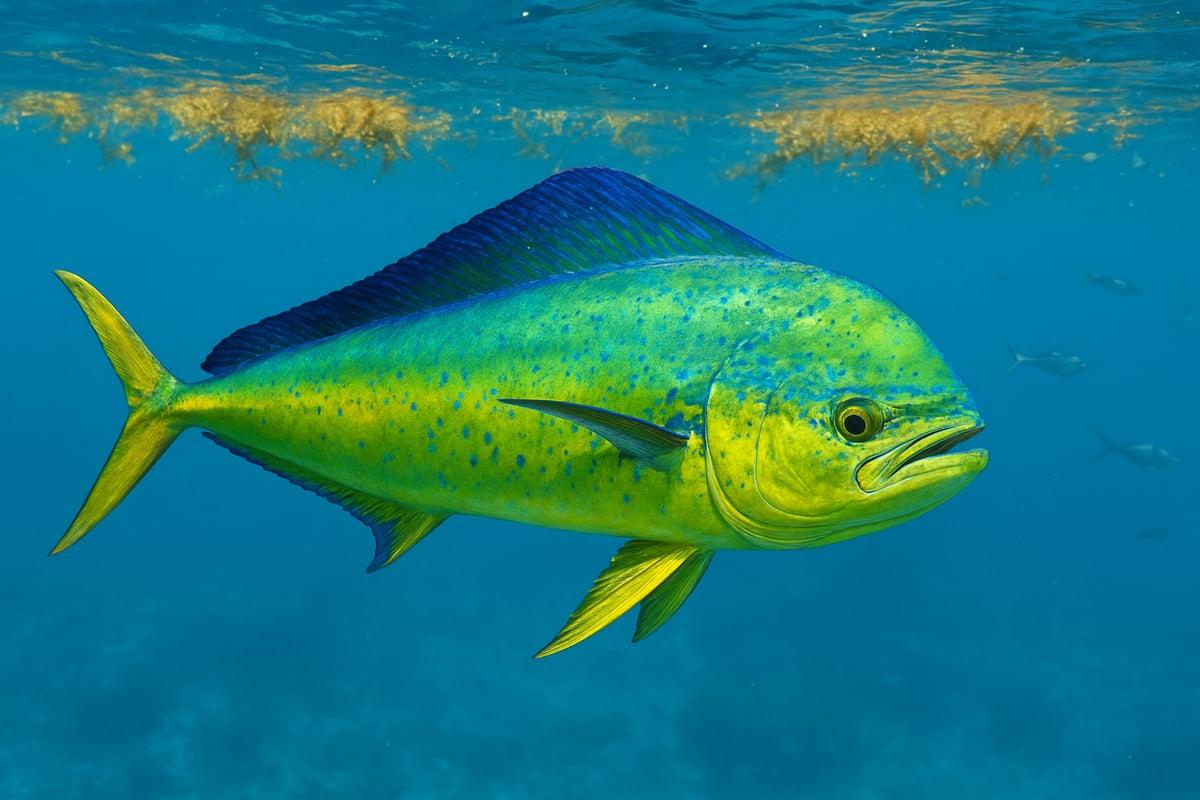
Mahi-mahi, also called dolphin fish or dorado, is a fast, colorful offshore gamefish known for wild jumps, hard runs and excellent table fare. Despite the name, the dolphin fish isn't a dolphin at all. The name comes from its distinctive head shape and acrobatic surface displays. This guide covers how to identify mahi, when and where to find them, the tackle and techniques that work, and how to handle your catch.
Identifying Mahi-Mahi
Mahi are instantly recognizable by their electric blue-green backs and golden yellow sides. Other features include:
- A long, continuous dorsal fin running nearly the entire length of the body
- A compressed body and a deeply forked tail built for speed
- Small, sharp teeth for grabbing baitfish
- Colors that change rapidly when the fish is caught or stressed, and fade shortly after death
Males, called bulls, have a blunt, prominent forehead that becomes squared-off and almost vertical in mature fish. Females, called cows, have a more rounded head.
Biology and Behavior
Mahi grow incredibly fast and reach maturity within their first year. They live only about 4 to 5 years, which is why they're sometimes called "rabbits of the sea." Females spawn multiple times a year. Mahi are highly social and often form large schools that migrate across tropical and subtropical waters. For more on their growth and spawning, see NOAA's Atlantic mahi-mahi profile (opens in a new tab).
Mahi are opportunistic feeders that eat small fish, squid, flying fish, zooplankton and crustaceans, and they strike a wide variety of lures and baits. They patrol near the surface but can be found as deep as 250 feet. In short bursts they can reach up to 50 mph.
Size
Most mahi caught weigh roughly 15 to 30 pounds, and big bulls can top 80 pounds.
When to Fish
Mahi thrive in warm water, typically between 70 and 85°F, and are highly migratory, following warm currents.
- Atlantic and Gulf of Mexico: prime season runs from April through October, peaking in summer when water temperatures climb into the upper 70s and 80s. In Florida, the action peaks from April to June as mahi move northward with the Gulf Stream. The "Bull Run" in the Gulf of Mexico each spring and summer draws anglers looking for trophy fish.
- Pacific Coast: productive from late spring through early fall.
- Mexico: prime fishing from May through December, especially along the Pacific coast.
- Australia: the top season starts in December and extends into the southern summer.
- Equatorial waters such as Hawaii and Southeast Asia offer year-round opportunities thanks to stable water temperatures.
Early morning and late afternoon often produce the best bite, though mahi will feed throughout the day. Overcast days with a light chop are ideal because the reduced light helps mahi ambush baitfish near the surface. New and full moons can trigger stronger feeding, and moving tides and stable weather windows improve your odds.
Where to Find Mahi
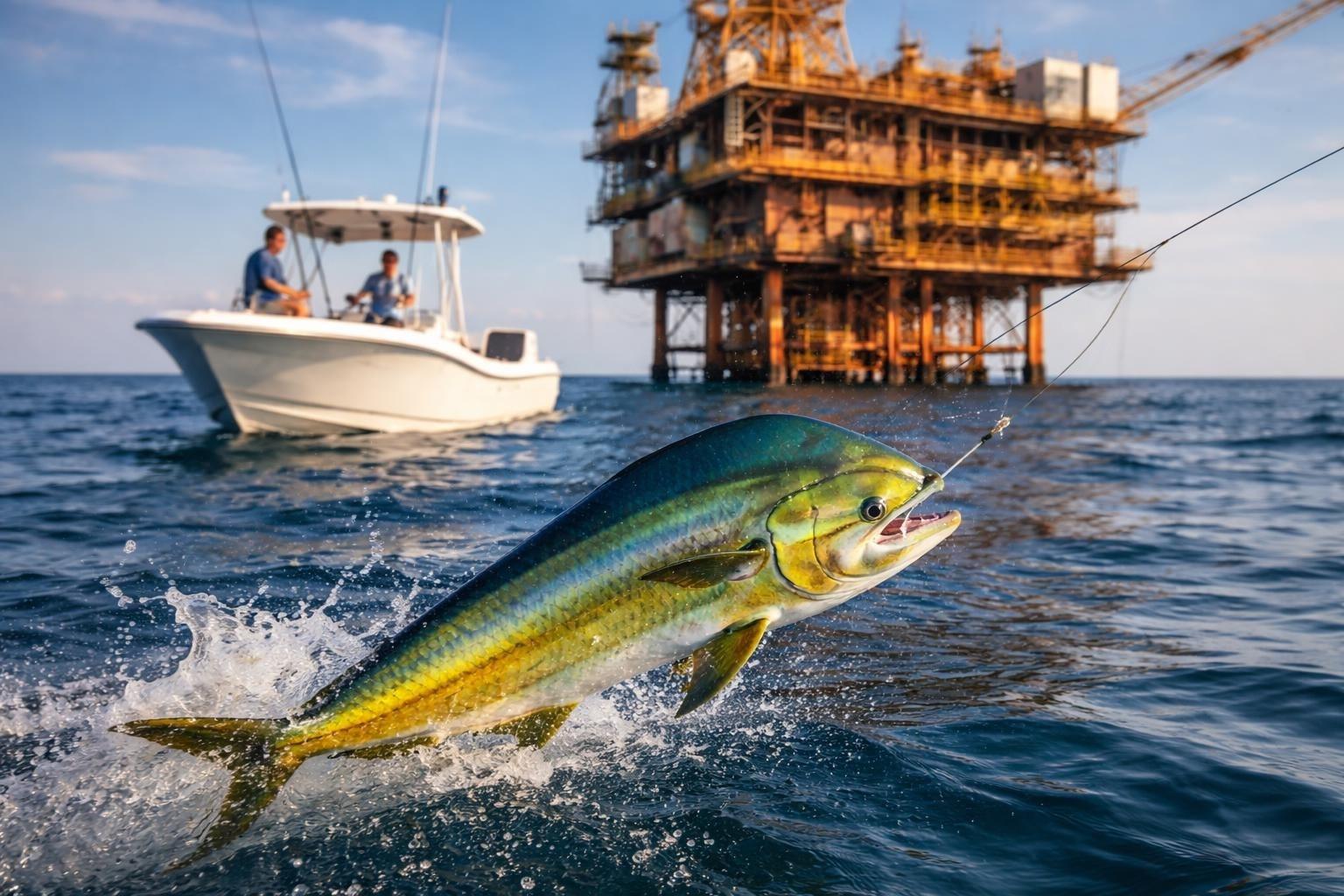
In U.S. waters, mahi are most abundant along the Atlantic coast, throughout the Gulf of Mexico and off Southern California. Most U.S. mahi are caught in Florida waters. The Florida Keys, Key West and Miami stand out for their proximity to the Gulf Stream; see these Miami offshore fishing spots. Stuart and Port Canaveral offer quick runs to deep water, and Louisiana's oil rigs and canyons attract mahi in spring and summer.
Southern California's offshore canyons and islands require longer runs but can produce quality fish when warm water moves in. California anglers frequently find success at spots like La Jolla Canyon and Nine Mile Bank. Internationally, the Caribbean, Hawaii, Costa Rica, the Mediterranean and Southeast Asia are all prime destinations.
Reading the Water
Look for:
- Sargassum weed lines, which act as floating mini-ecosystems that attract bait
- Floating debris such as logs, pallets and stray buoys
- Birds, especially frigate birds and terns, hovering or diving over feeding fish
- Temperature breaks where warm and cooler water meet, and current edges
- Current rips and color changes in the water
- Offshore structure such as oil rigs and fish aggregating devices (FADs)
GPS, fish finders and satellite imagery help you locate temperature breaks, current edges and structure. If you're new to an area, a charter captain or local guide will know the productive grounds.
Tackle and Gear
- Rods: 6 to 7 feet, medium to heavy action, for backbone against fast fish with enough tip to work a lure or bait.
- Reels: high-capacity spinning or conventional reels with a smooth drag. Anglers use either 30- to 50-pound braided or fused mainline, or at least 300 yards of 20- to 30-pound monofilament for most situations.
- Leaders: fluorocarbon, 30 to 50 pounds to prevent bite-offs without spooking fish, up to 80 pounds for bigger mahi.
- Boat setup: outriggers and teasers for a trolling spread, GPS and a fish finder, a sturdy gaff or large landing net, gloves, a first aid kit, and a big cooler with plenty of ice.
- Backup tackle: mahi are tough on gear, and it's common to lose a setup to a strong fish or a tangled weed line.
For more tackle advice, see these mahi-mahi techniques and gear tips (opens in a new tab).
Baits and Lures
Rigged ballyhoo is a favorite natural bait, and squid, pilchards and sardines also work well. Goggle-eyes and small tuna are used for live baiting. Live bait is best when fish are picky, while dead bait is easier to store and quick to rig.
Productive artificials include skirted lures, feathers, chugger heads, diving plugs, bright soft plastics, flashy spoons, poppers and stick baits. In clear water or with pressured fish, match lure color to the local baitfish. Teasers and chum can spark a feeding frenzy close to the boat.
Techniques
Trolling
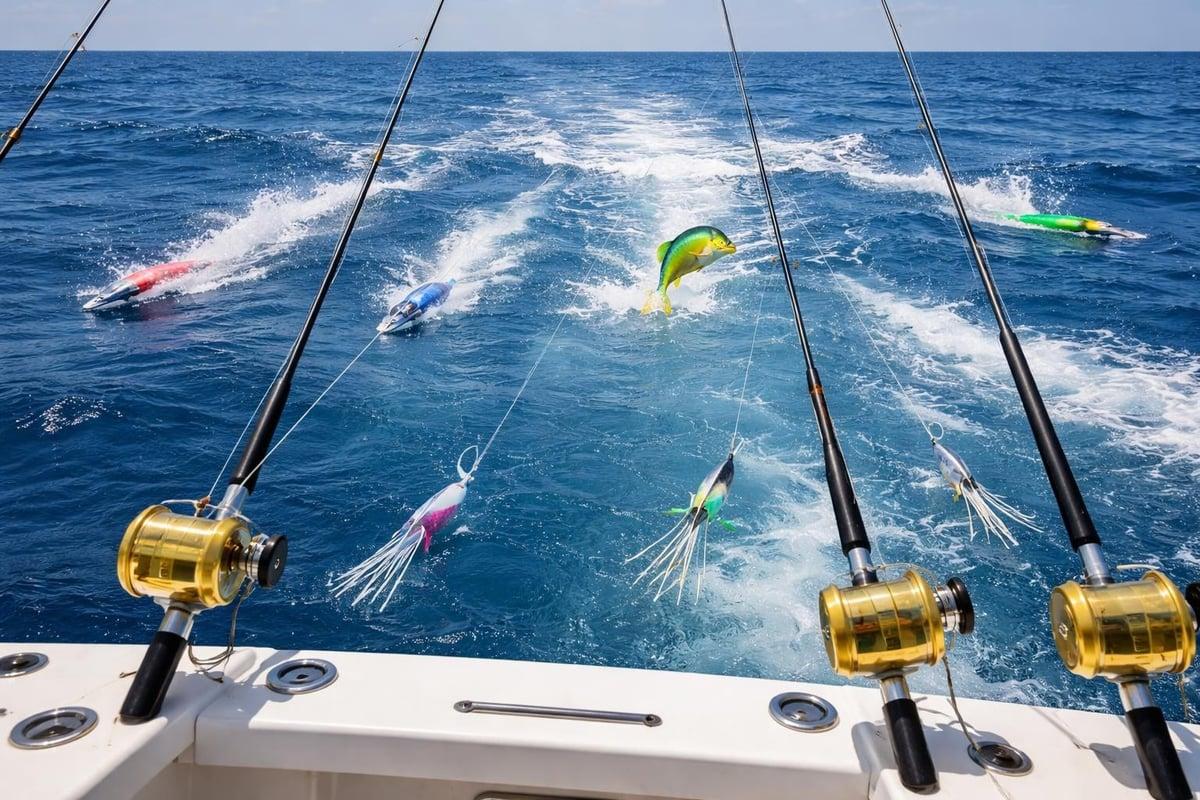
Trolling is the bread and butter of mahi fishing because it covers ground until you locate fish around debris and weed lines. Set a spread of three to four lines using outriggers and flat lines, staggered at different distances, with a mix of chuggers, skirted lures, diving plugs and ballyhoo. Trolling speeds of about 6 to 9 knots are typical, slower when working a weed line. When you see birds diving, flashes of color or jumping fish, slow down and circle back, as you would around a productive area like the 409 Hump.
Keep One Fish in the Water
Mahi are incredibly social. When you hook up, keep the first fish in the water near the boat while you prepare more rods. The rest of the school will usually stay with it, often turning a single hookup into multiple strikes.
Casting and Sight Fishing
When you find mahi around floating objects or weed lines, approach quietly, cut the engine and drift. Cast well past the fish and retrieve across their path. If they're picky, change lure color or slow your retrieve. A quick bait-and-switch with a live pilchard often seals the deal.
Chunking and Other Methods
Chunking with cut bait around weed lines and debris can draw fish to the boat, especially in slower conditions. Fly anglers use 8- to 10-weight rods with large streamers or poppers cast to visible fish, and kite fishing suspends live bait right at the surface where mahi strike.
Charters or DIY
A charter brings local expertise, gear and the necessary permits, and quick access to productive areas such as the Carysfort Trench off Key Largo. If you go on your own, make sure your boat is up for offshore runs, your navigation skills are sharp, and you have full safety equipment. Plan for fuel and bait, and leave extra time for finding fish.
Pack a broad-brimmed hat, a UPF shirt, polarized sunglasses, sunscreen, water, life jackets and a first aid kit. Monitor the weather and have a backup plan.
Handling Your Catch
Mahi jump and run hard right to the boat, so keep your gear organized and use a sharp gaff or sturdy landing net. Once landed, bleed and ice the fish immediately and clean it within hours for the best quality. Many anglers vacuum-seal portions and freeze them.
Mahi's firm white meat has a mild, slightly sweet flavor and stays moist when properly prepared. Grilling, baking and pan-searing are all popular; try baking dolphin fish (opens in a new tab) for an oven method.
Regulations and Conservation
Mahi populations are considered stable thanks to their rapid growth and high reproductive capacity. Most states and federal waters still enforce bag limits. Limits differ by region: in Florida's Gulf waters there is no minimum size and the limit is 10 fish per person (60 per vessel), while Florida's Atlantic waters have a 20-inch fork-length minimum and a limit of 5 per person (30 per vessel). Always check current licensing rules and regulations for where you fish.
Release undersized fish quickly and carefully, keep only what you'll use, and consider releasing larger bulls to preserve the breeding population.
Sources & Further Reading
Related Fishing Spots
Related Fishing Tournaments
About the Author
Matthew Howe
Matthew Howe is the founder of Find Fishing Spots and a lifelong fishing and boating enthusiast. He created FindFishingSpots.com to help anglers discover fishing locations, tournaments, and useful resources for getting on the water.