
The Potomac River in Maryland: Smallmouth, Walleye and the Tidal River
Fishing the Potomac in Maryland: upper-river smallmouth and walleye, North Branch trout, tidal blue catfish and stripers, and C&O Canal access, with safety and licensing notes.
Related Species
- Smallmouth Bass
- Walleye
- Muskellunge
- Rainbow Trout
- Blue Catfish
- Striped Bass
- White Perch
- Crappie
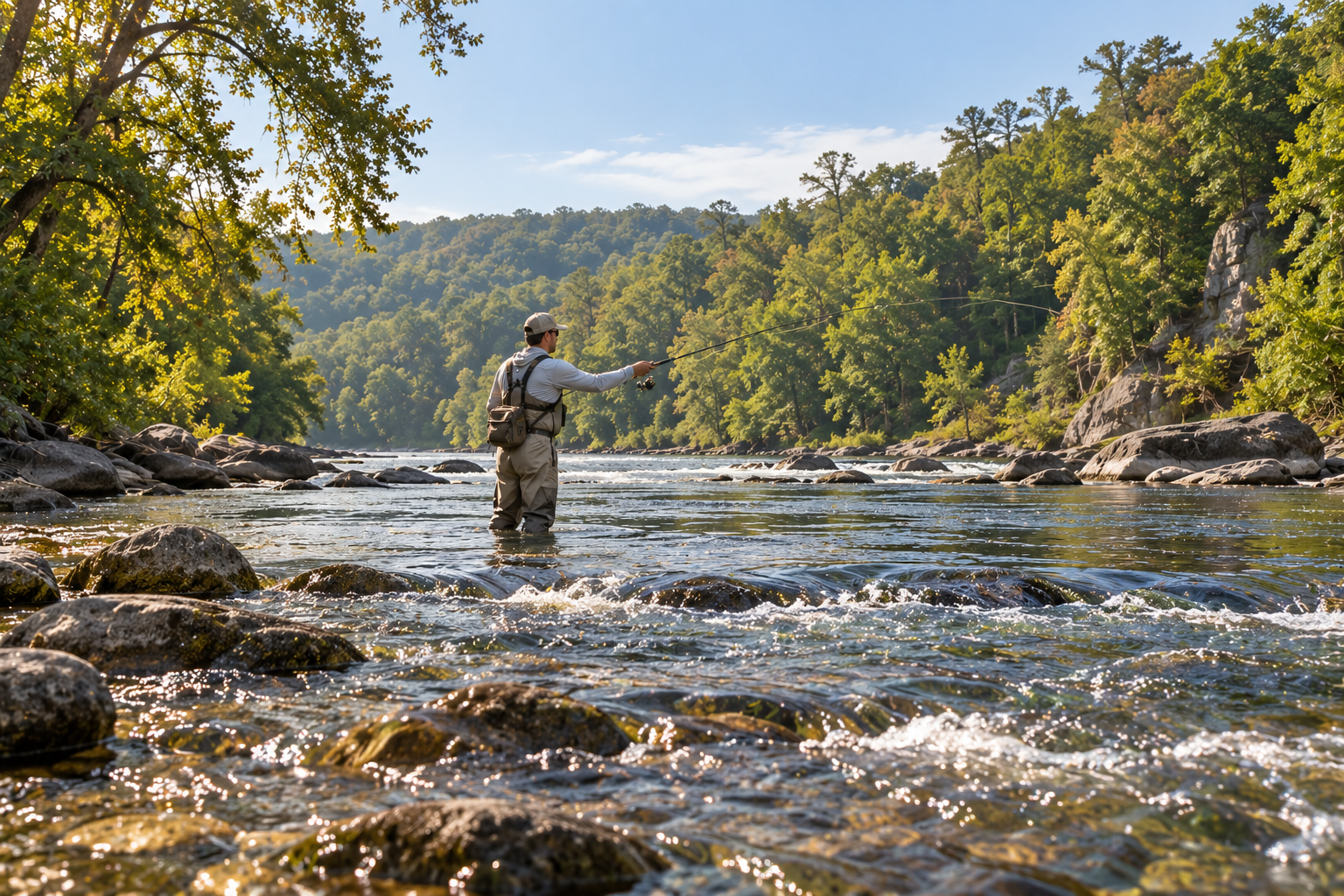
Along Maryland's shore, the Potomac River fishes like several different rivers. The Maryland Department of Natural Resources (DNR) describes the upper Potomac as home to Maryland's most popular smallmouth bass fishery; farther up, the North Branch adds trout water, and below Washington the tidal river turns into blue catfish, largemouth, crappie and striped bass country.
This guide focuses on the river within Maryland: how each stretch fishes, what DNR's own fishing reports say about timing and lures, and the public access points in our directory, many of them along the Chesapeake and Ohio Canal National Historical Park. It does not list size or creel limits, which differ between the river's tidal and non-tidal waters and between species; check DNR's current regulations before keeping fish.
A river in three parts
DNR's fishing hotspots guide sums up the river's range in two sentences: the northern Potomac fishery consists of species such as muskie, walleye and trout, while the southern Potomac and its more brackish reaches are popular for blue catfish and northern snakehead. For planning, it helps to think of the Maryland river in three stretches:
- The North Branch in western Maryland, near Kitzmiller and Cumberland, with trout water.
- The upper Potomac, from the Cumberland area down through Hancock, Williamsport and Brunswick to Great Falls, the heart of the smallmouth fishery and the stretch paralleled by the C&O Canal towpath.
- The tidal Potomac, below Washington, where blue catfish, crappie and striped bass take over.
The upper Potomac: smallmouth bass country
DNR calls the upper Potomac Maryland's most popular smallmouth bass fishery, and its weekly Maryland Fishing Report follows it closely through the year:
- Spring. Smallmouth spawn in the upper river in spring. In low, clear water, DNR's reports describe anglers relying on long casts with light line toward emerging grass beds, current breaks and deep pools.
- Summer. Mornings and evenings are best. DNR suggests topwater lures, root beer–colored tubes and small crankbaits cast near current breaks and grass edges.
- Fall. As the water cools, DNR describes good fishing for a mix of smallmouth bass and walleye, with swimbaits, tubes and small crankbaits worked near current breaks, underwater ledges and deeper holes.
Walleye share the river with the bass. In spring, DNR's reports describe clear, cool water that suits both species, with tubes, swimbaits, paddletails and small crankbaits fished along current breaks, mid-river boulders and submerged ledges.
How the smallmouth population is doing
DNR monitors the smallmouth fishery with annual surveys of juvenile and adult fish. The agency reports that the number of larger adult smallmouth has remained steady, but juvenile numbers have been below the long-term average, and high river flows in late spring, during and right after the spawn, are a major cause: they scour nests, displace fry and limit growth and survival. After consecutive poor year-classes, DNR began a pilot supplemental stocking program on the upper Potomac in 2019, raising fingerlings from the river's own adult smallmouth and stocking them back into sections with poor recruitment.
For anglers, that is a good reason to handle smallmouth carefully and release them, especially in spring.
Access along the upper river
Maryland's side of the upper Potomac is unusually accessible, thanks largely to the C&O Canal National Historical Park, which the National Park Service says offers plenty of boat ramps providing access to the Potomac. Access points in our directory include:
Hancock to Williamsport
Dam No. 4 and Big Slackwater
Harpers Ferry to Brunswick
Whites Ferry to Great Falls
Many of these sites offer shore access as well as a ramp, and the towpath makes it possible to walk or bike to stretches of river that are hard to reach otherwise.
Respect the river
The National Park Service is direct about the dangers here: in the last decade the park has seen several drownings, multiple boat-related injuries and loss of equipment. The most difficult rapids, ranked class IV and V, are in the eastern part of the park, particularly at Great Falls, while the Harpers Ferry area has easier class II and III rapids. NPS advises wearing a life jacket at all times, checking current conditions before you go and never entering rapids beyond your skill. Life jackets are required by the State of Maryland on the river.
The North Branch
In western Maryland, the North Branch Potomac is trout water. DNR's reports include rainbow trout catches from the North Branch, and our directory lists several access points there, including the North Branch Potomac River Put and Take Area and North Branch Potomac River - Kitzmiller near Kitzmiller, and the Gary Yoder Boat Ramp near Dawson. Check DNR's trout stocking information and the current regulations before fishing.
The tidal Potomac
Below Washington, the river changes character. DNR's reports describe blue catfish providing a lot of action from the Route 301 Bridge to the Wilson Bridge, crappie near the Wilson Bridge, and hickory and American shad spawning runs below Little Falls in spring. Farther down, the lower river and its steep channel edges from Piney Point to St. Georges Island are known for striped bass, and white perch school on oyster lumps in deeper water in the fall.
Striped bass rules on the tidal Potomac are seasonal and change from year to year, and in spring the main stem has been catch-and-release only for part of the season. Always check DNR's current striped bass season map before you target them.
Tidal access points in our directory include Marshall Hall and the Public Pier at National Colonial Farm near Accokeek, Fort Washington Lighthouse, Mallows Bay, and the Piney Point Lighthouse Museum and Park.
Northern snakehead
The invasive northern snakehead has spread through the Potomac. The C&O Canal National Historical Park asks anglers not to release a snakehead alive and to report catches to Maryland DNR, with a photo if possible.
Licenses on a border river
The Potomac touches four jurisdictions, and the National Park Service notes that fishing licenses follow the rules of the state where you fish. In Maryland, a license is required for anglers 16 and older in non-tidal waters; the District of Columbia, Virginia and West Virginia each have their own requirements. Check which jurisdiction you are in before you cast.
Planning a trip
- Pick your stretch by target. The upper river for smallmouth and walleye, the North Branch for trout, and the tidal river for blue catfish, crappie and seasonal striped bass.
- Watch the flows. High water makes the upper river dangerous and hurts the smallmouth spawn; low, clear water calls for long casts and light line.
- Use the C&O Canal access. The park's boat ramps and the towpath reach water you can't get to elsewhere.
- Read DNR's weekly report. The Maryland Fishing Report covers both the upper and tidal Potomac through the season.
- Wear a life jacket and stay out of rapids beyond your skill.
The Potomac rewards anglers who match the stretch to the season: smallmouth on current breaks in summer, walleye and bass in the cool water of fall, and blue cats and shad on the tidal river.
Related Locations
- Fishing spots in Maryland
- Fishing spots in Hancock, Maryland
- Fishing spots in Williamsport, Maryland
- Fishing spots in Brunswick, Maryland
- Fishing spots in Point of Rocks, Maryland
- Fishing spots in Darnestown, Maryland
- Fishing spots in Potomac, Maryland
- Fishing spots in Kitzmiller, Maryland
- Fishing spots in Accokeek, Maryland
- Fishing spots in Piney Point, Maryland
About the Author
Find Fishing Spots
The Find Fishing Spots editorial team covers all things fishing, from fishing spots and tournaments to species guides, fishing tips, and helpful resources. Find Fishing Spots helps anglers discover new places to fish and useful information for planning their next day on the water.
Sources & Further Reading
- Freshwater Fishing Hotspots (Maryland Department of Natural Resources) ↗
- Upper Potomac River Smallmouth Bass Stocking Program (Maryland Department of Natural Resources) ↗
- Maryland Fishing Report — November 19, 2025 (Maryland Department of Natural Resources) ↗
- Fishing — Chesapeake & Ohio Canal National Historical Park (National Park Service) ↗
- Boating and Paddling — Chesapeake & Ohio Canal National Historical Park (National Park Service) ↗