
Tuna Bait: Live Bait, Chunking and Chumming
The live and cut baits that catch tuna, how to rig and present them, chumming and chunking, and matching bait to water conditions.
Related Species
- Yellowfin Tuna
- Blackfin Tuna
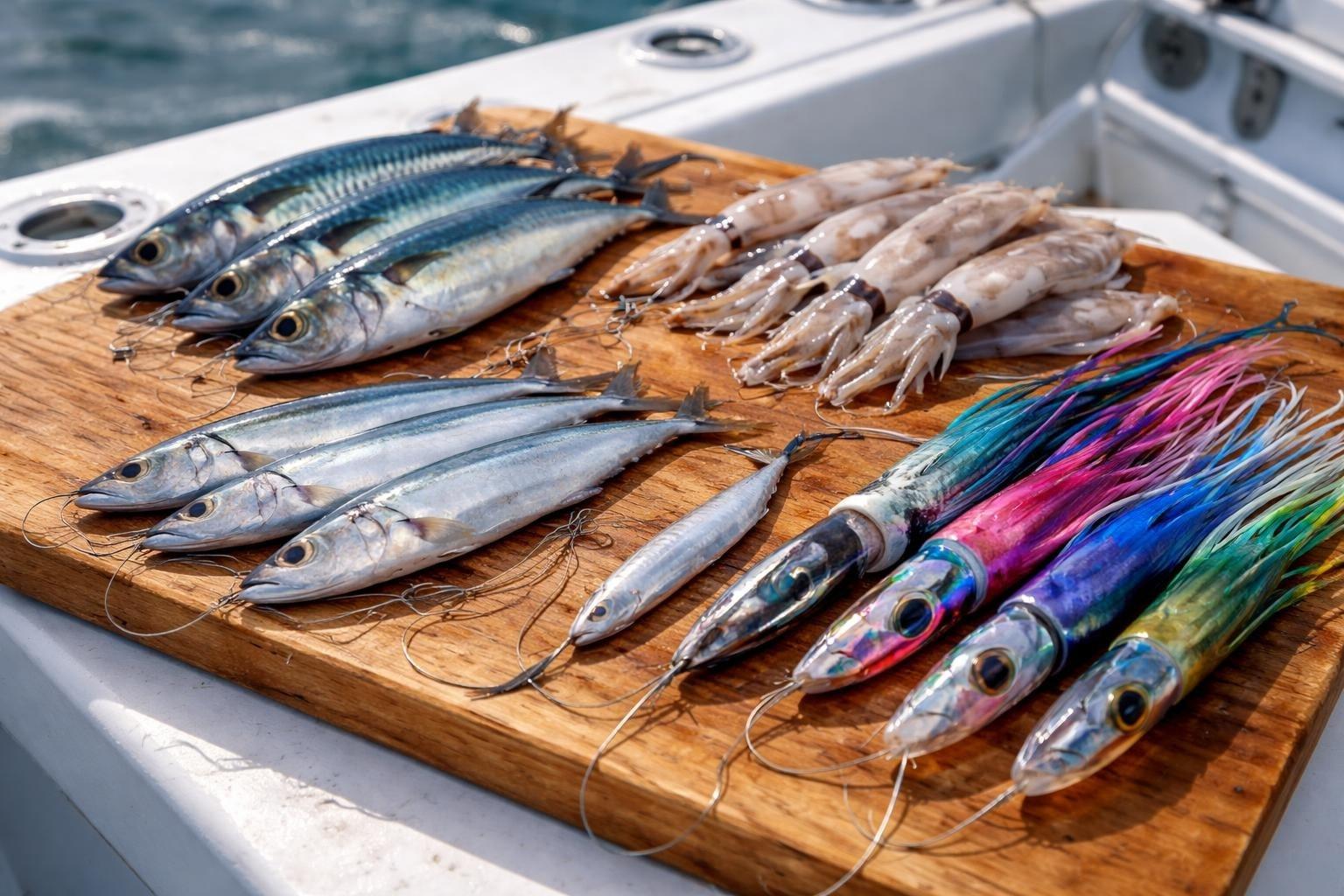
Natural bait catches a lot of tuna, whether it's a lively baitfish free-lined into a chum slick, a chunk drifted down current, or a rigged ballyhoo on the troll. This guide covers what tuna eat, the best live and cut baits, how to rig and present them, chumming and chunking, matching bait to conditions, and keeping bait fresh. For artificial lures, see the companion guide on tuna lures.
What Tuna Eat
Tuna are opportunistic feeders whose diet changes with location, season and what's around them. Common forage includes:
- Mackerel and herring
- Sardines and anchovies
- Squid and cuttlefish
- Flying fish
- Small tuna and bonito
Match your bait to what's naturally present. Local tackle shops and fishing reports tell you what baitfish are running that week. In spring and early summer, when smaller baitfish are abundant, downsize your baits.
Live Bait
Live bait is the gold standard for tuna, especially when fish are picky or conditions are calm. Its erratic movement, natural scent and appearance trigger strikes that even the best lures struggle to match.
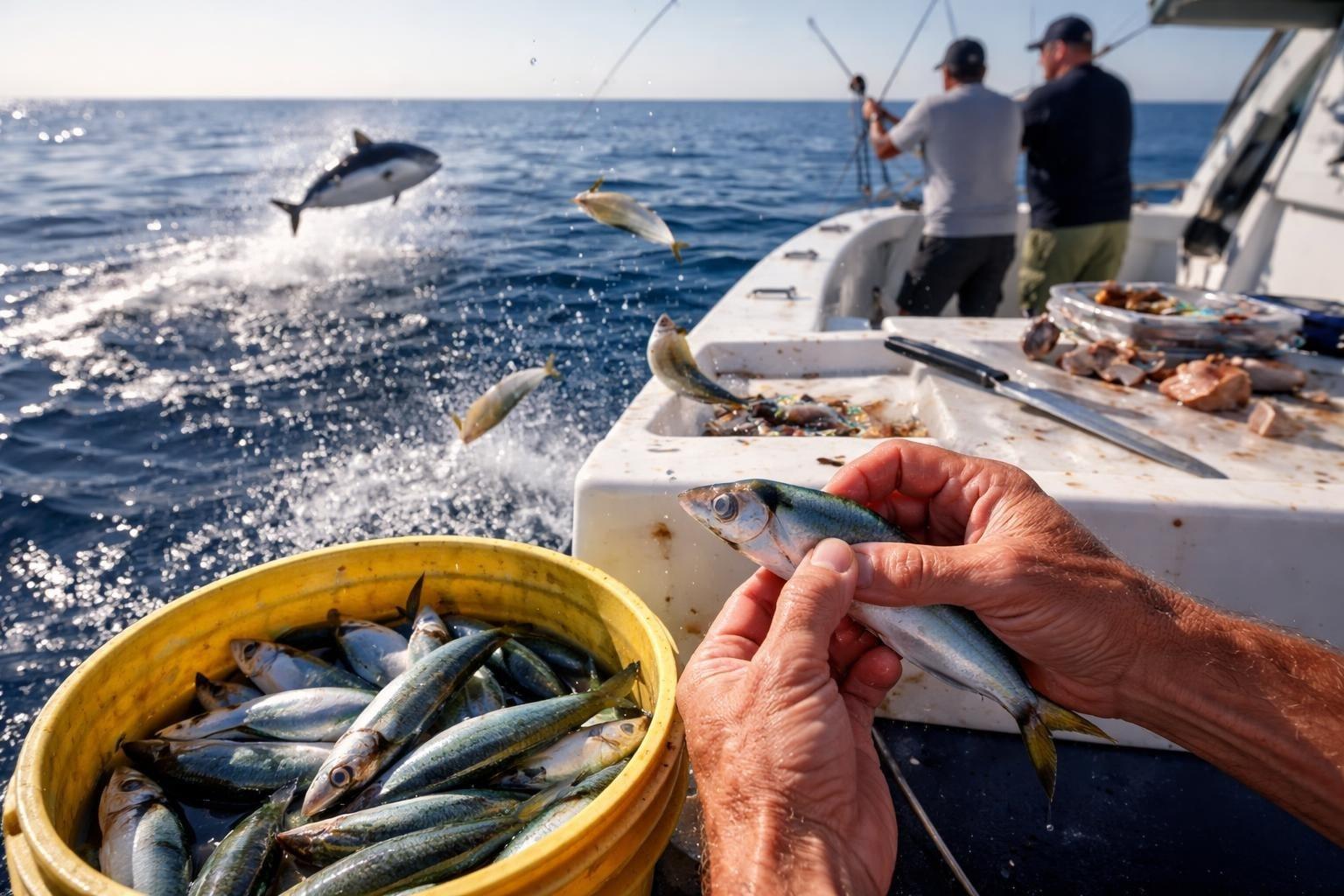
- Mackerel: hardy, lively and irresistible to most tuna, and they stay active on the hook. Their size suits larger bluefin.
- Herring: more delicate than mackerel, so handle them gently and replace them when they tire. They can be slow-trolled or fished under kites.
- Sardines and anchovies: deadly for yellowfin, skipjack and smaller blackfin, particularly when chumming.
- Goggle-eyes: a Southern favorite, readily attacked by yellowfin.
- Blue runners: tough baitfish that withstand long drifts.
- Pilchards and threadfin herring: smaller offerings for blackfin.
- Bonito: a larger bait for bluefin.
Herring are used in different ways: as a larger bait for bluefin, especially in cooler water, and as a lively bait for smaller tuna.
Rigging Live Bait
Circle hooks have become standard for live bait tuna fishing. They hook fish in the corner of the mouth, give better hookups, and make releases cleaner with better survival. Sizes from 3/0 to 8/0 cover most baits.
- Nose hooking: keeps the bait swimming straight and upright with maximum freedom. Use it for trolling, slow-trolling and free-lining, especially when tuna are feeding near the surface.
- Shoulder or back hooking, just behind the dorsal fin: allows free swimming when drifting or kite fishing, and keeps bait lively for long periods when chunking or chumming.
- Rubber band rigging: a small rubber band looped through the bait's mouth and around the hook eye lets the bait swim naturally while giving a solid connection. It is often used for fishing deeper water.
Use just enough weight to reach the depth you want, since too much kills the natural action. A slow-trolled live bait with minimal resistance often outfishes heavily weighted presentations.
Cut Bait and Chunking
When live bait isn't available, or alongside it, cut bait works well. It lasts longer on the hook, puts out a strong scent trail, works in rougher conditions and is cost-effective. Mackerel, bonito, mullet and squid make excellent cut bait. Slice them into strips or chunks, leaving some skin on for durability.
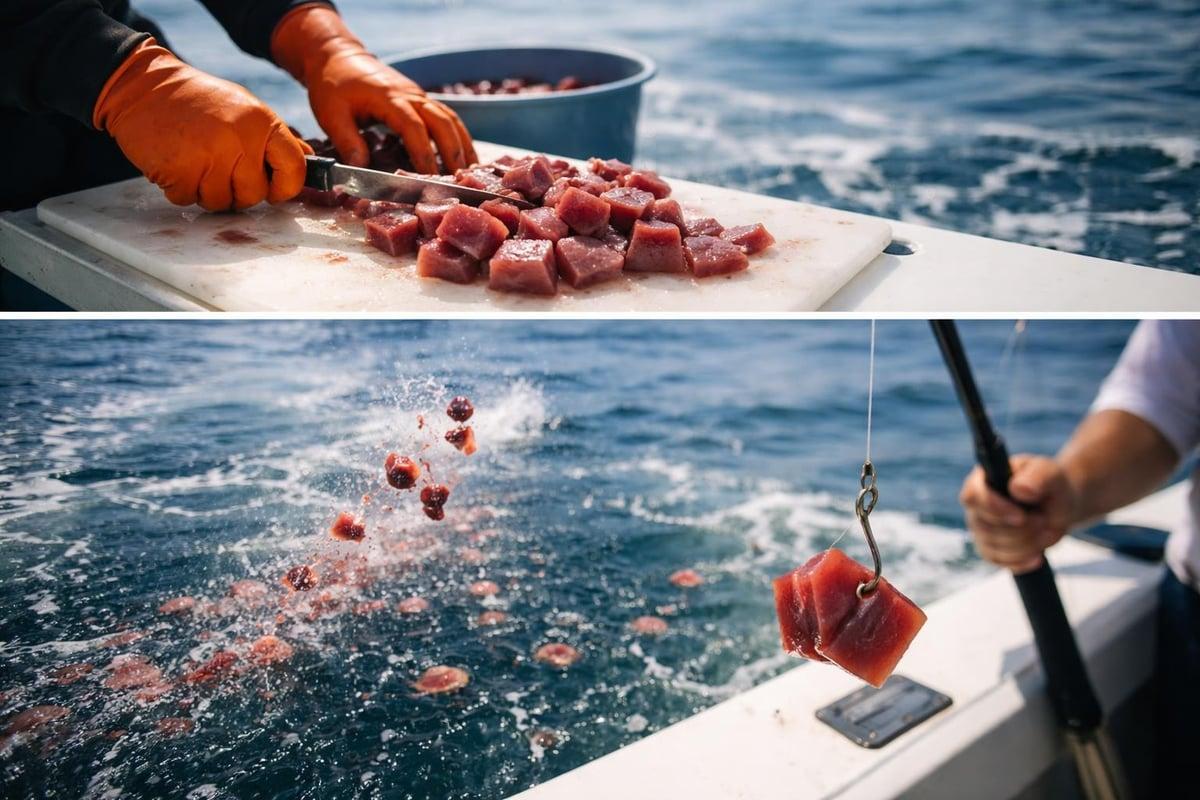
Chunking means cutting bait into pieces and tossing them overboard to build a chum line, then drifting a hook bait in it. It has been effective for bluefin in the Northeast and elsewhere. See AFTCO's guide on how to catch bluefin tuna (opens in a new tab). Approaches to the hook bait vary: some anglers keep it the same size as the chunks so it doesn't stand out, while others fish a larger chunk or whole fish on the hook. Chunking also works well when tuna are holding deep or being selective.
Chumming and Free-Lining
Chumming (opens in a new tab) creates a slick of scent and bits of bait that draws tuna into range and makes them less cautious. Start with chunks of cut bait or handfuls of live sardines, and keep a steady rhythm that holds tuna without overfeeding them. Once fish show, put your hooked baits into the same drift. Free-lining works well with chumming: drop a live bait into the chum line without extra weight and let it drift naturally with the current. Tuna following the trail often strike right at the surface.
Other Presentations
- Slow-trolling live bait at 2 to 4 knots keeps baits in the strike zone while covering water.
- Kite fishing suspends a live bait at the surface so it splashes like fleeing baitfish. It's especially effective in calm conditions when tuna cruise just below the surface.
- Rigged ballyhoo is a top dead bait, trolled in a spread or drifted beneath a kite. Squid is another excellent choice, particularly for yellowfin.
- Depth: some days tuna feed on the surface, others they suspend at 40 to 60 feet. Adjust to your sonar and feeding activity, using weighted lines, planers or downriggers to run some baits 20 to 30 feet down while others stay on top.
- Mixed spreads: some anglers run artificials such as cedar plugs or spreader bars on the outer lines and keep live or cut bait closer to the boat.
Matching Bait to Conditions
Water temperature, clarity and current all affect which bait performs best.
- Clear water and calm seas favor live bait and natural presentations, where tuna can inspect their meal. Use lighter leaders; fluorocarbon of 40 to 80 pounds covers most situations.
- Choppy or murky water favors cut bait and artificials, since scent matters more than sight, and tuna are less leader-shy, so you can beef up your tackle.
- Warmer water (70 to 75°F): tuna are more aggressive, and live bait excels.
- Cooler water (60 to 68°F): slower metabolism favors cut bait and chunking.
- Temperature breaks: fish both sides with different presentations.
Tuna concentrate where currents meet and push baitfish up, along current edges and rips, temperature breaks, structure, weed lines and floating debris. Watch for birds diving on bait, temperature changes of 2 to 3 degrees, and current rips. Early morning and late afternoon often bring the best live bait action; mid-morning can also produce where current is strong, and midday chunking can keep fish interested during slower periods. See midshore tuna tactics with live bait and jigs (opens in a new tab). For offshore spots with tuna activity near Miami, see these Miami offshore fishing spots.
Tackle for Live Bait Yellowfin
- 20- to 50-pound class spinning or conventional outfits
- Circle hooks of 3/0 to 7/0 depending on bait size
- Fluorocarbon leader of 40- to 80-pound test
- A live bait tank with proper aeration
Getting and Keeping Good Bait
Catching your own bait with sabiki rigs or cast nets near structure or bait balls gives the freshest bait, and you know where it came from. When buying live bait, look for alert, brightly colored fish and avoid cloudy eyes or damaged scales. Some jurisdictions, such as Hawaii, require a license to harvest live baitfish, so check local rules first.
- Keep live bait in a well-aerated livewell with constant circulation and the right temperature and salinity. Change the water regularly and don't overcrowd the tank, since stressed bait doesn't swim naturally.
- Use knotless mesh nets and handle bait as little as possible.
- Keep cut bait on ice and out of direct sunlight. Fresh outperforms frozen; if buying frozen, avoid bait with freezer burn or ice crystals.
- Pre-rig baits before you find fish, because the first few presentations often get the best bites.
Overfishing baitfish affects the whole food chain, including tuna. Buy from suppliers who harvest responsibly; this research on sustainable bait sources (opens in a new tab) shows alternatives exist.
Related Fishing Spots
About the Author
Matthew Howe
Matthew Howe is the founder of Find Fishing Spots and a lifelong fishing and boating enthusiast. He created FindFishingSpots.com to help anglers discover fishing locations, tournaments, and useful resources for getting on the water.