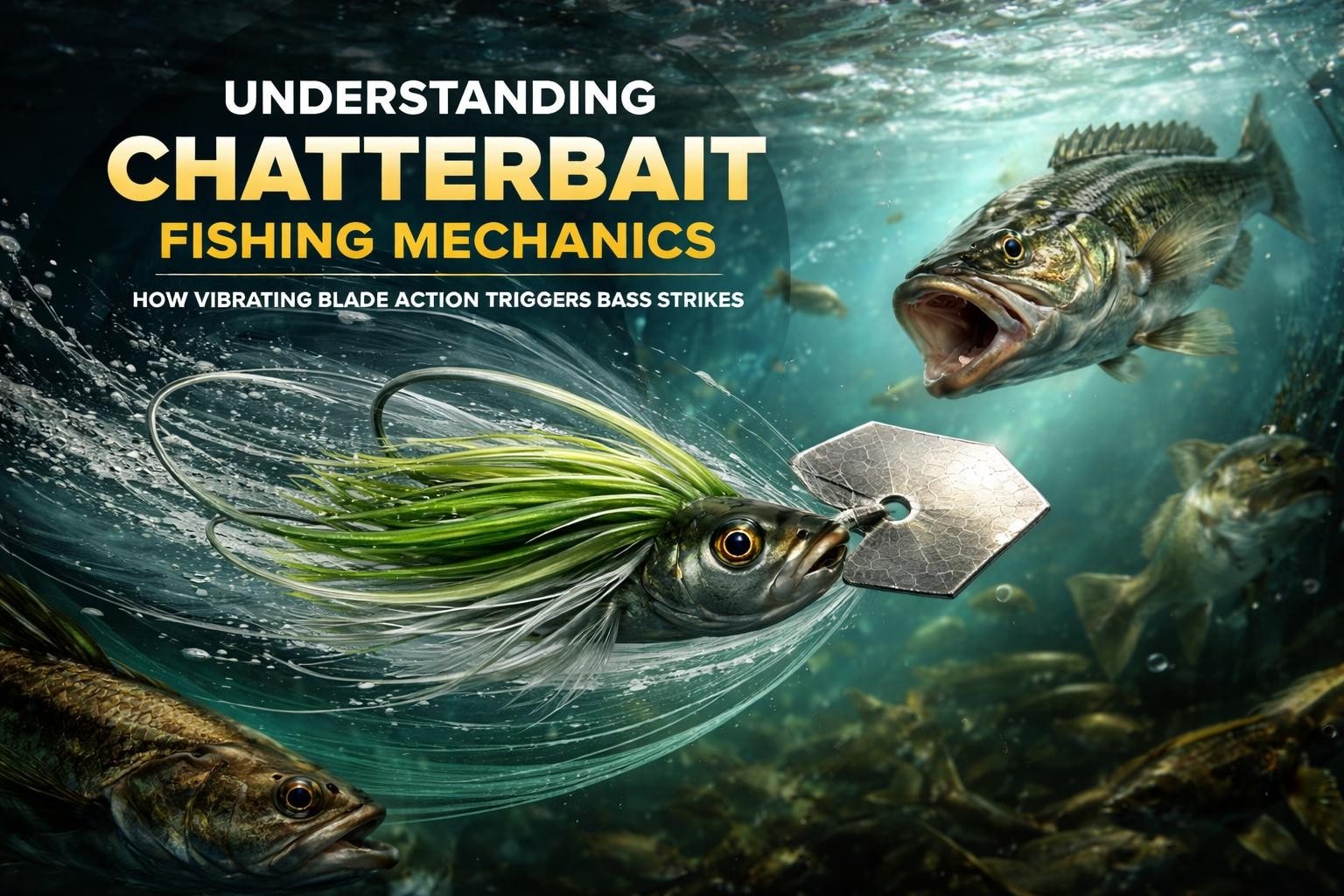
Chatterbait fishing has become one of the most reliable methods for targeting bass across the country. This versatile lure combines the best features of several classic baits into one package that bass simply can't resist. Whether you're working a shallow pond or a deep reservoir, understanding how to fish a chatterbait effectively can transform your time on the water. The unique vibration and erratic action make it a go-to choice for anglers looking to cover water quickly while triggering aggressive strikes. Let's dig into everything you need to know about making the most of this powerful bass-catching tool.
What Makes Chatterbait Fishing So Effective
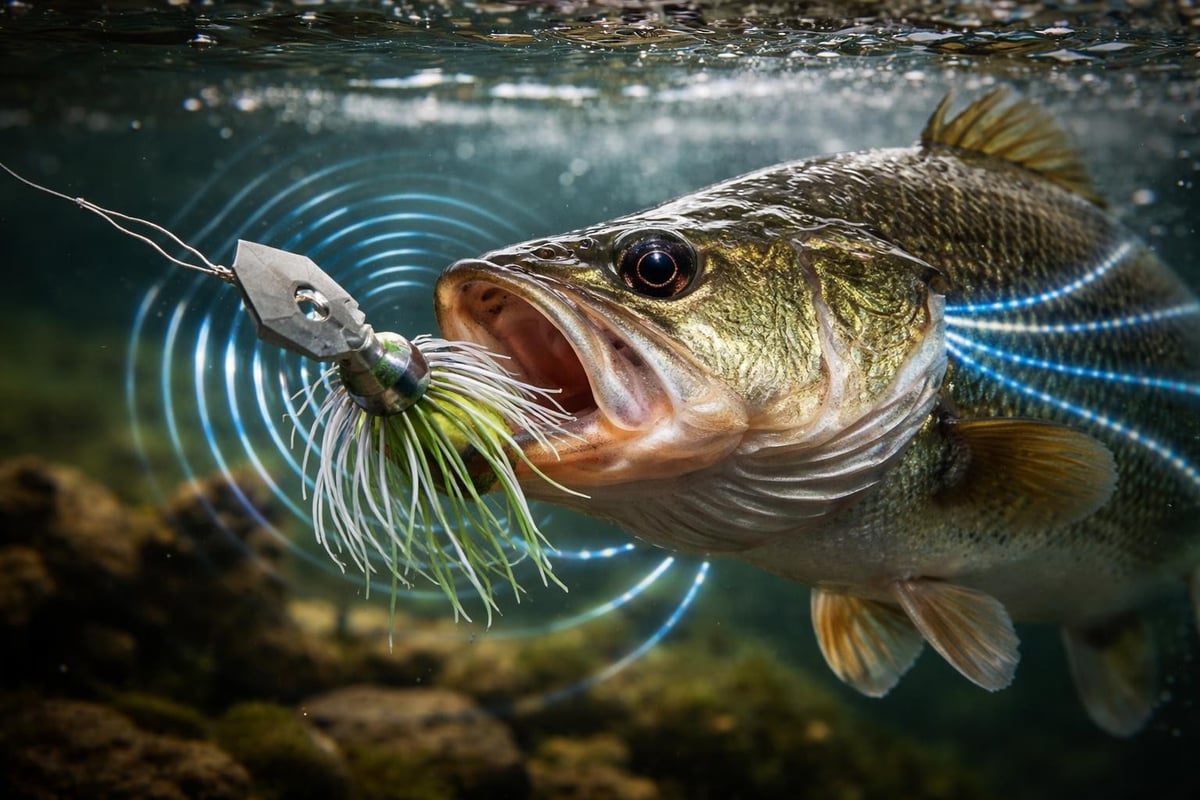
The chatterbait (also called a bladed jig or vibrating jig) stands out because of its distinctive blade that creates incredible vibration and flash. When you retrieve it, that hexagonal blade wobbles back and forth, sending out vibrations that bass can detect from significant distances.
The design triggers multiple predatory instincts:
- Visual appeal from the blade flash and skirted jig body
- Vibration that bass sense through their lateral line
- Versatility to fish at various depths and speeds
- Weedless design that works in heavy cover
What separates chatterbaits from other lures is their ability to mimic fleeing baitfish while also putting out enough commotion to draw reaction strikes. Bass don't always feed because they're hungry. Sometimes they strike purely out of instinct when something invades their territory or looks vulnerable.
The history and evolution of chatterbaits shows how this lure has developed from a regional secret into a nationwide phenomenon. Tournament anglers have proven its effectiveness across different water types and conditions.
Choosing the Right Chatterbait Setup
Your rod, reel, and line choices matter significantly when chatterbait fishing. The right setup helps you cast farther, feel bites better, and land more fish.
Rod Selection
A medium-heavy rod between 7 feet and 7 feet 6 inches works best for most situations. This length gives you good casting distance while maintaining enough backbone to drive hooks home. You want a rod with a moderate-fast action that has some give in the tip but plenty of power in the lower section.
The flexibility helps the chatterbait work properly during your retrieve, while the power section handles hooksets and fighting fish in cover.
Reel and Line Considerations
Reel specifications:
- 7:1 to 8:1 gear ratio for efficient retrieves
- Smooth drag system for fighting strong bass
- Capacity for at least 150 yards of line
For line, fluorocarbon in the 15 to 20-pound range handles most chatterbait fishing situations. Fluorocarbon sinks, which helps keep your bait at the right depth, and it's less visible than monofilament. Some anglers prefer braided line with a fluorocarbon leader when fishing extremely heavy cover, giving them extra pulling power to horse fish out of thick vegetation.
Best Conditions for Chatterbait Fishing
Knowing when to tie on a chatterbait makes a huge difference in your success rate. These lures shine in specific conditions that play to their strengths.
Water Clarity and Temperature
Chatterbaits excel in stained to muddy water where bass rely heavily on vibration to locate prey. The blade's commotion cuts through murky conditions better than subtler presentations. That said, they still catch fish in clear water, especially when bass are feeding actively.
Temperature-wise, chatterbaits work year-round but really shine in the 45 to 65-degree range. Spring and fall transitions are prime time. Cold water chatterbait strategies require adjustments to your presentation, but these lures still produce when other techniques slow down.
Wind and Weather
Optimal chatterbait conditions:
- Light to moderate wind creating surface chop
- Overcast skies reducing light penetration
- Pre-frontal conditions with stable barometric pressure
- Post-spawn recovery periods when bass feed aggressively
Wind is actually your friend with chatterbaits. The surface disturbance helps disguise the lure and makes bass less cautious. Calm, bluebird days can be tougher, though adjusting your retrieve speed and depth often turns things around.
Retrieval Techniques That Catch Fish
How you work a chatterbait through the water determines whether bass see it as an easy meal or ignore it completely. Mastering different retrieves gives you options to match bass mood and environmental conditions.
The Steady Retrieve
The most basic approach is simply casting out and reeling at a consistent pace. Keep your rod tip down, pointed toward the water, and maintain steady contact. Vary your speed until you find what bass want that day. Sometimes a fast burn triggers reaction strikes, while other times a slower grind produces better results.
Pay attention to depth. If you're catching grass or bumping bottom constantly, speed up slightly. If the lure runs too high without contact, slow down.
Yo-Yo and Lift-Fall
This technique adds vertical movement to trigger strikes from suspended or less aggressive bass. Cast out, let the chatterbait sink briefly, then lift your rod tip while reeling to bring it up in the water column. Drop your tip back down, allowing the bait to flutter down on semi-slack line.
Bass often hit during the fall, so stay alert for that telltale thump or weight on the line.
Burning and Killing
One of the most effective patterns involves burning the chatterbait quickly for several cranks, then stopping completely to let it fall. This mimics a baitfish fleeing then pausing, which triggers incredible reaction strikes. The sudden stop often causes bass to attack immediately.
Try different ratios: five cranks and stop, ten cranks and stop, or random intervals to keep bass guessing.
Trailers and Modifications
Adding the right trailer to your chatterbait significantly impacts its action, profile, and overall effectiveness. The trailer provides extra bulk, modifies sink rate, and adds enticing tail movement.
Popular trailer options:
- Paddle tail swimbaits: Increase vibration and create a larger profile
- Creature baits: Add bulk and appendages that wave enticingly
- Straight tail worms: Subtle action for pressured or finicky bass
- Flukes: Give a more baitfish-like appearance and glide
Color matching matters, but don't overthink it. White, green pumpkin, and black/blue cover most situations. Sometimes contrasting colors (dark bait with light trailer or vice versa) trigger more bites.
Some anglers modify their chatterbaits by changing out blades for different sizes or colors, adjusting skirt colors, or adding scent products. Experiment to find what works in your local waters. Speaking of local waters, knowing where to find productive fishing spots in your area gives you more places to test these techniques.
Target Areas and Structure
Chatterbait fishing works across various habitat types, but certain structures consistently produce better results.
Grass Lines and Vegetation
Edges where vegetation meets open water are prime chatterbait territory. Bass sit in the grass waiting to ambush prey, and a chatterbait running along that edge perfectly imitates a vulnerable baitfish. Run parallel to the grass line, occasionally bumping into the edge to trigger reaction strikes.
You can also fish over the top of submerged grass, letting the chatterbait tick the tops while maintaining a steady retrieve. The weedless design allows it to come through surprisingly thick cover.
Rocky Areas and Transition Zones
Productive rocky structure:
- Chunk rock banks with 45-degree slopes
- Riprap along dams and causeways
- Scattered rock piles in 5 to 15 feet of water
- Rocky points extending into deeper water
Deflecting the chatterbait off rocks creates erratic action that triggers strikes. Don't be afraid to make contact. The blade design actually enhances the action when it bounces off hard objects.
Docks and Laydowns
Skipping a chatterbait under docks takes practice but pays off with big fish holding in shade. The vibration draws bass out from tight spots where other lures struggle to reach. Similarly, running a chatterbait along laydowns and fallen trees, occasionally bouncing it off branches, produces violent strikes.

Common Mistakes to Avoid
Even experienced anglers make errors that cost them fish when chatterbait fishing. Being aware of these pitfalls helps you catch more bass and waste less time.
Setting the Hook Too Early
One of the biggest mistakes in chatterbait fishing is jerking the rod as soon as you feel a bite. Bass often swipe at chatterbaits or grab them from the side initially. If you set immediately, you'll pull the bait away.
Instead, when you feel weight or a thump, keep reeling for a half-second or full second until you feel sustained pressure. Then set the hook hard. This delay allows bass to fully engulf the lure, dramatically improving your hookup ratio.
Wrong Blade Size for Conditions
Chatterbaits come with different blade sizes that affect vibration intensity and sink rate. Larger blades create more vibration but also more resistance, making them better for warm water when bass are active. Smaller blades work better in cold water or for finicky fish.
Matching blade size to conditions prevents your chatterbait from working too aggressively or too subtly.
Ignoring Seasonal Patterns
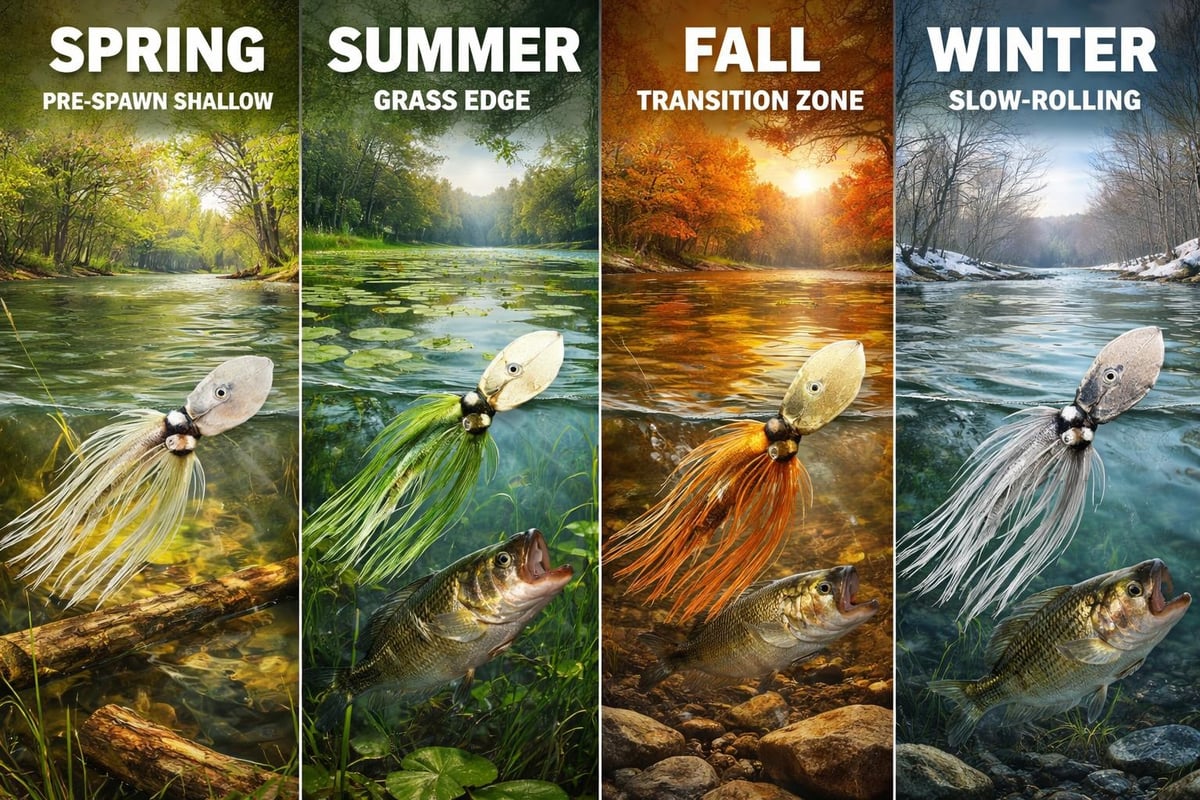
Bass location and behavior change throughout the year. Using the same chatterbait approach in January that worked in May leads to frustration. Expert chatterbait techniques emphasize adapting your presentation to seasonal patterns.
Spring focuses on shallow water transitions, summer targets deeper grass lines and shade, fall concentrates on shad-feeding patterns, and winter requires slower presentations in staging areas.
Color Selection Strategies
Choosing the right chatterbait color increases your catch rate, though it's not as critical as presentation and location. A few basic guidelines cover most situations.
Color selection framework:
- Clear water: Natural colors like shad, bluegill, or perch patterns
- Stained water: Chartreuse/white, white, or bright combinations
- Muddy water: Black/blue, all black, or high-contrast colors
- Low light: Darker colors create better silhouettes
- Bright sun: Shad patterns with flash
When fishing unfamiliar water, start with a white or shad-colored chatterbait. These universal colors catch bass everywhere. If you're not getting bites after thorough coverage, switch to something with chartreuse or bright accents to increase visibility.
Local baitfish matter too. If you're fishing a lake loaded with bluegill, a green pumpkin or bluegill-patterned chatterbait makes sense. Shad-dominated waters call for silver, white, or chrome options.
Fishing Pressure and Adjustment
Popular fishing locations across the United States often see heavy pressure, making bass more cautious. Adjusting your chatterbait approach helps you catch fish that have seen lots of lures.
Downsize Your Presentation
When bass get lockjaw from seeing too many big chatterbaits, drop down to a smaller size. A 3/8-ounce or even 1/4-ounce chatterbait with a subtle trailer often gets bites when larger versions get ignored. The reduced profile and lighter vibration seem less threatening to pressured fish.
Change Your Cadence
Instead of the steady retrieve most anglers use, incorporate pauses, speed changes, and direction changes. Burn it for a few cranks, kill it, then twitch your rod tip before resuming. This unpredictable action separates your presentation from the dozens of chatterbaits these bass have already seen.
Fish Different Times
Pressured bass often feed during low-traffic periods. Early morning, late evening, or midday when other anglers have left can produce surprising results. Night fishing with chatterbaits also works, especially during summer when bass cruise shallow water after dark.
Hookset and Fighting Techniques
Landing bass on chatterbaits requires proper technique throughout the fight. The treble hook on many chatterbaits (or the jig hook on others) demands attention to avoid losing fish.
The Initial Hookset
When you feel sustained weight after that slight delay mentioned earlier, sweep your rod hard to the side rather than straight up. This horizontal hookset drives the hook home while keeping the fish down initially, reducing jumping and throwing the lure.
Keep your rod tip low during the hookset to maximize power transfer.
Playing the Fish
Once hooked, maintain steady pressure without giving slack. Bass often jump when fighting, and keeping your rod tip down helps prevent this. If a bass does jump, quickly drop your rod tip (bow to the fish) to reduce tension that could pull the hooks free.
When fishing heavy cover, you need to turn bass immediately after hookup. Use your rod and reel in tandem, keeping the fish's head up and moving them away from structure before they can dive into weeds or around timber.
Seasonal Location Strategies
Where you fish your chatterbait matters as much as how you fish it. Bass move seasonally, and intercepting them requires understanding these patterns.
Spring Pre-Spawn and Spawn
As water temperatures rise into the 50s and low 60s, bass move shallow to feed before spawning. Target transition areas between deep wintering holes and shallow spawning flats. Secondary points, creek channels, and staging areas hold numbers of bass.
Once spawning begins, focus on shallow pockets, coves, and flats with hard bottom in 2 to 6 feet of water. Chatterbaits worked slowly around visible beds or likely spawning areas produce quality fish.
Summer Patterns
Heat pushes bass to deeper water, grass lines, and shade. Look for isolated grass patches in 8 to 15 feet, deep docks, and offshore structure. Early morning and evening offer shallow bite windows when bass cruise banks and points.
Running chatterbaits along the deep edges of grass or over the tops of submerged vegetation catches summer bass holding in cooler water with oxygen from plant photosynthesis.
Fall Feeding Frenzy
Autumn brings some of the year's best chatterbait fishing. Bass feed aggressively to build reserves for winter, often chasing shad schools. Find the baitfish and you'll find the bass. Main lake points, channel swings, and creek mouths concentrate both bait and bass.
Burn your chatterbait through these areas to imitate fleeing shad and trigger vicious strikes from multiple fish.
Winter Slowdown
Cold water slows bass metabolism, but they still eat. Focus on deeper staging areas, channel edges, and steep banks where bass can access deeper water quickly. Slow your retrieve significantly, sometimes barely crawling the chatterbait along bottom.
Warmer days with stable weather offer the best winter chatterbait opportunities, especially in the afternoon when sun has warmed shallow water slightly.
Advanced Tips for Consistent Success
Taking your chatterbait fishing to the next level involves fine-tuning details that casual anglers overlook.
Line Watching
Many chatterbait bites feel subtle or don't telegraph clearly to your rod. Watching your line where it enters the water reveals bites you'd otherwise miss. Any twitch, jump, or sideways movement means a fish has the bait. Reel down and set the hook.
This technique particularly helps in cold water or high-pressure situations when bass mouth the bait gently.
Blade Tuning
Sometimes chatterbait blades get bent during fights or storage, affecting action. Check your blade before each fishing trip. It should be centered and wobble freely. Slight bends can be straightened carefully with pliers, restoring optimal performance.
A properly tuned blade makes the entire lure hunt and track correctly, swimming straight rather than running to one side.
Strategic Coverage
Rather than randomly casting, develop a systematic approach to cover water efficiently. Make parallel casts along structure, moving your boat position to thoroughly work an area from multiple angles before moving on. This ensures you show the chatterbait to every bass in a zone.
When you catch a fish, thoroughly work that immediate area. Bass often group up, and one bite indicates more nearby.
Chatterbait fishing offers an exciting, productive way to target bass across diverse water types and conditions throughout the year. By matching your technique, color selection, and location choices to seasonal patterns and local conditions, you'll consistently boat more and bigger fish. Ready to put these tactics to work? Find Fishing Spots helps you discover productive bass waters near you with detailed GPS coordinates, access information, and location specifics, so you can spend less time searching and more time catching.