When it comes to targeting tuna in offshore waters, few methods prove as effective as live bait tuna fishing. This time-tested technique taps into the predatory instincts of these powerful game fish, offering anglers an authentic presentation that artificial lures simply can't match. Whether you're chasing yellowfin off the Carolina coast or battling bluefin in deeper waters, understanding how to properly deploy live bait can make the difference between a slow day and a cooler full of fish.
Why Live Bait Works for Tuna
Tuna are visual predators with incredible speed and hunting instincts. Live baitfish trigger their natural feeding response in ways that even the best lures struggle to replicate. The erratic movements, natural scent, and authentic appearance of struggling baitfish create an irresistible target.
Different tuna species respond to various bait presentations:
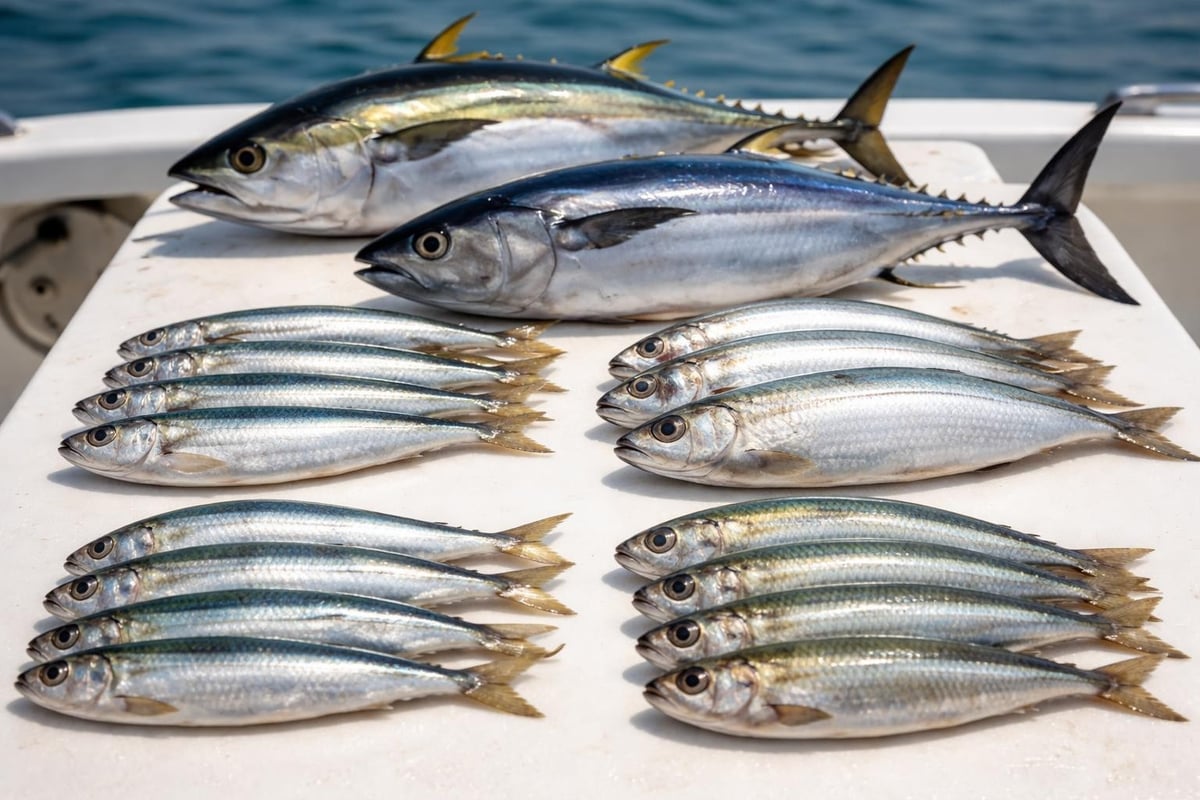
- Yellowfin tuna readily attack frisky sardines, mackerel, and goggle-eyes
- Bluefin tuna prefer larger baits like herring, mackerel, and bonito
- Blackfin tuna strike smaller offerings including pilchards and threadfin herring
The key advantage of live bait tuna fishing lies in its versatility. You can adjust your presentation based on conditions, from slow-trolling in calm seas to free-lining in active feeding zones.
Essential Rigging Techniques
Your rigging method directly impacts hookup ratios and bait survival. Proper hook placement keeps your bait swimming naturally while ensuring solid hooksets when tuna strike.
The Nose Hook Method
Threading a circle hook through the baitfish's nose works well for free-lining and slow trolling. This technique allows the bait maximum freedom of movement while keeping it upright in the water column. Use this method when tuna are actively feeding near the surface.
Shoulder Hooking for Durability
The shoulder hook technique involves placing your hook just behind the dorsal fin, creating a secure attachment point. This rigging style works exceptionally well when chunking or chumming because it keeps bait lively for extended periods. Your bait stays active longer, maintaining that critical lifelike appearance.
Rubber Band Rigging for Deep Fishing
When targeting deeper water species, the rubber band technique shines. This method secures the hook with a small rubber band looped through the bait's mouth and around the hook eye, allowing the bait to swim naturally while providing a solid connection.
Chumming and Free-Lining Strategies
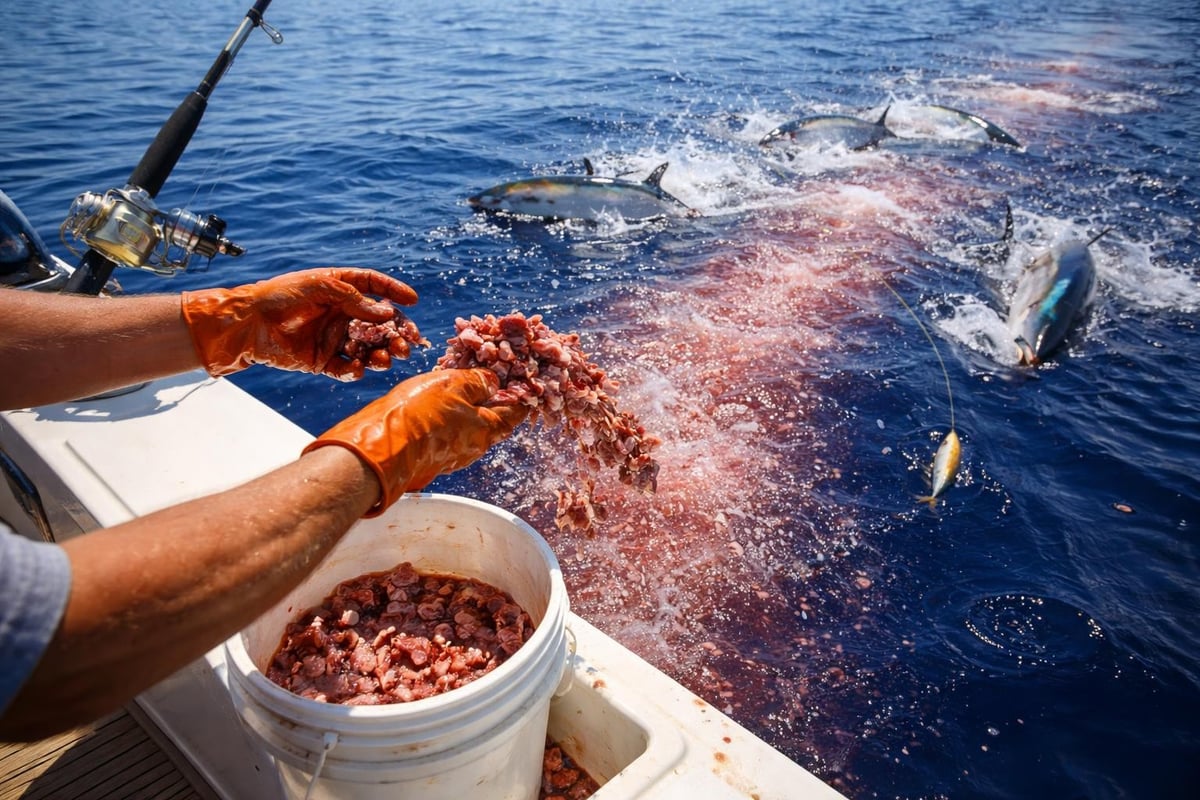
Creating a feeding frenzy amplifies your success with live bait tuna fishing. Chumming for tuna involves establishing a consistent stream of baitfish that draws tuna into your strike zone.
Start by chunking smaller pieces of cut bait or tossing out handfuls of live sardines. Establish a rhythm that keeps tuna interested without overwhelming them. Once fish start showing, introduce your hooked offerings into the same drift pattern.
Free-lining works beautifully in conjunction with chumming. Drop your live bait into the chum line without additional weight, letting it drift naturally with the current. Tuna following the chum trail will strike these offerings aggressively, often creating explosive surface bites.
Location and Timing Considerations
Finding productive water matters as much as your technique. Tuna congregate around temperature breaks, underwater structure, and baitfish concentrations. Offshore fishing spots with proven tuna activity give you a significant advantage.
Look for these key indicators:
- Bird activity diving on baitfish schools
- Temperature changes of 2-3 degrees on your fish finder
- Current rips where different water masses collide
- Floating debris or weed lines that concentrate bait
Time your trips around dawn and dusk feeding periods when tuna hunt most actively. Mid-morning can also produce excellent action, especially when working areas with strong current flow.
When planning your fishing adventures, checking saltwater locations in your target region helps identify proven tuna grounds. GPS coordinates and access information save valuable fishing time.
Tackle and Equipment Setup
Quality gear handles the explosive runs and raw power tuna deliver. Match your tackle to your target species and fishing method.
For yellowfin tuna using live bait, consider:
- 20-50 pound class spinning or conventional outfits
- Circle hooks sized 3/0 to 7/0 depending on bait size
- Fluorocarbon leader in 40-80 pound test
- Live bait tanks with proper aeration systems
Catching yellowfin tuna using live bait requires specific presentations that vary based on conditions. Slow trolling at 2-4 knots keeps baits in the strike zone while covering water. Free-lining works when fish show on the surface or around structure.
Bait Selection and Maintenance
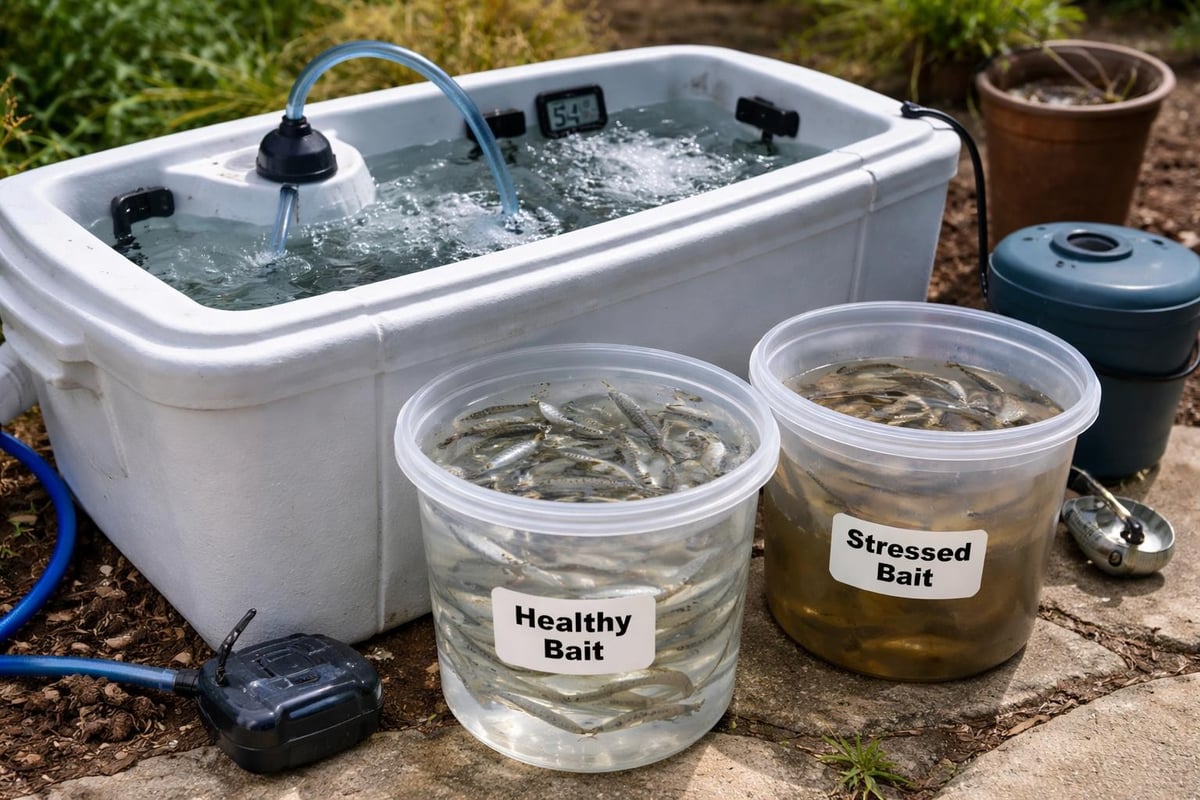
Your bait's condition determines whether tuna strike or swim past. Fresh, lively baitfish outperform sluggish or dying specimens every time.
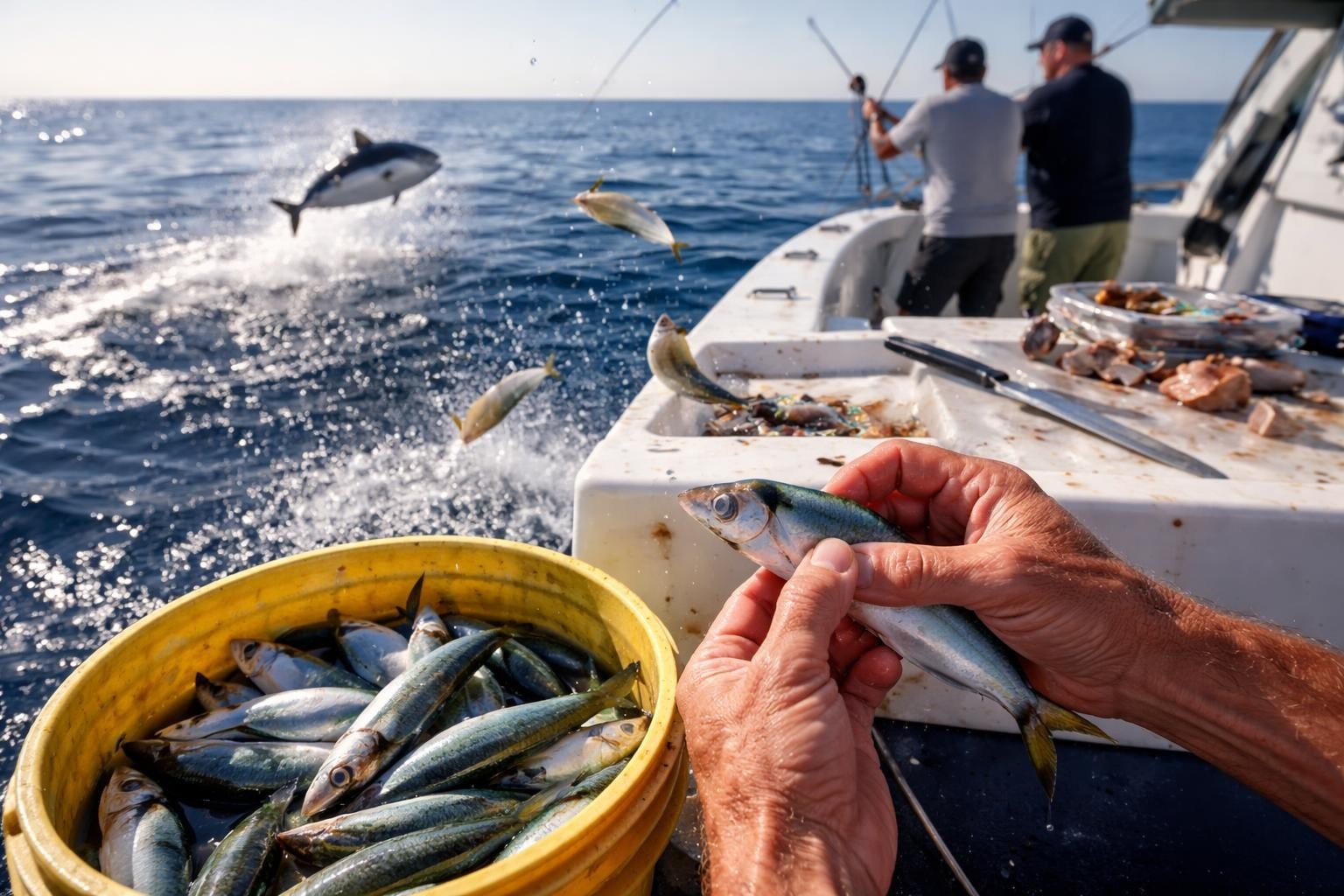
Catching your own bait ensures maximum freshness. Use sabiki rigs to harvest local species near structure or bait balls. Store caught bait in well-oxygenated tanks with constant water circulation and temperature control.
When purchasing bait, inspect for alert behavior and bright coloring. Avoid bait with cloudy eyes or damaged scales. Different regions offer varying bait options, and exploring tuna fishing techniques in productive areas reveals what works locally.
Bait Regulations and Licensing
Some jurisdictions require specific permits for bait collection. In Hawaii, you'll need to understand bait license requirements before harvesting live baitfish. Check local regulations through Find Fishing Spots before your trip to ensure compliance.
Advanced Presentation Methods
Once you've mastered basic live bait tuna fishing, experiment with advanced presentations. The live chumming technique combines elements of traditional chumming with strategic bait deployment, creating competitive feeding situations that trigger aggressive strikes.
Kite fishing elevates live bait above the surface, creating commotion that attracts tuna from distance. This method works exceptionally well in calm conditions when tuna cruise just below the surface. Dangle your bait from the kite line, creating enticing splashes that mimic fleeing baitfish.
Depth variation matters too. Some days tuna feed on the surface, other times they suspend at 40-60 feet. Adjust your presentation depth based on sonar readings and feeding activity. Weighted lines or downriggers help reach fish holding deeper in the water column.
Mastering live bait tuna fishing takes practice, but the rewards are worth the effort. Armed with proper rigging techniques, quality bait, and strategic presentations, you'll connect with more tuna on every offshore trip. Ready to find productive tuna grounds in your area? Browse detailed location information, GPS coordinates, and access details at Find Fishing Spots to plan your next successful outing.