When you're chasing tuna offshore, the right lure can make the difference between an empty cooler and a fish story you'll tell for years. These powerful pelagic fish respond to different presentations depending on species, water conditions, and feeding behavior. Whether you're working Miami's offshore waters or trolling the canyons up north, understanding which tuna fishing lures to choose and how to run them will put you on more fish. Let's break down what actually works when you're targeting these hard-fighting ocean predators.
Understanding Tuna Lure Categories
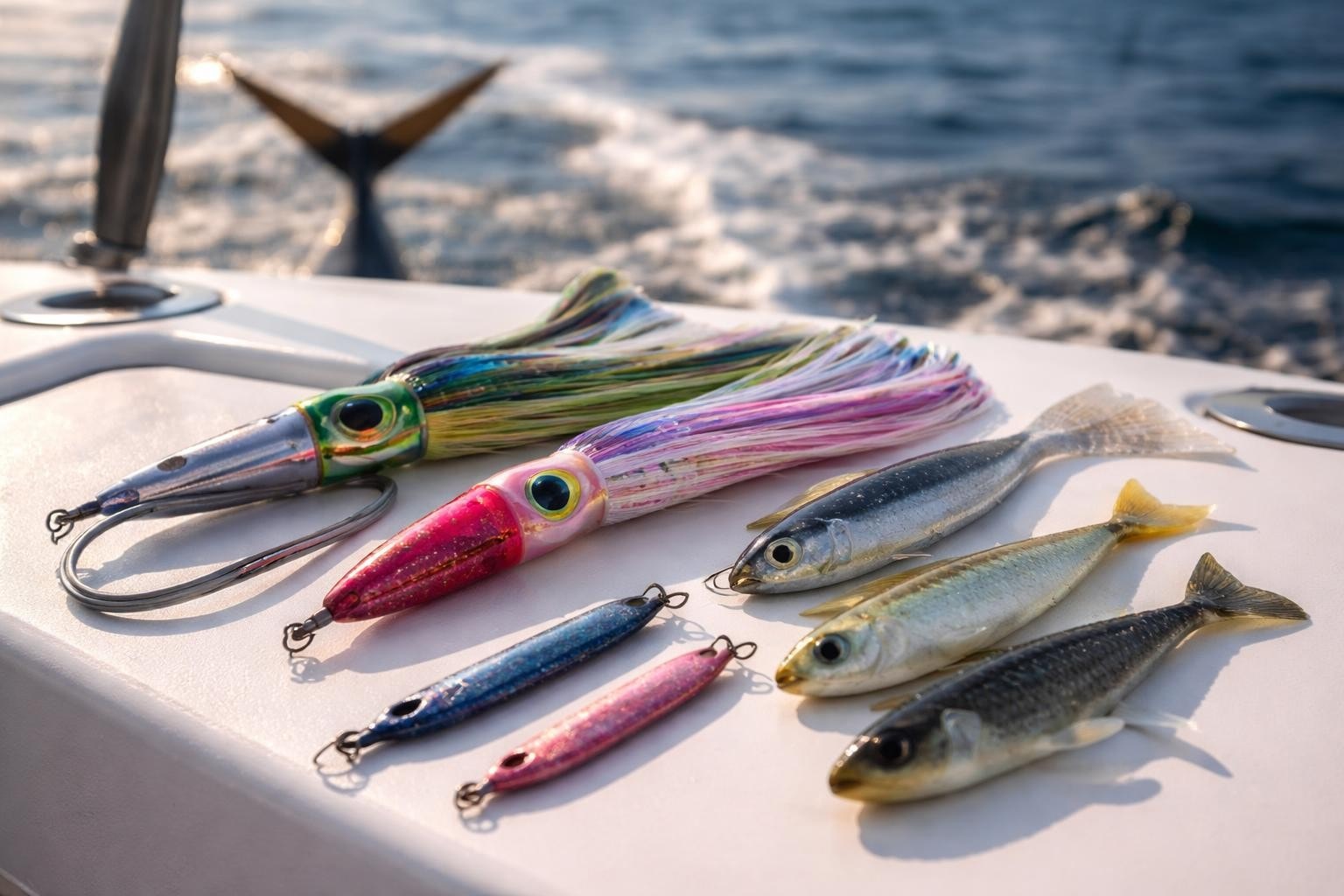
Tuna fishing lures fall into several main categories, each designed for specific techniques and conditions. Trolling lures dominate the offshore scene because they let you cover water efficiently while searching for active schools.
Skirted Trolling Lures
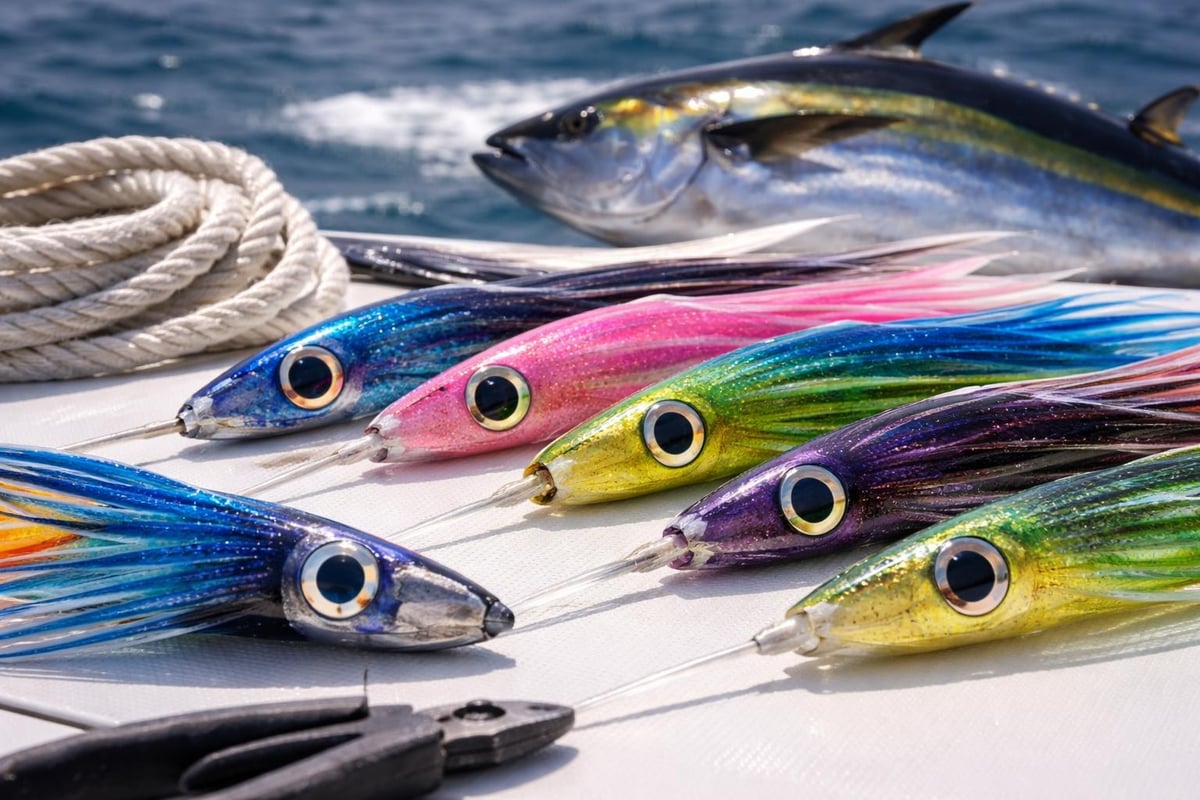
These classics remain the backbone of most tuna spreads. Skirted lures feature a weighted head with flowing skirts that create lifelike action and disturbance in the water. They excel at imitating squid and baitfish while producing the bubble trail that attracts tuna from distance.
- Size matters: 6-9 inches work for most yellowfin situations
- Head shapes change the lure's swimming action and dive depth
- Skirt colors should match local baitfish or create contrast
- Running position affects performance (straight runners vs. diving lures)
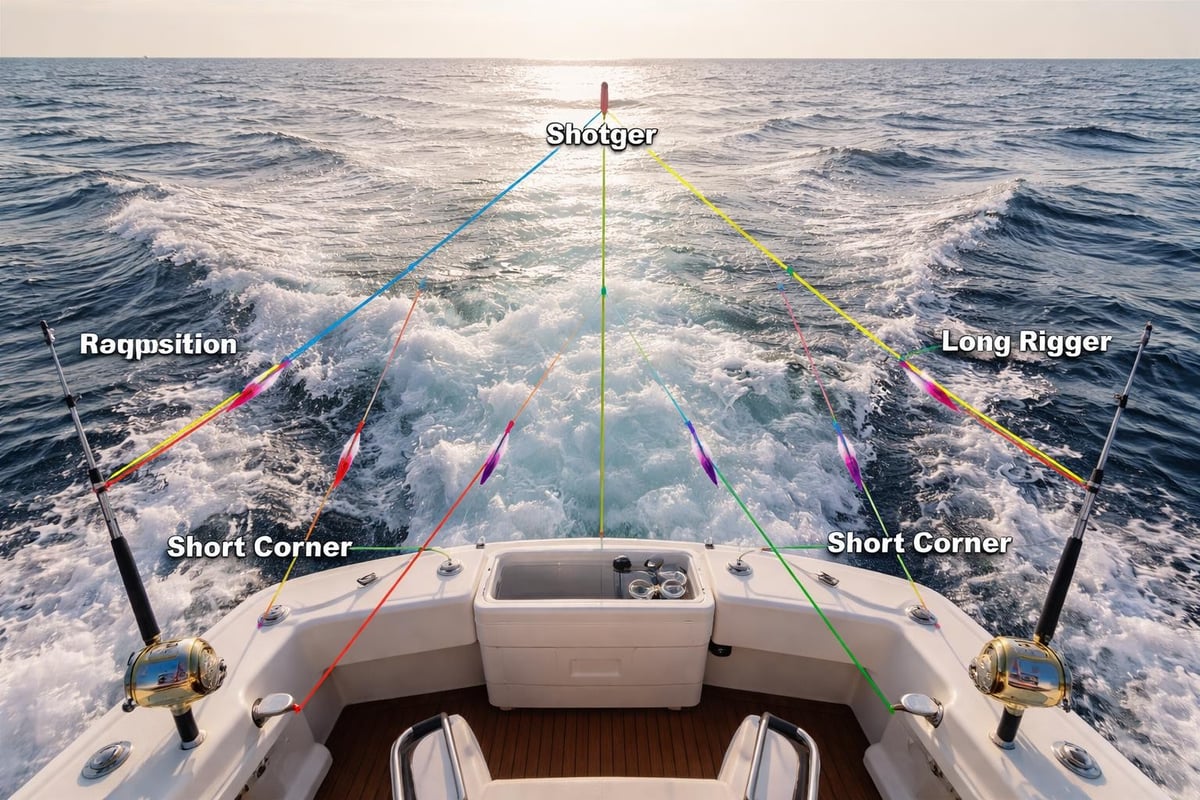
When you're setting up your spread, mix straight-running and diving lures at different distances. This creates a natural-looking school that triggers aggressive strikes from competitive tuna.
Cedar Plugs and Bullets
Simple but deadly effective, cedar plugs have been catching tuna for generations. These torpedo-shaped wooden or resin lures create tight wobbling action that perfectly mimics fleeing baitfish. Effective tuna fishing techniques often incorporate cedar plugs because they're versatile and productive.
The best part? They're affordable enough that you won't cry when a wahoo takes one. Run them on the flat lines or as part of your dredge setup when fish are feeding actively on the surface.
Matching Lures to Tuna Species
Different tuna species have distinct feeding preferences that influence lure selection. While there's plenty of overlap, tailoring your approach increases success rates.
Yellowfin Tuna Preferences
Yellowfin are aggressive feeders that respond well to larger profiles and bright colors. These fish often travel in schools and compete for food, making them susceptible to well-presented lures. Productive yellowfin colors include pink/white, green/yellow, and blue/white combinations.
For selecting yellowfin tuna lures, consider water clarity and time of day. In clear blue water, natural colors and metal finishes work beautifully. When there's color in the water or during low-light periods, brighter lures get more attention.
Bluefin Lure Selection
Bluefin tuna are more selective feeders that often require precise matching to local forage. These fish can be notoriously finicky, especially when targeting larger specimens. Smaller lures in the 4-6 inch range often outperform bigger offerings when bluefin are keyed in on smaller bait.
Choosing fishing lures for bluefin tuna requires attention to detail regarding size, profile, and color. When you find bluefin working on the surface, switching to metal jigs or poppers can produce explosive strikes.
Blackfin Tactics
Blackfin tuna are smaller but equally aggressive, making them perfect targets for anglers fishing closer to shore. These fish respond exceptionally well to smaller skirted lures, feathers, and metal jigs in the 3-5 inch range.
When exploring Florida’s offshore fishing spots, blackfin often concentrate around structure where smaller lures excel. They're less selective than their larger cousins and will readily attack bright colors.
Color Selection Strategies
Color choice sparks endless debate among tuna fishermen, but certain principles hold true across most situations. Water clarity plays the biggest role in determining what works on any given day.
Clear Water Colors
- Chrome and silver (flash mimics baitfish scales)
- Natural blue/white combinations
- Purple/black for depth and silhouette
- Bone or pearl for subtle presentations
In gin-clear offshore conditions, subtle colors with realistic flash often outperform gaudy patterns. The fish can see better, so matching the hatch becomes more critical.
Stained Water Approaches
When you're fishing areas with color in the water, visibility decreases and brighter colors help tuna locate your offerings. High-contrast patterns like chartreuse/orange, pink/white, and green/yellow create visual targets that fish can track from greater distances.
Jigging for Tuna
While trolling catches plenty of fish, vertical jigging offers an exciting alternative when you mark tuna holding deep. Metal jigs in the 80-300 gram range get down quickly and trigger reaction strikes from fish that might ignore trolled lures.
- Speed jigs work for aggressive fish
- Slow pitch jigs entice finicky biters
- Butterfly jigs create erratic falling action
- Flat-fall jigs helicopter down naturally
When targeting tuna with various techniques, jigging shines around structure, over deep ledges, and when fish are holding below the thermocline. It's more work than trolling but incredibly effective.
Presentation Tips That Matter
Having the right tuna fishing lures means nothing if you don't present them properly. Trolling speed ranks as the most critical variable, with most tuna preferring 6-9 knots depending on sea conditions and species.
Speed and Spread Considerations
Vary your trolling speed throughout the day. Start around 7 knots and adjust based on what produces strikes. When you hook up, note your exact speed and try to replicate it.
Spread configuration should cover different depths and positions. Run long riggers 75-150 feet back, flat lines at 50-100 feet, and shotguns at 200+ feet to create a natural baitfish school appearance.
Hook and Leader Setup
Don't cheap out on terminal tackle when targeting tuna. These fish have incredible power and abrasive mouths that test every connection. Quality circle hooks in 7/0-9/0 sizes work well for most applications, while fluorocarbon leaders in the 80-130 pound range provide necessary strength with minimal visibility.
When fishing spots like Schoolmaster Ledge or other productive offshore locations, proper rigging prevents heartbreaking break-offs.
Topwater Excitement
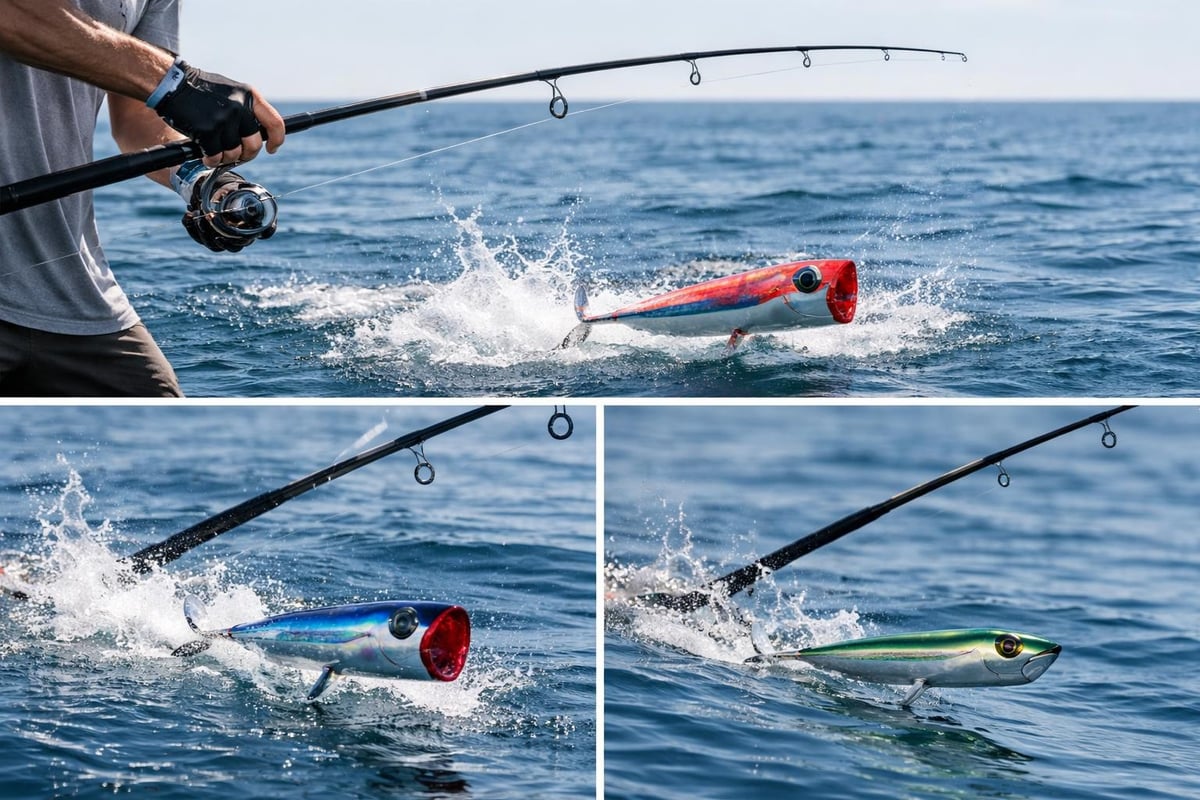
Few fishing experiences match the thrill of topwater tuna strikes. When fish are actively feeding on the surface, poppers and stickbaits create explosive action that gets your heart racing.
Popper Strategies
Large cup-faced poppers create commotion that draws tuna from distance. Work them with aggressive pops and pauses, creating a bubble trail and disturbance that imitates panicked baitfish. Retrieve cadence matters more than lure brand, so experiment until you trigger strikes.
Stickbait Techniques
Pencil poppers and stickbaits create side-to-side walking action that drives tuna crazy during blitzes. These lures require practice to master but produce incredible strikes when worked properly. Long sweeps of the rod create the classic walk-the-dog action.
Maintaining Your Lure Collection
Quality tuna fishing lures represent an investment worth protecting. Rinse everything thoroughly with fresh water after each trip, paying special attention to hooks and split rings. Saltwater corrosion happens fast, and rusty hooks cost fish.
Check skirts regularly for tears and damage. Replace worn skirts before they fail during battle. Store lures in tackle boxes that prevent tangling, and sharpen or replace hooks at the first sign of dullness.
When you're heading to proven producers like Star Island Reef, having confidence in your gear's condition lets you focus on fishing instead of worrying about equipment failure.
Building Your Arsenal
You don't need fifty lures to catch tuna successfully. Start with a core selection that covers the basics, then expand based on your local conditions and target species. A solid starting collection includes:
- Six skirted trolling lures in various colors
- Four cedar plugs or similar bullet-style lures
- Two topwater poppers
- Selection of metal jigs for vertical presentations
- Spare skirts and hooks for quick repairs
As you gain experience on the water, you'll develop preferences based on what produces in your home waters. Understanding tuna fishing equipment helps you make informed decisions when expanding your collection.
Pay attention to what other successful anglers are running, but don't be afraid to experiment. Sometimes the lure everyone overlooks becomes your secret weapon on tough days.
Success with tuna fishing lures comes down to matching your presentation to the conditions, species, and feeding behavior you encounter on the water. Once you've dialed in the right techniques, the next step is finding productive offshore structure and proven tuna grounds to put your knowledge to work. Find Fishing Spots helps you discover GPS-marked offshore locations, reefs, and ledges across the U.S. coastline where tuna congregate, complete with access information and detailed coordinates to get you on fish faster.