
D.O.A. C.A.L. 3-Inch Shad Tail: Rigging, Jig Heads & Fishing Tips
D.O.A.'s 3-inch C.A.L. Shad Tail: what D.O.A. lists and claims, which C.A.L. jig head fits, and independent rigging and retrieve tips for snook, redfish and trout.
Related Species
- Snook
- Red Drum
- Spotted Seatrout
- Flounder
The 3-inch C.A.L. Shad Tail is D.O.A.'s soft-plastic paddle tail, a small shad-shaped body that the company calls a mainstay for probing waters from inches deep to ocean depths. D.O.A. says it can catch anything from freshwater largemouth bass to saltwater seatrout, redfish, flounder and snook.
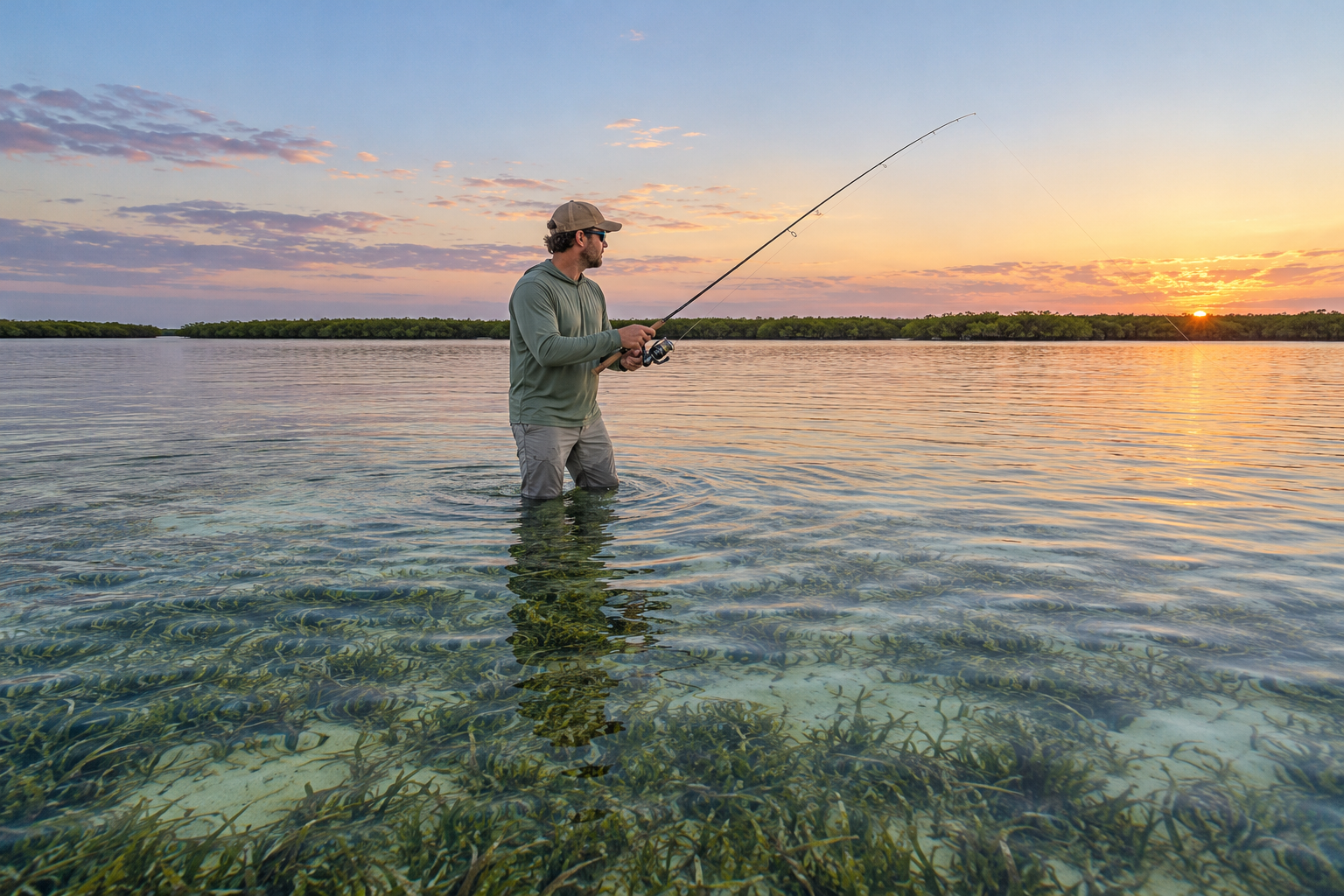
This spotlight sets D.O.A.'s own listing beside independent rigging and retrieve advice for snook, redfish and spotted seatrout on shallow grass flats.
→ View Product on Manufacturer Website (opens in a new tab)
C.A.L. Shad Tail Specifications
D.O.A. lists the 3-inch C.A.L. Shad Tail as bodies only, sold in 12-packs and 50-packs, so you supply the hook or jig head. The product page offers a long list of colors, from clear and glitter finishes such as rootbeer/gold glitter to glow colors and baitfish patterns such as Texas croaker and silver mullet.
What D.O.A. Says About It
D.O.A. founder Mark Nichols says his first prototypes were sold to anyone willing to listen along the piers, beaches and tackle shops of Martin County, and the company dates itself to 1983. Nichols says virtually all of his D.O.A. lure designs come from years spent on the water. D.O.A.'s official video shows three ways to rig the C.A.L. Shad Tail.
Matching C.A.L. Jig Heads
D.O.A. makes C.A.L. short shank jig heads that it says are used primarily for 3-inch shad tails, 4-inch jerk baits, curltails and grubs, all on black nickel Mustad hooks. The hook grows with the head: a 2/0 on the 1/16, 1/8 and 1/4 oz heads, a 3/0 on the 3/8 oz, a 4/0 on the 1/2 and 3/4 oz, and a 5/0 on the 1 oz. Head colors include chartreuse, white, natural, black, red, nite glow and orange, depending on weight, and the heads come in 3-packs.
Salt Strong's Joseph Simonds throws the C.A.L. Shad Tail on a 1/8-ounce D.O.A. jig head when fishing flats in the 3 to 5 foot range for snook on Florida's east coast. He fishes it for snook, redfish and trout on grass flats from 1 to 5 feet deep on both Florida coasts, and varies the jig head size with the depth so the bait stays close to the bottom on the retrieve. Salt Strong has a commercial interest in anglers' tackle choices, since it sells Insider Fishing Club memberships, though it says it is not affiliated with any fishing lure company.
How to Rig the C.A.L. Shad Tail
Simonds describes the shad as a 3-inch bait with a smooth body and an angled paddle tail, and stresses that none of it matters if the body sits wrong on the jig head. His rigging checklist is short and practical.
- Center the hook: he makes sure the hook is perfectly centered in the middle of the body, using a thumb to mark where it should come out.
- Tie a loop knot: he uses a loop knot with this type of lure.
- Test the swim: after threading the body on, he does a quick test in the water to make sure it swims with no twists or odd action.
- Recheck after every fish: he rechecks that the hook and jig head are still set properly on the body.
Salt Strong's Tony Acevedo, who says he has used it regularly for redfish, trout and other inshore gamefish, rigs it on shallow grass flats either weedless on a twist-lock hook or on a jig head.
How to Fish It on the Flats
On shallow flats, Simonds keeps the rod tip up and reels fairly fast with small, intermittent jerks, but slow enough that the shad is still hitting the grass and popping up.
An Independent Comparison
In a 2018 side-by-side review, Acevedo found the Slayer SST had more action in the water and cast farther because of its extra weight, though he rated both good lures. That is one angler's comparison, so weigh it against the water and fish you target. For another small paddle tail, see our Keitech Easy Shiner guide.
Where to Fish It
In Tampa Bay, FWC's boating guide places red drum near grass beds, oyster bars and dock pilings, and spotted seatrout over grass beds, sand and sandy or mud bottoms. It puts flounder within bays near or within grass flats during spring and summer, and snook near tidal passes and the mangrove fringe at high tide. The guide also notes seasonal moves to deeper water: red drum to deeper channels and spotted seatrout to deeper water during the warmest and coolest months, and snook to canals, tidal creeks and other deep, warm waters in cool months. When the fish drop deeper, Simonds' advice applies: vary the jig head size with the depth you are fishing so the bait stays close to the bottom on the retrieve. Those grass flats and edges are where a jig-head paddle tail can be swum just over the bottom, and our Biscayne Bay guide covers one Florida example.
Before You Buy
Check D.O.A.'s C.A.L. Shad Tail page (opens in a new tab) for current colors and pack sizes, and its short shank jig head page (opens in a new tab) to match head weight to your water depth. D.O.A. says it strongly promotes catch and release, and that teaching anglers how to catch and handle fish so they can be released is one of its mission statements. Treat the rigging and retrieve advice above as starting points, and adjust jig weight and speed to the depth, current and grass you are fishing.
About the Author
Find Fishing Spots
The Find Fishing Spots editorial team covers all things fishing, from fishing spots and tournaments to species guides, fishing tips, and helpful resources. Find Fishing Spots helps anglers discover new places to fish and useful information for planning their next day on the water.