
Rapala Saltwater Skitter Walk: How to Fish This Topwater Lure
Rapala's Saltwater Skitter Walk topwater: SSW11 specs, what Rapala claims, and independent walk-the-dog tips for redfish, seatrout and snook.
Related Species
- Red Drum
- Spotted Seatrout
- Snook
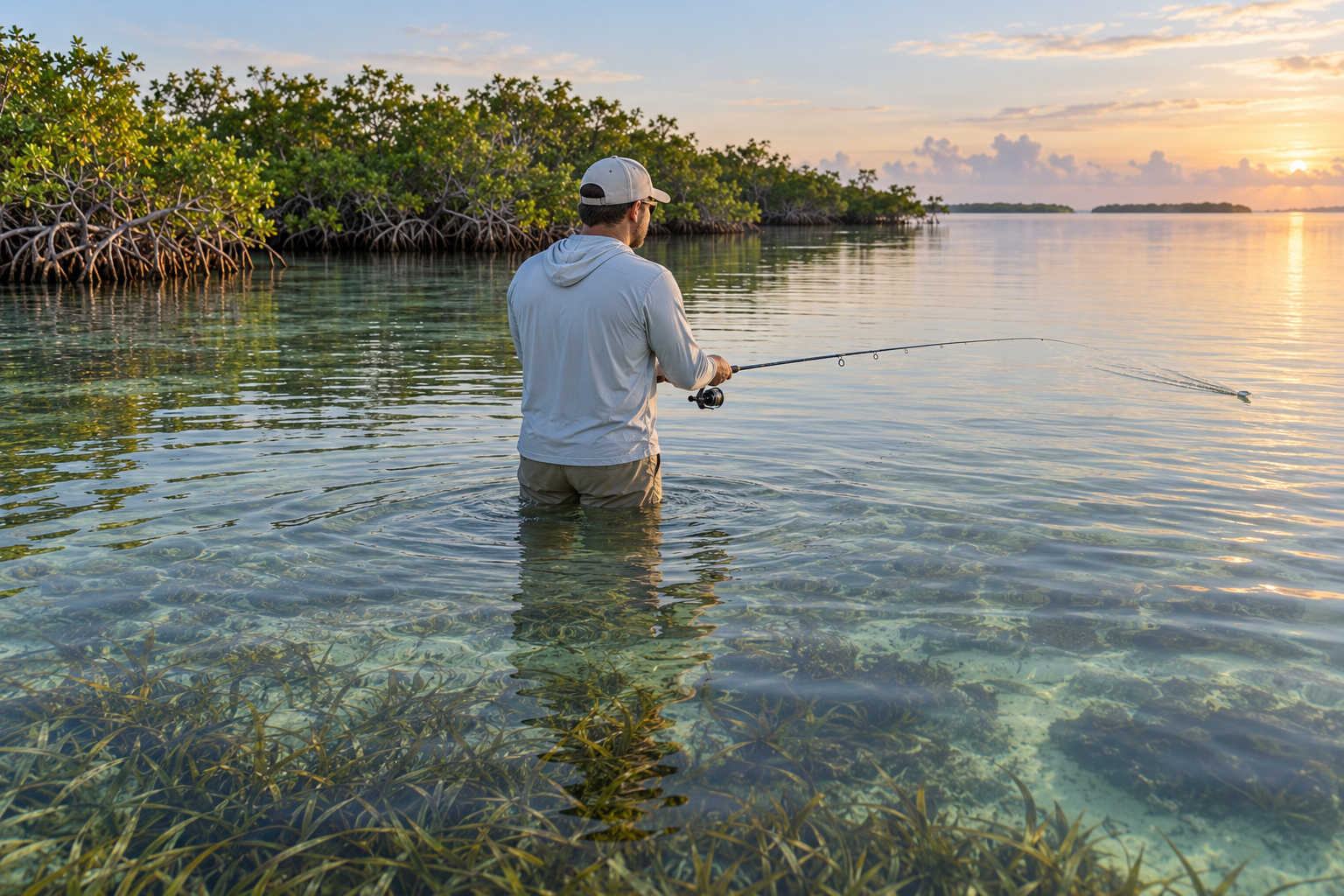
The Saltwater Skitter Walk is Rapala's saltwater walk-the-dog topwater plug, which Rapala equips with VMC Perma Steel hooks and what it calls rugged saltwater hardware. Rapala says large internal rattles give it a rhythmic side-to-side motion-and-sound combination that imitates swimming mullet or fleeing baitfish.
This spotlight pairs Rapala's specifications with independent walk-the-dog advice for red drum, spotted seatrout and snook, three inshore fish that hit topwater plugs.
→ View Product on Manufacturer Website (opens in a new tab)
Saltwater Skitter Walk Specifications
Rapala's specification table lists one Saltwater Skitter Walk model, the SSW11, at 4-3/8 inches and 5/8 oz with two No. 2 hooks. It is a floating lure that runs on the surface. Rapala's feature list includes a weighted tail, realistic eyes, painted or chrome finishes, rugged construction and an internal rattle.
Salt Strong's independent review lists the same specifications and describes both hooks as trebles. If you have seen a smaller 3-1/8-inch Skitter Walk in saltwater colors, that is the regular Skitter Walk (SW08), which Rapala lists at 7/16 oz with two No. 3 hooks.
What Rapala Says About It
Rapala says its construction assures a perfect swimming bait right out of the box. Its instructions are short: toss it out, then pump and reel, pump and reel, which Rapala calls walking the dog. Rapala's own video shows the Saltwater Skitter Walk working on the surface.
What an Independent Review Says
Salt Strong's Luke Simonds, who notes that his site is not affiliated with any lure company, calls the Skitter Walk one of his favorite topwater lures and says inshore anglers should keep one or two in their tackle. Salt Strong has a commercial interest here: it sells both Skitter Walk sizes in its own online tackle store, so read the review with that in mind. Apart from swapping the treble hooks for single inline hooks, he considers the lure ready to go out of the box.
How to Walk the Saltwater Skitter Walk
Captain Jud Brock, writing for Salt Strong, keeps the rod tip low and to the side and twitches it straight back continuously, reeling just enough to keep slack out of the line. You know it is working when the plug makes a steady zigzag. He matches speed to water temperature, slowing down when the water is cold and the fish are lethargic, and speeding up when it is warm and the fish are aggressive. He also works the plug all the way back, because redfish and trout often follow it to the boat.
Simonds shows the cadence in a split-screen video that syncs the rod tip with the lure underwater, using the smaller Skitter Walk.
Redfish versus Trout
Brock's experience is that redfish like the lure kept moving, so after a missed blowup he keeps the pace or even speeds up. For trout he adds occasional pauses, usually five or six twitches and then a one- or two-second pause. Whatever the species, he waits to feel the fish on the line before setting the hook, because swinging at a blowup rips the lure out of the strike zone. Brock also treats a topwater plug as a search bait, because a fish that blows up on it and misses the hooks still shows exactly where fish are holding. After a missed strike, Salt Strong suggests casting back or following up with a subsurface soft plastic.
Snook
Salt Strong points out that a snook's underslung jaw is designed to smash baits on the surface above it, which is why topwater plugs can be an effective way to target them. For snook it recommends a constant, steady cadence without pauses that is faster than you would use for trout or redfish. Salt Strong notes that snook use structure to hide and then ambush prey. It also suggests making at least three casts to a spot around structure, since a lure inches off the mark can be the difference between a strike and none.
Hooks and Hardware
In his review, Simonds replaces the Skitter Walk's treble hooks with single hooks built for replacing trebles. Salt Strong's snook advice points the same way: hard-fighting snook can bend the treble hooks found on topwater lures, so it recommends heavier split rings and inline hooks. The same article adds that trebles can hook a snook in the soft part of its mouth and lose the fish, and that treble hooks can be dangerous for anglers and fish alike. The article also promotes Salt Strong's own split ring scissors for that job, another reminder that the site sells tackle. Rapala ships the Saltwater Skitter Walk with VMC Perma Steel hooks, so a swap is an angler's choice for the fish and cover in front of you.
Where to Fish It
In Tampa Bay, FWC's boating guide places red drum near grass beds, oyster bars and dock pilings, moving to deeper channels during the warmest and coolest months. The same guide puts spotted seatrout over grass beds, sand and sandy or mud bottoms, and snook near tidal passes and the mangrove fringe at high tide.
Those shallow, structured waters are where a walk-the-dog plug can be worked over feeding fish, and our Biscayne Bay guide covers one Florida example. When searching, Salt Strong suggests fan casting about 5 to 8 feet left or right of your previous cast to cover an area.
Before You Buy
Check Rapala's Saltwater Skitter Walk page (opens in a new tab) for current colors and availability, and the Skitter Walk page (opens in a new tab) if you want the smaller model. Treat the walk-the-dog advice above as a starting point, and adjust cadence and pauses to how the fish respond on the day.
About the Author
Find Fishing Spots
The Find Fishing Spots editorial team covers all things fishing, from fishing spots and tournaments to species guides, fishing tips, and helpful resources. Find Fishing Spots helps anglers discover new places to fish and useful information for planning their next day on the water.