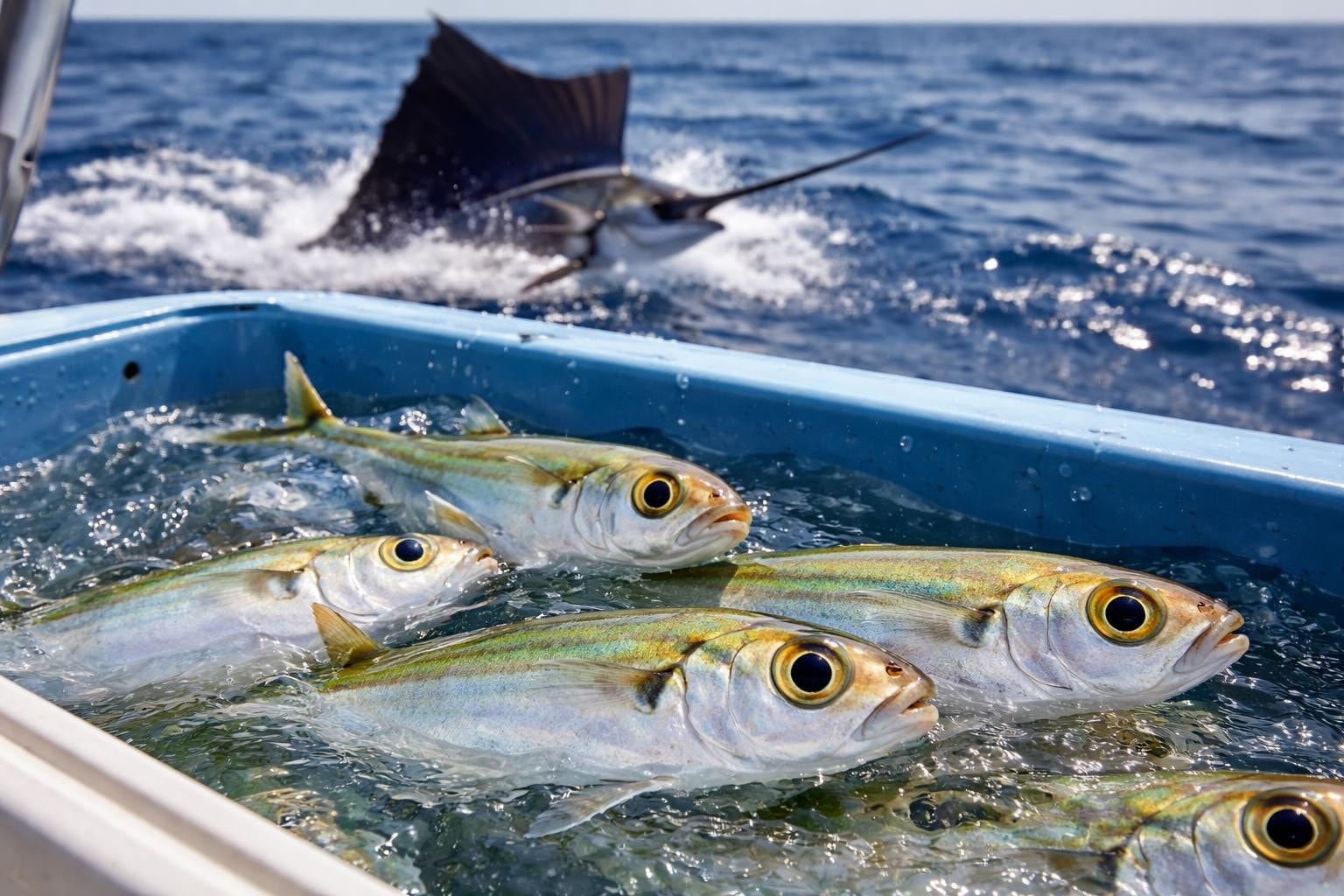
Trolling ballyhoo for mahi is one of the most reliable ways to connect with these explosive offshore gamefish. Whether you're cruising past floating debris or working a weedline, properly rigged ballyhoo swimming behind your boat triggers aggressive strikes from hungry dolphinfish. This natural bait presentation combines simplicity with effectiveness, making it a go-to choice for both seasoned offshore anglers and those new to the blue water game.
Why Ballyhoo Works for Mahi-Mahi
Mahi-mahi are opportunistic feeders that strike at prey with lightning speed. Ballyhoo matches their feeding preferences perfectly because of its size, profile, and natural swimming action when rigged correctly.
These baitfish offer several advantages:
- Natural scent trail that attracts mahi from a distance
- Realistic appearance in the water column
- Durable enough to withstand multiple trolling passes
- Available frozen at most tackle shops year-round
The silver flash and elongated body profile of ballyhoo mimics the small fish that mahi regularly hunt. When you're learning effective trolling techniques for mahi-mahi, ballyhoo should be near the top of your bait list.
Rigging Ballyhoo Properly
How you prepare your ballyhoo makes all the difference between hookups and missed opportunities. Start with quality frozen bait that's been properly stored. Thaw only what you'll use for the day, and keep extras on ice.
Basic rigging steps include:
- Remove backbone and internal organs through the gill plate
- Insert hook through the lower jaw and out the top of the head
- Secure with rigging wire or thread around the bill
- Optional: add a chin weight for deeper swimming action
- Pull the bait straight to ensure proper tracking
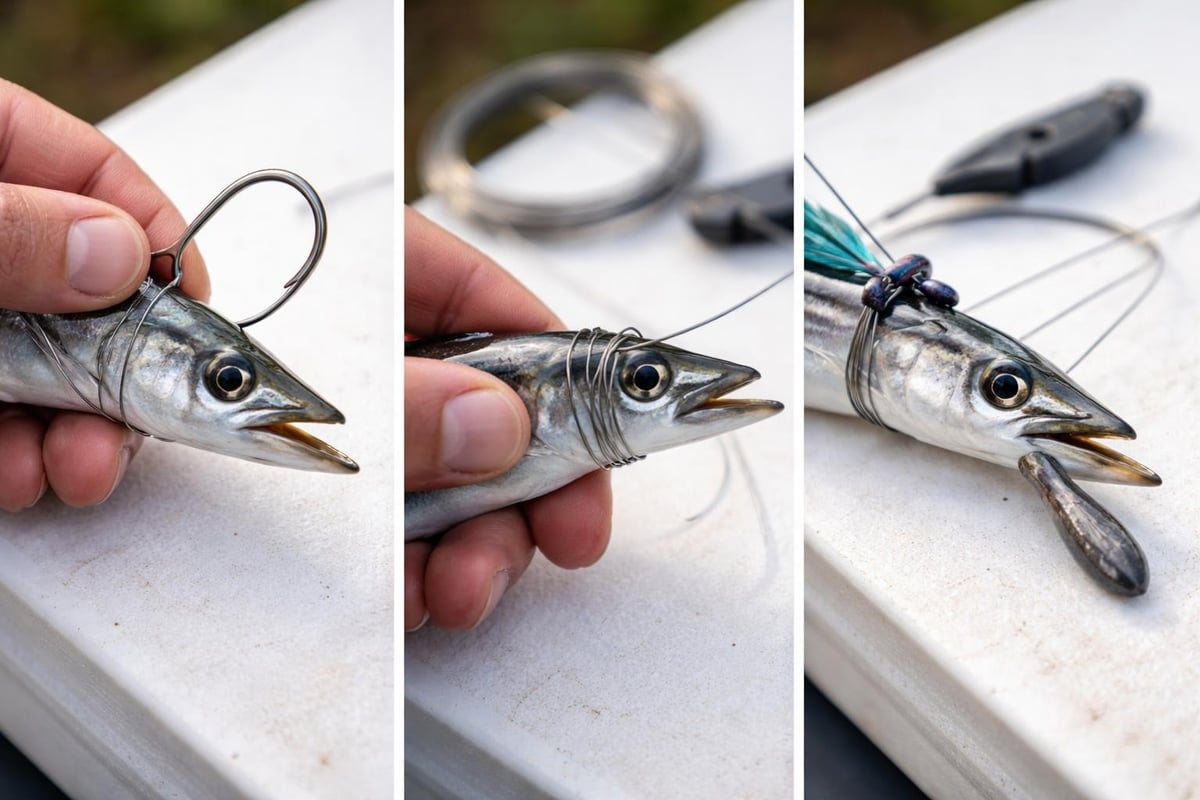
Some anglers prefer naked ballyhoo while others add skirts or lure heads. Naked presentations work exceptionally well when mahi are actively feeding, while skirted versions create more flash and vibration to attract fish from greater distances.
Finding Mahi-Mahi Offshore
Trolling ballyhoo for mahi becomes exponentially more effective when you know where to look. These fish congregate around structure and current breaks, even though they're technically pelagic species.
Prime locations include:
- Floating weed mats and sargassum lines
- Floating debris like pallets or boards
- Current edges where water colors change
- Temperature breaks of 2-3 degrees
- FADs and offshore buoys
When searching for productive offshore spots, resources like Find Fishing Spots can point you toward known mahi territory. Florida's offshore reefs, for example, often hold mahi during their seasonal migrations.
Trolling Speed and Spread
Getting your speed right is critical when trolling ballyhoo for mahi. Too slow and the baits won't swim naturally. Too fast and they'll spin or skip across the surface.
Most experienced captains maintain speeds between 6-9 knots. Understanding optimal trolling speeds helps you adjust based on sea conditions and bait presentation. Rougher seas might require slightly slower speeds, while calm days allow you to push the upper range.
Setting your spread:
- Run baits at varying distances from 50-150 feet back
- Stagger them across both sides of the wake
- Position longer lines on the outriggers
- Keep shorter lines closer to the boat's center
- Use different colored skirts if adding them
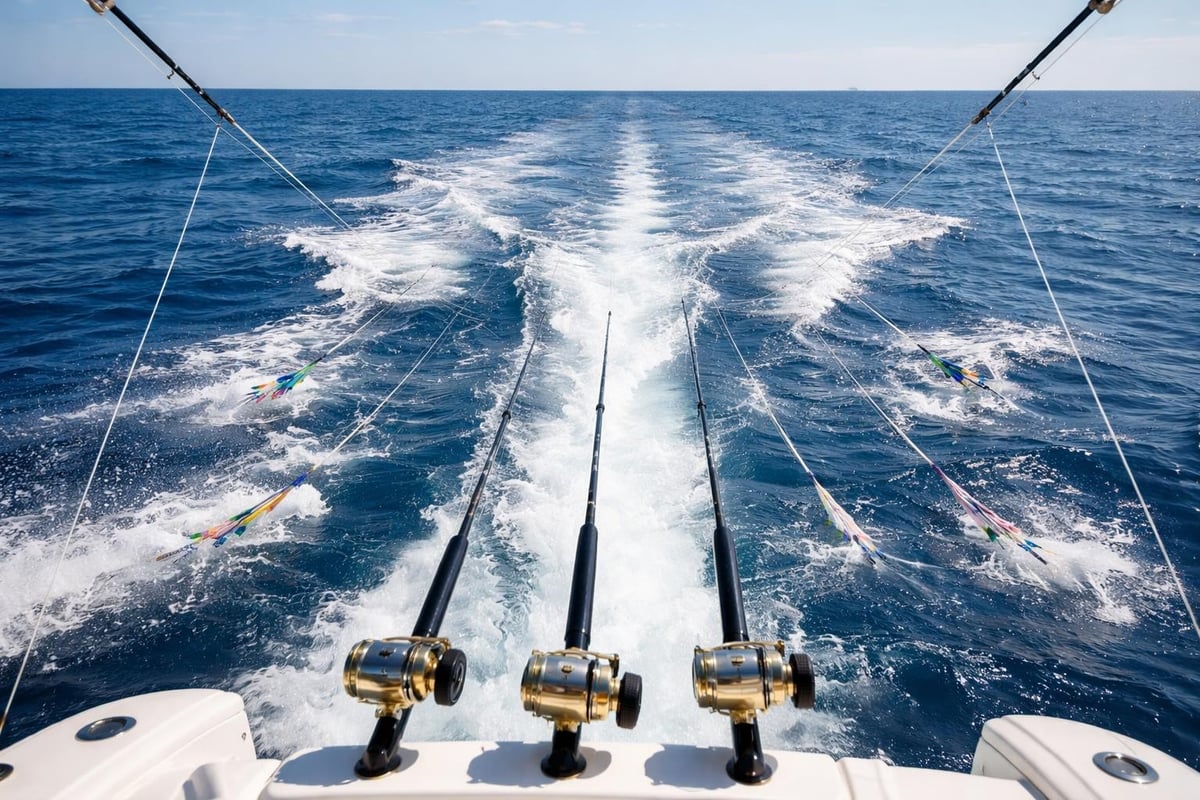
When you hook the first mahi, don't immediately stop or reel in other lines. These fish are notorious schoolers, and keeping baits in the water often results in multiple hookups.
Gear Selection and Setup
Your trolling equipment for mahi doesn't need to be heavy-duty, but it should be balanced and reliable. Mahi aren't line-shy, so you can get away with heavier setups than you'd use for more cautious species.
Recommended tackle:
- 20-30 pound class conventional reels
- 7-7.5 foot medium-heavy trolling rods
- 30-50 pound monofilament or fluorocarbon leader
- Circle hooks in 5/0-7/0 sizes
- Quality ball-bearing swivels
Many anglers exploring different methods for catching mahi find that having multiple rods rigged and ready maximizes their opportunities. Once you locate fish, being able to quickly deploy fresh baits keeps the action going.
Reading the Bite
Mahi strikes range from subtle to violent. Sometimes you'll see your rod bend slowly as a fish picks up the bait. Other times, the rod nearly gets yanked from the holder as a bull mahi crashes the spread.
When trolling ballyhoo for mahi, watch for these signs:
- Birds diving on baitfish schools
- Flying fish breaking the surface repeatedly
- Color changes in the water indicating current edges
- Floating structure visible on the horizon
The effectiveness of medium-sized lures and baits relates directly to mahi feeding patterns. They'll hit larger baits, but ballyhoo in the 8-12 inch range triggers more consistent strikes across different conditions.
Seasonal Patterns and Migration
Mahi movements follow warm water and bait concentrations. Along the Atlantic coast, spring and summer bring the best action as fish move north. Gulf anglers often find mahi year-round, with peak seasons varying by latitude.
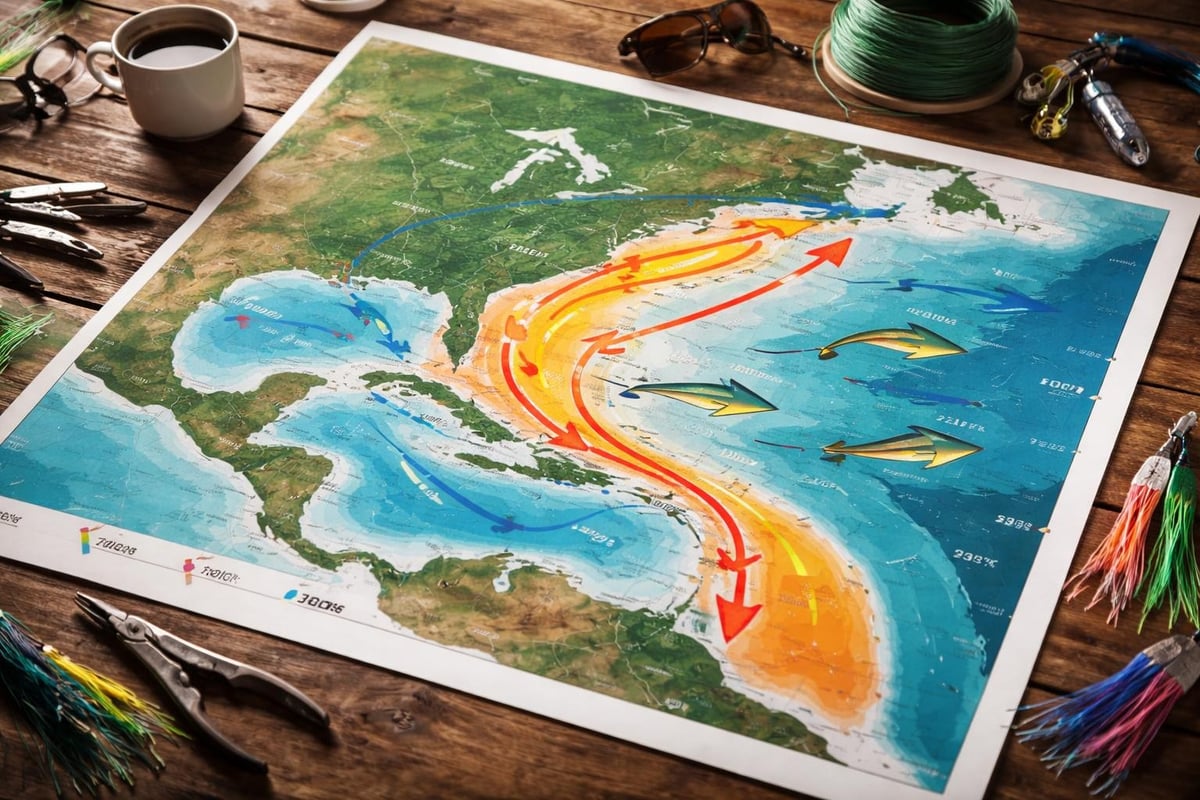
Coastal areas near productive offshore fishing spots often see mahi passing through during migration windows. Checking recent catch reports and talking with local captains helps you time your trips for maximum success.
Additional tips for trolling success emphasize the importance of persistence and covering water until you locate active fish. Some days require running miles of ocean before finding the right conditions.
Trolling ballyhoo for mahi combines time-tested techniques with the thrill of pursuing one of the ocean's most acrobatic gamefish. Once you dial in your rigging, speed, and search patterns, consistent hookups become the norm rather than the exception. Ready to find your next offshore adventure? Check out Find Fishing Spots to discover productive saltwater locations complete with GPS coordinates, access details, and local insights that'll put you on the fish faster.