Mahi-mahi are some of the most aggressive and acrobatic fish you'll encounter offshore, making them a favorite target for anglers from coast to coast. These electric-colored fish aren't shy about smashing lures, but getting them to bite consistently means matching your tackle to their hunting style. Trolling lures for mahi need to imitate the fast-moving baitfish and squid that dolphin fish feed on, and choosing the right ones can make the difference between a slow day and limiting out.
Whether you're targeting structure in the Gulf, weed lines off the Carolinas, or debris fields along the West Coast, understanding how different lures perform will help you land more fish. Let's break down what works and why.
Why Lure Selection Matters for Dolphin
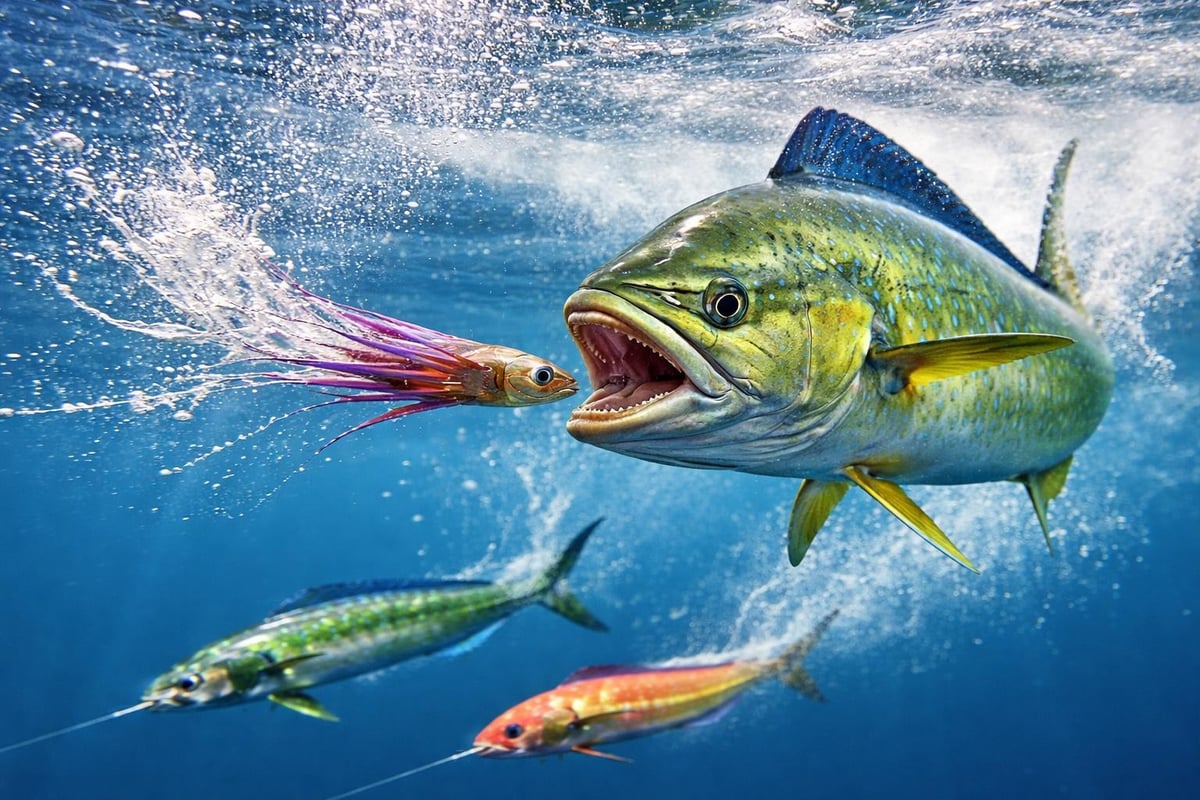
Mahi-mahi are visual hunters that respond to both color and action. They're attracted to commotion on the surface and will often compete with each other once one fish strikes, which is why trolling lures for mahi that create splash and vibration tend to produce multiple hookups.
These fish move fast and feed aggressively, so your lures need to match their energy. The right presentation triggers their predatory instincts, especially when you're covering water looking for floating debris, weed patches, or temperature breaks where mahi congregate.
Top Lure Types for Trolling Mahi
Different lure styles excel in different conditions. Here's what to keep in your spread:
Skirted Trolling Lures
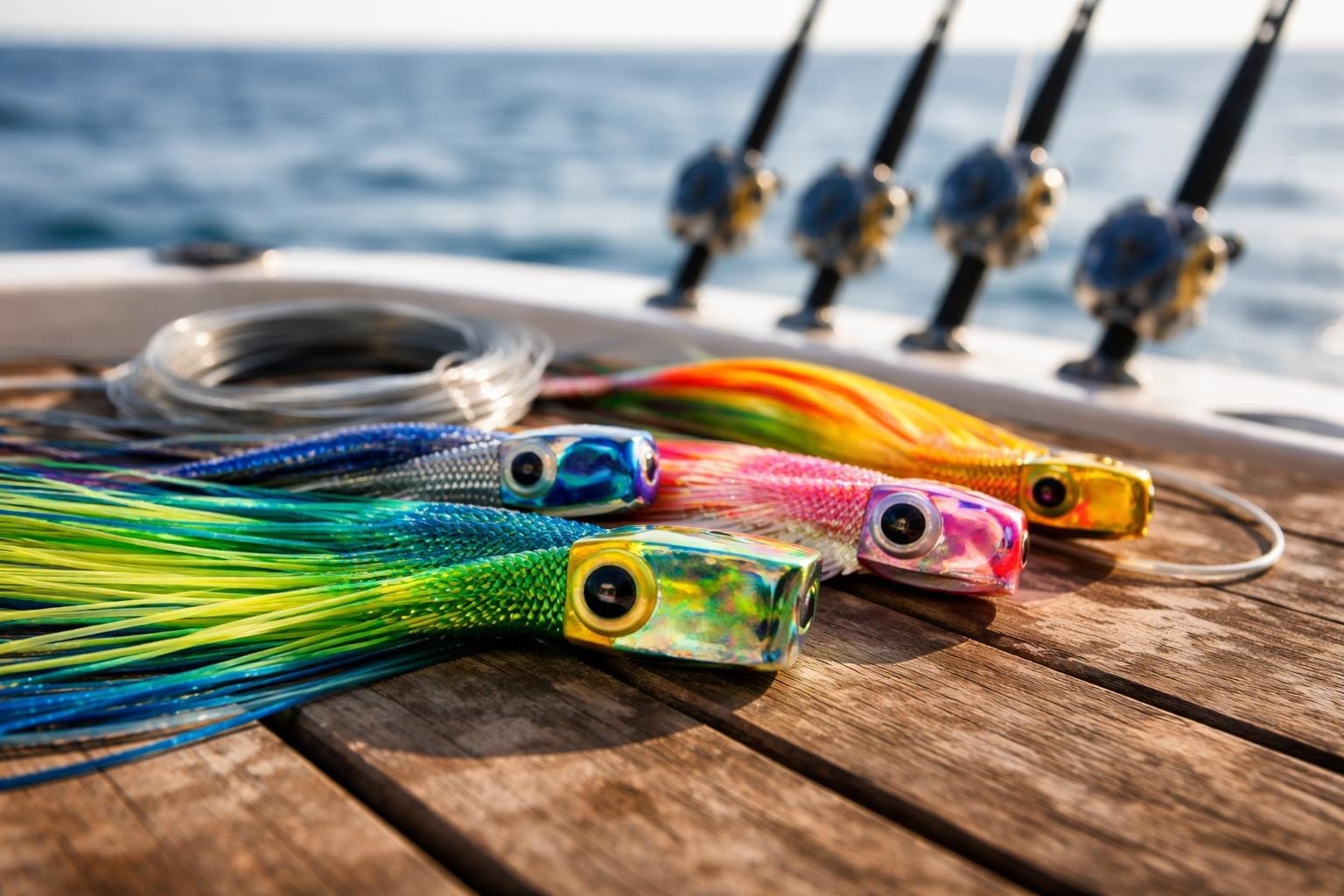
Skirted lures are the workhorses of mahi fishing. Their flowing skirts create movement that mimics squid and small fish, and the bubble trail they leave attracts fish from a distance. Traditional trolling lures like flashers and plugs are designed to imitate injured or fast-moving prey.
Popular options include:
- Bullet-head designs that push water and create surface disturbance
- Slant-face lures that dive and pop erratically
- Concave heads that produce big splash patterns
Colors matter more than you might think. Chartreuse, pink, blue-and-white, and green-yellow combinations consistently produce. Some anglers swear by natural baitfish patterns, while others prefer bright attractors that stand out in blue water.
Soft Plastic Squid Lures
Mahi love squid, making soft plastic squid lures incredibly effective. The Squidy Lure and similar designs work well at various trolling speeds and can be rigged with or without skirts for different presentations.
These lures have a realistic swimming action that dolphin can't resist. They're especially productive when rigged on lighter tackle, allowing them to skip and dart across the surface like fleeing prey.
Diving Plugs and Minnow Imitations
Hard-bodied diving plugs add variety to your spread. They dive beneath the surface and wobble side to side, imitating wounded baitfish. These work particularly well when mahi are feeding deeper or when surface action slows down.
The key is finding plugs that maintain action at your trolling speed (typically 6-9 knots for mahi). Look for lures with tight wobbles rather than wide, lazy swims.
Setting Up Your Trolling Spread
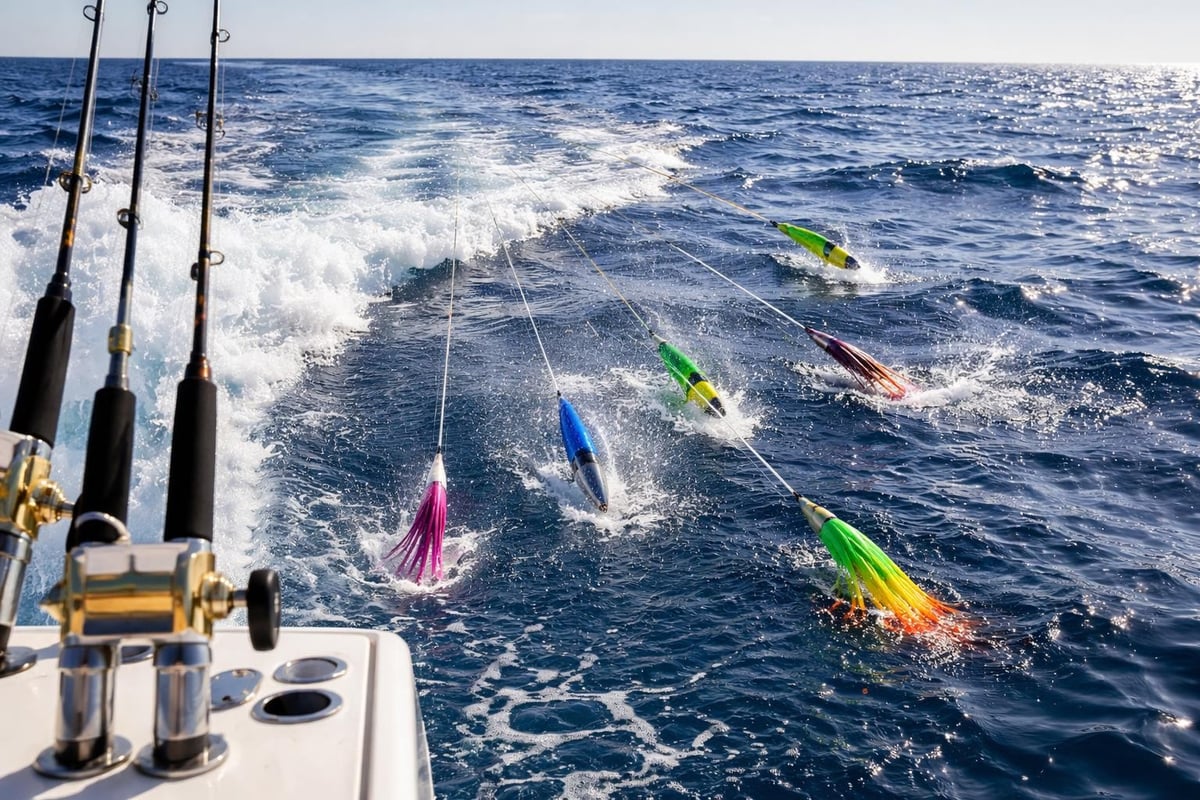
Running multiple lines increases your odds of finding fish and triggering competitive feeding. A typical mahi spread might include:
- Flat lines (no outriggers) running skirted lures close to the boat
- Long rigger baits set 75-150 feet back with larger lures
- Short rigger positions with smaller lures or teasers
- Shotgun or stinger line running straight back down the middle
Vary your lure sizes and colors across positions. Many successful offshore anglers use specialized mahi lures that combine proven color patterns with reliable rigging.
Position changes matter. When you hook up, leave the other lines in the water. Mahi often travel in schools, and hooked fish attract their buddies. This is where having a well-planned spread pays off with double or triple hookups.
Speed and Presentation Tips
Trolling speed dramatically affects lure performance. Most trolling lures for mahi work best between 6 and 9 knots, though some days require adjustments.
Faster speeds (8-9 knots) work well when:
- Covering lots of water searching for fish
- Targeting aggressive, surface-feeding schools
- Running in calm conditions
Slower speeds (5-7 knots) are better when:
- Working around floating structure or weed lines
- Fish are present but less aggressive
- Sea conditions are rough
Pay attention to how your lures run at different speeds. They should track straight, create consistent action, and occasionally break the surface without tumbling or spinning. Adjust your boat speed until you see the right action.
Color Selection and Water Conditions
Water clarity influences color choice more than most anglers realize. In clear blue water, natural colors with some flash work well, think blue-and-white, purple-and-black, or silver patterns. When water has color or debris, brighter options like chartreuse, pink, or orange increase visibility.
High-visibility combinations that consistently produce:
- Chartreuse and pink
- Green and yellow
- Blue and white with silver flash
- All-pink or all-chartreuse
Don't be afraid to experiment. Mahi can be color-selective on certain days, and sometimes switching from a popular pattern to something different triggers bites when fish are following but not committing.
Rigging Considerations
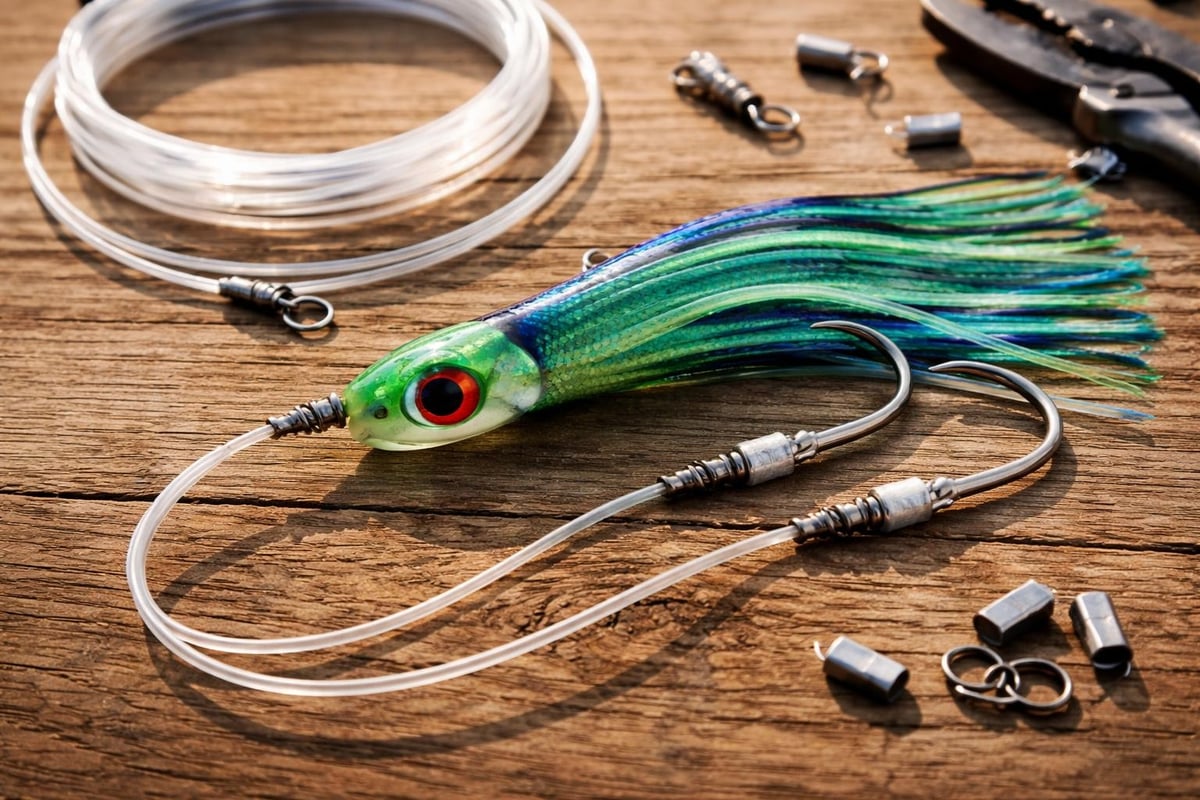
Pre-rigged lures save time and ensure consistent performance. Purpose-built mahi lures like the Mahi Hunter come ready to fish with proper hook setups and leaders.
When rigging your own, use 60-80 pound fluorocarbon or monofilament leaders. Mahi aren't leader-shy like some species, but you want something that can handle their rough mouths and aggressive head shakes. Circle hooks in the 6/0-8/0 range work well for most lures and improve hookup ratios.
Finding the Right Spots
Even the best lures won't help if you're not fishing where mahi are. These fish relate to structure, temperature changes, and floating debris. Look for weed lines, floating pallets, logs, and current edges where baitfish concentrate.
Once you've got your offshore tackle dialed in and know what lures work, the next step is finding productive water. Explore saltwater fishing locations with detailed GPS coordinates and access information to plan your next mahi trip. Offshore hotspots like La Jolla Canyon or the Rock Pile off San Diego offer excellent mahi opportunities when conditions are right.
Birds working the surface often mark active schools. When you spot diving birds or surface disturbance, slow down and work the area thoroughly. Mahi will often hold near floating objects for extended periods, making these prime targets for your trolling spread.
Getting your trolling lures for mahi dialed in takes some experimentation, but once you find what works in your local waters, you'll be hooking up consistently. The combination of the right lure types, proper speeds, and smart color choices puts more fish in the boat. Whether you're fishing the Gulf, Atlantic, or Pacific, having your tackle ready and knowing where to find fish makes all the difference. Ready to locate your next mahi hotspot? Check out Find Fishing Spots to discover offshore locations near you with GPS coordinates, detailed access information, and everything you need to plan your trip.